Tracked price checks
Bikes in this guide
Sur-Ron
Light Bee X
Enormous aftermarket and parts ecosystem — the most-supported e-dirt-bike platform
Trade-off: Advertised range collapses at speed — plan for real-world miles well under the claim
We may earn a commission if you buy through this link, at no extra cost to you.
Check price at ATV Wholesale OutletRawrr
Mantis X Pro
15 kW peak and 65+ mph — a big step above the base Mantis X for $900 more at $3,899
Trade-off: 65 mph / 15 kW is a lot of bike for newer riders
We may earn a commission if you buy through this link, at no extra cost to you.
Check price at Rawrr (official)Stark
Varg MX 1.2
The fastest electric motocrosser made — up to 80 hp from a 360V, 7.2 kWh system
Trade-off: Halo price (~$12k) — competes with premium gas MX, not trail e-bikes
We may earn a commission if you buy through this link, at no extra cost to you.
View official pageThe short answer
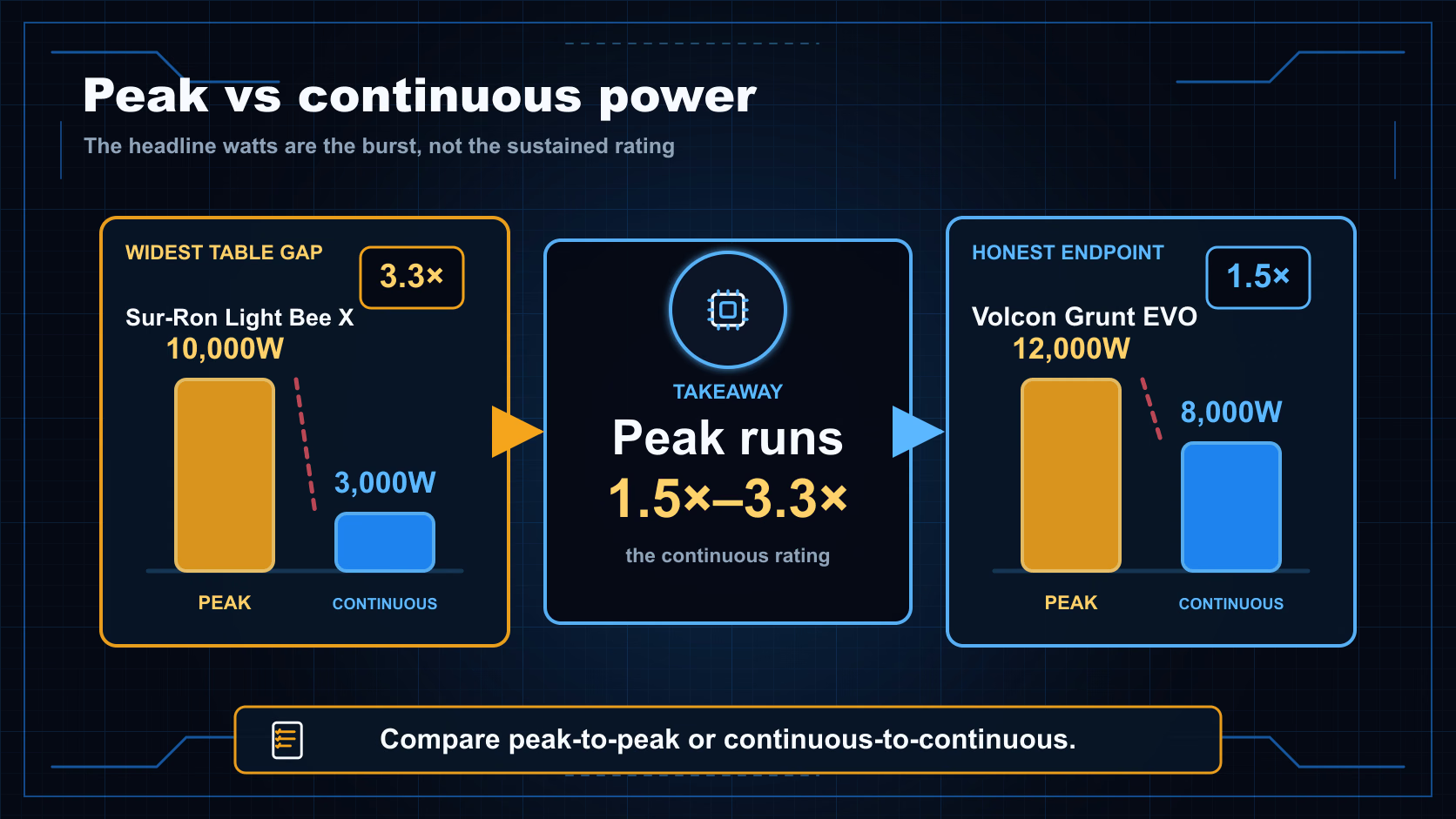
The wattage on an electric dirt bike's spec sheet is almost always a peak burst, not what the bike actually sustains — and the gap is enormous. Across the bikes we track, peak power runs 1.5 to 3.3 times the continuous rating. That "10,000W" Sur-Ron is really a 3,000W-continuous bike that can briefly hit 10,000W for a launch.
This is the second-most-misread number on any spec sheet, right behind range. It is not dishonest on its own — a peak rating is a legitimate spec — but it becomes a trap the moment you compare one bike's peak against another's continuous. Here is every number, and how to read it.
Peak vs continuous: the table
"Peak" is the short burst; "continuous" (also called nominal) is the sustained rating. The multiplier is how much bigger the headline peak number is than the honest continuous one.
| Bike | Continuous | Peak (the headline) | Peak is... |
|---|---|---|---|
| Sur-Ron Light Bee X | 3,000W | 10,000W | 3.3× bigger |
| Sur-Ron Ultra Bee | 8,000W | 24,500W | 3.1× |
| Altis Sigma | 8,000W | 25,000W | 3.1× |
| Stark Varg | 20,000W | 60,000W | 3.0× |
| Rawrr Mantis X Pro | 5,000W | 15,000W | 3.0× |
| E-Ride Pro SS 3.0 | 6,000W | 15,800W | 2.6× |
| Segway Xaber 300 | 8,000W | 21,000W | 2.6× |
| Apollo RFN Ares | 5,000W | 12,500W | 2.5× |
| Talaria MX5 Pro | 5,500W | 13,400W | 2.4× |
| Sur-Ron Storm Bee | 10,000W | 22,500W | 2.3× |
| Onyx RCR | 8,000W | 18,000W | 2.3× |
| Talaria X3 | 3,000W | 6,500W | 2.2× |
| Talaria Sting R MX4 | 4,000W | 8,000W | 2.0× |
| Volcon Grunt EVO | 8,000W | 12,000W | 1.5× — the honest one |
| Talaria Sting MX3 | 4,000W | 6,000W | 1.5× |
What the table tells you
Three takeaways, each one a shopping rule:
- The headline is a burst, not a description. Every bike here can hit its peak number — for a few seconds, on a launch or a climb. None of them sustains it. When a listing shouts a big wattage, read it as "what this bike can do for a moment," not "how powerful it is."
- The multiplier varies, so peak numbers aren't even comparable to each other cleanly. The Sur-Ron's peak is 3.3× its continuous; the Volcon's is only 1.5×. That means two bikes with the same peak wattage can have very different sustained power — the one with the lower multiplier is the stronger sustained machine. Peak-to-peak is a rough comparison at best.
- The real trap is mixing the two. A budget bike advertising a 15,000W peak looks like it matches a serious bike's 15,000W — until you notice one number is peak and the other is continuous. This is exactly how inflated spec sheets mislead, and it is why we called it out on the MotoTec brand page, where a "30,000W" flagship is rated at 6,000W continuous.
Why motors are rated two ways
An electric motor can briefly draw far more current than it can handle continuously, because heat takes time to build. For a few seconds — launching, climbing, passing — it delivers the peak. Held there, it would overheat, so the controller limits it back to the continuous rating for sustained running. Both numbers are real; they just describe different things. It is the same reason a power tool lists a peak and a running wattage.
For a dirt bike, this maps neatly to riding: peak power is your acceleration and short bursts, continuous power is how the bike feels over a whole trail. A high peak makes a bike feel punchy; a high continuous rating makes it stay strong. Cheap bikes tend to have the widest gap between the two — a big peak headline hiding a modest sustained motor.
How to compare power honestly
- Check whether a wattage is peak or continuous before you compare two bikes. If a listing doesn't say, assume it's peak — it almost always is.
- Compare like with like — peak-to-peak or continuous-to-continuous, never one bike's peak against another's continuous.
- Weight continuous power for sustained riding, peak for launches and climbs. A trail rider should care more about continuous; a drag-launch enthusiast more about peak.
- Be most skeptical of the biggest headline numbers, especially on budget bikes, where the peak-to-continuous gap tends to be widest and the marketing loudest. Our how to read specs guide covers the other numbers that mislead.
The bottom line
The wattage that sells electric dirt bikes is a peak burst that runs 1.5 to 3.3 times the power the bike actually sustains — so a "10,000W" Sur-Ron is a 3,000W-continuous machine, and a "60,000W" Stark is 20,000W continuous. None of that is a scandal; peak ratings are legitimate. The scandal is comparing one bike's peak against another's continuous, which is how the loudest spec sheets win sales they don't deserve. Check which number you're looking at, compare like with like, and treat the biggest headline wattage as the marketing department's number — not the motor's.
Every power tier, ranked:
- 1000W Electric Dirt Bike: The Entry Class, Explained
- 3000W Electric Dirt Bike: The Sur-Ron Class
- 5000W Electric Dirt Bike: The Value Power Tier
- 8000W Electric Dirt Bike
VoltRipper is independent — peak and continuous figures are the manufacturers' own published ratings. Real sustained output depends on cooling, controller limits and conditions. We are spec-verified and data-driven rather than hands-on. Affiliate disclosure is included on monetized pages.
FAQ
What's the difference between peak and continuous power on an electric dirt bike?
Peak power is a short burst the motor can deliver for a few seconds — for a launch or a climb — while continuous (or nominal) power is what it can sustain indefinitely without overheating. The headline wattage on almost every spec sheet is the peak number, and across the bikes we track it runs 1.5 to 3.3 times the continuous rating. So a '10,000W' bike is often a 3,000W-continuous bike that can briefly hit 10,000W.
How much power does a Sur-Ron Light Bee X actually make?
The Sur-Ron Light Bee X is advertised at 10,000W peak, but its continuous rating is about 3,000W — a 3.3x gap, one of the widest in the class. That doesn't make it a weak bike; the 10,000W burst is real and useful off the line. It just means you should compare it to other bikes on the same basis, peak-to-peak or continuous-to-continuous, not one bike's peak against another's continuous.
Is a 15,000W electric dirt bike really 15,000 watts?
For a few seconds, yes — as a peak burst. Continuously, a '15,000W' bike like the Rawrr Mantis X Pro sustains about 5,000W, a 3x gap. This is normal and not dishonest in itself, but it becomes misleading when a cheap bike's inflated peak number is compared against a better bike's continuous rating. Always check whether a wattage is peak or continuous before you compare two bikes.
Should I compare electric dirt bikes on peak or continuous power?
Either is fine — as long as you compare like with like. Comparing one bike's peak against another's continuous is how buyers get misled, because peak numbers run 1.5 to 3.3 times higher. Continuous power is the better measure of sustained performance and how the bike feels over a whole ride; peak matters for launches and short climbs. Just never mix the two in the same comparison.
Sources
Specification sources
- Sur-Ron Light Bee XATV Wholesale Outlet - 2026 Sur-Ron Light Bee X (72V/35Ah, 10 kW), $4,699 from $4,999Checked
- Rawrr Mantis X ProRide Rawrr — Mantis X ProChecked
- Stark Varg MX 1.2Stark Future — Varg MXChecked