The verdict
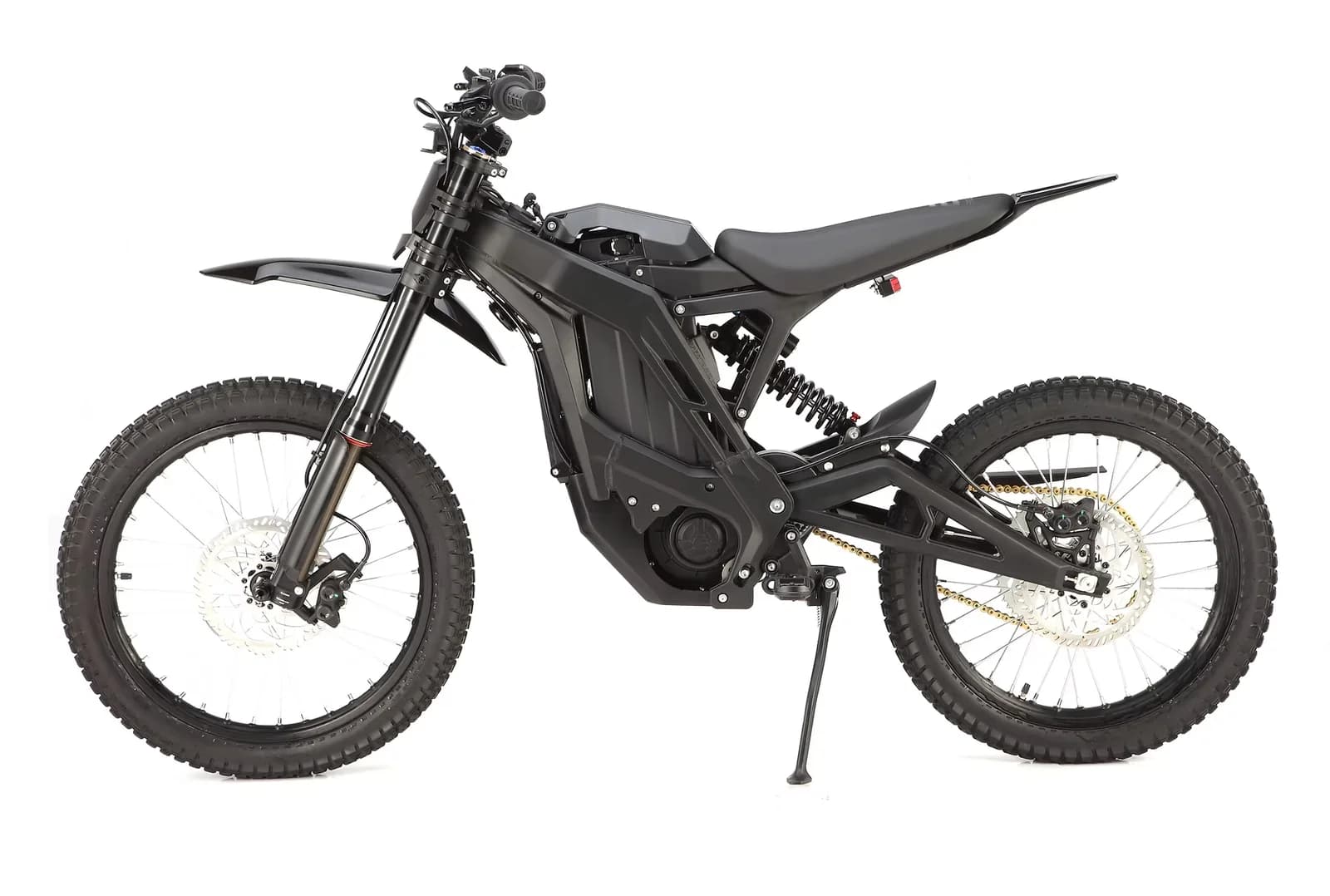
The E-Ride Pro SS 3.0 is the current E-Ride performance step-up: 15.8 kW peak power, a 72V/50Ah swappable pack, a claimed 60 mph top speed, app support, reverse, and upgraded suspension/brakes for about $4,699. On our data it lands at a VoltRipper Score of 92, which puts it right in the top value-performance tier with bikes like the Altis Sigma and Apollo RFN Ares.
The important caveat: this is not just a cheaper SS 2.0 with more power. It is stronger and more complete, but it also costs about $100 more, and it carries the same conservative official 265 lb rider-weight rating we use for the SS 2.0 (dealer pages may cite 302 lb).
Who it is for
Buy it if you want a compact trail bike with more power than a Sur-Ron Light Bee X or Talaria MX5 Pro, a big swappable battery, and current-model features without jumping to a full-size moto bike.
Skip it if you mainly want the lowest price, the deepest aftermarket, or the highest documented rider-weight rating. The SS 2.0 remains the lower-cost E-Ride value pick where available; Sur-Ron and Talaria still own the broader parts ecosystem.
What changed versus SS 2.0
The headline upgrades are real: the SS 3.0 moves to a 72V/50Ah pack, up from the SS 2.0's 72V/40Ah pack, and peak power rises from 12 kW to 15.8 kW. It also adds app support, reverse, more ride modes, and a more complete current-model spec sheet.
That makes the 3.0 the better performance buy if you are already shopping near $5,000. The 2.0 still matters because it sits closer to $4,000 and keeps a different value case: lower price, strong 12 kW output, and the same conservative official 265 lb rider rating.
Range reality
E-Ride advertises low-speed range figures for the SS 3.0, including a 64-mile claim at 25 mph. We are not treating that as real trail range. The larger 3,600 Wh pack gives the 3.0 more energy than the SS 2.0, but the stronger motor can spend that energy quickly when ridden hard.
Until there is reliable owner or test data, we leave real-world range blank in the catalog and let the claimed range stay clearly labeled. The practical range advantage is still the swappable battery: carry a charged spare and the bike can keep riding while others wait on a charger.
Why it scores 92
- Power: 15.8 kW peak and 60 mph put it above the Light Bee/Talaria baseline.
- Range hardware: 3.6 kWh and a removable, swappable battery are strong for the class.
- Value: $4,999 is not cheap, but the spec-per-dollar is real.
- Support: E-Ride has dealer coverage, but the community and aftermarket are still thinner than Sur-Ron or Talaria.
- Versatility: it is off-road only as sold, so street use is not part of the score case.
By the numbers: the spec-per-dollar case, computed
Our standard computed metrics from the verified spec set:
| Metric | SS 3.0 | How it reads |
|---|---|---|
| Battery per dollar | 0.72 Wh/$ | Near the top of the class — a 3,600 Wh pack at $4,999 (Light Bee X: 0.57) |
| Power to weight | 95 W/lb | Second only to the far pricier full-size bikes — serious punch for 167 lb |
| Price per real-world mile | not published | No third-party real-range data exists yet for the SS 3.0 — we don't invent it |
The math backs the pitch: the SS 3.0 buys more watt-hours AND more watts-per-pound per dollar than the establishment picks. What the numbers can't show is the reason it still isn't the default recommendation — ecosystem depth — and that missing real-range row is honest too: this platform is new enough that nobody has published credible measured range, so we won't pretend otherwise.
SS 3.0 vs SS 2.0
The 3.0 is the clear performance upgrade — 15.8 kW against 12, a 3,600 Wh pack against 2,880, and the Score 92 to 88. The 2.0 is still the cleaner budget play at 28 lb lighter, and after both 2026 price moves there is only $100 between them on the sticker.
Full head-to-head: E-Ride Pro SS 2.0 vs SS 3.0 →
The bottom line
The E-Ride Pro SS 3.0 is now one of the strongest sub-$5,000 performance bikes in the catalog: fast, powerful, swappable, and current. Buy it as a Talaria/Sur-Ron alternative when you want more power and battery without going full-size. Keep the SS 2.0 in mind if price matters more than the latest performance hardware.
Compared with
Every head-to-head we have published on this bike:
- E-Ride Pro SS 2.0 vs SS 3.0
- E-Ride Pro SS 3.0 vs Apollo RFN Ares
- E-Ride Pro SS 3.0 vs Segway Xaber 300
- E-Ride Pro SS 3.0 vs Sur-Ron Light Bee X
- E-Ride Pro SS 3.0 vs Talaria Sting MX5 Pro
- Sur-Ron Ultra Bee vs E-Ride Pro SS 3.0
Go deeper on the E-Ride Pro SS 3.0:
VoltRipper is spec-verified and data-driven - we do not claim hands-on testing of this bike. Specs and prices are cross-checked against the sources listed on the bike page; real-world figures stay blank or caveated until defensible data exists.
FAQ
Is the E-Ride Pro SS 3.0 worth it?
For a rider who wants more power than a Sur-Ron Light Bee X or Talaria — 15.8 kW peak, 60 mph — plus a big swappable battery and current-model features near $5,000, yes; it earns a VoltRipper Score of 92. Skip it if you want the lowest price (the SS 2.0 is cheaper), the deepest aftermarket (Sur-Ron and Talaria still lead there), or a rider-weight rating above E-Ride's official 265 lb.
E-Ride Pro SS 3.0 vs SS 2.0 — which should you buy?
The SS 3.0 is the performance upgrade: 15.8 kW peak (vs 12 kW), a 72V/50Ah pack (vs 40Ah), plus app support and reverse. The gap used to be about $1,000, but the SS 2.0 moved to $4,599 plus a stated $300 shipping charge in July 2026 — roughly $4,899 delivered against the SS 3.0's $4,999 delivered ($4,699 plus the same $300 shipping) — so they now cost close to the same. At that spread the higher-scoring SS 3.0 (86 vs 81) is the better buy for most riders, and the SS 2.0's remaining argument is its lighter 139 lb chassis and intermediate rating. Both use a conservative 265 lb official rider rating in the catalog, though dealer pages cite higher — 302 lb for the SS 3.0, 300 lb for the SS 2.0.
Is the E-Ride Pro SS 3.0 better than a Sur-Ron?
On raw performance, yes — 15.8 kW peak beats a Sur-Ron Light Bee X's ~10 kW, with a bigger, swappable battery. But the Sur-Ron wins on aftermarket depth, community size, and resale value. The E-Ride is the more powerful bike; the Sur-Ron is the more supported, better-holding-value platform — which matters more depends on whether you prioritize outright performance or long-term ownership. See our full [E-Ride Pro SS 3.0 vs Sur-Ron Light Bee X comparison](/guides/e-ride-pro-ss-3-vs-sur-ron-light-bee-x).
What is the real range of the E-Ride Pro SS 3.0?
E-Ride advertises 62+ miles at 25 mph, but that's a low-speed figure — real trail range ridden hard is meaningfully less, so we leave the real-world number blank until reliable test or owner data exists rather than repeat an optimistic claim. The practical range advantage is the swappable 72V/50Ah battery: carry a charged spare and keep riding while others wait on a charger.