Tracked price checks
Bikes in this guide
Dust Moto
Hightail
One of the only serious American-made electric dirt bikes in this class, designed in Oregon and assembled in Detroit
Trade-off: Pre-order and just launching, so it has no long-term owner base or reliability record yet
We may earn a commission if you buy through this link, at no extra cost to you.
Check price at Dust MotoSur-Ron
Light Bee X
Enormous aftermarket and parts ecosystem — the most-supported e-dirt-bike platform
Trade-off: Advertised range collapses at speed — plan for real-world miles well under the claim
We may earn a commission if you buy through this link, at no extra cost to you.
Check price at ATV Wholesale OutletTalaria
Sting MX5 Pro
72V/2.88 kWh Samsung-cell platform is a real power and range step up from the 60V Sting and X3 family
Trade-off: Ships limited to 20 mph, so the high-speed numbers assume derestriction and local-law risk
We may earn a commission if you buy through this link, at no extra cost to you.
Check price at Luna CycleThe short answer
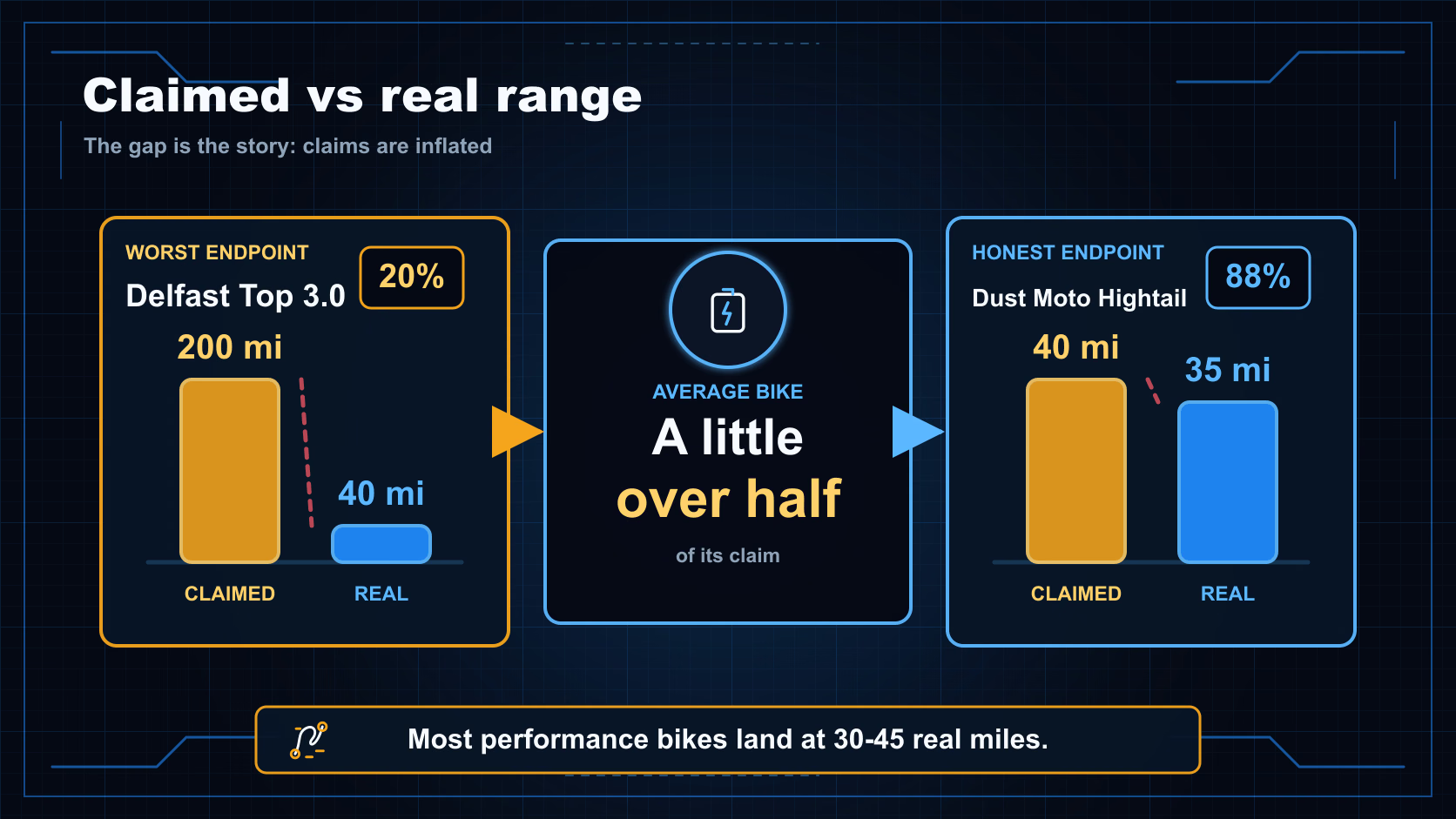
We compared the advertised range of 21 electric dirt bikes against our real-world estimates, and the result is blunt: the average bike delivers a little over half of what it claims. The worst delivers about a fifth. The most honest gets close to nine-tenths — and, crucially, that honest bike goes farther in real life than several rivals that advertise a bigger number.
That is the whole point of this page: the claimed range tells you almost nothing about how far a bike actually goes, and a lower honest claim often beats a higher fake one. Here is every number.
For a ride-specific range band, run the electric dirt-bike range estimator. It applies claimed range, rider weight, style, terrain, and temperature with every coefficient visible.
The claimed-vs-real table
Ranked by honesty — the percentage of the advertised range you actually get in normal riding. "Real" is our real-world estimate, derived from test and owner data where available and conservative figures where not; it is the number we score against.
| Bike | Claimed | Real (our estimate) | You actually get |
|---|---|---|---|
| Dust Moto Hightail | 40 mi | 35 mi | 88% — the honest one |
| Stark Varg | 50 mi | 35 mi | 70% |
| E-Ride Pro SS 2.0 | 50 mi | 35 mi | 70% |
| Altis Sigma | 50 mi | 35 mi | 70% |
| Sur-Ron Light Bee X | 47 mi | 30 mi | 64% |
| Volcon Grunt EVO | 70 mi | 45 mi | 64% |
| Talaria Sting MX3 | 44 mi | 28 mi | 64% |
| Sur-Ron Storm Bee | 75 mi | 45 mi | 60% |
| Talaria MX5 Pro | 62 mi | 35 mi | 56% |
| Segway Xaber 300 | 62 mi | 35 mi | 56% |
| Rawrr Mantis X Pro | 62 mi | 35 mi | 56% |
| Talaria X3 | 62 mi | 32 mi | 52% |
| Apollo RFN Ares | 90 mi | 40 mi | 44% |
| Onyx RCR | 130 mi | 45 mi | 35% |
| Delfast Top 3.0 | 200 mi | 40 mi | 20% — the worst |
(The Delfast is no longer in production, but it remains the clearest example of the problem: a 200-mile headline for a bike that does about 40 ridden normally.)
What the table tells you
Three things jump out, and each one should change how you shop:
- The advertised number is not a range — it's a marketing ceiling. Every bike here falls short of its claim, most of them badly. A "62 mile" Talaria, Segway or Rawrr all deliver about 35 real miles; the "130 mile" Onyx does about 45. The claim tells you the maximum the bike could theoretically do crawling in eco mode, not what you'll get.
- A bigger claim does not mean more real range. The Apollo claims 90 miles and does 40; the Dust Moto claims 40 and does 35. On the sticker the Apollo looks like more than double the bike; in reality they are five miles apart. Buy the honest number, not the big one.
- The whole performance class clusters at 30–45 real miles. Strip away the marketing and nearly every adult bike lands in the same narrow band. That is the true shape of electric dirt bike range in 2026 — so if a listing promises dramatically more, it is quoting a low-speed figure, not describing your ride.
Why the gap is so large
Advertised range is measured at low steady speed, in the most efficient mode, on flat ground. Real riding is the opposite: variable throttle, climbs, top-speed pulls, and the higher power modes you actually use. And power costs range — the faster and harder you ride, the more energy per mile, and it falls off a cliff at speed. It's the same reason a car's highway range trails its city number, except the gap is far larger on a bike built to accelerate hard. We break down the physics in the range explained guide.
How to shop range honestly
- Ignore the headline number. Assume roughly half to two-thirds of the claim, and less if you ride hard.
- Compare real figures, not claims — which is exactly why we publish a real-world estimate for every bike and score against it, not against the marketing.
- If you need genuine distance, carry a spare battery rather than chasing a bigger claim. A swappable pack is worth more than any advertised mile. See the long-range picks for the bikes that actually go farthest.
- Treat an honest claim as a green flag. A maker who advertises 40 miles when the bike does 35 is telling you something good about how they'll describe everything else.
The bottom line
Electric dirt bike range claims are inflated across the board — the average bike delivers a little over half its number, the worst a fifth, and only the most honest gets close — and nearly the entire performance class lands at 30 to 45 real miles no matter what the sticker says. Never buy on the advertised figure, compare real estimates instead of claims, and remember that a bike honest enough to quote a low number often out-ranges a rival shouting a big one. When a range claim sounds too good, it is — and now you have the table to prove it.
VoltRipper is independent — the "real" figures are our own conservative real-world estimates, derived from test and owner data where available, and we score against them rather than the manufacturers' claims. Your actual range depends on speed, weight, terrain and mode. We are spec-verified and data-driven rather than hands-on. Affiliate disclosure is included on monetized pages.
FAQ
How accurate are electric dirt bike range claims?
Not very. Across the bikes we track, real-world range averages a little over half of the advertised figure — and the range of honesty is enormous, from bikes that deliver about 20% of their claim to one that gets close to 90%. Advertised ranges are almost always low-speed or eco-mode numbers; ridden hard, every bike falls well short. Plan on roughly half to two-thirds of the claim unless you have real test data.
Which electric dirt bike has the most honest range claim?
In our data the Dust Moto Hightail is the most honest — its real-world range is about 88% of its claim, because it advertises a conservative 40 miles rather than an inflated eco figure. At the other end, some bikes advertise two to five times their real range. The lesson is that a lower, honest claim can mean a bike that actually goes farther than a rival with a bigger, fake number.
Why is real electric dirt bike range so much lower than advertised?
Because advertised range is measured at low steady speed in the most efficient mode, and real riding is nothing like that. Power costs range, so the moment you ride hard, climb, or hit top speed, the miles fall fast. It is the same reason a car's EPA range drops on the highway — but the gap is much larger on a performance dirt bike. Our range guide explains the physics.
How much range do electric dirt bikes really have?
For the performance class most adults buy, plan on roughly 30 to 45 real-world miles per charge, regardless of what the sticker claims. The bikes that advertise 60, 70, or 200 miles are quoting low-speed figures; the real number ridden normally clusters in that 30-45 range for nearly the whole class. If you need more, carry a spare battery rather than believing a bigger claim.
Sources
Specification sources
- Dust Moto HightailDust Moto - Hightail official specificationsChecked
- Sur-Ron Light Bee XATV Wholesale Outlet - 2026 Sur-Ron Light Bee X (72V/35Ah, 10 kW), $4,699 from $4,999Checked
- Talaria Sting MX5 ProTalaria Canada - Sting MX5 Pro specificationsChecked