"Best for the money" isn't one bike — it depends on which kind of value you're after:
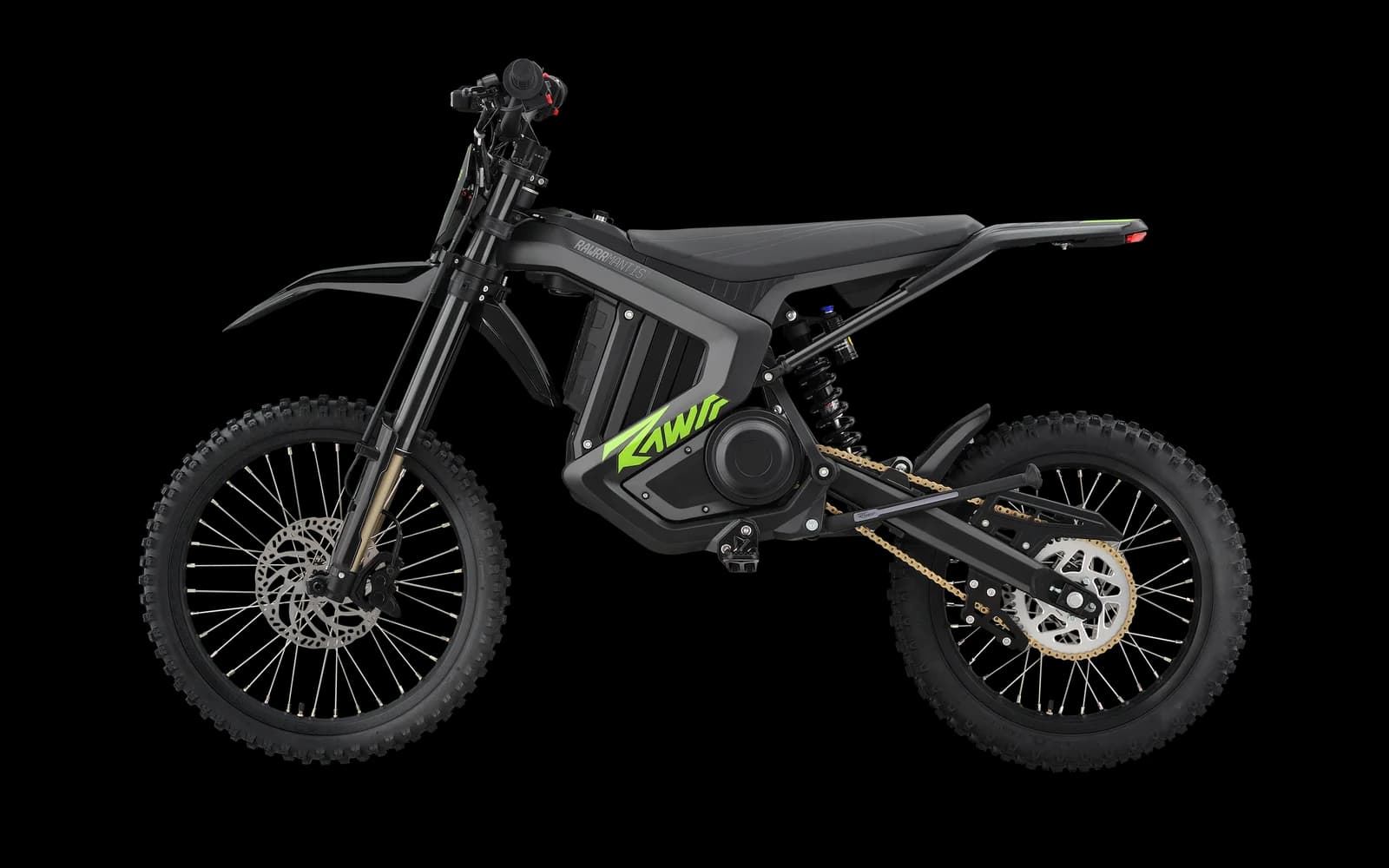
Raw spec-per-dollar → Rawrr Mantis X Pro (Score 89, $3,899) — 15 kW and 65 mph on a swappable 2,520 Wh pack, the most power per dollar under the cap now that the Altis Sigma prices out at $5,299.
Strongest balanced sub-$5k package → Apollo RFN Ares (Score 89, ~$4,799) — 12.5 kW, a large manufacturer-listed battery, lights, and a 24-month warranty.
Newest E-Ride performance value → E-Ride Pro SS 3.0 (Score 92, ~$4,699) — 15.8 kW, a 3.6 kWh swappable pack, app support, and reverse; the caveat is a thinner ecosystem and a lower rider-weight rating than the SS 2.0.
Newest 72V Sting → Talaria Sting MX5 Pro (Score 89, ~$4,990) — 72V and 13.4 kW that out-spec the Light Bee X; the early ~$4,299 pricing is gone (July 2026), so the case is hardware depth, not discount. Young aftermarket remains the caveat.
Full-size enduro value → Arctic Leopard XE Pro R (Score 91, $5,699) — 26.5 kW, 4,440 Wh, 21/18 wheels, and a 175 lb claimed weight for ~$800 less than an Ultra Bee; support depth is the caveat.
Talaria top-power value → Talaria Komodo (Score 91, $5,999) — 32 kW, 21/18 wheels, and a ~4.4 kWh pack for $500 less than an Ultra Bee; heavier and newer, but a lot of hardware for the money.
Cheapest real entry → Rawrr Mantis X (~$2,999) — beginner-rated and the least-expensive genuine bike, with a thinner support network than Talaria. The Talaria Sting MX3 (86, ~$3,700) held this slot until it was discontinued in August 2026; last stock is worth it if support matters more to you than $700.
Best long-term value → Sur-Ron Light Bee X (89, $4,499) — because resale and support are value, too.
How we judge "value"
Cheapest isn't the same as best value. We're after the most bike per dollar — factoring power, battery, and features and the things that hold value over years: aftermarket depth, resale, and support. (Our VoltRipper Score already weights value at 15% of the total, which is why a well-priced bike can out-score a pricier one — see the Onyx RCR ($4,699, Score 94) beating the Talaria Komodo ($5,999, Score 91).)
Our value picks
Value angle
Bike
Score
Price
The case
Raw spec-per-dollar
Rawrr Mantis X Pro
89
$3,899
15 kW, 65 mph, swappable 2,520 Wh pack; the cheapest real power here
72V / 13.4 kW that out-spec the Light Bee X — now priced above the Apollo
Full-size enduro value
Arctic Leopard XE Pro R
91
$5,699
26.5 kW, 4,440 Wh, 21/18 wheels, and 175 lb claimed; thin support caveat
Talaria top-power value
Talaria Komodo
91
$5,999
32 kW, 97.2V, 21/18 wheels, and $500 less than an Ultra Bee
Cheapest real entry
Rawrr Mantis X
83
$2,999
Beginner-rated and the cheapest genuine bike — in stock at Rawrr at $2,999 as of 2026-09-14, though support is thinner than Talaria
Was the entry pick(discontinued)
Talaria Sting MX3
86
$3,700
Out of production Aug 2026; last stock now dearer than it was, and still the best-supported beginner bike
Was the tech-per-dollar pick(discontinued)
Segway X260
80
$3,999
Segway replaced it with the bigger, pricier Xaber 300
Best long-term value
Sur-Ron Light Bee X
89
$4,499
Resale + biggest aftermarket = value that lasts
Raw spec-per-dollar — Rawrr Mantis X Pro. At $3,899 (~$4,099 delivered) it makes 15 kW and 65 mph on a swappable 2,520 Wh pack — more power per dollar than anything else still under this page's $5,000 cap. It scores 89, and the honest trade is that it is less complete than the E-Ride SS 3.0, less approachable than the Apollo. The Altis Sigma held this slot until 2026-07-20, when we corrected it to $5,299 — we had been carrying the 2025 model's price against the 2026 model's specs. It still makes strong power per dollar — third-best in the catalog at about 4.7 kW per $1,000, behind the Talaria Komodo (5.3) and Stark Varg MX (5.0) — it is simply no longer a sub-$5,000 bike. (Full review →)
Strongest balanced sub-$5k package — Apollo RFN Ares. The Ares also posts an 89 with a different pitch from the Altis: 12.5 kW peak power, a 3.1 kWh manufacturer-listed removable battery, adjustable suspension, lights, and a 24-month warranty for under $5,000. The caveat is brand depth and spec clarity: Apollo/RFN still does not have Sur-Ron's aftermarket or resale certainty, and dealer battery listings can lag the manufacturer page. (Full review →)
Newest E-Ride performance value — E-Ride Pro SS 3.0. The SS 3.0 is the current-model E-Ride step-up: 15.8 kW, a 3,600 Wh swappable pack, app support, reverse, and a Score of 92 for about $4,699. It is the E-Ride to buy for power and battery, while the SS 2.0 remains the cheaper value/heavy-rider pick where available. (Full review → · vs the Talaria Sting MX5 Pro →)
Newest 72V Sting — Talaria Sting MX5 Pro. An honest price update (July 2026): the early ~$4,299 pricing is gone — dealers now list it around $4,990 (Luna in stock; ATV Wholesale running a $4,700 sale). It still posts an 89 with 13.4 kW peak and a 72V platform that out-specs the Light Bee X on paper, but the it-undercuts-the-Apollo story no longer holds — buy it for the newest Sting hardware, not for a discount. The honest caveat is ecosystem: it's a brand-new platform, so the MX5-specific aftermarket and resale history are still young — which is why it lands at 89 rather than higher. If you want the newest Sting hardware and don't mind an aftermarket that's still maturing, it's the hardware pick — just no longer the discount one. (Full review →)
Full-size enduro value — Arctic Leopard XE Pro R. If the target is a full-size 21/18 bike rather than a compact trail machine, the XE Pro R is the sharp value play: 26.5 kW, a 4,440 Wh pack, a claimed 175 lb weight, and a $5,699 price that undercuts the Ultra Bee by about $800. The reason it doesn't score higher is ownership risk, not hardware — Arctic Leopard has much thinner support, aftermarket, and resale than Sur-Ron. (Full review → · vs Ultra Bee →)
Talaria top-power value — Talaria Komodo. The Komodo is not cheap, but in the ~$6k full-size tier it is a strong value: 32 kW, 97.2V, a ~4.4 kWh pack, full-size 21/18 wheels, and $5,999 versus the Ultra Bee's $6,499. The trade-off is weight and maturity — it is ~216 lb and brand-new — but it remains Talaria's top peak-power buy for the money. The newer Dragon adds a larger 5.2 kWh pack and rider aids, but at $6,949 with a pre-order caveat it is the premium feature play, not the value pick. (Full review → · vs Ultra Bee →)
The entry pick, and what happened to it — Talaria Sting MX3. For most of 2026 this was the least-expensive way into a legitimate, well-supported light e-dirt-bike at ~$3,099, and it out-scored its own pricier sibling on value. That door has closed: Talaria discontinued the MX3, and Luna Cycle now states plainly that the successor Sting R MX4 ships in its place. Watch the direction of travel, because it is the opposite of what buyers expect — last-stock MX3s list around $3,700, roughly $600 above the old price. (Full review →) If you want the cheapest beginner-rated bike today it is the Rawrr Mantis X at ~$2,999, and as of 2026-09-14 Rawrr lists it in stock at that price (REVRides is sold out); if you want the MX3's support network, the MX4 at ~$4,100 is the official continuation, though we rate it intermediate rather than beginner.
What happened to the Segway X260. It was our tech-per-dollar pick — a polished, app-connected bike with a hot-swappable battery for under $4,000 — until Segway discontinued it. (Full review →) One 2026 caveat: Segway's own store has moved on to the newer Xaber 300, and remaining X260 dealer stock is thinning — if you can't find one near $3,999, the value case fades fast.
Best long-term value — Sur-Ron Light Bee X. It's not the cheapest and it isn't the lightest — ten adult bikes we track weigh less than its 130 lb — but it's the value benchmark: light enough to be genuinely manageable, with the deepest parts-and-community ecosystem and the widest pool of used buyers in the class. (Full review →)
The hidden value nobody prices in
The sticker price is only half of value. A bike you can get parts for and resell is worth more than a cheaper one you can't. That's Sur-Ron's quiet advantage — years from now, the Light Bee X will still have upgrades, mechanics, and buyers, while an orphaned budget import may not. When you compare prices, mentally add the cost of not being able to fix or sell a bike later.
What's not good value
Halo bikes for casual riders. The Stark Varg (from $11,990) and Sur-Ron Storm Bee ($8,999) are phenomenal, but you pay a steep premium for the last 20% of performance. Buy one because you need full-size motocross capability — not to save money.
"Best value" hype on ultra-cheap imports. A few sub-$2k bikes are legitimate — the VALTINSU EM-5 Pro and the established-brand Heybike Villain are real options, not mystery-brand junk. But be skeptical of the marketing that crowns the cheapest bike "the best value of 2026": those claims lean on inflated range numbers (a "50-mile" budget bike is really ~25 in the dirt) and quietly ignore the parts, resale, and support that decide real cost of ownership. On our independent Score, those budget bikes land mid-pack (60s), not #1 — because value is what a bike is worth to own for years, not just its sticker price. A true no-name import with no parts pipeline is a risk, and the Rawrr Mantis X, at $2,999, is roughly the floor for a genuine bike.
The bottom line
For most riders, the Sur-Ron Light Bee X is the best all-around value once you count resale and support; the Rawrr Mantis X Pro is the raw spec-per-dollar play; the Apollo RFN Ares is the strongest balanced sub-$5k package; the E-Ride Pro SS 3.0 is the newest E-Ride power/battery value; the XE Pro R and Komodo are the new full-size enduro value plays; and the Rawrr Mantis X is the smartest tight-budget buy. These picks deliver far more fun-per-dollar than the halo tier. Want the best value for your size and riding? Run the Find Your Ride configurator.
VoltRipper is independent — our picks come from verified specs and the transparent VoltRipper Score, not commissions. Affiliate disclosure is included on monetized pages, and we are spec-verified/data-driven rather than hands-on until first-hand testing exists.
FAQ
What's the best-value electric dirt bike overall?
It depends on which kind of value you want. For raw spec-per-dollar under this page's $5,000 cap, the Rawrr Mantis X Pro now leads: 15 kW and 65 mph on a swappable 2,520 Wh pack, Score 89, for $3,899. The Altis Sigma makes more raw output per dollar still, but at $5,299 it prices out of this page. For the strongest balanced sub-$5k package, the Apollo RFN Ares scores 89 with a larger manufacturer-listed battery, lights, and a 24-month warranty. The E-Ride Pro SS 3.0 (92, ~$4,699) is the new power-and-battery step-up, while the Talaria Sting MX5 Pro (89, now ~$4,990 at dealers) is the 72V Sting step-up. For full-size enduro value, the Arctic Leopard XE Pro R (91, $5,699) and Talaria Komodo (91, $5,999) undercut the Ultra Bee tier with bigger spec sheets and newer-platform caveats. For the best long-term value including resale and support, the Sur-Ron Light Bee X (89, $4,499).
What's the cheapest electric dirt bike worth buying?
It was the Talaria Sting MX3, and that answer changed in August 2026 when Talaria discontinued it. Last-stock MX3s now list around $3,700 — up from $3,099, because remaining stock of a wanted bike gets dearer, not cheaper. The cheapest genuinely beginner-rated bike is now the Rawrr Mantis X at about $2,999, and the trade you are making is support: Talaria's dealer and parts network is far deeper than Rawrr's. Below roughly $2,500 you are generally in youth/toy territory or no-name imports with real parts-and-support risk, which usually is not a bargain at all.
Are expensive electric dirt bikes worth the money?
For most riders, no. Halo bikes like the Stark Varg (from $11,990) and Sur-Ron Storm Bee ($8,999) are superb, but you pay a steep premium for the last slice of performance. Unless you specifically need full-size motocross capability, a $3,000–$5,000 bike delivers the vast majority of the fun for a fraction of the price.
Does resale value matter on an electric dirt bike?
More than most buyers realize. A bike with a big aftermarket and active community (that's Sur-Ron) holds its value and is easy to sell, while an orphaned budget bike can be hard to offload. Factor resale and parts availability into 'value,' not just the sticker price.