Tracked price checks
Bikes in this guide
Sur-Ron
Light Bee X
Enormous aftermarket and parts ecosystem — the most-supported e-dirt-bike platform
Trade-off: Advertised range collapses at speed — plan for real-world miles well under the claim
We may earn a commission if you buy through this link, at no extra cost to you.
Check price at ATV Wholesale OutletSur-Ron
Ultra Bee
Big 4.4 kWh (74V/60Ah) pack, ~24.5 kW HP listings, and a 59 mph top end — a real step up from the Light Bee
Trade-off: Heavier (~195 lb) and more bike than a beginner needs
We may earn a commission if you buy through this link, at no extra cost to you.
Check price at Boca ScootersStark
Varg MX 1.2
The fastest electric motocrosser made — up to 80 hp from a 360V, 7.2 kWh system
Trade-off: Halo price (~$12k) — competes with premium gas MX, not trail e-bikes
We may earn a commission if you buy through this link, at no extra cost to you.
View official pageThe short answer
Electric dirt bike spec sheets look scientific, but they're easy to misread — and marketing counts on it. Here's what each number actually means, and the two traps (peak power and Ah-without-voltage) that make one bike look better than it is.
Get these five numbers right and you can compare any two bikes honestly.
Power: kW (and the peak-vs-continuous trap)
Kilowatts (kW) measure power — roughly, how hard the bike accelerates. 1 kW ≈ 1.34 horsepower.
The trap is peak vs continuous. Peak power is a short burst; continuous is what the bike can sustain without overheating. Marketing quotes the bigger peak number, so always compare peak-to-peak or continuous-to-continuous — never one bike's peak against another's continuous.
And remember scale: the Sur-Ron Light Bee X makes about 10 kW and is plenty for real trail riding; the Stark Varg makes up to 60 kW — full race-motorcycle power. More kW is harder to ride, not automatically better — match it to your skill, and see most powerful for the full ranking.
Voltage: the platform's performance tier
Voltage (V) — 48V, 60V, 72V, 97V — is roughly the "size" of the electrical platform. Higher voltage lets the system move more power with less current and heat, which is why faster bikes tend to run higher voltage.
Treat voltage as a sign of the performance tier, not a score by itself: a well-built 60V bike can out-ride a poorly-sorted 72V one. It tells you what league the bike plays in, not whether it's good.
Battery: compare Wh, never Ah
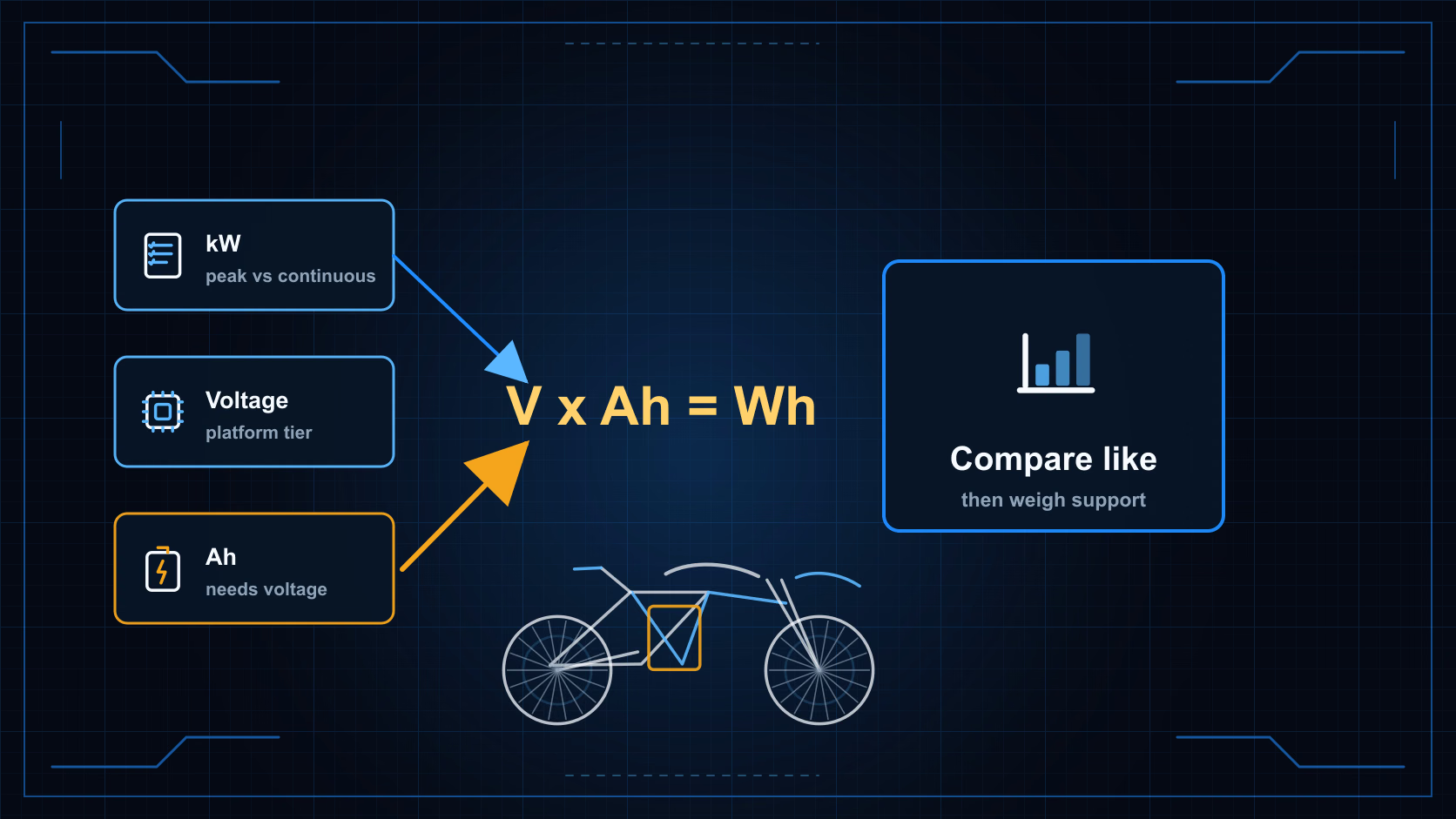
This is the number most buyers get wrong. Amp-hours (Ah) are meaningless on their own because they ignore voltage. The real measure is watt-hours (Wh):
> Wh = Voltage × Ah
Watt-hours tell you how much energy the pack actually holds — and therefore range. Example: a 60V × 40Ah pack = 2,400 Wh, which holds more energy than a 72V × 30Ah pack = 2,160 Wh, even though "30Ah" and "72V" sound bigger. Always compare Wh to Wh. If a listing only gives Ah, multiply by the voltage before you compare.
More Wh generally means more range — but claimed range is optimistic, so read range explained for how to estimate the real number.
Torque: instant pulling power
Torque (Nm or lb-ft) is pulling force — how hard the bike lunges from a stop or up a hill. Electric motors deliver it instantly, which is why even modest e-motos feel punchy. It's a useful number for climbing and low-speed grunt, but like power, more isn't automatically better for your riding.
Top speed and weight: read them honestly
- Top speed depends on gearing as much as power, and claimed figures run optimistic. A bike geared for explosive drive can show a lower top speed than a less powerful bike geared for pace — see how fast do they really go.
- Weight is the spec that decides manageability and confidence, especially for smaller and newer riders — and it's often buried. A lighter bike is easier to ride, pick up, and transport; see how much they weigh.
The numbers a spec sheet won't show
The spec sheet is only half the story. It won't tell you about support, parts availability, resale, build quality, or real-world reliability — the things that decide what a bike is actually worth to own. A bigger number from an unsupported brand can be a worse buy than a smaller number from a proven one.
That gap is exactly why the VoltRipper Score exists: it turns the raw specs and the things specs miss (value, support, versatility, ergonomics) into one honest number, so you don't have to reverse-engineer it.
The bottom line
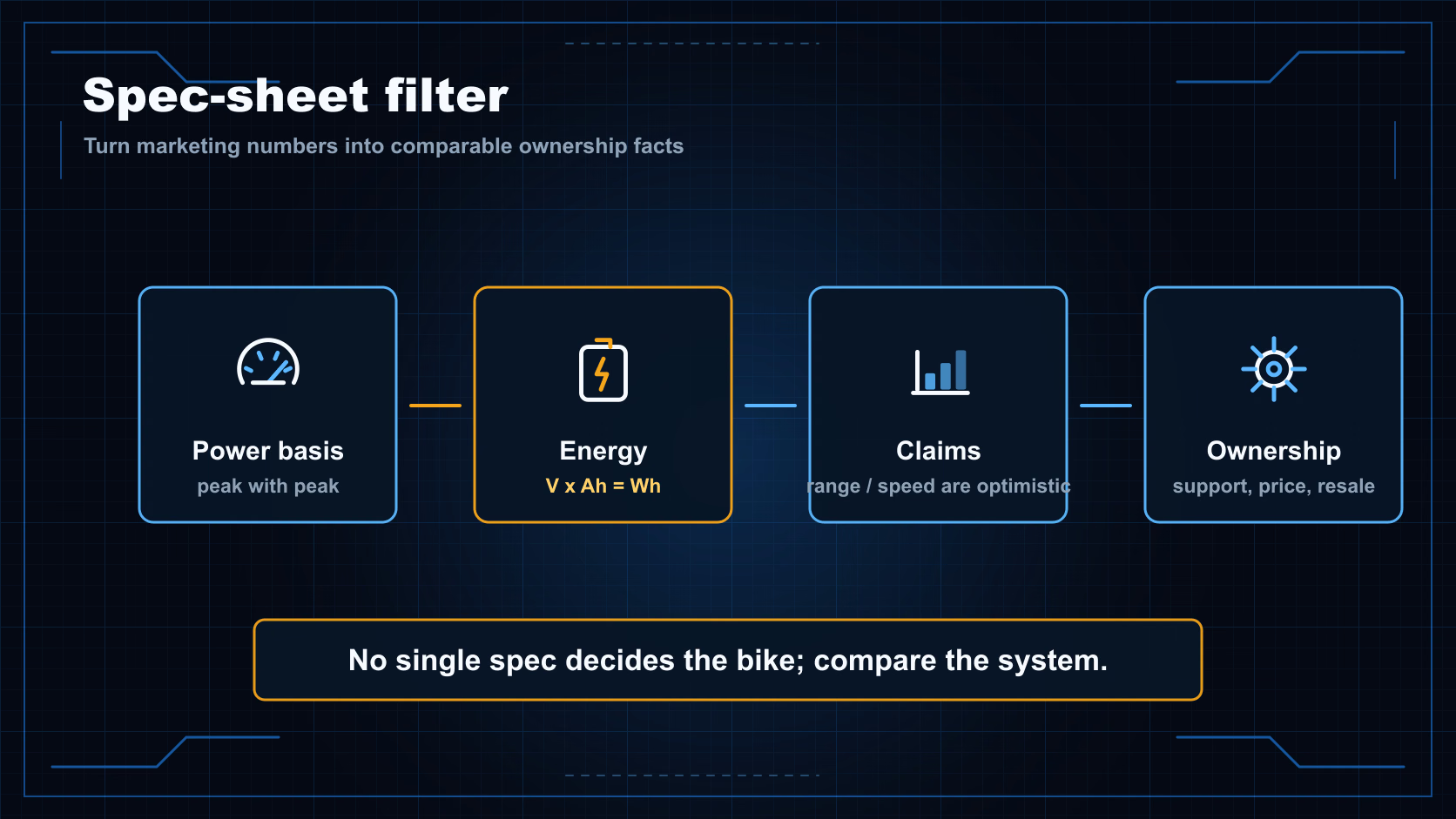
To read a spec sheet honestly: compare peak-to-peak power, watt-hours (not Ah), and real-world range and speed — then weigh it all against weight, support, resale, and price. Do that and no amount of marketing can make a weaker bike look like the better buy. Want the comparison done for you? Every bike's numbers feed the VoltRipper Score, and the Find Your Ride configurator matches the right spec to how you actually ride.
VoltRipper is independent — our specs come from verified manufacturer data and our Score is transparent, not commission-driven. Unit conversions here are approximate for explanation; always check a bike's official figures. Affiliate disclosure is included on monetized pages, and we're spec-verified/data-driven rather than hands-on until first-hand testing exists.
FAQ
What does kW mean on an electric dirt bike?
Kilowatts (kW) measure power - roughly, how hard the bike can accelerate. 1 kW is about 1.34 horsepower. But watch for peak vs continuous ratings: peak kW is a short burst, continuous is what the bike can sustain, and marketing usually quotes the bigger peak number. More kW means more acceleration, not automatically a better bike - a 10 kW Sur-Ron Light Bee X is plenty for most trail riding, while 60 kW is full race-motorcycle territory.
Is a higher voltage electric dirt bike better?
Higher voltage (say 72V or 97V versus 48V or 60V) generally means more performance headroom - it lets the system move more power with less heat and current, which is why faster bikes tend to run higher voltage. But voltage alone doesn't decide the bike; a well-sorted 60V bike can out-ride a poorly-built 72V one. Treat voltage as a sign of the platform's performance tier, not a score by itself.
What's the difference between Ah and Wh on a battery?
Amp-hours (Ah) alone are meaningless for comparing bikes at different voltages - you need watt-hours (Wh), which is voltage multiplied by Ah. Wh is the real measure of how much energy the pack holds, and therefore of range. A 60V 40Ah pack (2,400 Wh) holds more energy than a 72V 30Ah pack (2,160 Wh), even though the second sounds bigger on Ah. Always compare Wh, not Ah.
How do I compare two electric dirt bikes fairly?
Compare like-for-like: peak power vs peak power (or continuous vs continuous), watt-hours vs watt-hours (not Ah), and real-world range and speed rather than the claimed spec-sheet figures, which run optimistic. Then weigh the numbers against weight, support, resale, and price - the things a spec sheet doesn't show. That's exactly what the VoltRipper Score does, so you don't have to reverse-engineer it yourself.
Sources
Specification sources
- Sur-Ron Light Bee XATV Wholesale Outlet - 2026 Sur-Ron Light Bee X (72V/35Ah, 10 kW), $4,699 from $4,999Checked
- Sur-Ron Ultra BeeVoro Motors — Surron Ultra Bee HP SW 24.5kW 74V 60AhChecked
- Stark Varg MX 1.2Stark Future — Varg MXChecked