The verdict
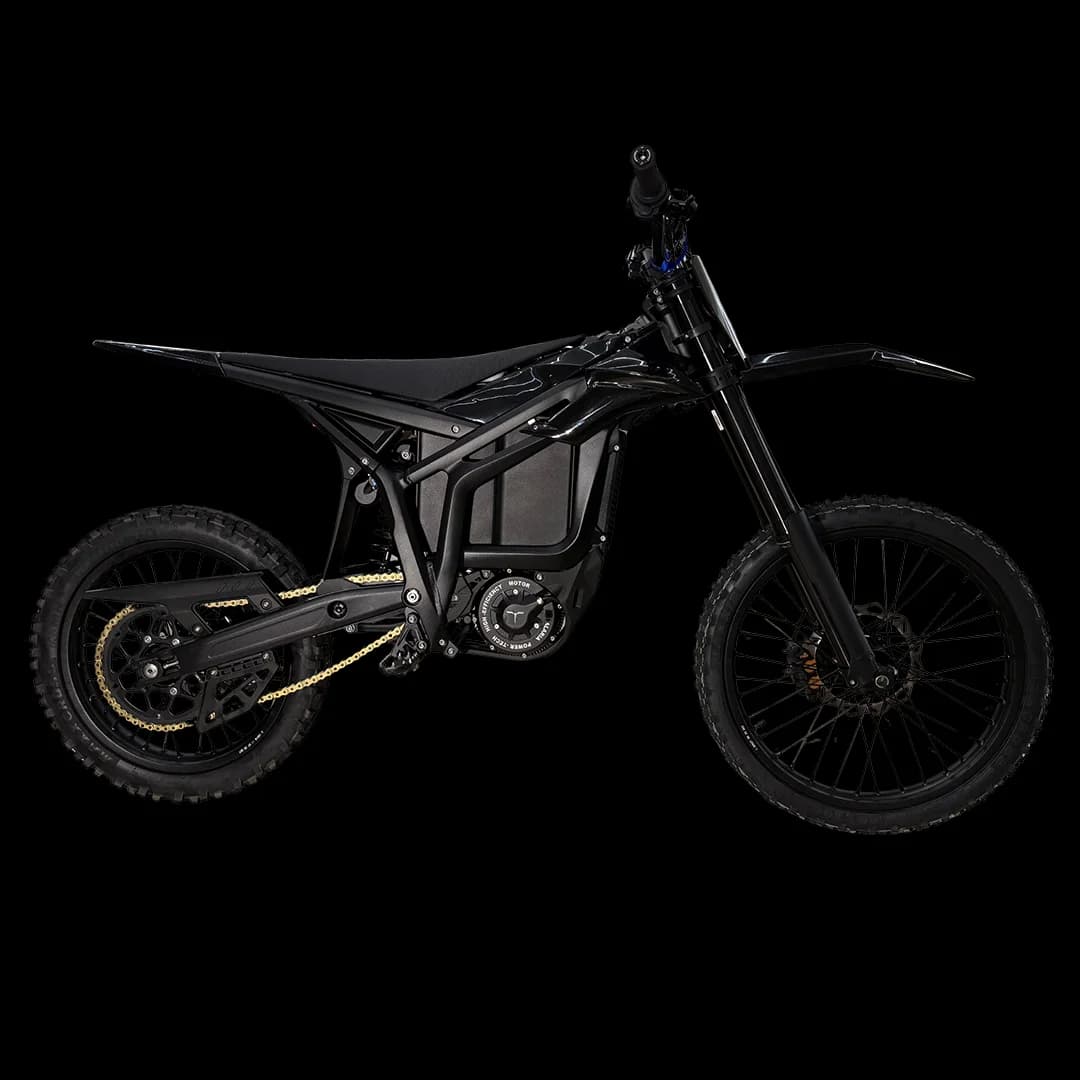
The Talaria Komodo is the bike that moved Talaria above the Sting family and into Sur-Ron Ultra Bee territory. It earns a VoltRipper Score of 91/100 on a serious spec sheet — 32 kW peak, a 97.2V / ~4.4 kWh pack, 754 N·m of wheel torque, full-size 21/18-inch wheels, full suspension, and a 65 mph top speed — for a $5,999 dealer price that undercuts the Ultra Bee by $500. The hardware is the story here; what holds the Score just below the top tier is honest: it's heavy at ~216 lb, its real-world range is unverified behind a low-speed claim, and the US listing is off-road only. Buy it if you want Talaria's top peak-power full-size value and you're an experienced rider comfortable with a newer platform.
Who it's for — and who should skip it
Buy it if you want the most powerful Talaria made, you value full-size 21/18 wheels and real suspension over a compact Sting chassis, you're cross-shopping the Sur-Ron Ultra Bee, or you are a heavier rider — its 353 lb max load is the highest we track, and it is one of only three bikes we track that pair a 300 lb-plus rating with 10 kW or more. Experienced riders only.
Skip it if you are a beginner (this is an expert-level bike), you want the lightest, most flickable trail bike, you need proven long-term parts depth and resale today, you need a street-legal machine as delivered, or you prioritize verified long range.
What it actually is: Talaria's move upmarket
For years Talaria owned the value end of the class with the Sting line — capable, well-priced, but not a full-size Ultra Bee rival. The Komodo changes that. It runs a 97.2V, 45Ah (≈4.4 kWh) pack feeding a 32 kW peak motor with 754 N·m of wheel torque, rides on full-size 21-inch front / 18-inch rear wheels with full suspension and dual hydraulic brakes, and carries four ride modes plus multi-level regen and reverse. At 216 lb, it's a substantially bigger, more motorcycle-like machine than a Sting MX5 Pro — closer in stature and intent to the Sur-Ron Ultra Bee it's clearly aimed at.
That's the point: the Komodo is Talaria answering the Ultra Bee directly, with more peak power and more voltage for $500 less. Even with the Dragon now adding a bigger-battery premium lane, the Komodo remains Talaria's peak-power value play.
The spec story: power and torque, at a weight cost
The Komodo's headline numbers are legitimately strong. 32 kW peak is more than the Ultra Bee's 24.5 kW and far beyond the Sting MX5 Pro's 13.4 kW; the 97.2V system is higher-voltage than either; and 754 N·m of wheel torque is a big, trail-friendly number. The 21/18 wheels are the real tell — this is a full-size enduro layout, not a compact play-bike, so it carries speed over rough terrain and rolls obstacles a smaller-wheeled Sting can't.
The trade-off is mass. At ~216 lb the Komodo is heavier than an Ultra Bee (~195 lb) and far heavier than a Light Bee-class Sting — which matters in tight, technical terrain and when you're picking it up. This is a bike for a rider who wants big-bike capability and grunt, not the lightest, flickable feel.
The spec nobody else publishes: 353 lb
Talaria publishes a max load of 160 kg — 353 lb for the Komodo. That is the highest rider rating in our entire catalog, above the GT73 and the Segway Xaber 300 at 330 lb, and far above the 220 lb that every Sur-Ron and every other Talaria Sting publishes.
Pair it with 32 kW and it makes the Komodo a genuinely unusual machine: the only bike we track that combines a rating that high with power like that. A 250 lb rider in full gear is over the published limit of a Light Bee X, an Ultra Bee and a Sting MX5 Pro — and comfortably inside this one.
Two caveats worth stating. It is 216 lb of motorcycle, so a heavier rider is also managing a heavier bike, and picking it up off a trail is real work. And rider capacity is a manufacturer design limit covering frame, suspension and brakes — treat it as a ceiling, not a target. We sourced the figure from Talaria's own regional specification table and confirmed it against a US dealer listing the same 160 kg. See electric dirt bike weight limits for the full published field.
Range reality
Talaria quotes 71.5 miles, but that's a low-speed/eco claim, not a number to plan a hard trail loop around. The ~4.4 kWh pack is genuinely large, but a 32 kW bike ridden for performance drains it quickly. Rather than guess a real-world figure, we leave it unverified until owner or instrumented data exists — consistent with how we treat every low-speed range claim in the class. The honest planning takeaway: it's a large battery, but treat 71.5 miles as a best-case ceiling, not a trail-range promise.
Street-legal reality
The US-market Komodo we score is off-road only — a pure off-highway machine with no factory DOT lighting. A homologated L3e street trim (lighting, mirrors, DOT tires) exists in some markets, but don't assume it's the US-delivered bike — confirm the exact trim with the dealer before counting on any road use. Treat it as a trail and private-land machine, and check our street-legal guide and your state's rules first.
A buyer beware on where you shop
The Komodo is a hot, in-demand release, and Talaria's popularity has spawned a wave of fake and unauthorized `*.us.com`-style reseller sites. Buy from a legitimate, established dealer, confirm pricing and the exact trim, and treat any too-good-to-be-true listing with suspicion. Our $5,999 figure reflects a current, established dealer listing — verify the out-the-door price and trim before you commit. (New to the fake-storefront problem? See how to spot a fake Talaria site.)
Where it wins, where it costs you
Wins: the most peak power and highest voltage in the Talaria lineup; a big ~4.4 kWh pack; 754 N·m of torque; genuine full-size 21/18 enduro geometry with full suspension; and a $5,999 price that undercuts the Ultra Bee.
Costs you: significant weight (~216 lb); an unverified real-world range behind a low-speed claim; off-road-only US status; and — as a newer full-size platform — a much thinner owner history, aftermarket, and resale record than the Sur-Ron it targets. Those are the honest reasons a 32 kW bike lands at 91 rather than in the top tier.
Komodo vs Sur-Ron Ultra Bee
The Komodo wins the spec sheet — more peak power, higher voltage, a higher top speed, and $500 less. It still trails the Sur-Ron Ultra Bee on our board, 91 to 94, because the things a spec sheet doesn't show — Sur-Ron's aftermarket, dealer network, resale and lighter chassis — outweigh a hardware lead over years of ownership.
Full head-to-head: Talaria Komodo vs Sur-Ron Ultra Bee → · vs the XE Pro R · vs the Dragon
Compared with
Every head-to-head we have published on this bike:
- Arctic Leopard XE Pro S vs Talaria Komodo
- Dust Moto Hightail vs Talaria Komodo
- Talaria Dragon vs Talaria Komodo
- Talaria Komodo vs Arctic Leopard XE Pro R
- Talaria Komodo vs Segway Xaber 300
- Talaria Komodo vs Sur-Ron Storm Bee
- Talaria Komodo vs Sur-Ron Ultra Bee
- Talaria MX5 Pro vs Talaria Komodo
Go deeper on the Talaria Komodo:
Bottom line
The Talaria Komodo is the brand's top peak-power value play — a genuine full-size enduro with big power, big torque, and 21/18 geometry, priced to undercut the Sur-Ron Ultra Bee. Its 91 Score reflects exactly that balance: outstanding hardware weighed against real weight, an unverified range claim, off-road-only status, and the unproven track record of a newer full-size platform. If you want Talaria's most peak power for the money and you ride at a level that can use it, it's a compelling — and honestly cheaper — alternative to the class benchmark. Just buy it for what it verifiably is, and from a dealer you can trust.
VoltRipper is spec-verified and data-driven — we do not claim hands-on testing of this bike. Specs and prices are cross-checked against the sources listed above and re-verified regularly; real-world figures we can't verify are left unstated rather than guessed. Affiliate disclosure is included on monetized pages.
FAQ
Is the Talaria Komodo worth it?
If you want Talaria's top peak-power full-size value and 21/18 enduro geometry, yes — the Komodo is a genuine step above the Sting family: 32 kW peak, a 97.2V / ~4.4 kWh pack, 754 N·m of torque, and a 65 mph top speed for $5,999 (VoltRipper Score 91). The honest catches are weight (~216 lb, much heavier than a Sting or Light Bee), an unverified real-world range behind the 71.5-mile low-speed claim, and a US listing that is off-road only. If you want the newer big-battery Talaria instead, the Dragon is still a prototype on pre-order; if you want value and peak power, the Komodo is the pick.
Talaria Komodo vs Sur-Ron Ultra Bee — which should you buy?
They're the two bikes to cross-shop in the ~$6,000 flagship class. The Komodo is the spec-forward pick — more peak power (32 vs 24.5 kW), higher voltage (97.2 vs 74V), full-size 21/18 wheels, and $500 less. The Ultra Bee leads on our board, 94 to 91: the Komodo's spec-sheet lead is outweighed by Sur-Ron's decade-deep aftermarket, dealer network, resale, and lighter weight (~195 vs 216 lb) over years of ownership. Buy the Komodo for the hardware and the Talaria badge; buy the Ultra Bee for the ecosystem and resale.
Is the Talaria Komodo street legal?
The US-market Komodo we score is off-road only — no factory DOT lighting and no clean conversion path in most states. A street-homologated L3e trim (lighting, mirrors, DOT tires) exists in some markets, but do not assume it's the US-delivered bike; confirm the exact trim with the dealer. Treat the Komodo as a trail and private-land machine, and check our street-legal guide and your state's rules before assuming any road use.
What's the real range of the Talaria Komodo?
Talaria's 71.5-mile figure is a low-speed/eco claim, not a hard-trail number — so plan around a realistic figure instead. The ~4.4 kWh pack is genuinely large, but a 32 kW bike ridden for performance spends energy fast. We leave the real-world range unverified until owner or instrumented data exists, rather than guessing. If long range matters most, prioritize a bigger battery and a lighter bike.