Tracked price checks
Bikes in this guide
Sur-Ron
Light Bee X
Enormous aftermarket and parts ecosystem — the most-supported e-dirt-bike platform
Trade-off: Advertised range collapses at speed — plan for real-world miles well under the claim
We may earn a commission if you buy through this link, at no extra cost to you.
Check price at ATV Wholesale OutletTalaria
Sting R MX4
Bigger 2,700 Wh (60V/45Ah) LG-cell pack than a stock Sur-Ron — more usable range
Trade-off: Ships factory-limited to 20 mph — needs derestriction to reach its ~40+ mph potential
We may earn a commission if you buy through this link, at no extra cost to you.
Check price at Luna CycleTalaria
Komodo
32 kW peak output, 65 mph capability, and a 97.2V/45Ah pack make it Talaria's step above the Sting MX5 Pro
Trade-off: Current US dealer listing is off-road only; the L3e street trim should not be assumed for US buyers
We may earn a commission if you buy through this link, at no extra cost to you.
Check price at Ronster RidesTalaria
Dragon
28 kW peak output, 10 kW nominal power, and a 5.2 kWh pack make it Talaria's premium big-battery full-size entry
Trade-off: Current credible source material does not confirm a US ship date, so real owner range and support history are not established
We may earn a commission if you buy through this link, at no extra cost to you.
Check price at Talaria CanadaSur-Ron
Ultra Bee
Big 4.4 kWh (74V/60Ah) pack, ~24.5 kW HP listings, and a 59 mph top end — a real step up from the Light Bee
Trade-off: Heavier (~195 lb) and more bike than a beginner needs
We may earn a commission if you buy through this link, at no extra cost to you.
Check price at Boca ScootersThe short answer
For most riders, the Sur-Ron Light Bee X is the safer pick — it's lighter, faster out of the box, and sits on the largest parts-and-community ecosystem in the segment — though you now pay $399 more for it than for the Sting R MX4. It earns a VoltRipper Score of 89/100 to the Talaria Sting R MX4's 87/100. The MX4 is sold out at both US sellers we track as of 2026-09-14. For now, the Talaria you can order in this tier is the Sting MX5 Pro (Score 89, $4,990).
But that doesn't make Talaria the loser. The Sting gives you a bigger battery and a more motorcycle-like ride, and it's the better buy if those things matter to you more than aftermarket depth. Neither bike is universally "better" — this is a fit decision, and below we make it for you by rider type.
Why it's always Sur-Ron vs Talaria
These two brands define the light electric-dirt-bike class. Sur-Ron created the category with the Light Bee; Talaria arrived as the most credible challenger, and the two have been cross-shopped against each other ever since. Almost everyone deciding on a first serious e-dirt-bike ends up here — and most of the "reviews" comparing them are published by shops that sell both, so they rarely pick a side. We sell neither, so we will.
The core matchup: Light Bee X vs Sting R MX4
| Sur-Ron Light Bee X | Talaria Sting R MX4 | |
|---|---|---|
| VoltRipper Score | 89 | 87 |
| Price | $4,499 | $4,100 |
| Battery | 2,520 Wh (72V) | 2,700 Wh (60V) |
| Peak power | 10 kW | 8 kW |
| Top speed | 50 mph | 45 mph (ships limited to 20) |
| Weight | 130 lb | 145 lb |
| Real-world range | ~30 mi | ~28 mi |
| Availability | Limited | Sold out at both US sellers |
Head-to-head, factor by factor
Power & speed → Sur-Ron (vs the Sting R MX4) — but newer Talarias flip the spec sheet. The Light Bee X runs a 72V/10 kW system and does a genuine 50 mph out of the crate. The Sting R MX4 makes 8 kW and tops out around 45 mph — but it ships factory-limited to 20 mph and needs to be derestricted before you see its real speed. The update worth knowing: the 72V Sting MX5 Pro (13.4 kW, ~59 mph unlocked, ~$4,990) out-powers the Light Bee X in the same shopping tier, while the full-size Talaria Komodo pushes Talaria's top peak-power tier to 32 kW and 65 mph. The newer Talaria Dragon adds a 28 kW / 5.2 kWh / 70 mph big-battery option with ABS and traction control, but it stays caveated as an unconfirmed pre-order. Talaria now has the raw-power edge above the older Sting, if you'll accept younger platforms, factory limits on Sting models, and a thinner ecosystem than Sur-Ron's.
Battery & range → Talaria (slightly). The Sting's 2,700 Wh pack is a touch larger than the Light Bee's 2,520 Wh. On paper that's a Talaria win; in the real world both land around 25–35 miles, so it's a small edge. (Why claimed range and real range diverge is covered in our range guide.)
Weight & handling → Sur-Ron, with different characters. The Light Bee X is meaningfully lighter (130 vs about 145 lb) and feels more flickable — more "fast bicycle." The Talaria rides bigger and more moto-like thanks to its gearbox and multi-level regen. Which you prefer is personal, but the Sur-Ron has the weight edge.
Drivetrain → belt vs gearbox, a genuine philosophy split. This is the tangible difference most cross-shoppers miss, and it's the clearest reason the two bikes feel different. The Light Bee X uses a primary belt drive — light, quiet, and snappy, with instant throttle response and a simple belt service path. Its catch: hard riding can snap a belt, so it wants some vigilance and the occasional spare. The Sting uses a gearbox with gear oil — more robust against belt failures, with no primary belt to break in the middle of the woods. Its catch is the flip side: it adds a little weight and drag, and it needs periodic gear-oil changes (the first around 185 miles, then roughly every 3,100). Neither is "better": the belt is the lighter, more responsive, simpler setup; the gearbox is the more durable choice for demanding conditions. It's the mechanical root of the Sur-Ron-feels-like-a-fast-bicycle versus Talaria-feels-like-a-motorcycle split.
The factory speed limit → a real Talaria gotcha. This is the difference nobody selling the bike leads with: the Sting R MX4 is delivered throttled to 20 mph for compliance. Derestricting it is common and well-documented, but it's on you, it can affect warranty coverage, and it's an extra step the Sur-Ron simply doesn't require.
Aftermarket & support → Sur-Ron, decisively. This is the moat. Sur-Ron has the biggest parts catalog, the widest dealer network, and the largest, most active owner community in the class. Five years into ownership, that's what actually matters. The Score doesn't capture it, though: its support factor rates the two brands level, because both have strong parts availability, and the Light Bee X's two-point lead over the MX4 comes from value and versatility.
Price → Talaria, when you can get one. The Light Bee X ($4,499) is $399 more than the Sting R MX4 ($4,100). The price row used to be a wash; it is not one any more, and anyone treating these two as the same money is working from last year's numbers. The catch is stock: the MX4 is sold out at both US sellers we track as of 2026-09-14. The Sur-Ron earns its premium by being faster out of the box and better supported. The Sting counters with the bigger battery and the moto feel — a real pitch, just not the value pick.
Beyond the flagships: the full lineups
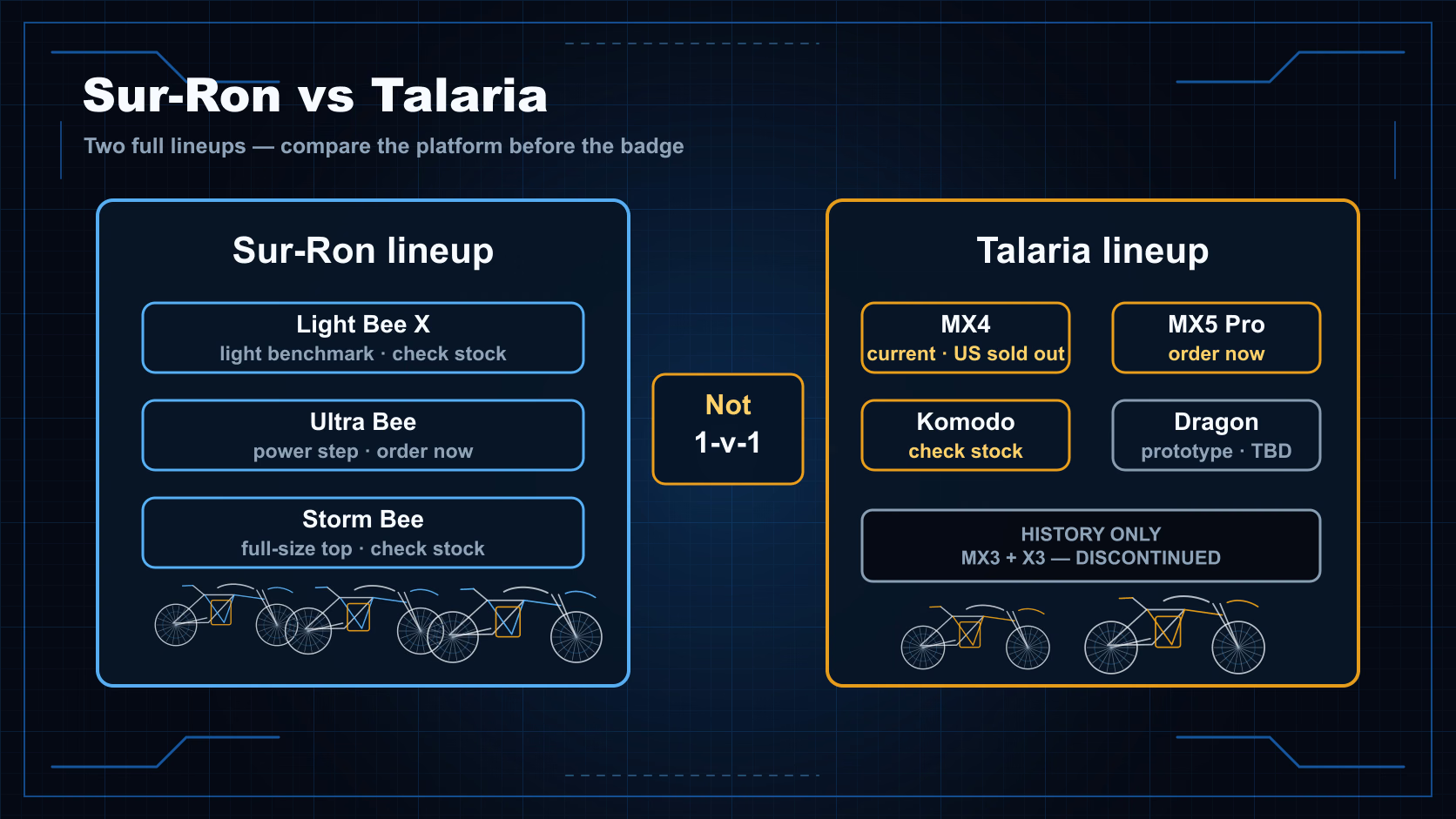
The head-to-head is closer once you look at each brand's whole range:
- Sur-Ron: Light Bee X ($4,499) → Ultra Bee ($6,499, Score 94) → Storm Bee ($8,999, Score 96). Sur-Ron owns the top end with two of the highest-scoring bikes on our board.
- Talaria: the Sting MX3 was the value entry until Talaria discontinued it. The current line runs Sting R MX4 (~$4,100) → the 72V Sting MX5 Pro ($4,990, Score 89), which out-specs the Light Bee X on paper → the full-size Talaria Komodo ($5,999, Score 91, 32 kW) for top peak-power value → and the Talaria Dragon ($6,949, Score 90, 28 kW / 5.2 kWh) for the big-battery premium tier. Talaria still undercuts Sur-Ron at the entry tier and now fields genuine challengers at both the mid and full-size tiers, though its cheapest current model, the MX4, is sold out at both US sellers we track as of 2026-09-14.
So the honest brand-level read: Talaria undercuts Sur-Ron at the entry tier and — with the MX5 Pro, Komodo, and Dragon — challenges it across the mid and full-size tiers; Sur-Ron still holds the benchmark on ecosystem and resale, and its Storm Bee owns the most proven top-end ownership story, but Talaria now has two serious Ultra Bee/Storm Bee cross-shops above the Sting line.
If your real decision is Talaria versus Segway rather than Talaria versus Sur-Ron, use our Talaria vs Segway comparison — the value math changes in Talaria's favor.
Which should you buy?
- Best all-around / first serious bike / value: Sur-Ron Light Bee X — the default recommendation. (Full review →)
- Want the Sting's slightly larger battery and a moto-style ride, and don't mind derestricting: Talaria Sting R MX4, once it is back in stock; it is sold out at both US sellers we track as of 2026-09-14. (Full review →)
- Want a Talaria you can order today: Talaria Sting MX5 Pro ($4,990, Score 89), which out-specs the Light Bee X on paper. (Full review →)
- Tightest budget: Rawrr Mantis X ($2,999, Score 83), in stock at Rawrr and the cheapest adult bike we score above 80 that you can buy new. The Talaria Sting MX3 held this slot until Talaria discontinued it. (Full review →)
- Ready to step up in power: Sur-Ron Ultra Bee (Score 94). (Full review →)
- Want a full-size Talaria: Komodo for peak-power value, or Dragon for the larger battery and newer rider aids with pre-order caveats.
Not sure which fits your size, experience, and riding? Run the Find Your Ride configurator.
The honest bottom line
Sur-Ron is the safer, better-supported default, and the Light Bee X scores higher than the Sting R MX4 — lighter, faster out of the box, and backed by the deepest ecosystem in the segment, though it costs $399 more. Talaria is a legitimate choice for riders who want a bigger battery and a more motorcycle-like ride. Its cheapest current model, the Sting R MX4, is sold out at both US sellers we track as of 2026-09-14, so the Talaria you can order today is the MX5 Pro. You won't be miserable on either brand — buy the one whose trade-offs match how you actually ride.
VoltRipper is independent — we don't sell Sur-Ron, Talaria, or any bike, and our Score is based on verified specs, not who pays us. Affiliate disclosure is included on monetized pages, and we're spec-verified/data-driven rather than hands-on until first-hand testing exists.
FAQ
Is a Sur-Ron or a Talaria faster?
Out of the box, the Sur-Ron Light Bee X is faster — 50 mph on tap versus the Talaria Sting R MX4's factory 20 mph limit. Once you derestrict the Talaria it reaches roughly 40+ mph, but the Sur-Ron is quicker with no changes required.
Which has better range, Sur-Ron or Talaria?
The Talaria Sting R MX4 carries a slightly larger battery (2,700 Wh vs the Light Bee X's 2,520 Wh), so on paper it edges the Sur-Ron. In real mixed riding both land around 25–35 miles — the gap is small, and how you ride matters far more than the brand.
Which is better supported — parts and service?
Sur-Ron, decisively. It has the largest aftermarket, dealer network, and rider community of any electric dirt bike, which makes parts, upgrades, and troubleshooting easier for years of ownership. Our Score doesn't separate the two brands on support, because both have strong parts availability; the Light Bee X's two-point lead over the Sting R MX4 comes from value and versatility instead.
Which needs less maintenance, a Sur-Ron or a Talaria?
They're maintained differently rather than one being clearly lower-effort — and the difference is the drivetrain. The Sur-Ron Light Bee X uses a primary belt drive: quiet, light, and simple, but hard riding can snap a belt, so it wants some vigilance. The Talaria Sting uses a gearbox with gear oil: more robust against belt failures, but it needs periodic gear-oil changes (the first around 185 miles, then roughly every 3,100). Both share chain final drives and similar general upkeep. Pick the belt for lightness and simplicity; pick the gearbox for durability in demanding conditions.
Are Sur-Ron and Talaria bikes street-legal?
No — both ship as off-road machines and are not street-legal as sold. Road use requires a lighting/registration kit and a state that permits the conversion, which is a narrow path. Check our street-legal guide and your state's rules first.
Which is better for a beginner?
The Sur-Ron Light Bee X is the friendlier starting point — it's flickable, needs no derestriction, and rides more like a light bike than a motorcycle. That said, both are genuinely powerful; a true novice should start in a low power mode regardless of brand.
Sources
Specification sources
- Sur-Ron Light Bee XATV Wholesale Outlet - 2026 Sur-Ron Light Bee X (72V/35Ah, 10 kW), $4,699 from $4,999Checked
- Talaria Sting R MX4Talaria Canada - Sting R MX4 specificationsChecked
- Talaria KomodoRonster Rides - Talaria Komodo dealer listingChecked
- Talaria DragonTalaria Canada - Dragon prototype specificationsChecked
- Sur-Ron Ultra BeeVoro Motors — Surron Ultra Bee HP SW 24.5kW 74V 60AhChecked