VoltRipper verdict
Pick: Heybike Villain
Cheapest and best are different questions on this page. The Villain is the best budget bike: an established brand with a real warranty and selectable 20/38/45 mph caps, which is a genuine learning tool rather than a spec-sheet line. If you want the lowest price on a real dirt-bike feel instead, the Tuttio Soleil01 is $300 less and 105 lb with a mid-drive and chain — accept a thinner support network for it.
Runner-up: Tuttio Soleil01
Trade-off: Budget build and thin dirt-bike aftermarket versus Sur-Ron, Talaria, or Segway
We may earn a commission if you buy through this link, at no extra cost to you. As an Amazon Associate I earn from qualifying purchases.
Tracked price checks
Bikes in this guide
Heybike
Villain
A genuine throttle-only dirt bike with no pedals and no e-bike pretense
Trade-off: Budget build and thin dirt-bike aftermarket versus Sur-Ron, Talaria, or Segway
We may earn a commission if you buy through this link, at no extra cost to you. As an Amazon Associate I earn from qualifying purchases.
Check Amazon priceValtinsu
EM-5 Pro
IPX6 water resistance and a CE-marked charger, which is more than most sub-$2,000 imports publish — though VALTINSU publishes no UL certification
Trade-off: Thin US aftermarket and support versus Sur-Ron, Talaria, or Segway
We may earn a commission if you buy through this link, at no extra cost to you. As an Amazon Associate I earn from qualifying purchases.
Check Amazon priceYozma
IN10
One of the cheapest ways into a real electric dirt bike — around $1,079 with full hydraulic brakes and suspension
Trade-off: No-name budget brand — minimal aftermarket, spare parts, or dealer/community support
We may earn a commission if you buy through this link, at no extra cost to you. As an Amazon Associate I earn from qualifying purchases.
Check Amazon priceTuttio
Soleil01
Very cheap entry point (about $990 for the base bike; accessory bundles cost more) with fat tires, full suspension, and hydraulic brakes
Trade-off: A fat-tire MINI bike (14"/12" wheels) — closer to an e-moped than a full-size dirt bike like a Sur-Ron
We may earn a commission if you buy through this link, at no extra cost to you. As an Amazon Associate I earn from qualifying purchases.
Check Amazon priceRiding Times
GT73
Big 25-inch fat tires and dual 48V batteries (1,747 Wh) make it more usable than most sub-$2.5k e-dirt-bikes
Trade-off: A generic model resold under many labels (Riding Times, Bootime, TST, ENGWE) — no single accountable brand or aftermarket
We may earn a commission if you buy through this link, at no extra cost to you. As an Amazon Associate I earn from qualifying purchases.
Check Amazon priceThe short answer
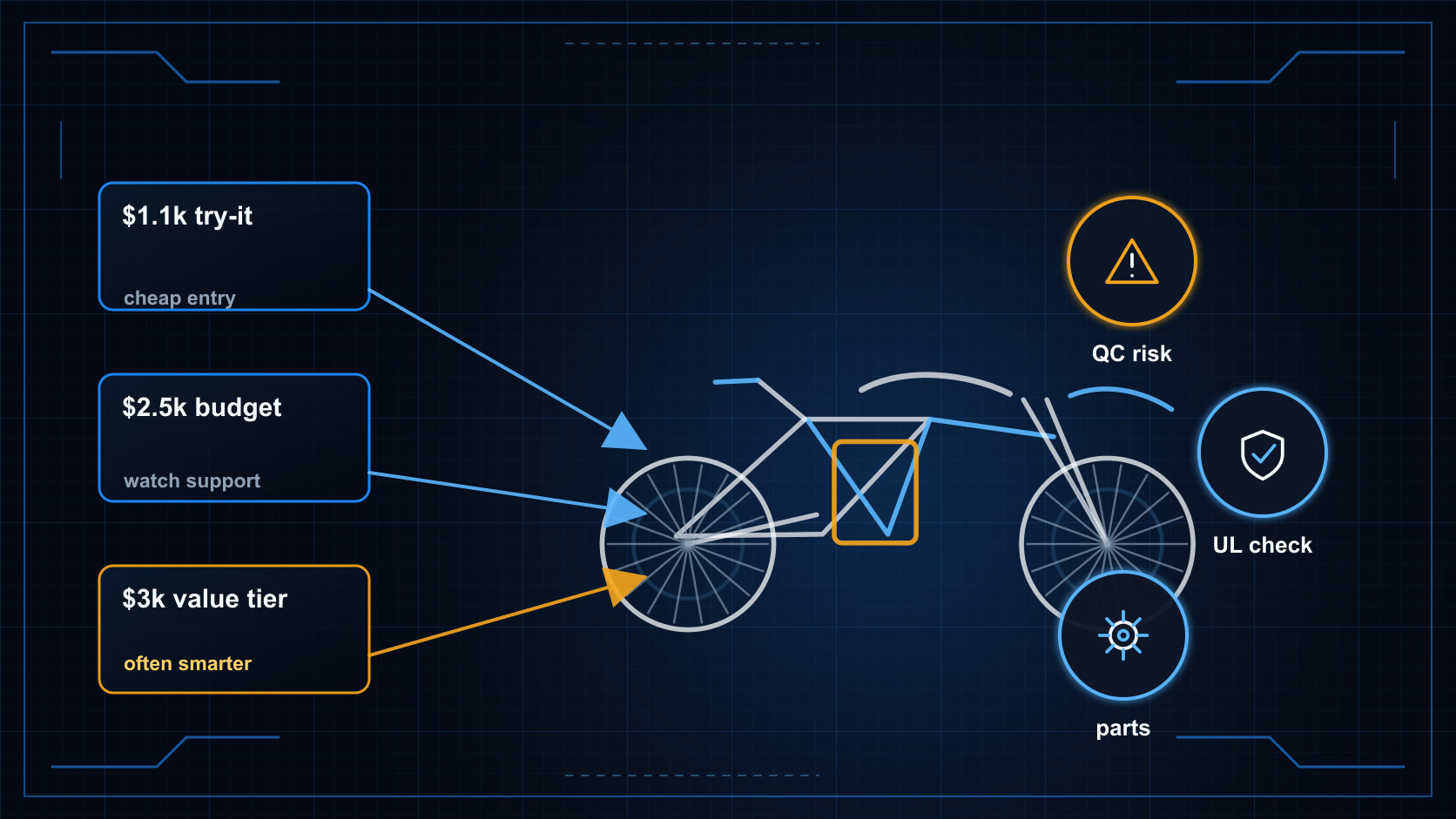
The best budget electric dirt bike depends on how honest you want the answer to be. For the cheapest genuine entry, the Tuttio Soleil01 (~$990) and Yozma IN10 (~$1,079) are real, capable budget mini-motos — and note the order, because the Tuttio undercut the Yozma in August 2026 after both makers moved their prices; a bit more gets you the highest-scored budget bikes — the established-brand Heybike Villain (~$1,499, speed caps + warranty) and the VALTINSU EM-5 Pro (~$1,699, the most spec-per-dollar in the tier). But the honest truth — the one sellers of no-name bikes won't tell you — is that the smartest "budget" buy is often to stretch to the ~$3,000 value tier for a bike you'll actually keep. Here's how to think about it, and the genuine picks if sub-$2,500 is the plan.
The honest truth about budget bikes
Cheap electric dirt bikes have gotten genuinely good for the money — a $1,200 bike can come with hydraulic brakes, full suspension, a removable battery, and a real ~40 mph. That's remarkable. But the trade-offs are just as real, and the "tested & ranked!" retailer listicles pushing their own house brands won't mention them:
- No-name brands, thin support. Little to no aftermarket, spotty parts, and no dealer network. If it breaks, you're mostly on your own.
- Optimistic, inconsistent specs. The same chassis is resold under many names with wildly different power claims. Treat the headline numbers as ceilings, not promises.
- Shorter usable life. Cheaper cells, weaker components, and looser QC mean a shorter runway than a quality bike (see how long they last).
None of that makes them a bad buy — it makes them a low-risk way to try the category, not a decade-long keeper.
The genuine budget picks
Ranked by our VoltRipper Score, the honest sub-$2,500 options:
| Pick | Bike | Score | Price | Why |
|---|---|---|---|---|
| Best budget pick | Heybike Villain | 78 | ~$1,499 | Established brand, selectable 20/38/45 mph speed caps + 12-mo warranty — the strongest budget bike |
| Most spec-per-dollar | VALTINSU EM-5 Pro | 75 | ~$1,699 | 52 mph, 5.6 kW, full suspension, IPX6, CE-marked charger |
| Best cheap entry | Yozma IN10 | 72 | ~$1,079 | Real mini-moto — hydraulic brakes, suspension, ~40 mph. Yozma publishes no battery certification |
| Lightest / most dirt-bike feel | Tuttio Soleil01 | 73 | ~$990 | 105 lb, mid-drive motor + chain — the most real-dirt-bike feel of the budget group |
| Biggest / most equipped | GT73 | 73 | ~$1,499 | Dual batteries, fat tires — but it's a pedal e-bike, not a true dirt bike |
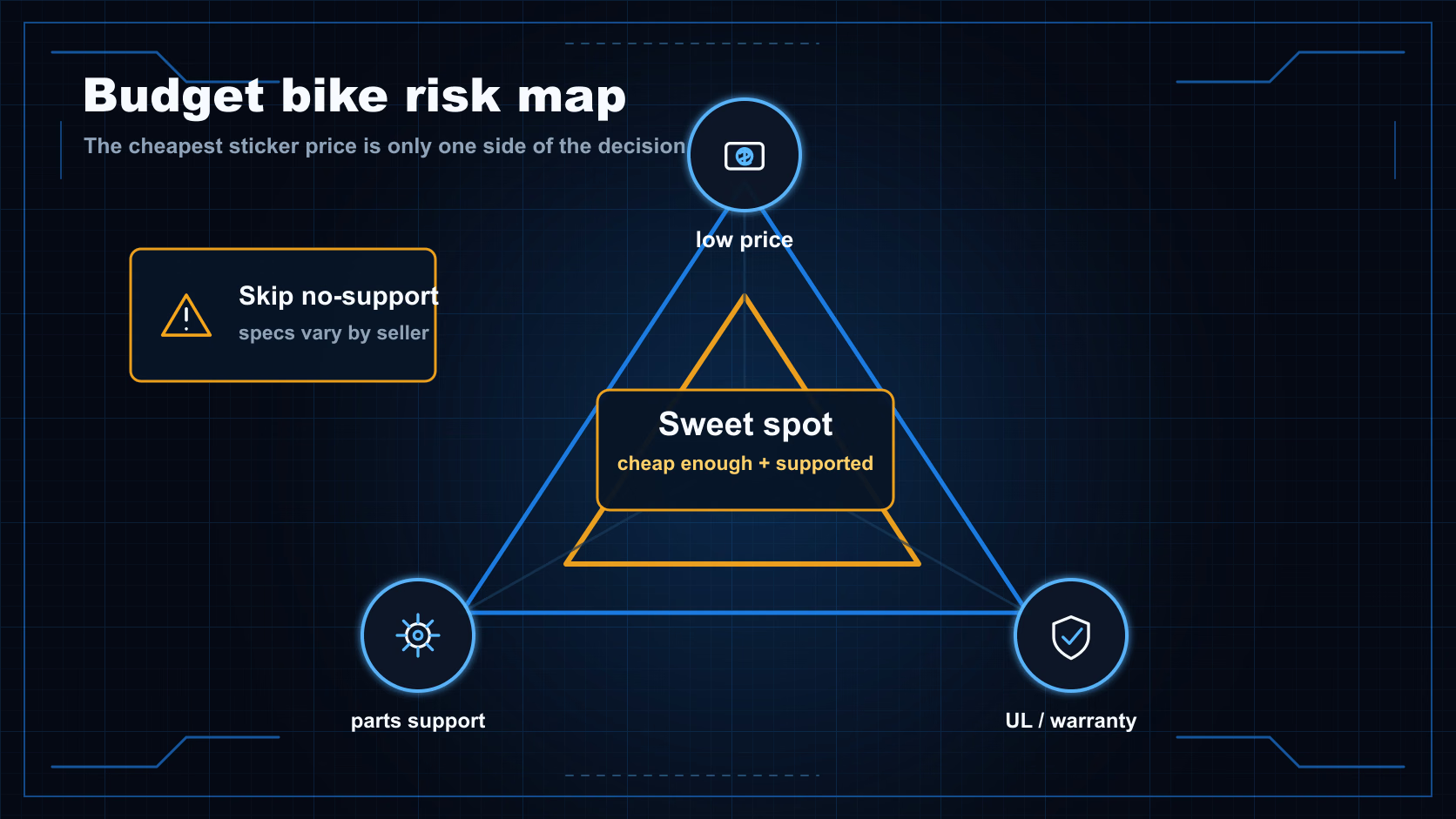
Skip anything cheaper with no findable support or warranty terms — below this tier you're buying a gamble, not a bargain.
The certification question, and the honest answer
Correction (2026-08-20): this section previously told you the VALTINSU EM-5 Pro carried a UL 2849 certification and recommended it on that basis. We re-checked VALTINSU's own product page and the dealer we cite, and neither publishes any UL claim. The claim was ours, not theirs, and we have withdrawn it. The pick has been re-framed around what the bike measurably is — a strong spec-per-dollar buy — and the "safest budget" slot has been removed rather than reassigned, because nothing in the tier earns it.
Here is what we found when we checked properly, and it is more useful than the claim it replaces.
We looked for a published safety certification on 19 bikes across the category in August 2026. Exactly one had it — and it is a sub-$700 lead-acid kids' ride-on, the Razor MX650, whose spec page names both the standard (UL 2272) and the lab that tested it. Not one adult Sur-Ron/Talaria-class machine published a device-level UL certification on its product page. Not the budget imports, and not the $9,000 flagships either. Razor's adult Stage2 M1 comes closest: its owner's manual, not its product page, names the lab behind its UL 2272 certification.
Why this is about to matter more than it did. Illinois' Micromobility Fire Safety Act took effect on 1 January 2026 and reaches this exact product class: it is now unlawful there to sell, lease or rent an electric off-highway motorcycle whose electrical system has not been tested to UL 2272, with lithium traction batteries required to meet UL 2271. New York City has had a comparable sale ban since 2023. A growing number of riding parks, landlords and insurers ask the same question.
What to do with that as a buyer. Ask the seller directly for the certificate — the standard number and the testing body, not a badge on a website. Be precise about what any answer covers, because these are all different things and sellers blur them:
- UL 2272 certifies the complete electrical system. This is what Illinois requires.
- UL 2271 certifies the traction battery.
- UL 2849 is the e-bike standard — a real certification, but not the one written for this class.
- "UL-certified cells" means the cells came from a certified supplier. The pack, BMS and charger are not covered.
- "UL listed components" and "meets UL standards" are marketing, not certification.
- UN 38.3 is a shipping test that nearly every lithium product passes. It is not a safety certification and should never be presented as one.
One caveat we owe you, having just been wrong in the other direction. No published claim is not proof of an uncertified device — certification is voluntary in most of the US, and manufacturers sometimes test to standards they never market. What we can say precisely is this: for most of this category, a buyer, a landlord or an insurer cannot find a certification claim to rely on, because the manufacturer does not make one. That is the seller's problem to answer, not yours to assume either way.
Budget — or spend up?
- Buy budget (~$1,200) if you're testing interest, on a genuinely tight budget, or buying for a smaller/newer rider, and you accept the no-name trade-offs.
- Spend up to the value tier (~$3,000) if you'll keep and ride it seriously. The Rawrr Mantis X at $2,999 is the value-tier bike we'd start with: full suspension, dual hydraulic brakes and a beginner rating, with more support than a budget bike can offer. It's the better long-term value. Talaria's value Stings, the X3 and the Sting MX3, are both discontinued. See our best under $4,000 picks and the Sur-Ron alternatives guide.
The bottom line
A good budget electric dirt bike is a low-risk ticket into the hobby — the Yozma IN10 and Tuttio Soleil01 are the genuine sub-$1,500 picks — as long as you go in clear-eyed about no-name support, optimistic specs, and the UL question. If you'll keep the bike, the honest money move is usually to stretch to the value tier. Not sure where your budget lands you? Our cost guide and Find Your Ride configurator sort it out.
VoltRipper is independent — our picks come from verified specs and the VoltRipper Score, not commissions, and we'll tell you when the smart move is to spend more (or less). Affiliate disclosure is included on monetized pages.
FAQ
What's the best budget electric dirt bike?
If you want the cheapest genuine entry, the Yozma IN10 (~$1,100–1,200, VoltRipper Score 72) is a legit budget mini-moto, and the Tuttio Soleil01 (~$990) is the lightest with a real mid-drive motor. But the honest 'best budget move' is often to stretch to the ~$3,000 value tier (the Rawrr Mantis X, $2,999) for a real, better-supported bike — these sub-$2k bikes are a low-risk way to try the hobby, not long-term keepers.
Are cheap electric dirt bikes any good?
For the price, some are surprisingly capable — hydraulic brakes, suspension, and ~40 mph for around $1,200. But they're no-name brands with optimistic, inconsistent specs, thin parts and support, and shorter lifespans. They're a genuinely fun, low-risk way to try electric off-road; they are not a Sur-Ron, and you shouldn't expect one.
What should I look for in a budget electric dirt bike?
Real hydraulic disc brakes, honest and consistent specs, a removable battery, and a seller with a genuine return and warranty policy. Certification is worth asking about — a growing number of riding parks and insurers want UL-certified electronics — but be aware that we checked every adult bike in our catalog in August 2026 and none of them publish a UL device certification, so treat any seller claiming one as something to verify rather than assume. Avoid the cheapest no-support listings and gray-market imports where the specs vary wildly and there's no recourse.
Should I buy a budget bike or save for a better one?
If you're testing interest, on a tight budget, or buying for a smaller rider, a ~$1,200 budget bike is a reasonable low-risk start. If you'll keep and ride it seriously, stretching to the ~$3,000 value tier (a Talaria Sting) gets you real quality, support, and resale — usually the better long-term value despite the higher sticker.
Sources
Editorial sources
- Heybike — Villain product page, now marketed as the V1; our budget pickChecked
- Tuttio — Soleil01 product page, including the configuration range our record had confused with the base bikeChecked
- Yozma — IN-10 product pageChecked
- VALTINSU — EM-5 Pro product page; its only certification claim covers the charger, not the bikeChecked
- Riding Times — GT73 product pageChecked
Specification sources
- Heybike VillainHeybike Sports - Villain official specificationsChecked
- Valtinsu EM-5 ProValtinsu official store - EM-5 Pro, $1,699 from $1,899, ships 1-3 business days (green variant sold out)Checked