Tracked price checks
Bikes in this guide
Sur-Ron
Light Bee X
Enormous aftermarket and parts ecosystem — the most-supported e-dirt-bike platform
Trade-off: Advertised range collapses at speed — plan for real-world miles well under the claim
We may earn a commission if you buy through this link, at no extra cost to you.
Check price at ATV Wholesale OutletArctic Leopard
XE Pro S Enduro
20 kW peak and 600 N.m through a direct-drive powertrain with no belt or jackshaft to service
Trade-off: Dealer spec sheets disagree with the manufacturer on battery, weight and travel - see reality checks
We may earn a commission if you buy through this link, at no extra cost to you.
Check price at REVRidesHiboy
DK1
Lithium (not SLA) — light 38 lb and a ~4.5 hr charge vs. lead-acid toys
Trade-off: Small 187 Wh pack — ~9 mi of real range
We may earn a commission if you buy through this link, at no extra cost to you. As an Amazon Associate I earn from qualifying purchases.
Check Amazon priceTalaria
Sting R MX4
Bigger 2,700 Wh (60V/45Ah) LG-cell pack than a stock Sur-Ron — more usable range
Trade-off: Ships factory-limited to 20 mph — needs derestriction to reach its ~40+ mph potential
We may earn a commission if you buy through this link, at no extra cost to you.
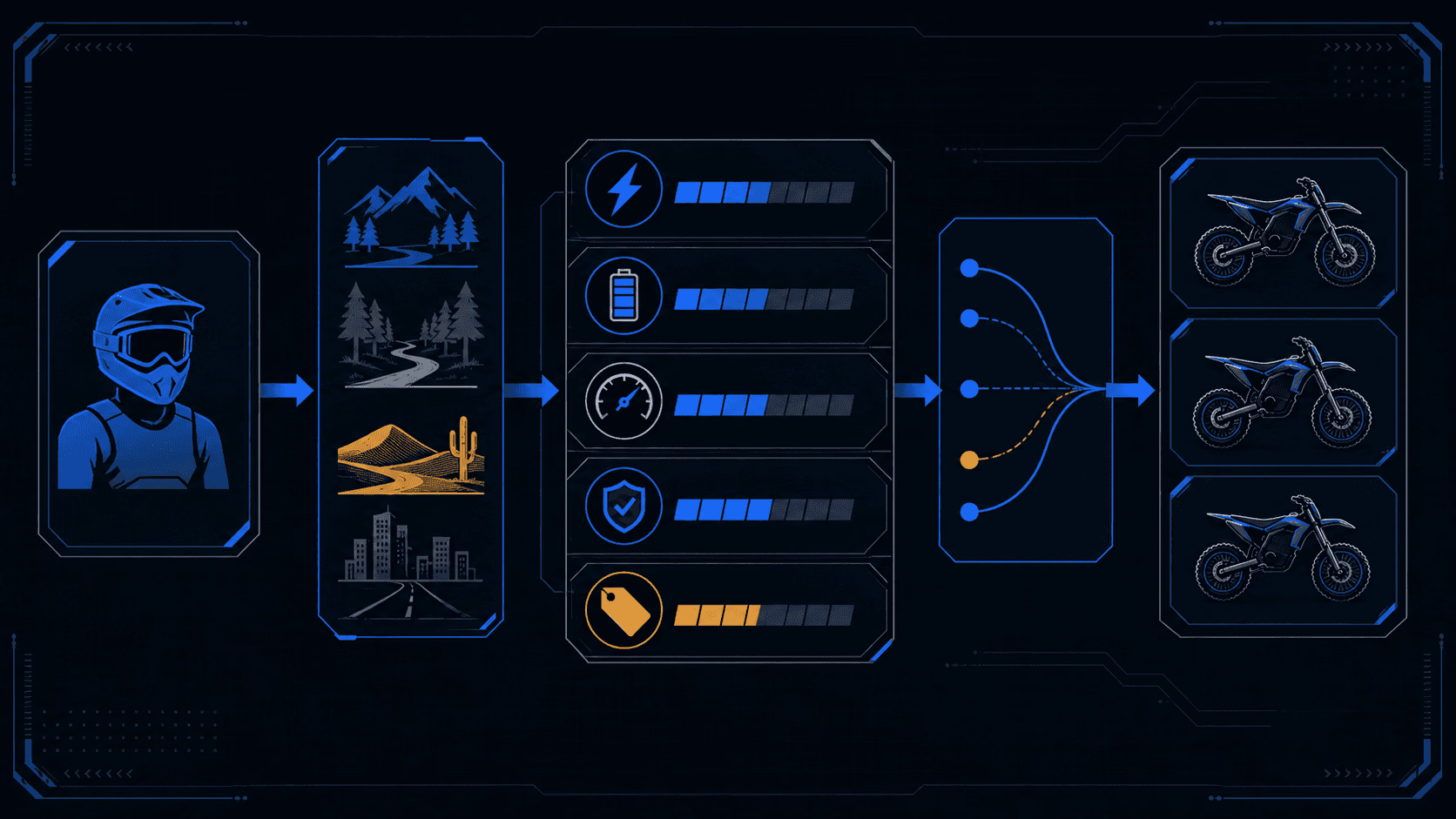
Check price at Luna CycleThe fastest way to choose wrong is to shop by top speed. The fastest way to choose right is to match the rider first, then weigh five factors: power, real range, weight, street-legality, and budget. This guide walks that framework using data from the bikes we track and the VoltRipper Score — or skip straight to the Find Your Ride configurator, which does it for you.
Step 1: Start with the rider, not the bike
Everything flows from who's riding. Pick the class first:
| Rider | Class | Typical seat / speed | Examples |
|---|---|---|---|
| Child ~3–8 | Kids | ~20–24 in / 14–20 mph | Hiboy DK1, STACYC |
| Youth ~8–14 | Youth | ~26–31 in / 20–30 mph | Greenger G2 / CRF-E2, Segway X160 |
| Teen / adult, trail | Trail | ~32–34 in / 45–65 mph | Sur-Ron Light Bee X, Talaria Sting MX5 Pro, Sting R MX4 |
| Experienced, max performance | Moto | full-size / 65–75 mph | Stark Varg, Sur-Ron Storm Bee |
| Commuter / mixed | Dual-sport | varies / street-capable | Onyx RCR |
Get this right and the shortlist shrinks from dozens to a handful.
Step 2: The five factors that decide the winner
1. Power — buy what you can grow into
Peak watts is the honest performance number. Kids' bikes are 250–650W; the trail benchmark (Sur-Ron Light Bee X) is ~10 kW peak; a Stark Varg is ~60 kW. More isn't better for a new rider — instant torque is a handful. Prioritize adjustable power modes so the bike grows with the skill.
One power nuance that matters: motor type. A mid-drive motor (Sur-Ron, Talaria, and most real e-motos) sends power through the chain — it climbs better and feels more like a genuine dirt bike. A hub motor (built into the wheel, common on cheap "moto-style" e-bikes like the GT73) is simpler and lower-maintenance but less capable on technical off-road terrain. If a real dirt-bike feel is the goal, favor mid-drive.
2. Real range — ignore the sticker
Manufacturers quote range at low, steady speed. Ridden hard, real range is 40–60% of the claim. A bike advertised at 40–75 miles typically delivers 25–35 real miles. Compare watt-hours (2,000–2,700 Wh is normal for the trail class) and check our claimed-vs-real reality check on each model page. If range is your priority, look at big packs like the Delfast Top 3.0 (3.4 kWh) or swappable-battery bikes.
3. Weight and fit — the crash factor
A rider needs to hold the bike up and control it. A 130 lb Sur-Ron is flickable and forgiving; a 280 lb Storm Bee is a lot of machine. Match seat height so the rider can touch the ground, and weight to their strength. (See how much electric dirt bikes weigh for the full weight-by-class breakdown.)
The fit test, because "can they touch the ground" is vaguer than it sounds. Measure the rider's inseam, not their height — two people the same height often differ by three inches in leg. Then compare it to the bike's seat height. You want to plant one foot flat for control at a stop, with some knee bend left when seated. Both feet flat is reassuring for a nervous beginner and costs you a little cornering room. Tiptoes on both sides means the first unexpected stop on loose ground goes badly.
A note on our own data. We publish a seat height for nearly every bike we track, and it is the number to use. Manufacturer "recommended rider height" ranges are rarer — mostly the consumer-direct brands publish them, because marketplace listings demand a fit spec. Where a bike has no published seat height, our configurator says so rather than guessing, and so should any seller you ask.
4. Street-legality — this narrows the field hard
Most electric dirt bikes are not street-legal (see our street-legal guide). If you need pavement, that eliminates the majority of the market up front — start with a dual-sport or check your state's rules before you fall for an off-road-only bike.
5. Budget — and the hidden cost of parts
Set a number, then factor parts availability. A cheaper bike with a thin supply chain costs more over its life. The Sur-Ron/Talaria ecosystem has the deepest aftermarket; newer brands are catching up but verify before you buy.
Step 3: Let the Score break ties
Once you have 2–4 candidates in the right class and budget, the VoltRipper Score ranks them on the same 100-point scale — power, range, chassis, value, support, ergonomics, and legality — so you're comparing apples to apples instead of marketing copy. The Find Your Ride configurator runs this automatically from your answers.
Quick recommendations by rider
- First bike for a young child: Hiboy DK1 (lithium, speed-limited) or a STACYC.
- Teen stepping up: Burromax TT750R or a Talaria Sting MX3.
- Adult, best all-round trail bike: Sur-Ron Light Bee X.
- Most performance per dollar: Rawrr Mantis X — check stock, it is constrained. The Arctic Leopard XF Pro held this slot until Arctic Leopard discontinued it.
- Experienced rider, max power: Stark Varg or Sur-Ron Storm Bee.
Bottom line
Match the rider to a class, weigh the five factors honestly, and let the Score settle the finalists. Do that and you'll skip the two most common mistakes — buying too much bike, and believing the range sticker. When you're ready, the configurator turns this framework into a scored shortlist in under a minute. Shopping for someone else? Our electric dirt bike gift guide layers on the gift-specific advice — matching the bike to the recipient, the safety gear to buy with it, and holiday shipping deadlines.
Before and after you buy:
- Are Electric Dirt Bikes Worth It?: The Honest Case For and Against
- 9 Electric Dirt Bike Buying Mistakes to Avoid: What We'd Tell a Friend
- Electric Dirt Bike CC Equivalent: There Isn't One — Here's What to Compare Instead
- New Electric Dirt Bike Setup: The First Things to Do
- How to Clean an Electric Dirt Bike: Wash It Without Wrecking It
Browse the whole catalog:
VoltRipper is reader-supported. When you buy through our links we may earn a commission at no extra cost to you — it never affects our rankings or the Score. See our disclosure.
FAQ
How much should I spend on an electric dirt bike?
Match spend to the rider. A young child is well served by a $250-600 bike (Razor MX350, Hiboy DK1). A teen or adult who wants real trail performance should budget $3,000-4,500 for the value tier (Arctic Leopard XF Pro, Rawrr Mantis X) or $4,500-6,500 for the benchmarks (Sur-Ron Light Bee X, Talaria Sting R MX4). Full-size race bikes run $8,000+.
What size electric dirt bike do I need?
Go by seat height and weight, not just age. Kids' bikes have ~20-24 inch seats; the adult trail class (Sur-Ron, Talaria) sits around 32-34 inches. A rider should be able to touch the ground comfortably and handle the bike's weight — a 130 lb Sur-Ron is manageable, a 280 lb Storm Bee is not a beginner's bike.
Is more power always better on an electric dirt bike?
No. Instant electric torque is a lot to manage, and an overpowered bike is intimidating and easier to crash for a new rider. Beginners are better on a bike with adjustable power modes and a moderate peak (a Sur-Ron Light Bee at ~10 kW, not a 60 kW Stark Varg). Buy the power you can grow into, not the biggest number.
Should I buy a Sur-Ron as my first electric dirt bike?
For an adult or older teen, yes — the Sur-Ron Light Bee X is the benchmark first serious bike: manageable weight, adjustable power, and by far the deepest parts and support ecosystem. If budget is tight, the Arctic Leopard XF Pro or Rawrr Mantis X deliver similar performance for less.
Sources
Editorial sources
Specification sources
- Sur-Ron Light Bee XATV Wholesale Outlet - 2026 Sur-Ron Light Bee X (72V/35Ah, 10 kW), $4,699 from $4,999Checked
- Arctic Leopard XE Pro S EnduroArctic Leopard - XE Pro S Enduro manufacturer specsChecked
- Hiboy DK1Hiboy — DK1Checked
- Talaria Sting R MX4Talaria Canada - Sting R MX4 specificationsChecked