Tracked price checks
Bikes in this guide
Sur-Ron
Light Bee X
Enormous aftermarket and parts ecosystem — the most-supported e-dirt-bike platform
Trade-off: Advertised range collapses at speed — plan for real-world miles well under the claim
We may earn a commission if you buy through this link, at no extra cost to you.
Check price at ATV Wholesale OutletSur-Ron
Ultra Bee
Big 4.4 kWh (74V/60Ah) pack, ~24.5 kW HP listings, and a 59 mph top end — a real step up from the Light Bee
Trade-off: Heavier (~195 lb) and more bike than a beginner needs
We may earn a commission if you buy through this link, at no extra cost to you.
Check price at Boca ScootersTalaria
Sting R MX4
Bigger 2,700 Wh (60V/45Ah) LG-cell pack than a stock Sur-Ron — more usable range
Trade-off: Ships factory-limited to 20 mph — needs derestriction to reach its ~40+ mph potential
We may earn a commission if you buy through this link, at no extra cost to you.
Check price at Luna CycleThe short answer
Yes — if you want to keep, ride, and modify the bike for years. A Sur-Ron is worth it not because it wins the spec sheet (in 2026, it often doesn't), but because it's the benchmark: the deepest aftermarket, the widest pool of used buyers, the biggest community, and the most proven platform in the electric dirt bike class. No — if you just want the cheapest way to have fun, in which case a budget bike or a Talaria gets you most of the way for less. Here's the honest breakdown.
What you're actually paying for
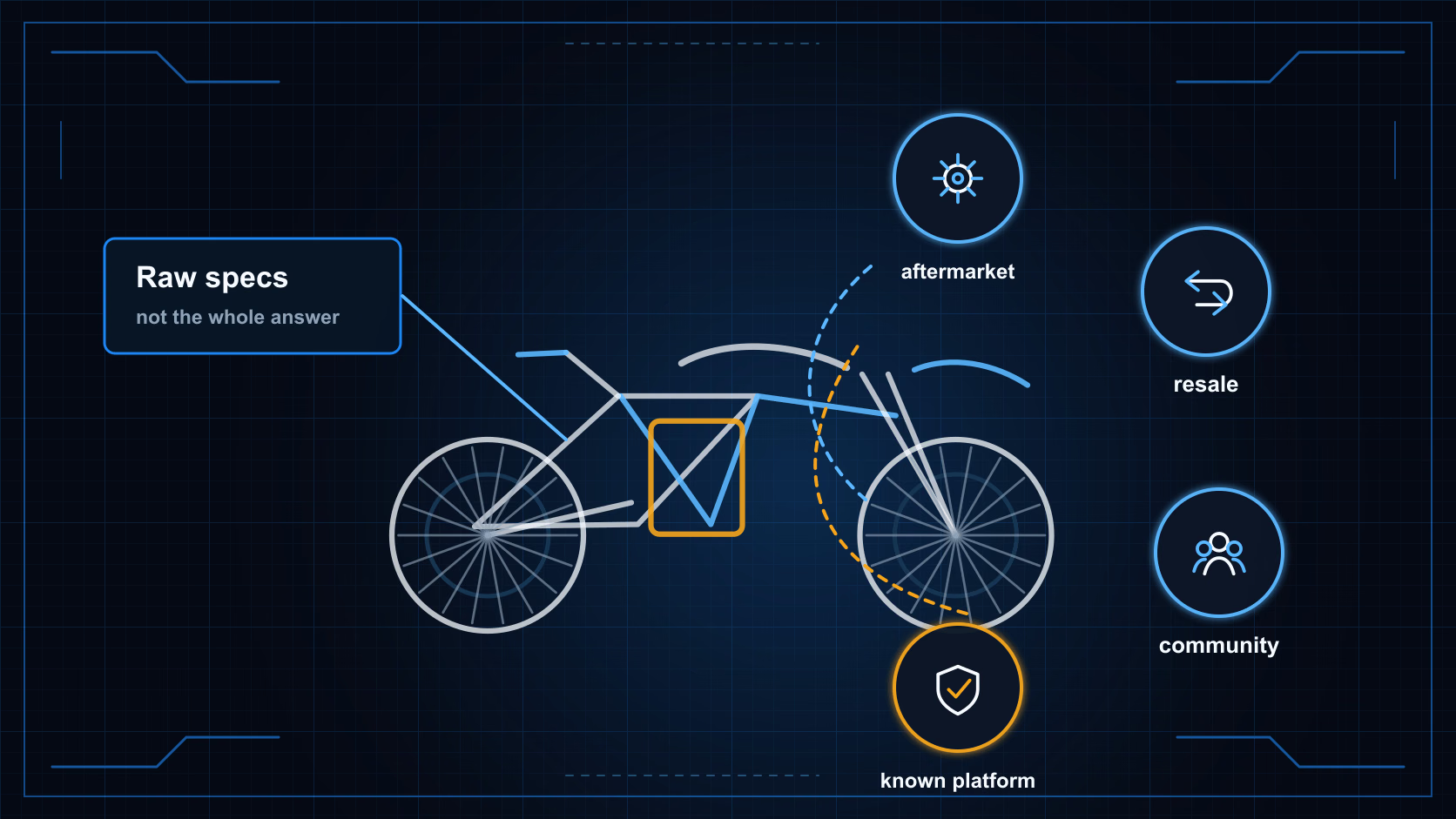
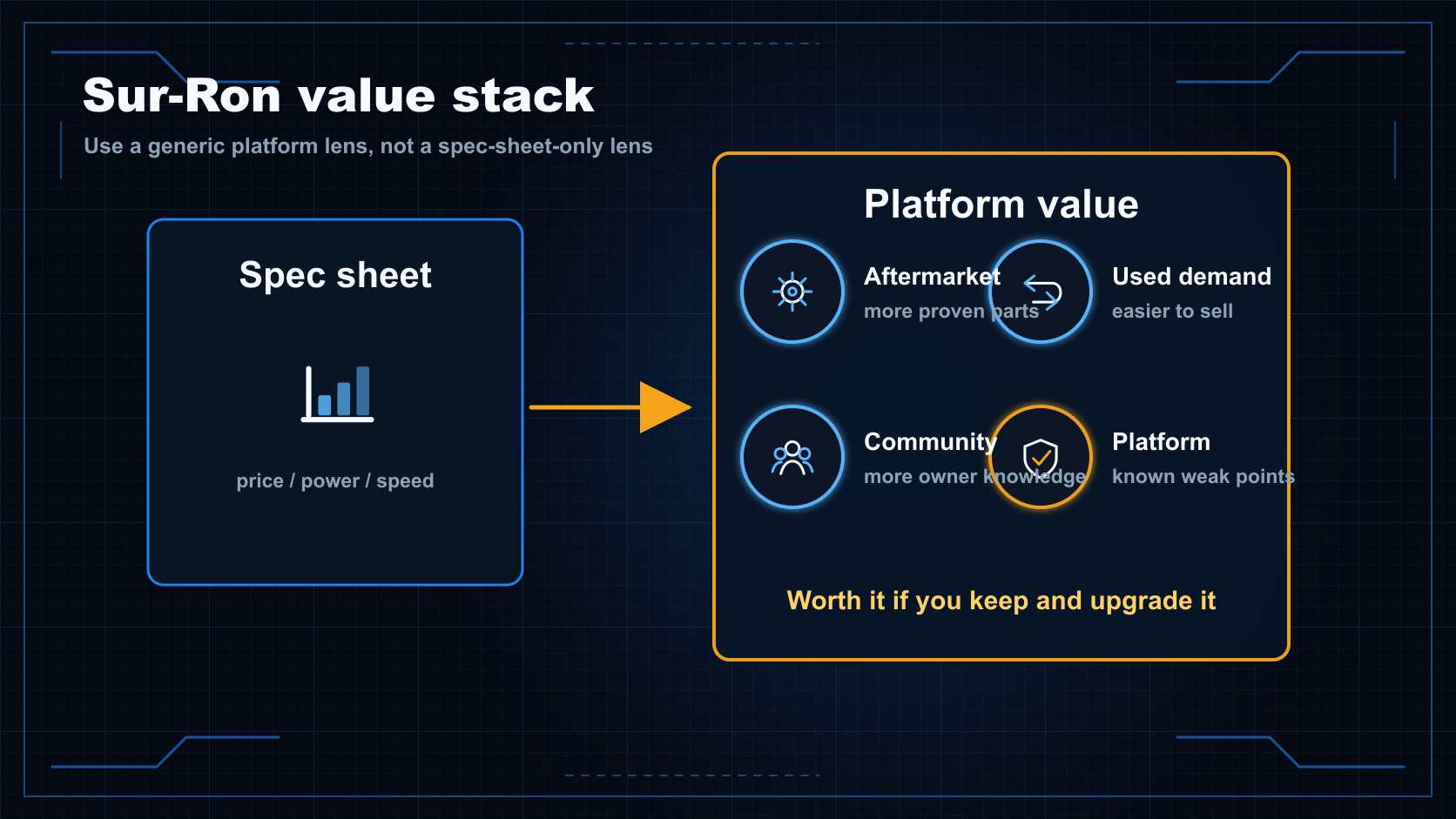
This is the part most "is it worth it" articles miss. A $4,499 Sur-Ron Light Bee X doesn't out-spec everything — a Rawrr Mantis X Pro makes more peak power for $600 less, and a $4,799 Apollo RFN Ares does too. What the Sur-Ron sells is the ecosystem:
- The deepest aftermarket in the class. Whatever you want to do — plusher suspension, more power, bigger battery, supermoto conversion — there's a proven part and a guide for it. See our upgrades guide.
- The easiest bike here to sell on. As the established benchmark, a used Sur-Ron has the widest pool of ready buyers, which is the part of resale you can actually count on (nobody in this class publishes the data needed to put a percentage on it) (see which bikes hold value & why).
- The biggest community and support base. More owners, more knowledge, more help when something breaks.
- A proven platform. Years of real-world use and iteration, versus a newer brand's unknowns.
You're buying a platform and a support network, not just a bike. That's the whole case.
Where it wins
- Longevity and modding. If you plan to own it for years and make it yours, nothing else in the class supports that as well.
- Resale. Sell it in three years and you'll get more back than you would from a no-name brand.
- Peace of mind. Proven reliability and a huge community mean fewer nasty surprises.
- The benchmark feel. It's the bike everything else is measured against for a reason — the fundamentals are dialed.
Where it doesn't
Being honest, because that's the point of this site:
- It's not the cheapest. Budget bikes like the Yozma IN10 get you riding for a quarter of the price.
- It's not the best raw value. A Talaria Sting MX3 matched the specs for ~$1,300 less until Talaria discontinued it in August 2026 — last stock now runs ~$3,700, so the gap is nearer $800 and shrinking. Among bikes still sold new, the Rawrr Mantis X Pro matches the Light Bee X's Score of 89 for $600 less.
- It's not the fastest or most powerful — and in 2026 the spec-per-dollar gap has only widened. The most direct example is the Talaria Sting MX5 Pro, a 72V Sting that out-specs the Light Bee X — more peak power, a bigger battery, a higher top speed — for about the same money (head-to-head). The Rawrr Mantis X Pro (~15 kW for $3,899 — half again the power for $501 less) and Arctic Leopard XF Pro (12 kW for ~$3,699) undercut it on price outright. Bigger numbers for less money than ever — which is exactly why the ecosystem, not the spec sheet, is what a Sur-Ron is really selling.
- It's not street-legal. Like the whole class, it's an off-road machine as sold (see our legality guide).
If your priority is lowest price or biggest spec-per-dollar, the Sur-Ron is not your bike.
Who should buy one
- Buy a Sur-Ron if you want a bike to keep and upgrade for years, you value resale and support, and you want the platform with the most proven parts and community. Start with the Light Bee X.
- Buy a Talaria instead if you want ~90% of the Sur-Ron for meaningfully less money and a strong (if slightly smaller) aftermarket — see Sur-Ron vs Talaria.
- Buy a budget bike (Yozma, etc.) instead if you just want to try the category cheaply or you're on a tight budget and won't be modifying.
- Buy a Stark Varg instead if you actually race motocross and need a full-size competition machine.
The bottom line
A Sur-Ron is worth it for the rider who wants the benchmark platform — the deepest aftermarket, the widest pool of used buyers, and the most proven bike in the class — and who'll keep and modify it long enough for that to matter. It is not the cheapest or the best raw value, and we won't pretend otherwise: a Talaria matches the specs for less, and a budget bike gets you riding for far less. Buy the Sur-Ron for the ecosystem and the long haul; buy something cheaper if you want maximum bike per dollar today. Still weighing it? Our Find Your Ride configurator and cost guide lay out the trade-offs by budget.
VoltRipper is independent — our rankings and recommendations are based on verified specs and value, not commissions. Affiliate disclosure is included on monetized pages.
FAQ
Is a Sur-Ron worth the money?
For most serious riders, yes — but not because of the spec sheet. You're paying for the deepest aftermarket, the widest pool of used buyers, the largest community, and the most proven platform in the class. Cheaper bikes now match or beat a Sur-Ron on raw numbers; none of them match the ecosystem, and that's what makes it worth it if you plan to keep and modify the bike.
Is a Sur-Ron worth it over a cheaper Talaria or budget bike?
Depends on your plan. A budget bike like the Yozma IN10 (~$1,079) is a cheaper way to try the category; a Talaria Sting (~$3,099) matches a Sur-Ron closely on specs for less money. The Sur-Ron's edge is aftermarket depth, resale, and community — worth the premium if you'll keep and upgrade it for years, less so if you just want inexpensive fun.
Which Sur-Ron should I buy?
The Light Bee X (~$4,499) is the benchmark and the right choice for most riders. Step up to the Ultra Bee (~$6,499) for more power and range, or the full-size Storm Bee (~$8,999) if you want a proper large-format e-moto. Match the bike to your size and riding, not just your budget.
Do Sur-Rons hold their value?
Yes — Sur-Ron has the deepest used demand in the class because it's the established benchmark with the deepest demand and aftermarket. Good resale is a real, often-overlooked part of the value equation: a bike that holds value costs less to own over time, even at a higher purchase price.
Sources
Specification sources
- Sur-Ron Light Bee XATV Wholesale Outlet - 2026 Sur-Ron Light Bee X (72V/35Ah, 10 kW), $4,699 from $4,999Checked
- Sur-Ron Ultra BeeVoro Motors — Surron Ultra Bee HP SW 24.5kW 74V 60AhChecked
- Talaria Sting R MX4Talaria Canada - Sting R MX4 specificationsChecked