Tracked price checks
Bikes in this guide
Sur-Ron
Light Bee X
Enormous aftermarket and parts ecosystem — the most-supported e-dirt-bike platform
Trade-off: Advertised range collapses at speed — plan for real-world miles well under the claim
We may earn a commission if you buy through this link, at no extra cost to you.
Check price at ATV Wholesale OutletTalaria
Sting R MX4
Bigger 2,700 Wh (60V/45Ah) LG-cell pack than a stock Sur-Ron — more usable range
Trade-off: Ships factory-limited to 20 mph — needs derestriction to reach its ~40+ mph potential
We may earn a commission if you buy through this link, at no extra cost to you.
Check price at Luna CycleStark
Varg MX 1.2
The fastest electric motocrosser made — up to 80 hp from a 360V, 7.2 kWh system
Trade-off: Halo price (~$12k) — competes with premium gas MX, not trail e-bikes
We may earn a commission if you buy through this link, at no extra cost to you.
View official pageThe short answer
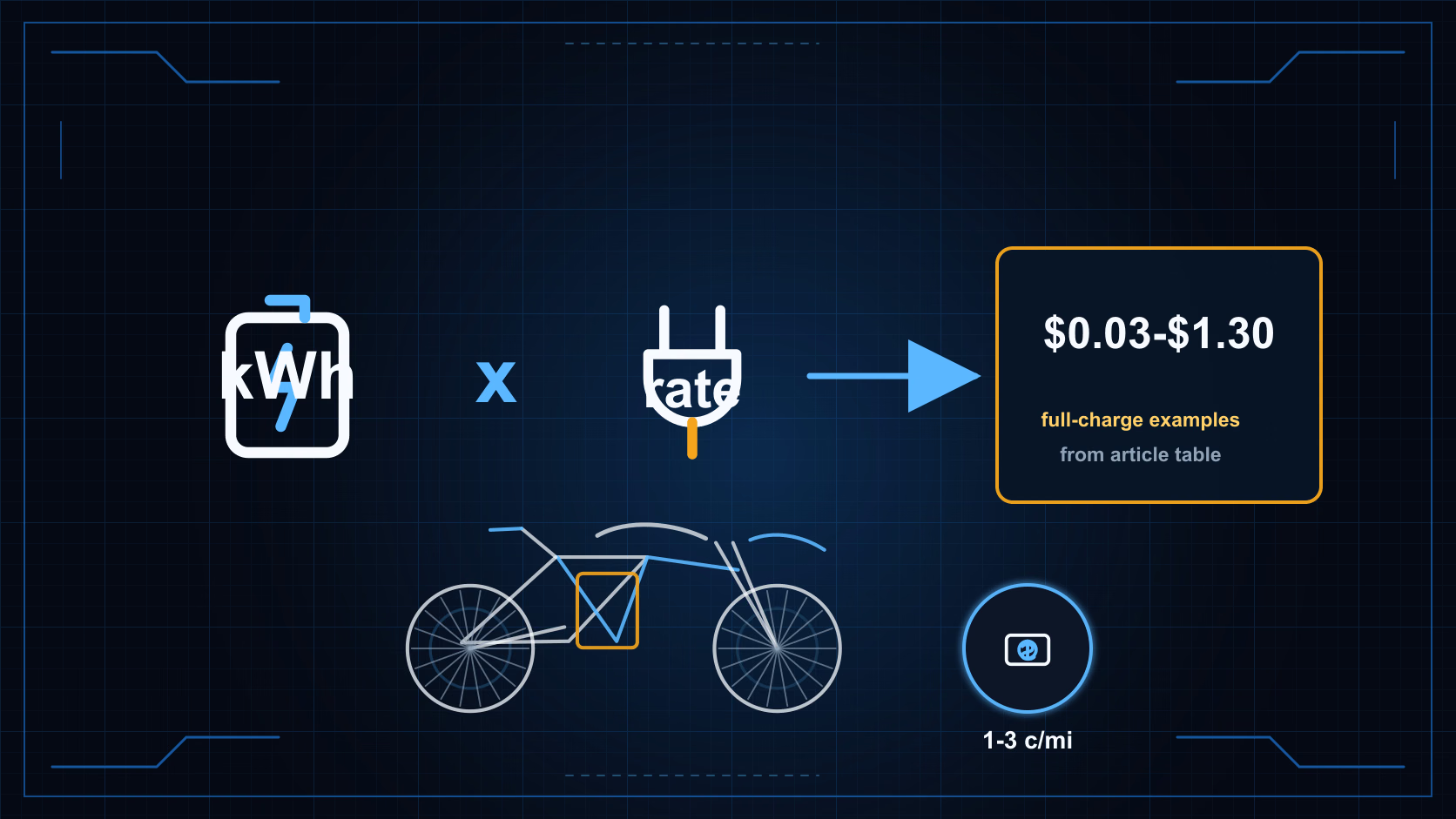
Charging an electric dirt bike costs pennies to about a dollar per full charge — genuinely one of the cheapest things about owning one. The formula is simple:
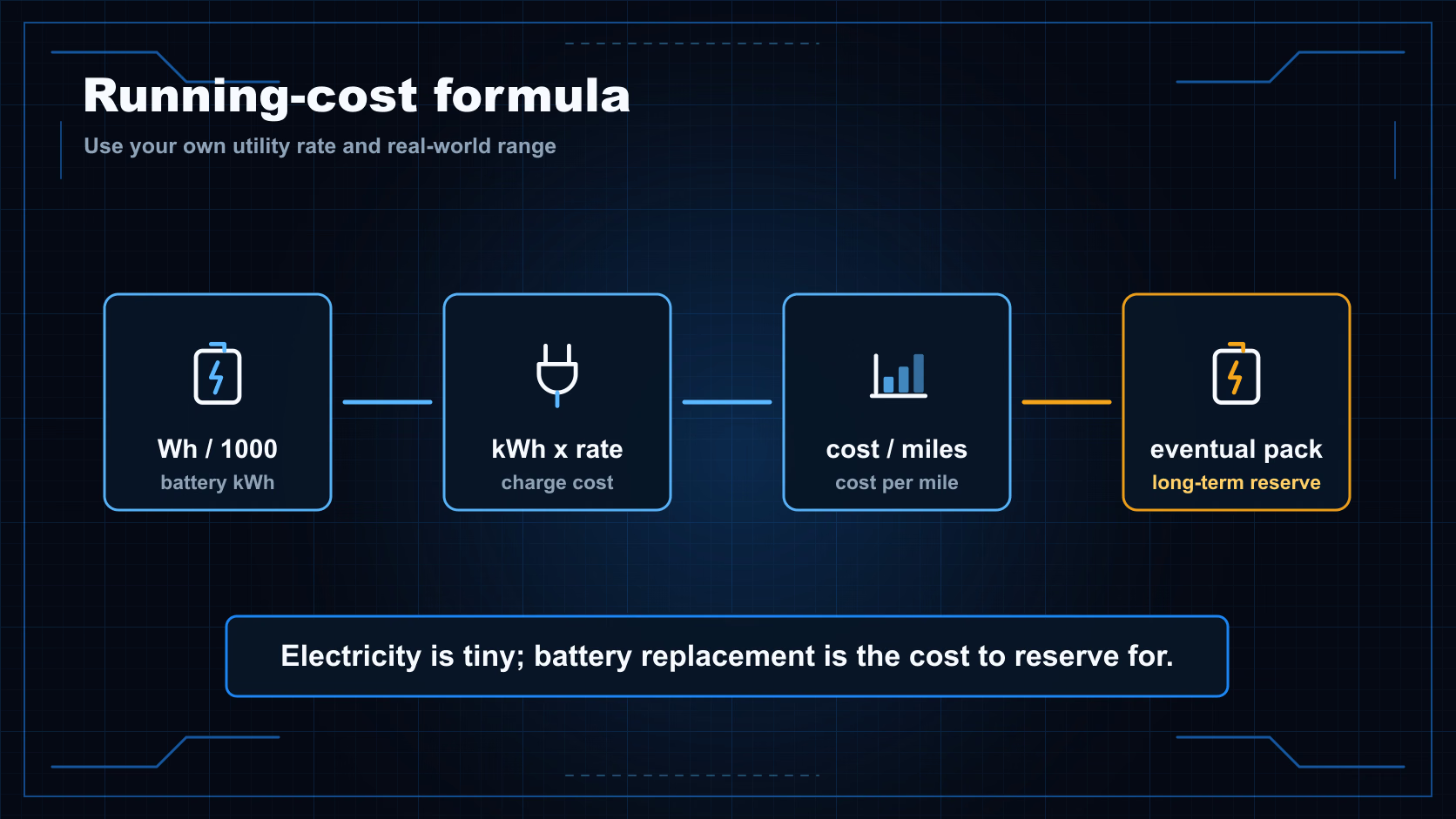
> Cost per charge = battery size (kWh) × your electricity rate ($/kWh)
At the 2026 U.S. average of about 18¢ per kWh (it ranges from ~12¢ in the cheapest states to 40¢+ in Hawaii — check your own bill), here's what a full charge runs across the class:
Rather than round numbers, here are real packs from bikes we rank, using each one's verified battery capacity:
| Bike | Verified pack | Cost per full charge (~18¢/kWh) |
|---|---|---|
| Razor MX350 (kids) | 168 Wh | ~$0.03 |
| Hiboy DK1 (kids) | 187 Wh | ~$0.03 |
| Razor MX650 (youth) | 432 Wh | ~$0.08 |
| Segway X260 | 1,920 Wh | ~$0.35 |
| Talaria Sting MX3 | 2,280 Wh | ~$0.41 |
| Sur-Ron Light Bee X | 2,520 Wh | ~$0.45 |
| Sur-Ron Ultra Bee | 4,440 Wh | ~$0.80 |
| Stark Varg EX | 7,200 Wh | ~$1.30 |
That is the whole range of the category: the biggest pack we rank is nearly 43× the smallest, and it still costs about the price of a vending-machine snack to fill. Use your rate for an exact figure — the takeaway doesn't change: charging is trivially cheap.
Cost per mile: usually 1–3 cents
Divide the charge cost by your real-world range (which runs lower than the claimed number — see range explained):
Using our own real-world range estimates rather than claimed figures:
| Bike | Charge cost | Real-world range | Cost per mile |
|---|---|---|---|
| Hiboy DK1 | ~$0.03 | ~9 mi | ~0.4¢ |
| Razor MX650 | ~$0.08 | ~8 mi | ~1.0¢ |
| Segway X260 | ~$0.35 | ~28 mi | ~1.2¢ |
| Talaria Sting MX3 | ~$0.41 | ~28 mi | ~1.5¢ |
| Sur-Ron Light Bee X | ~$0.45 | ~30 mi | ~1.5¢ |
Here is the part worth noticing. Pack sizes across that table vary by more than an order of magnitude, and cost per mile barely moves — everything lands between roughly 0.4¢ and 1.5¢ a mile. Buying a bigger battery does not make riding more expensive per mile; it buys you more miles per charge, at essentially the same cost to cover ground. Range anxiety is a real reason to size up a pack. Running cost is not.
(The Sur-Ron Ultra Bee works out near ~1.1¢ per mile, but on its claimed 71-mile range rather than a real-world estimate, so we have left it out of the table above. The Stark Varg EX publishes no mile-based range figure at all — only riding hours — so an honest cost-per-mile for it is not something we can calculate.)
That's a rounding error compared with a gas dirt bike's fuel and oil — and it ignores everything electric doesn't buy (no gas, no oil changes, no filters, no plugs).
How it compares to gas
On running cost, electric wins by a wide margin. A gas dirt bike burns dollars of fuel and oil per ride and carries the full maintenance chore list; an electric costs pennies to charge and skips almost all of it. If day-to-day running cost is what you care about, this is one of the strongest arguments for going electric — the full picture is in electric vs gas.
The one big long-term cost buyers forget
Here's the honest asterisk: electricity is cheap, but the battery isn't forever. Over several years (roughly 500–1,000+ charge cycles), the pack fades and eventually needs replacing — a ~$1,000–$2,500 cost that's the main expense electric adds versus the running-cost savings it delivers. Everything else — tires, brakes, chain — is normal wear covered in the maintenance guide.
Factor the battery into your long-term math (and treat it well to delay it — see charging habits), and electric still usually wins on total running cost. It's low, not zero.
The bottom line
To charge an electric dirt bike costs pennies to a dollar (battery kWh × your rate), which works out to ~1–3¢ per mile — a fraction of gas, with none of the fuel-and-oil chores. The real long-term cost isn't the electricity; it's an eventual battery replacement, so budget for that and you've got the whole picture. Want the purchase-side numbers too? See how much they cost, or match a bike to your budget with the Find Your Ride configurator.
VoltRipper is independent — our figures use the 2026 U.S. average electricity rate (~18¢/kWh, per EIA; rates vary widely by state and utility, so use your own) and typical battery/range values for illustration; your exact costs depend on your bike, rate, and riding. Affiliate disclosure is included on monetized pages, and we're spec-verified/data-driven rather than hands-on until first-hand testing exists.
FAQ
How much does it cost to charge an electric dirt bike?
Pennies to about a dollar per full charge. The math is simple: battery size in kilowatt-hours (kWh) times your electricity rate. At the 2026 U.S. average of roughly 18 cents per kWh, a ~2 kWh light trail pack costs about 36 cents to fill, a ~4 kWh full-size pack about 72 cents, and a big ~7 kWh halo pack about $1.26. Use your own kWh figure and your own rate for an exact number, but the takeaway holds: charging is trivially cheap.
What's the cost per mile of an electric dirt bike?
Usually one to three cents per mile. Divide the cost of a full charge by your real-world range: about 36 cents over ~25 real miles is roughly 1.4 cents per mile. Even a big pack that costs ~$1.26 to charge and goes ~50 miles is about 2.5 cents per mile. That's a fraction of a gas dirt bike's fuel-and-oil cost, before you even count gas-bike maintenance.
Are electric dirt bikes cheaper to run than gas?
By a wide margin. Electricity to charge is pennies where gas is dollars, and electric bikes skip oil changes, air filters, spark plugs, fuel, and most of the gas-bike chore list. The running-cost gap is one of the real advantages of going electric. The catch is long-term: the battery eventually needs replacing, which is the main big cost electric adds - budget for it and electric still usually wins on total running cost.
What's the biggest long-term cost of an electric dirt bike?
The battery. Electricity is cheap and maintenance is light, so over years the standout cost isn't charging - it's an eventual replacement battery, roughly $1,000-$2,500 after several years or 500-1,000+ charge cycles. Everything else (tires, brakes, chain) is normal wear. Factor the battery into your long-term math and the running cost is still low, just not zero.
Sources
Specification sources
- Sur-Ron Light Bee XATV Wholesale Outlet - 2026 Sur-Ron Light Bee X (72V/35Ah, 10 kW), $4,699 from $4,999Checked
- Talaria Sting R MX4Talaria Canada - Sting R MX4 specificationsChecked
- Stark Varg MX 1.2Stark Future — Varg MXChecked