Tracked price checks
Bikes in this guide
Sur-Ron
Light Bee X
Enormous aftermarket and parts ecosystem — the most-supported e-dirt-bike platform
Trade-off: Advertised range collapses at speed — plan for real-world miles well under the claim
We may earn a commission if you buy through this link, at no extra cost to you.
Check price at ATV Wholesale OutletTalaria
Sting MX5 Pro
72V/2.88 kWh Samsung-cell platform is a real power and range step up from the 60V Sting and X3 family
Trade-off: Ships limited to 20 mph, so the high-speed numbers assume derestriction and local-law risk
We may earn a commission if you buy through this link, at no extra cost to you.
Check price at Luna CycleRawrr
Mantis X Pro
15 kW peak and 65+ mph — a big step above the base Mantis X for $900 more at $3,899
Trade-off: 65 mph / 15 kW is a lot of bike for newer riders
We may earn a commission if you buy through this link, at no extra cost to you.
Check price at Rawrr (official)The short answer
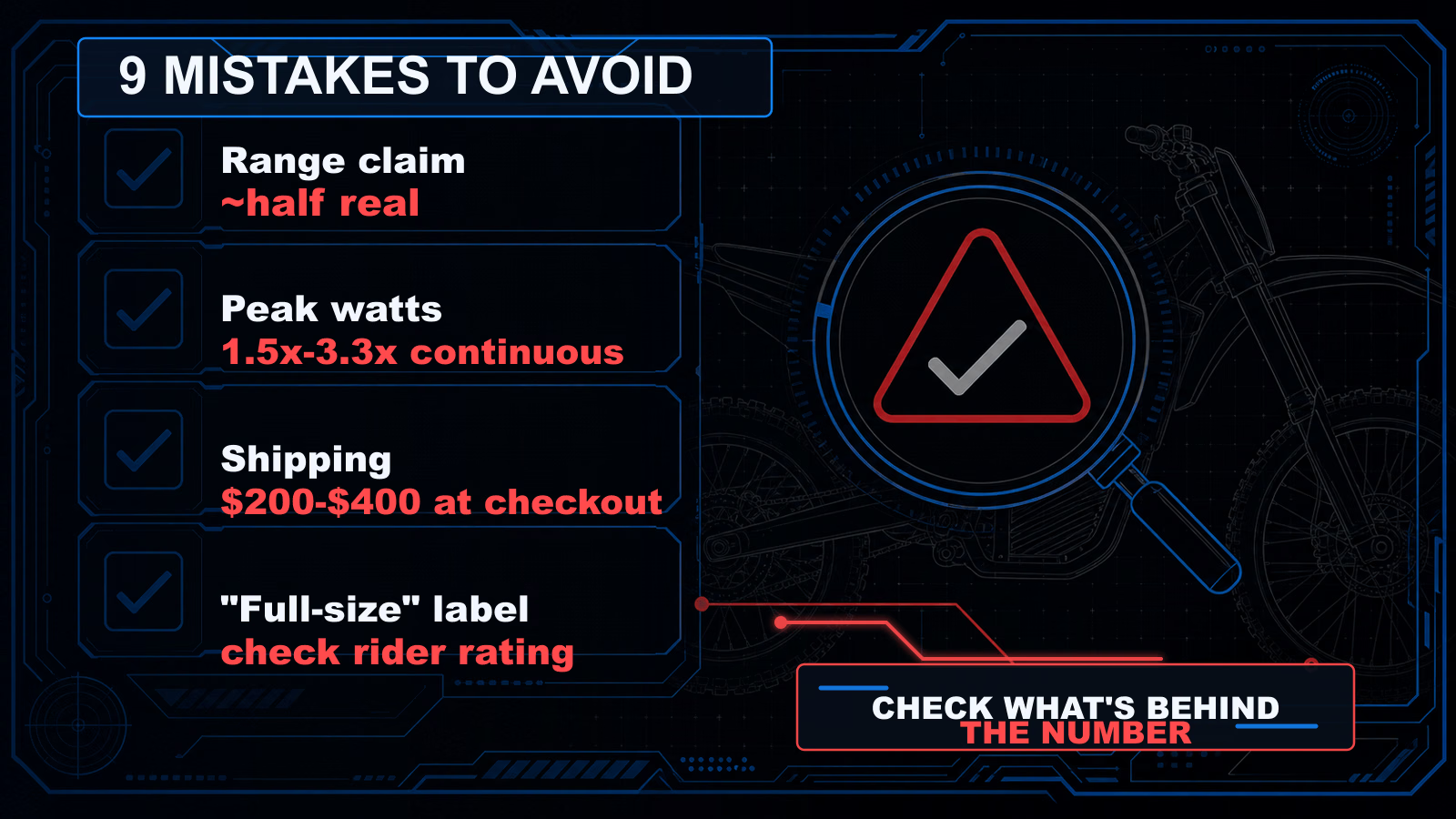
Most electric dirt bike regret comes from a handful of predictable traps — inflated numbers, hidden costs, and assumptions that don't survive the first ride. Here are the nine we'd warn a friend about, in the order they cost people the most, each with the fix and where to read more.
1. Believing the range claim
The single most common mistake. Advertised ranges are low-speed figures, and real-world range averages a little over half of them — a "62 mile" bike does about 35 ridden normally, and some claims are two to five times the real number. The fix: assume half to two-thirds of any range claim, and compare real estimates. We put the whole claimed-vs-real range table side by side.
2. Comparing peak watts against continuous watts
The headline wattage is a peak burst that runs 1.5 to 3.3 times the sustained rating — a "10,000W" Sur-Ron is 3,000W continuous. That's fine, until you compare one bike's peak against another's continuous and conclude the wrong bike is stronger. The fix: check whether a wattage is peak or continuous, and only compare like with like. Full breakdown in the peak vs continuous guide.
3. Forgetting shipping
Many bikes add $200–$400 in shipping that only appears at checkout, so a bike that looks cheaper on the sticker can cost more delivered — we've seen a $700 sticker gap shrink to $350, and a $700 gap grow to $950, once freight is counted. The fix: get the delivered price, not the sticker, before you compare two bikes. Our cost guide tracks which sellers publish shipping.
4. Buying the wrong generation or trim
Makers bump power on an unchanged chassis under the same model name, and sell old stock alongside new — so the bike in the review may not be the bike in the listing. One popular youth model exists as both a slower older version and a faster newer one under one name. The fix: confirm the exact power figure and model year on the listing itself, not the review or the URL, before you pay.
5. Ignoring the support network
A bike you can't get parts for is unreliable no matter how well it's built. Budget and obscure brands often out-spec the benchmarks on paper but can't match their parts networks — and several names in this space have gone dark or through bankruptcy, taking their parts supply with them. The fix: weigh support and staying power as a spec in their own right; our brand tier list ranks who actually has it.
6. Assuming "full-size" means it fits an adult
Plenty of bikes look full-size in a photo and are rated for a 120 lb rider. An adult on one is over the manufacturer's limit on day one. The fix: check the maximum rider weight and the seat height — the rider rating, not the "full-size" label, decides whether a bike can carry you. More in the adult buyer's guide.
7. Assuming it's street-legal
Most electric dirt bikes are sold off-road only, and making one road-legal takes a kit and depends on your state — it is not a given. The fix: confirm the legal path before you plan to commute on it. Start with are electric dirt bikes street legal and your state's rules.
8. Shopping under $1,000 for an adult bike
There is no genuinely good adult electric dirt bike under about $1,199 — everything cheaper is a kids' or toy-tier machine. Buying a $1,000 "adult" bike that's really a toy is how people conclude the whole category is junk. The fix: if your ceiling is $1,000, save toward the value tier rather than buying below the floor. See electric dirt bikes for adults.
9. Trusting a big-box shelf for a serious bike
Big-box and general retailers carry the kids' and entry tier only — the performance class is direct-to-consumer and dealer-only, and it never touches a mainstream shelf. A trusted retailer vouches for its return policy, not the bike's performance. The fix: buy a kids' bike from a big-box store if you like, but buy a real bike from the maker or a specialist dealer. Details in does Best Buy/Target/Amazon sell them.
The pattern behind all nine
Notice the through-line: the mistakes all come from trusting a number or a label instead of checking what's behind it. The range, the wattage, the "full-size" tag, the sticker price, the retailer's badge — each is a surface that hides something a two-minute check would reveal. The whole reason we publish real estimates, delivered prices, rider ratings and support assessments is so you don't have to make these mistakes to learn them.
The bottom line
The nine mistakes that catch electric dirt bike buyers are all versions of one: believing the marketing number instead of the real one. Halve the range claim, don't mix peak and continuous power, add the shipping, confirm the generation and the rider rating, weigh the support network, and never let a low price or a big retailer's shelf stand in for quality. Do that, and you'll skip the regret that sends people back to gas — and if you want the checks done for you, that's what every bike page and buyer's guide here is for. Not sure where to start? Run the Find Your Ride configurator.
VoltRipper is independent — our guidance comes from verified specs, real-world estimates and the transparent VoltRipper Score, not commissions. Figures are typical ranges, not guarantees. We are spec-verified and data-driven rather than hands-on. Affiliate disclosure is included on monetized pages.
FAQ
What's the most common electric dirt bike buying mistake?
Believing the range claim. Advertised ranges are low-speed figures, and real-world range averages a little over half of them — so a bike sold as '62 miles' does about 35 ridden normally. The fix is simple: assume half to two-thirds of any range claim, and compare real-world estimates rather than marketing numbers.
What should I know before buying an electric dirt bike?
Three things catch buyers out most: range claims are roughly double the real number, the headline wattage is a peak burst that runs 1.5 to 3.3 times the sustained rating, and many bikes add $200–$400 shipping that only shows at checkout. Beyond those, check that the bike is actually rated to carry an adult, confirm it isn't a superseded generation, and weigh the support network — an obscure brand can be hard to get parts for.
How do I avoid overpaying for an electric dirt bike?
Add shipping before you compare prices — it's $200–$400 on many bikes and hidden until checkout, so a bike that looks cheaper on the sticker can cost more delivered. Don't pay a premium for an inflated peak-wattage number, don't assume a big-box shelf means quality, and remember there's no genuinely good adult bike under about $1,199, so a sub-$1,000 'adult' bike is a toy.
Is it a mistake to buy a cheap electric dirt bike?
Not always — a budget bike can be fine for a kid or a low-stakes first try. The mistake is buying a cheap bike expecting adult performance and support: the specs are optimistic, the parts network is thin, and resale is weak. If you'll rely on the bike for years, spend up to a supported brand; if you're testing the waters, a budget bike with clear eyes is reasonable.
Sources
Specification sources
- Sur-Ron Light Bee XATV Wholesale Outlet - 2026 Sur-Ron Light Bee X (72V/35Ah, 10 kW), $4,699 from $4,999Checked
- Talaria Sting MX5 ProTalaria Canada - Sting MX5 Pro specificationsChecked
- Rawrr Mantis X ProRide Rawrr — Mantis X ProChecked