The short answer
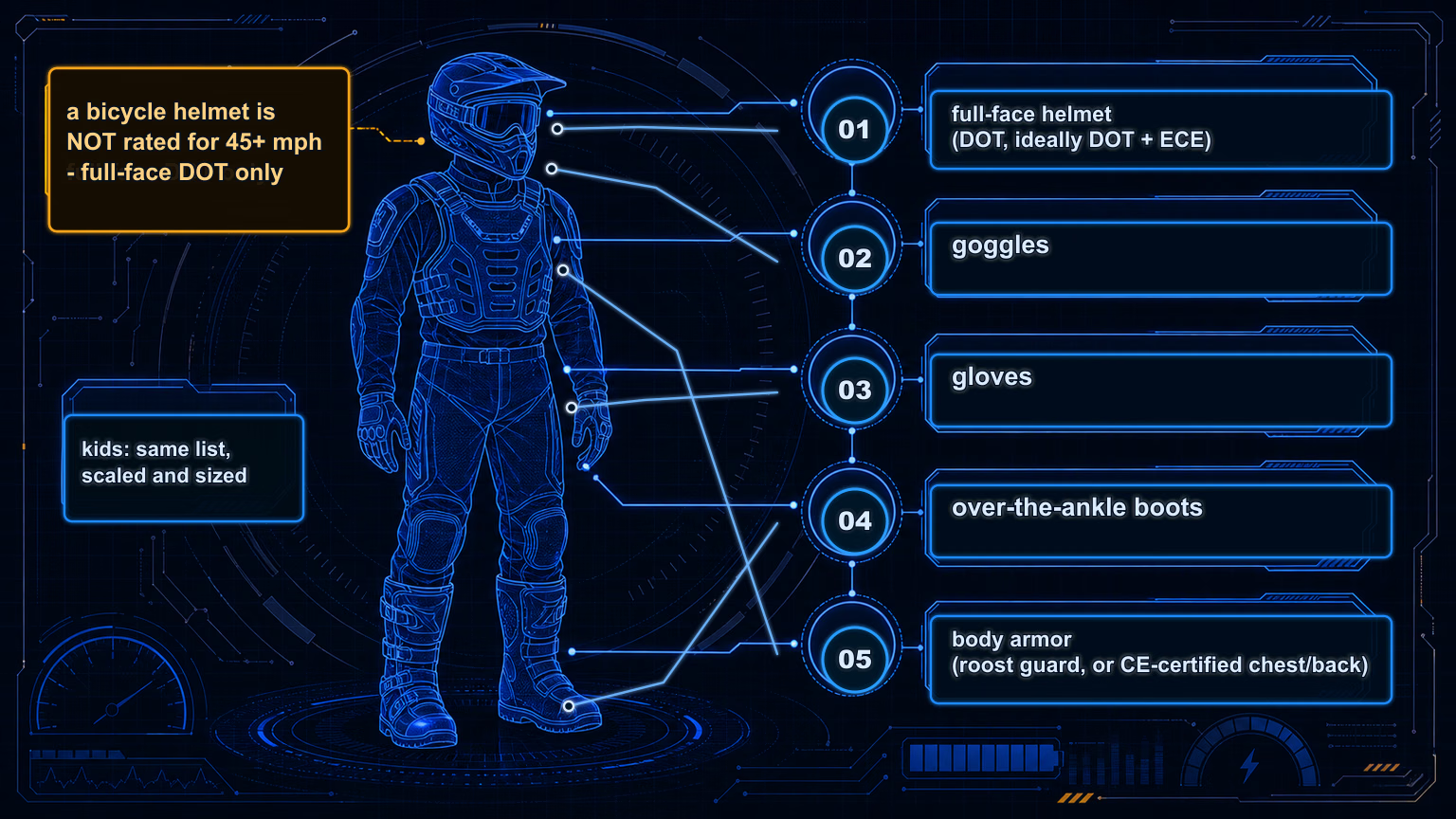
An electric dirt bike is quiet, so it feels tamer than it is — but a Sur-Ron, Talaria, or Ultra Bee hits motorcycle speeds and deserves motorcycle gear. The list that actually matters:
- A full-face off-road helmet (DOT minimum) — non-negotiable, and never a bicycle helmet.
- Goggles, gloves, and over-the-ankle boots — the everyday essentials.
- Body armor — a roost deflector at least, a CE-certified chest/back protector if you ride fast or rough.
Buy the helmet first and best; build up the rest over time. Here's what to get and why — including two honesty points the gear world routinely glosses over.
The helmet: the one you never compromise on
A quiet bike is still a fast bike. These machines run 45-plus mph and ride like motorcycles, so they need a full-face motorcycle/off-road helmet — DOT-certified at a minimum, and better still one that also carries ECE 22.06 (independently batch-tested) or Snell. Look for the certification, not the graphics.
The trap, stated plainly: never wear a bicycle or e-bike helmet on one of these bikes. A bicycle helmet is certified to a bicycle standard (CPSC), leaves your face and jaw exposed, and is not designed for motorcycle-speed impacts. It's the most common and most dangerous gear mistake in this class — and the one place we won't soften the message.
Fit matters as much as the sticker: measure your head circumference, match the maker's chart (sizes aren't interchangeable across brands), and the helmet should be snug with no pressure points and no rotation when you shake your head with the strap done up. Replace it after any real impact.
Goggles: cheap, essential, easy
Goggles keep roost, dust, and branches out of your eyes, and they pair with the peaked off-road helmet. Look for an impact-rated lens; add tear-offs or a roll-off system if you ride mud. It's a low-cost, high-attach essential — there's no reason to skip it.
Body armor: the roost-vs-impact truth
Here's the second honesty point. A roost deflector and a certified chest protector are not the same thing, and calling both "chest protectors" muddies a real safety decision:
- A roost deflector protects against flying debris and roost (the rocks other riders kick up). It is generally not certified for hard impact.
- A CE-certified chest/back protector (EN 1621-3 for the chest, EN 1621-2 for the back, Level 2 more protective than Level 1) is the impact-rated tier.
Both are legitimate — they just do different jobs. For trail riding where roost is the main hazard, a deflector is the lighter, cheaper, honest choice. If you want certified impact protection for speed or aggressive riding, step up to a CE-rated protector. Buy for the hazard you actually face, and know which one you're getting.
Gloves: your hands hit first
In almost every fall, the hands go down first. Gloves are cheap insurance against the abrasion, blisters, and knuckle knocks that come with off-road riding. A thin off-road glove is grip and abrasion protection (not certified impact armor) — fine for most riders; if you want more, a heavier armored glove exists.
Boots: over-the-ankle, no exceptions
The foot and ankle are among the most commonly and badly injured areas in a dirt-bike crash, and ordinary boots don't protect them. Over-the-ankle motocross/off-road boots — hard shell, rigid sole, ankle bracing — are the floor, even on kids' bikes. After the helmet, this is one of the highest-value pieces you'll buy.
MX boots run stiff and need a short break-in; size close to your street shoe and expect them to loosen slightly. For kids, size to the current foot — never "to grow into," because a boot that doesn't fit doesn't protect.
The order to buy — and the kids note
If you're building the kit over time:
- Helmet — first, best, never compromised.
- Boots and gloves — feet and hands take the first hit.
- Goggles — cheap, essential.
- Body armor — roost deflector at least; CE protector if you ride fast or rough.
For kids and youth riders, the list is identical, scaled down and *correctly sized* — an oversized helmet that rotates or a hand-me-down that doesn't fit offers little protection. Size to the child, and never drop the full-face helmet for a bicycle one because "it's just the backyard." Our safety-gear guide covers the full rundown, including how to fit each piece.
The bottom line
The gear rule for electric dirt bikes is simple: treat the quiet bike like the motorcycle it is. A DOT (better DOT + ECE) full-face helmet is non-negotiable and never a bicycle helmet; goggles, gloves, and over-the-ankle boots are the essentials; and body armor is the strong next step — as long as you know the difference between a roost deflector and a certified impact protector. Kit up honestly and the bike stays as fun as it should be. Building the machine too? The maintenance guide keeps it running. Still choosing a bike? Run the Find Your Ride configurator.
Every piece, covered properly:
Being seen, after dark:
VoltRipper is independent — we don't sell gear and our recommendations aren't pay-to-play. Protective gear is safety-critical: confirm a helmet's certification (DOT/ECE/Snell), match sizing to the manufacturer's chart, and replace any helmet after an impact. Certifications and standards are cited from manufacturer and standards-body information; we don't give medical or legal advice. Affiliate disclosure is included on monetized pages, and we're spec-verified/data-driven rather than hands-on until first-hand testing exists.
FAQ
Can I wear a bicycle helmet on a Sur-Ron?
No — this is the single most dangerous gear mistake, and it's common. A Sur-Ron, Talaria, or Segway hits 45-plus mph and rides like a motorcycle; a bicycle or e-bike helmet is certified to a bicycle standard (CPSC), leaves your face and jaw exposed, and is not built for motorcycle-speed impacts. You need a full-face motorcycle/off-road helmet certified to DOT at a minimum. A bicycle helmet on one of these bikes is a serious, avoidable risk — this is the one place we won't hedge.
What protective gear do I actually need for an electric dirt bike?
The non-negotiables are a DOT (ideally DOT + ECE) full-face off-road helmet, goggles, gloves, and over-the-ankle boots. Body armor — at minimum a roost deflector, better a CE-certified chest/back protector — is the strong next step, especially at speed or on rough trail. Kids need the same list scaled down and correctly sized. Buy the helmet first and never compromise on it; the rest can be built up over time, but boots and gloves should come early because feet and hands take the first hit in most falls.
Is a roost deflector the same as a chest protector?
No, and gear pages routinely blur this. A roost deflector protects against flying debris and roost — the rocks other riders kick up — but is generally not certified for hard impact. A CE-certified chest protector (look for EN 1621-3 for the chest, EN 1621-2 for the back, Level 2 being more protective than Level 1) is the impact-rated tier. Both are legitimate; they just do different jobs. If you want certified impact protection, buy the CE-rated protector; if you mainly want debris protection for trail riding, a roost deflector is the lighter, cheaper, honest choice — just know which one you're buying.
Do I really need dirt bike boots, or will regular boots work?
You need over-the-ankle, purpose-built boots, and it's not a small difference. Motocross/off-road boots protect the ankle, shin, foot, and Achilles with hard shells, a rigid sole, and ankle bracing that ordinary boots simply don't have — and the foot and ankle are among the most commonly and severely injured areas in a dirt-bike crash. Regular work boots are better than sneakers but still leave you exposed. Over-the-ankle is the floor, even on kids' bikes; this is one of the highest-value pieces after the helmet.