The short answer
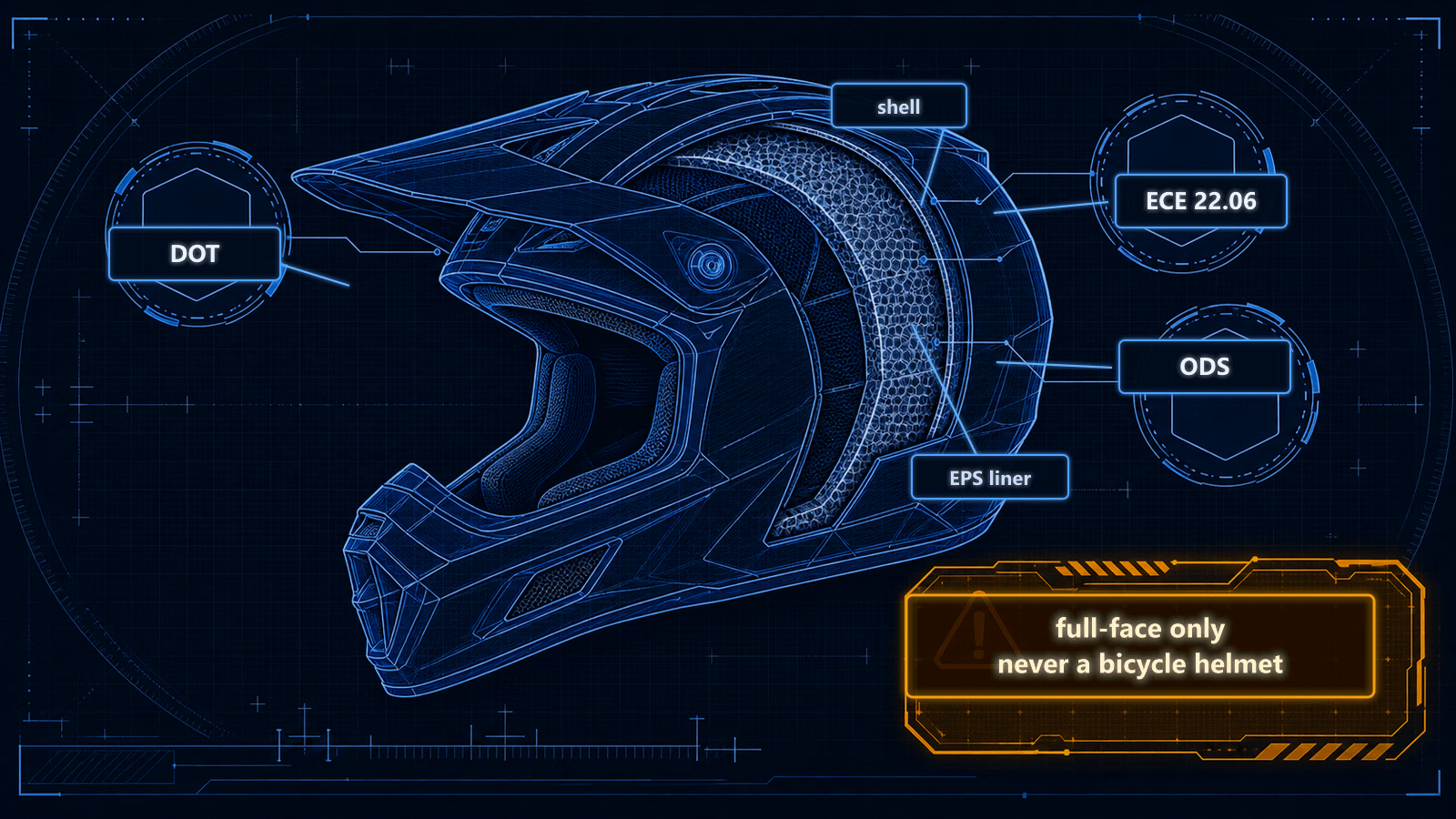
A quiet bike is still a fast bike. A Sur-Ron or Talaria hits motorcycle speeds, so it needs a full-face motorcycle/off-road helmet — DOT-certified at a minimum, and never a bicycle helmet. The good news: a genuinely safe certified helmet starts around $100, so there's no reason to compromise.
Three picks, from value to premium:
- Value floor (~$100): a real DOT + ECE helmet for new and casual riders.
- The popular value pick (~$160): the one most riders land on.
- Premium (~$900): carbon, the newest cert, and rotational protection for fast riders.
First, the two things that decide whether a helmet is worth buying at all.
Non-negotiable: never a bicycle helmet
This is the clearest line in e-moto safety. A bicycle or e-bike helmet (CPSC standard) is built for far lower speeds and leaves your face and jaw exposed. At the 45-plus mph these bikes reach, that's not protection. You need a full-face motorcycle/off-road helmet, DOT-certified at a minimum. We won't soften this one.
The certifications that matter
More certifications, better protection — here's the ladder:
- DOT — the US legal floor, self-certified by the maker. Necessary, not sufficient.
- ECE 22.06 — the current European standard, independently batch-tested, with rotational and multi-impact testing. A DOT + ECE 22.06 helmet carries a stronger, verified signal than DOT alone.
- Snell — a stringent private standard seen on premium lids.
- Rotational systems (like 6D's ODS, or MIPS) — manage the oblique impacts that cause a lot of head injuries. Worth paying up for if you ride fast.
For most e-moto riders, DOT + ECE is the sweet spot; newer ECE 22.06 and rotational tech are the upgrade.
The value floor: Answer Racing AR1
A real, certified full-face dirt helmet at the floor price — DOT and ECE 22.05, a removable/washable liner. It's the honest answer for a new rider, a kid moving up, or anyone who wants proper protection without overspending. The one caveat: it's ECE 22.05 (the previous standard) and has no rotational-impact system — fine for the price, but not the newest tech.
The popular value pick: Fox V1 Core
The helmet a lot of riders land on: DOT + ECE, a well-vented off-road shell, and the fit-and-finish of a major brand for a mid-value price. A safe, comfortable, no-regrets pick for trail and off-road riding.
Premium: 6D ATR-3
The max-protection pick for fast riders. DOT + ECE 22.06 (the current standard) plus 6D's ODS rotational-management system, a 3K carbon shell, and a light claimed weight. It's expensive, but it's the lightest, best-vented, most protective tier — the helmet for someone riding a fast bike hard.
Sizing: the part people get wrong
The safest helmet in the world doesn't protect you if it doesn't fit:
- Measure your head circumference ~1 inch above the eyebrows and match the maker's chart — sizes are not interchangeable across brands.
- Head shape (round / intermediate-oval / long-oval) is the usual cause of a "correctly sized but painful" helmet — brands run differently.
- Fit test: snug all around, no pressure points, cheek pads touch but don't crush, no rotation when you shake your head with the strap done up.
- Cheek pads pack ~15–20%, so buy snug, not loose, and replace the helmet after any real impact (and roughly every 5 years regardless).
The kids note
For a young rider, the list is the same, scaled down and correctly sized — a full-face DOT (ideally ECE) youth helmet, never a bicycle one, and never "sized to grow into." An oversized helmet that rotates doesn't protect. Size to the child's head today. Our safety-gear guide covers the full kit.
The bottom line
The helmet is the one piece you never compromise on — and you don't have to overspend to be safe: a certified full-face dirt helmet starts around $100 (the Answer AR1), the Fox V1 Core is the popular value pick, and the 6D ATR-3 is the premium, current-cert, rotational-protection choice for fast riders. Whichever you choose: full-face, DOT at a minimum, never a bicycle helmet, sized correctly, and replaced after any impact. Round out the kit with the safety-gear guide, and if you're still choosing a bike, run the Find Your Ride configurator.
VoltRipper is independent — we don't sell gear and our recommendations aren't pay-to-play. Helmets are safety-critical: confirm the certification (DOT/ECE/Snell), match sizing to the manufacturer's chart, and replace any helmet after an impact. Certifications are cited from manufacturer and retailer information; we don't give medical or legal advice. Affiliate disclosure is included on monetized pages, and we're spec-verified/data-driven rather than hands-on until first-hand testing exists.
FAQ
What kind of helmet do I need for a Sur-Ron?
A full-face motorcycle or off-road (MX) helmet, DOT-certified at a minimum. A Sur-Ron, Talaria, or Segway hits 45-plus mph and rides like a motorcycle, so it needs motorcycle-grade head protection — an open-face or, worst of all, a bicycle helmet leaves your face and jaw exposed at speeds they were never designed for. Look for the certification (DOT floor, ideally DOT + ECE 22.06), pair it with goggles for off-road use, and size it correctly. This is the one piece of gear you never compromise on.
Can I wear a bicycle helmet on an electric dirt bike?
No — this is the single most dangerous and most common gear mistake. A bicycle or e-bike helmet is certified to a bicycle standard (CPSC), which is built for far lower speeds and leaves the face and jaw unprotected. These bikes reach motorcycle speeds, and in a face-first impact a bicycle helmet offers essentially no facial protection. You need a full-face motorcycle/off-road helmet certified to DOT at a minimum. It's the clearest line in all of e-moto safety, and we won't soften it.
What's the difference between DOT, ECE, and Snell helmet ratings?
They're different certification standards, and more of them is better. DOT (US legal minimum) is self-certified by the maker — the floor, not a ceiling. ECE 22.06 (current European standard) is independently batch-tested and adds rotational and multi-impact testing, so a DOT + ECE 22.06 helmet carries a stronger, verified signal than DOT alone. Snell is a stringent private standard common on premium lids. Some premium helmets also add a rotational-impact system (like 6D's ODS). For most e-moto riders, DOT + ECE is the sweet spot; the newer ECE 22.06 and rotational tech are worth paying up for if you ride fast.
How much should I spend on a dirt bike helmet?
You can get a genuinely safe, certified full-face dirt helmet for around $100, and that's a perfectly good starting point for a new or casual rider — the floor for real protection is low. Mid-range helmets ($150-400) buy better ventilation, lighter shells, and often rotational-management tech. Premium helmets ($450-900) buy the lightest carbon shells, the best venting, and the newest certifications. The honest rule: buy the best certification and fit you can afford, replace it after any real impact, and never buy a bargain that isn't a certified motorcycle helmet.