The short answer
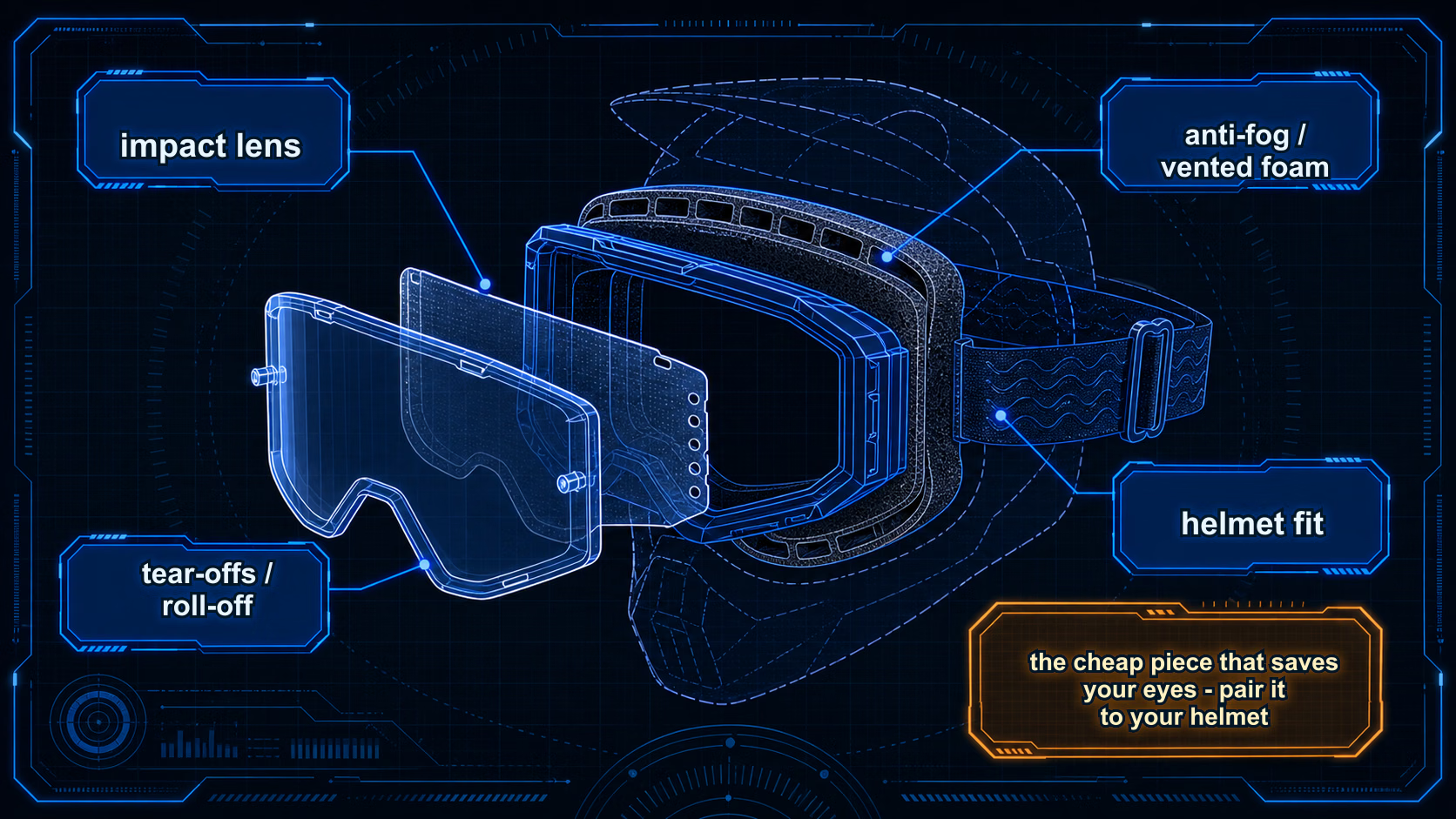
Goggles are the cheap, essential piece that pairs with your off-road helmet — they keep roost, dust, and branches out of your eyes and seal to the peaked helmet opening. There's no reason to skip them, and you don't need to overspend. Three picks:
- Budget (~$30): a solid tear-off-ready goggle.
- Mid (~$50): more lens and comfort for a little more.
- Premium (~$140): a quick lens-swap system and top optics.
What actually matters
- A high-impact lens — the core of the goggle. Look for a shatter-resistant material (Lexan, Plutonite) and a stated impact/shatter claim.
- A good seal to your helmet — a goggle that gaps lets in dust and roost and fogs. Always test with your helmet.
- Anti-fog treatment and, for mud, tear-off or roll-off compatibility.
- Fit and field of view — comfortable triple-layer foam and an outrigger strap that holds the seal.
An honest note on certification: quality MX goggles use high-impact lenses, but many pages don't publish an exact eye-protection cert (ANSI Z87.1 / EN 1938) — so we won't claim one where the maker doesn't. Treat "high-impact lens + shatter-resistance" as the practical standard.
Budget: 100% Strata 2
A proven, affordable goggle with a high-impact lens and tear-off compatibility — the no-fuss pick for a new rider or a spare pair. Everything you actually need, nothing you don't.
Mid: 100% Accuri 2
A step up in lens and comfort with the same standard MX tear-off ecosystem — a high-impact Lexan lens, anti-fog, and 9-pin tear-off retention, for a little more money.
Premium: Oakley Airbrake MX
The premium pick for riders who swap lenses often: Oakley's Switchlock quick lens-change system, a high-impact Plutonite lens, and the Prizm lens ecosystem for tuning contrast to conditions. Pricey, and the value is the optics and the fast lens swap.
Fit: test with your helmet
Goggles seal to your specific helmet's eye port, so a pair that fits one helmet can gap on another. Test them together, match the tint to your conditions (clear for low light, tinted for sun), and for kids, use youth goggles (a smaller frame, not just a smaller lens) sized to the child's face — part of the kids gear kit.
The bottom line
Goggles are cheap and essential, so just get a good pair: a high-impact lens, a seal to your helmet, anti-fog, and tear-offs for mud. The 100% Strata 2 is the budget no-fuss pick, the Accuri 2 adds lens and comfort, and the Oakley Airbrake MX is the premium lens-swap choice. Match the tint to your riding and test the fit with your helmet. Round out the kit with the safety-gear guide, and if you're choosing a bike, run the Find Your Ride configurator.
VoltRipper is independent — we don't sell gear and our recommendations aren't pay-to-play. For eye protection, look for a high-impact/shatter-resistant lens, confirm fit with your helmet, and confirm any specific certification directly with the manufacturer for the exact model. Affiliate disclosure is included on monetized pages, and we're spec-verified/data-driven rather than hands-on until first-hand testing exists.
FAQ
Do I need goggles for an electric dirt bike?
For off-road riding, yes — goggles keep roost, dust, mud, and branches out of your eyes and seal to the peaked opening of an MX helmet. Riding fast off-road without eye protection is how a rock or a branch ends a ride (or worse), and sunglasses don't seal or stay put. If you've converted the bike to street use with a full-face road helmet and shield, the shield replaces the goggles; otherwise, goggles are a cheap, essential part of the kit. Get a pair with a good lens and make sure they fit your specific helmet's opening.
What should I look for in dirt bike goggles?
A high-impact lens, a good seal to your helmet, anti-fog treatment, and tear-off or roll-off compatibility for mud. The lens is the core — look for a shatter-resistant material (many use Lexan or Plutonite) and, if you can find it stated, an impact rating. A wide field of view, a comfortable triple-layer foam, and an outrigger strap system that holds the seal are the other differentiators. Premium goggles add quick lens-change systems for swapping tints. Match the tint to your conditions (clear for low light, tinted for sun) and confirm the goggle fits your helmet's eye port.
Are dirt bike goggles certified for eye protection?
Inconsistently — and it's worth being honest about. Quality MX goggles use high-impact lens materials and often state shatter resistance, but many product pages do not publish an exact eye-protection certification (like ANSI Z87.1 or EN 1938), so we won't claim one where the maker doesn't. Treat 'look for a high-impact lens and shatter-resistance claim' as the practical standard for MX goggles, rather than expecting a formal cert on every pair. If a specific certification matters to you, confirm it directly with the manufacturer for the exact model.
Will any goggles fit my helmet?
Not necessarily — goggles need to seal to your specific helmet's eye opening, so always test the pair with the helmet you'll wear. A goggle that seals well on one helmet can gap on another, and a gap lets in dust and roost and hurts the anti-fog performance. Buy them together if you can, or check that the goggle's frame size suits your helmet's port. For kids, use youth goggles (a smaller frame, not just a smaller lens) sized to the child's face and their youth helmet.