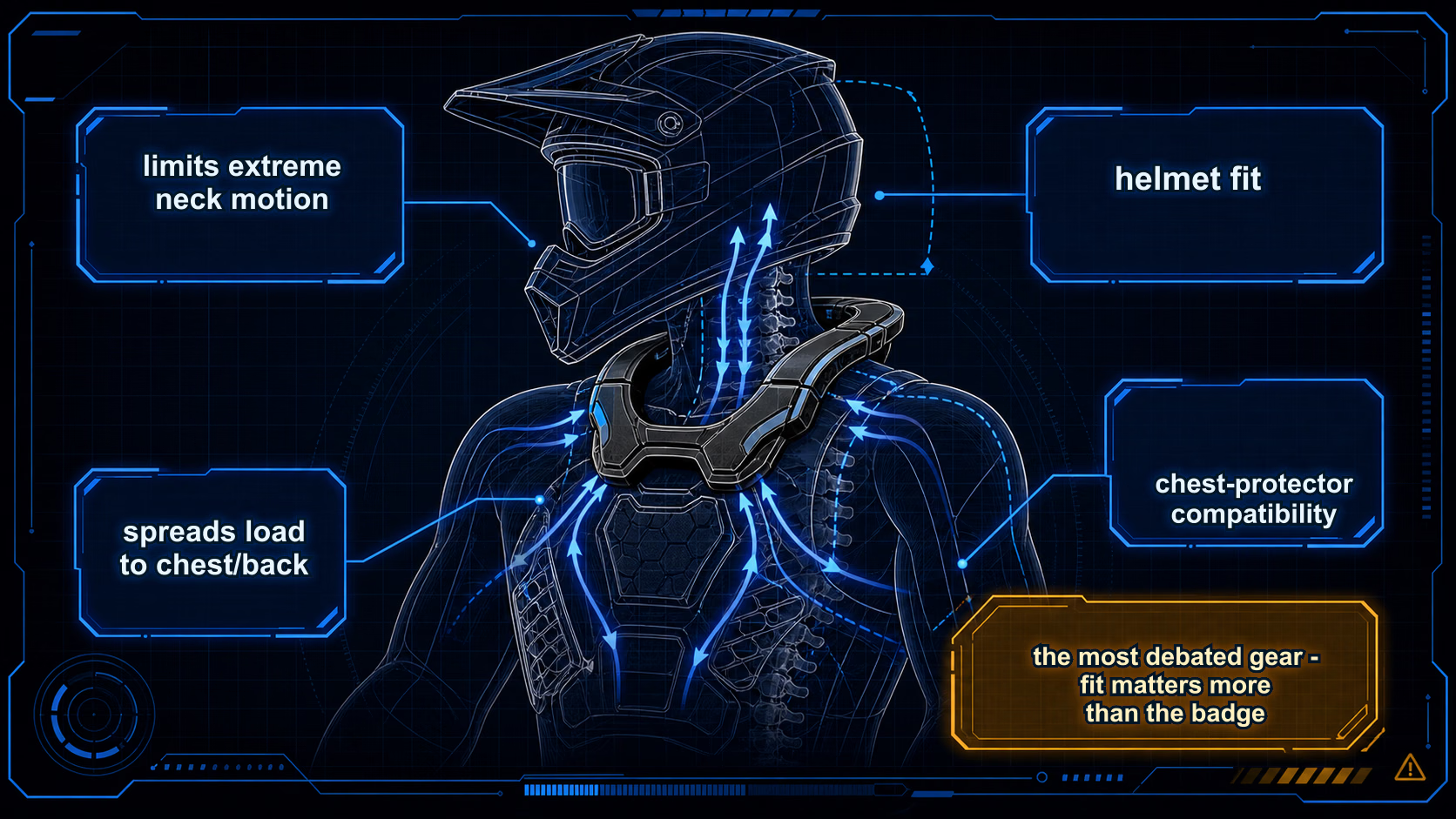
The short answer
Neck braces are the most debated piece of off-road gear, so here's the honest version for Sur-Ron and Talaria riders:
- A brace is designed to limit extreme helmet movement in a crash — it's risk-reduction gear, not injury-proofing, and the evidence is genuinely debated.
- Fit and compatibility matter more than the brand — it must clear your helmet and work with your chest protector.
- Unlike helmets and armor, neck braces largely lack a universal impact standard, so you buy on design, reputation, and fit.
Whether you need one comes down to how you ride — and e-motos are fast and heavy, so the speeds are real.
What a neck brace does (and doesn't)
A neck brace sits on your shoulders and chest and gives your helmet a surface to contact, limiting how far the neck can hyperflex, hyperextend, or compress in a crash. That's the design goal.
What it doesn't do: it isn't a certified impact-absorber, it does nothing for many crash types, and — honestly — critics raise real questions about force being transferred elsewhere. The research isn't one-sided. So treat a brace as one considered layer, not a cure-all, and never as a substitute for riding within your limits.
The certification reality
This is the part that surprises people. Your helmet carries DOT/ECE; your chest protector carries CE EN1621 levels. Neck braces largely don't have an equivalent universal standard. Some state a general CE Personal Protective Equipment marking; others don't publish a specific neck-impact standard at all. You can't rank them by a rating the way you can helmets — so prioritize proven design and correct fit, and read exactly what each maker publishes.
Fit & compatibility is everything
A neck brace is a system with your helmet and chest protector:
- It must clear your helmet's rim so the helmet contacts the brace correctly.
- It must sit properly with your chest protector / body armor, not fight it.
- Size it to your chest, and use the maker's clearance guidance.
Buy the brace last — after your helmet and chest protector — so you can fit the whole system together. A brace that doesn't fit your specific setup can be worse than none.
The picks
A proven design with a thoracic strut, fine adjusters, and a stated CE PPE marking:
An adjustable alternative with a size-adapter system (note the maker doesn't publish a specific neck-impact standard):
Both need the helmet + chest-protector fit check above — that's what actually decides which works for you.
Who should consider one?
- Strong case: you ride fast, jump, or ride aggressively — the speeds and crash types a brace targets.
- Weaker case: slow, casual, flat-ground riding.
- The e-moto angle: a Sur-Ron or Talaria is quick and heavy, so even trail riders hit real speeds — worth honest consideration.
It's your risk call. If you ride hard, a brace belongs in the conversation alongside a great helmet and chest protector.
The bottom line
A neck brace is a considered layer, not a must-have or a miracle — designed to limit extreme helmet movement in specific crashes, with debated benefits and no universal rating to compare by. If you ride hard, consider one; if you buy one, fit is everything — clear your helmet, work with your chest protector, size to your chest, and buy it last so the whole system fits together. Build the rest of your protection first: helmet, boots, chest protector, and knee braces. Choosing a bike? Run the Find Your Ride configurator.
VoltRipper is independent — we don't sell gear and our recommendations aren't pay-to-play, and this is not medical advice. Neck-brace benefits are debated and most carry no universal impact standard — buy on proven design and correct fit, confirm helmet and chest-protector compatibility, and never treat any gear as a substitute for riding within your limits. Affiliate disclosure is included on monetized pages, and we're spec-verified/data-driven rather than hands-on until first-hand testing exists.
FAQ
Do I need a neck brace for a Sur-Ron?
It's a personal risk decision, not a requirement — and it depends most on how you ride. Riders who go fast, jump, or ride aggressively off-road have the strongest case for a neck brace, because that's where the crashes a brace is designed to influence tend to happen; casual, low-speed riders have a weaker case. The relevant point for e-motos is that a Sur-Ron or Talaria is fast and heavy for its size, so the speeds are real. A neck brace is designed to limit extreme helmet movement in a crash, but it is not magic and its benefits are debated, so treat it as one considered layer of a full protective setup rather than a must-have or a cure-all. If you ride hard, it's worth serious consideration alongside a good helmet and chest protector.
Does a neck brace actually prevent injury?
It's designed to reduce the risk of certain neck injuries by limiting how far the helmet can move in a crash, but the evidence is genuinely debated and no brace prevents all injuries — so buy it with realistic expectations. The concept is that the brace gives the helmet a surface to contact, limiting extreme hyperflexion, hyperextension, and compression of the neck. Critics raise questions about force being transferred elsewhere, and the research is not one-sided, which is why honest sellers describe braces as risk-reduction gear, not injury-proofing. So a neck brace may help in the specific crash types it targets, it does nothing for many others, and it never replaces riding within your limits and wearing the rest of your protection.
Are neck braces certified like helmets?
Mostly no — and this surprises people. Helmets carry DOT/ECE ratings and body armor carries CE EN1621 levels, but neck braces largely lack an equivalent universal impact-test standard, so you're buying on design, brand reputation, and fit rather than a certification number. Some braces state a general CE Personal Protective Equipment marking; others don't publish a specific neck-impact standard at all. That doesn't mean they're worthless, but it does mean you can't compare them by a rating the way you can helmets, so prioritize proven design and correct fit. Read exactly what each maker publishes and don't assume a safety rating that isn't stated.
Will a neck brace work with my helmet and chest protector?
Only if you confirm it — compatibility is the single most important thing about a neck brace, more than the brand. The brace has to clear your helmet's rim so the helmet contacts the brace correctly, and it has to sit properly with your chest protector or body armor rather than fighting it; a brace that doesn't fit your specific helmet and armor can be uncomfortable or work against you. So size the brace to your chest, check the maker's helmet-clearance guidance, and ideally test it wearing your actual helmet and chest protector together. Buy the brace last, after your helmet and chest protector, so you can fit the whole system as one.