The short answer
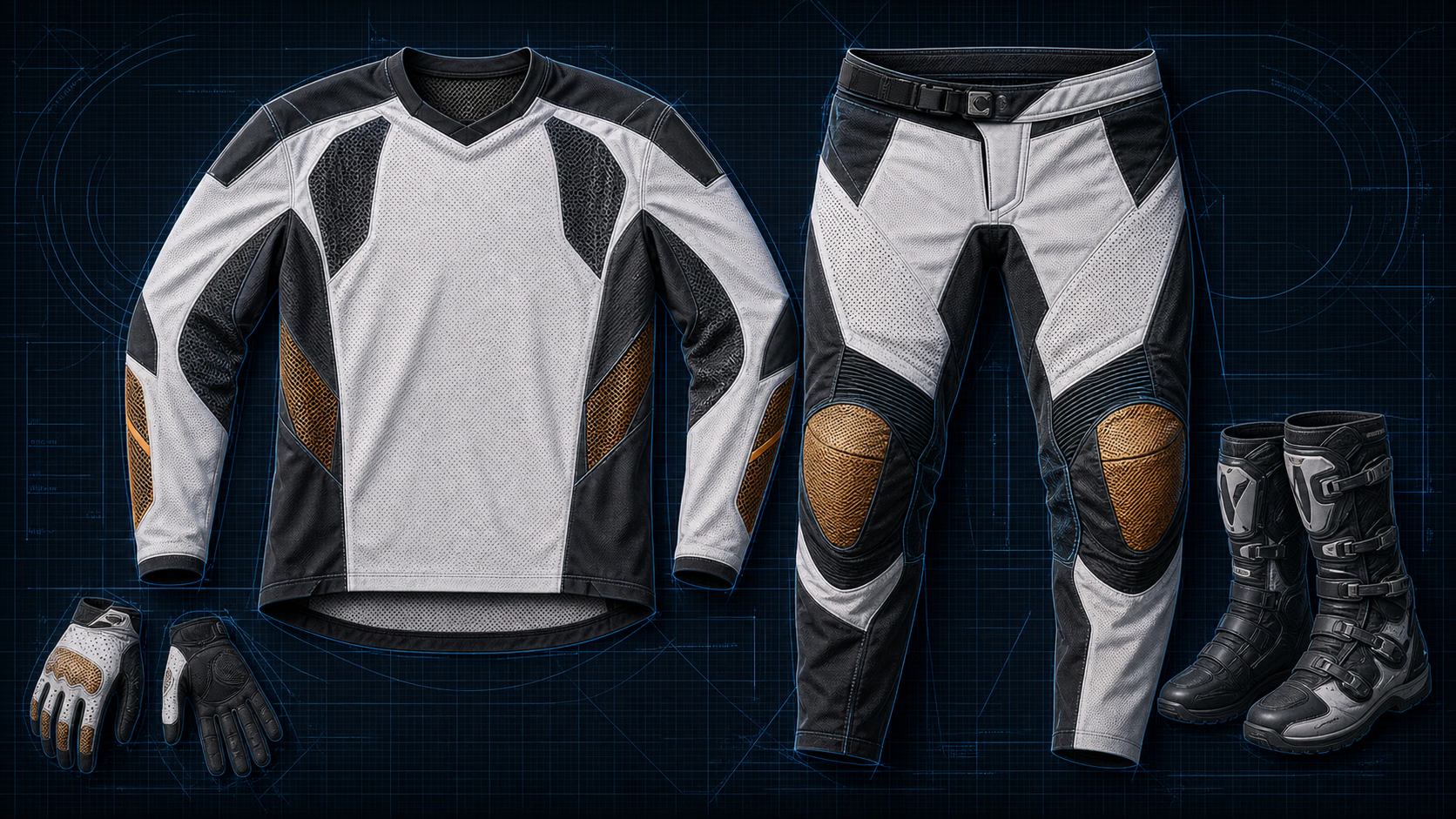
This is the soft goods — the jerseys, pants, base layers, and hydration you actually ride in on a Sur-Ron or Talaria. It matters for comfort and durability, but here's the honest part most gear pages skip:
> A jersey and pants are NOT your protection. They're riding wear. Your protection — helmet, boots, and body/limb armor — is separate, and non-negotiable.
With that clear, here's the kit.
Jerseys
A proper MX jersey is vented, stretchy, and cut for the bars — far better than a cotton tee, and cheap. Budget to mid, adult:
Youth:
| Jersey | Price | Fit note |
|---|---|---|
| O'Neal Element Racewear | $32.99 | The cheapest way out of a cotton tee |
| Leatt Moto 4.5 Lite | $38.49 | Cut to be ridden in, not stood around in |
| Fox Racing 180 Shield | $44.95 | Size by chest, confirm sleeve length |
| Fox Racing Youth 180 Noble | $39.95 | Size by chest and arm, not by age |
None of these are armor — the padding, where there is any, is comfort rather than a CE rating. The whole adult jersey range here spans $11.96, which is the clearest sign that this is not the decision to agonise over. Size by chest.
Pants
MX pants are abrasion-resistant riding wear with heat-resistant knee panels built to survive braces and the bike — not to protect your knees. Adult:
Youth:
| Pants | Price | Fit note |
|---|---|---|
| O'Neal Element Racewear | $89.99 | No CE armor claim — wear protection under them |
| Fox Racing 180 Noble | $116.10 | Knee panels tolerate braces underneath |
| Fox Racing Youth 180 Noble | $88.07 | Brace-friendly cut in a youth size |
The reinforced knee panels are why you can run knee braces underneath — the pants don't replace them. Note that the youth pants cost $19.96 more than the cheapest adult pair; a smaller garment is not a cheaper one, because the brace-friendly panel is the expensive part and it does not scale down.
Base layer & the one protective piece
A compression base layer wicks sweat, cuts chafing under armor, and regulates temperature:
The one genuinely protective item in this list is a certified impact short — CE EN1621-1 Level 1 at the hips, worn under your pants:
Base layer for comfort, certified short for protection — two different jobs.
Hydration & carry
A Sur-Ron has nowhere to carry water, so a hydration pack does double duty (drink + small storage). Route the tube and straps so they can't snag the bars or levers. Budget:
Armor-friendly, more cargo:
The small stuff
Knee-brace socks cut the rub under braces and boots — comfort, not support:
A gear bag hauls your kit to the trailhead (it's a bag, not bike luggage — don't strap it to the moto):
What you are actually paying for
Add up a full adult kit from this page at the cheap end — jersey, pants, base layer, impact shorts, hydration — and it comes to $436.88. At the expensive end it is $613.84.
Here is the part worth sitting with. Of that $436.88, exactly $159 is certified protection: the Leatt impact shorts, the only item on the page carrying a standard number. That is 36% of the spend. The other 64% is abrasion-resistant riding wear with no CE rating at all.
Two more numbers make the same point:
- The $104.95 base layer costs 2.3x the most expensive jersey on this page, and it is explicitly not protective. It is a comfort purchase, and a defensible one — chafing under armour ends rides — but it is comfort.
- The $159 impact shorts cost more than a budget jersey and pants combined ($122.98).
None of that is an argument against buying the kit. It is an argument for knowing which line on the receipt is doing the protecting, because the marketing on this category will not tell you. If your budget is fixed, the certified item is the one to buy first and the base layer is the one to defer.
The bottom line
Good riding kit — a vented jersey, tough pants with brace-friendly knee panels, a wicking base layer, and a hydration pack routed clear of the controls — makes every ride more comfortable and your gear last longer. Just keep the honest line straight: this is riding wear, not protection. Layer your real protection — helmet, boots, armor, knee braces, and a certified impact short — underneath. Choosing a bike? Run the Find Your Ride configurator.
VoltRipper is independent — we don't sell gear and our recommendations aren't pay-to-play. Jerseys, pants, base layers, socks, and packs are riding wear, not certified protective equipment unless a specific standard (e.g. CE EN1621) is stated — wear real protection separately, size gear to fit, and route hydration tubes and straps clear of the controls. Affiliate disclosure is included on monetized pages, and we're spec-verified/data-driven rather than hands-on until first-hand testing exists.
FAQ
Do I need real MX jerseys and pants for a Sur-Ron?
You don't strictly need MX-specific kit, but it's genuinely better for riding than regular clothes — and it's important to understand what it does and doesn't do. MX jerseys and pants are built from durable, vented, stretch fabrics cut for a riding position, with heat-resistant knee panels and room for braces underneath, so they hold up to trail abuse and keep you cooler than cotton. What they do NOT do is protect you: a standard jersey or pant is not CE armor and won't prevent impact or abrasion injuries on its own. So wear proper riding kit for comfort and durability, but layer your actual protection — helmet, boots, and body/limb armor — separately underneath or over it.
Are motocross pants protective?
Not by themselves — most MX pants are abrasion-resistant riding wear, not certified protective gear, so treat them as the layer you wear over your protection rather than as protection. Many quality pants include hip padding and tough leather knee panels, but unless the source specifically publishes a CE armor standard, that padding is comfort and durability, not certified impact protection. The reason good pants have reinforced knee panels is to survive contact with knee braces and the bike, not to replace the braces. So pair MX pants with actual knee braces or guards and, if you want hip protection, a certified impact short underneath.
What should I wear under my riding gear?
A moisture-wicking base layer for comfort and temperature control, and — if you want extra protection — a certified impact short or armor under your pants. A compression base layer moves sweat off your skin, reduces chafing under armor, and helps regulate temperature on long or hot rides, which matters more than people expect. For protection under the pants, a padded impact short with a published CE hip rating adds genuine crash protection at the hips and tailbone. Keep the base layer for comfort and the certified short for protection as two separate jobs, and size both to fit snugly without restricting movement.
Do I need a hydration pack for trail riding?
For anything beyond a short blast, yes — staying hydrated matters for focus and safety, and a pack is the easiest way to carry water plus a few essentials on a bike with little storage. A hydration pack with a bladder lets you drink without stopping, and the external pockets hold a tube, a multitool, keys, and a phone, which a Sur-Ron otherwise has nowhere to carry. The one safety point: route the drink tube and straps so they can't snag the bars, levers, or your body in a fall. Pick a capacity that matches your ride length, and choose a harness cut that fits over any chest protector or armor you wear.