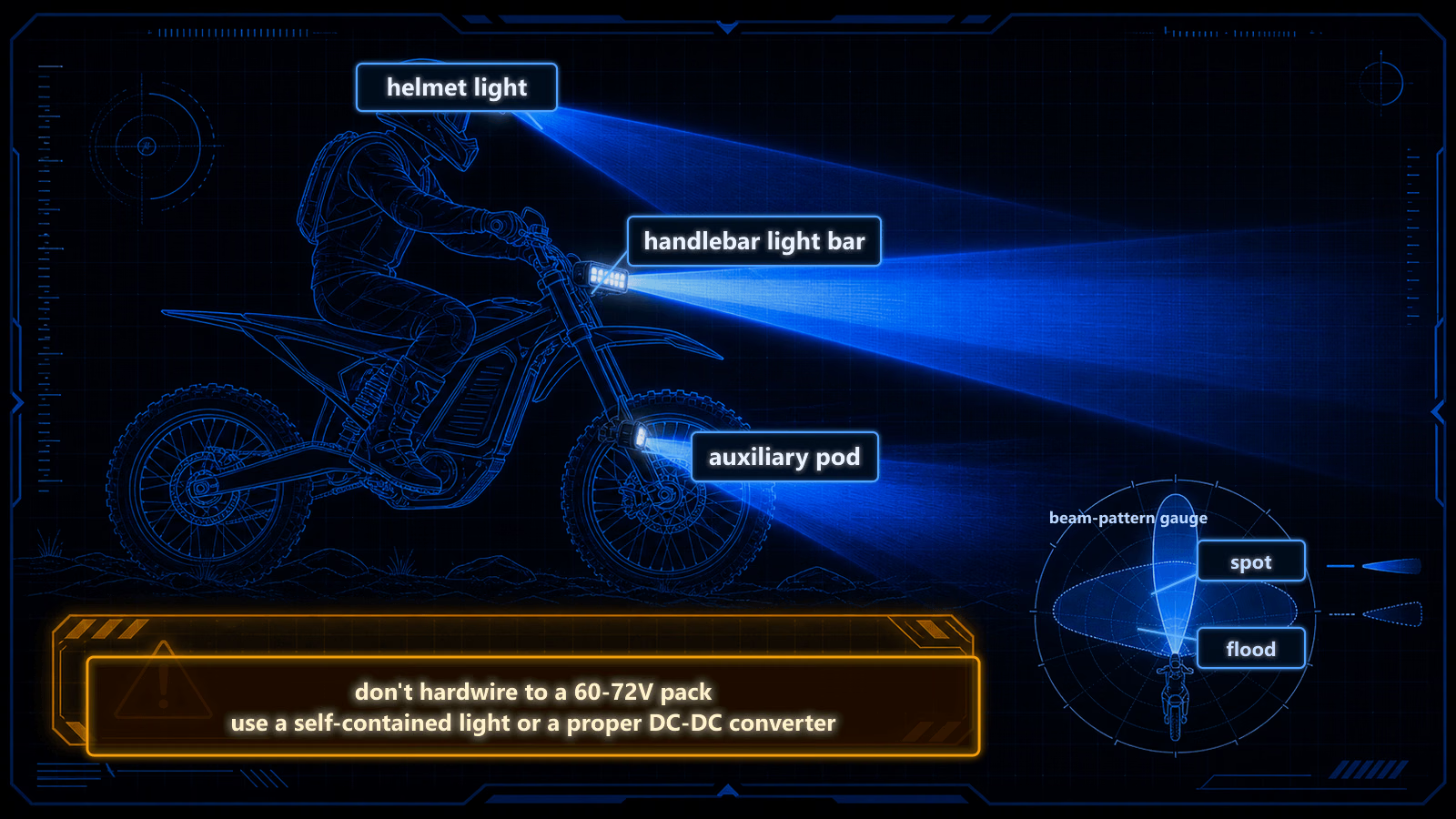
The short answer
Most e-motos have weak or no lights, so night riding a Sur-Ron or Talaria needs real illumination. Two rules decide how you add it:
- Hardwiring a light to a 60-72V pack is a fire risk. Either go self-contained (a helmet light — zero wiring), or hardwire it properly: a DC-DC converter, fuse, correct gauge, sealed connectors.
- Off-road lighting is NOT street-legal. A bright light doesn't make the bike road-legal — that's a separate job.
The easiest, safest path is a helmet light. Here's the full menu.
The rules (read before you wire anything)
Never wire a 12V light straight to the traction pack. A light is low-voltage; the pack is 60-72V. You need a DC-DC converter to step it down (we cover a 72V DC-DC on the performance page), a fuse, the right gauge, and sealed connectors away from heat and abrasion. Do it right or it's a genuine fire hazard.
Off-road ≠ street-legal. These are visibility lights, not regulated signaling. Many aren't DOT-approved. To ride the road, see the street-legal parts guide.
Every hardwired light costs range — it draws from your battery. And aim it on a solid mount, so vibration doesn't point it at the sky or blind others.
The easy, safe path: self-contained helmet lights
The lowest-risk option touches no bike wiring — a rechargeable helmet light you charge like a flashlight. Bonus: it lights wherever you look, which is gold in corners and over jumps. Three good ones:
Many riders run a bike light plus a helmet light together — the bike lights the trail, the helmet lights the corner.
Bike headlights (hardwired — mind the DC-DC rule)
A fixed headlight is always on and aimed down the trail. Two are e-moto-specific (cheap to premium), two are universal masks — all need the DC-DC/fuse wiring above:
Auxiliary pods (add spread & distance)
Pods supplement a headlight — a spot for distance, a flood/wide for the corners. The Baja Designs S1 below is the Wide Cornering pattern (42° flattened beam — the corners-and-dust job). The same pod comes as a 9° Spot, the wrong optic for a bike that already has a headlight, and as a Work/Scene area light that Baja Designs says is not for driving — Amazon lists that one too, so check the pattern before you buy. Premium to cheap-and-cheerful:
Light bars (maximum output)
A bar throws the most light — and draws the most current, so it costs the most range. Watch the amp draw against your battery. The Rigid below is the Flood pattern (Rigid's spec table: 50° spread, 129 m to 1 lux, 80 W) — the right one for a single bar on a trail bike; the Spot version of the same bar (16.5°, 462 m) is a truck searchlight that leaves the corners black:
Wiring it right
If you hardwire, do the safety wiring properly: a DC-DC converter first (from the performance page), then a fused harness with a switch, and a solid clamp mount that holds aim:
Every light on this page, by output and cost per lumen
| Light | Output | Mount | Price | Cost / 1,000 lm |
|---|---|---|---|---|
| Nilight 18W spot pods (2-pack) | 1,260 lm | Aux pod | $11.43 | $9.07 |
| Warp 9 Big Light Kit | 5,000 lm | Bike headlight | $159.99 | $32.00 |
| Acerbis VSL Universal | 4,320 lm | Bike headlight | $158.36 | $36.66 |
| Rigid E-Series Pro 6-in bar (Flood) | 9,504 lm | Light bar | $389.99 | $41.03 |
| GritShift Blinder | 700 lm | Bike headlight | $32.99 | $47.13 |
| Oxbow Voyager helmet kit | 2,100 lm | Helmet | $99.99 | $47.61 |
| Baja Designs S8 10-in bar | 6,324 lm | Light bar | $349.95 | $55.34 |
| Baja Designs S1 pod (Wide Cornering) | 2,375 lm | Aux pod | $131.95 | $55.56 |
| NiteRider Lumina Pro 1200 | 1,200 lm | Helmet | $99.99 | $83.33 |
| Denali D3 driving pod | 2,100 lm | Aux pod | $204.99 | $97.61 |
| Denali DM 2.0 pod | 1,095 lm | Aux pod | $133.99 | $122.37 |
| Outbound Hangover helmet light | ~1,000 lm | Helmet | $135.00 | $135.00 |
Why you should not buy the top row
The spread on that last column is 14.9x — from $9.07 per thousand lumens to $135.00. If lumens per dollar were the whole story, this page would be one line long and it would say "buy the Nilight two-pack."
It is not, and the reason is the single most useful thing to understand about riding at night. Beam pattern beats lumen count, and it is not close. A raw flood pod throws light everywhere including straight back at you off dust, fog and your own front wheel spray. More lumens with no optics discipline makes that worse, not better. What you actually need is throw down the trail and a defined edge, which is engineering rather than wattage — and engineering is what the expensive end of this table is charging for.
So read that column as what the market charges for a beam pattern, not as a bargain ranking. The $135.00-per-thousand Outbound helmet light is the most expensive thing here per lumen and it is a genuinely good buy for singletrack, because a helmet light points where you look and its pattern is cut for trees at close range. The $9.07 Nilight pods are honest hardware at an honest price and they are a supplement, not a headlight.
The one number in that table that is unambiguously good value is the Warp 9 kit at $32.00 per thousand lumens — a purpose-built e-moto headlight rather than a repurposed truck pod, at the second-cheapest cost per lumen on the page.
Which setup is for you?
- Night-curious / occasional → a self-contained helmet light. No wiring, no fire risk.
- Regular night rides → a bike headlight wired through a proper DC-DC + fuse, ideally plus a helmet light.
- Max trail illumination → add pods or a bar — and budget for the range they cost.
The bottom line
Night riding an e-moto is a blast with real light — just do it safely. The easy, safe path is a self-contained helmet light (zero wiring); if you want a fixed bike headlight, pods, or a bar, wire them through a proper DC-DC converter and fuse — never straight to the 60-72V pack — mount them solid, and aim them. And remember these are visibility lights, not a street-legal conversion. Keep the bike dialed with the maintenance guide, and if you're choosing a bike, run the Find Your Ride configurator.
VoltRipper is independent — we don't sell parts and our recommendations aren't pay-to-play. Wiring lights into a 60-72V system is safety-critical — use a proper DC-DC converter, fuse, gauge, and sealed connectors, or choose a self-contained light — and off-road lights are not street-legal equipment. Affiliate disclosure is included on monetized pages, and we're spec-verified/data-driven rather than hands-on until first-hand testing exists.
FAQ
How do I add a headlight to a Sur-Ron for night riding?
You have two safe routes, and one of them avoids the bike's wiring entirely. The easiest and lowest-risk is a self-contained, battery-powered helmet or bar light that never touches the pack — you charge it like a flashlight and mount it, done. The other route is a hardwired bike light, which gives you a fixed, always-on headlight but must be wired correctly: because these bikes run 60-72V and lights are low-voltage, you need a proper DC-DC converter to step the voltage down, plus a fuse, correct wire gauge, and sealed connectors. Never wire a 12V light straight to the traction pack. Pick self-contained for simplicity and zero fire risk, or a hardwired setup done properly if you want a permanent headlight.
Is it safe to wire lights to an electric dirt bike battery?
Only if you do it correctly, and wiring straight to the 60-72V traction pack is not correct — it's a fire risk. A light is a low-voltage device, so it has to be fed from a proper DC-DC converter that steps the pack voltage down to 12V (or the light's rated voltage), protected by a correctly-sized fuse, with the right wire gauge and sealed weatherproof connectors kept away from heat and abrasion. Done that way, a hardwired light is safe and reliable. Done by tapping the pack or with undersized, unfused wiring, it's a genuine fire hazard on a bike that carries a lot of energy. If you're not comfortable with this, either use a self-contained light or have the wiring done by someone who knows high-voltage systems.
Do off-road lights make my dirt bike street legal?
No — a bright headlight, pod, or light bar does nothing for street-legality on its own. Off-road/night-riding lights are visibility equipment for seeing the trail, not the regulated signaling equipment (DOT/ECE headlight, turn signals, plate, registration) that road use requires; many of these lights are explicitly not DOT-approved and can even be illegal on-road if they're too bright or aimed wrong. So use these to see off-road, but if you want to ride on the street, that's a separate job covered on our street-legal parts page — and even there, the lights are only part of registration and equipment law. Don't confuse 'I can see' with 'this is road legal.'
How bright a light do I need for night trail riding?
More than you'd guess, and the beam pattern matters as much as the raw lumens. For real speed at night off-road, riders typically want a strong primary light in the roughly 1,500-6,000+ lumen range with a spot/driving beam to see far ahead, often supplemented by a flood or wide-cornering beam so the corners aren't dark. A helmet light adds light wherever you look, which is hugely valuable in corners and over jumps, so many riders run a bike light plus a helmet light together. Just remember every hardwired light draws current from your battery, cutting range, so balance brightness against how far you need to ride — and make sure the mount holds aim against the vibration.