Tracked price checks
Bikes in this guide
Sur-Ron
Light Bee X
Enormous aftermarket and parts ecosystem — the most-supported e-dirt-bike platform
Trade-off: Advertised range collapses at speed — plan for real-world miles well under the claim
We may earn a commission if you buy through this link, at no extra cost to you.
Check price at ATV Wholesale OutletTalaria
Sting R MX4
Bigger 2,700 Wh (60V/45Ah) LG-cell pack than a stock Sur-Ron — more usable range
Trade-off: Ships factory-limited to 20 mph — needs derestriction to reach its ~40+ mph potential
We may earn a commission if you buy through this link, at no extra cost to you.
Check price at Luna CycleSur-Ron
Ultra Bee
Big 4.4 kWh (74V/60Ah) pack, ~24.5 kW HP listings, and a 59 mph top end — a real step up from the Light Bee
Trade-off: Heavier (~195 lb) and more bike than a beginner needs
We may earn a commission if you buy through this link, at no extra cost to you.
Check price at Boca ScootersThe short answer
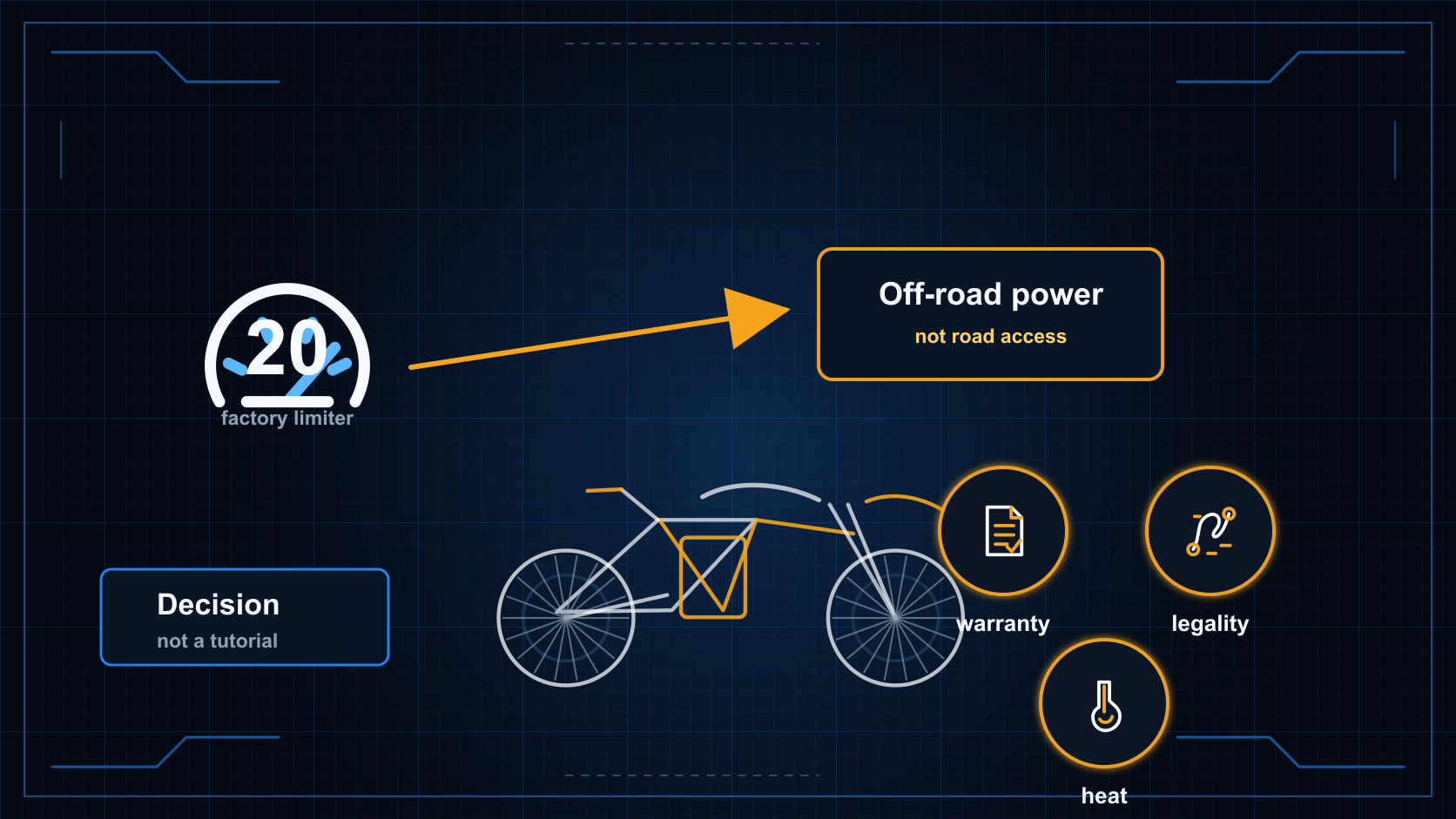
A lot of electric dirt bikes — Sur-Ron, Talaria, and many others — ship with a speed or power limiter, often a ~20 mph "e-bike" mode, even though the bike is capable of far more. Derestriction unlocks that full performance. It's extremely common, and it's usually a settings or controller change rather than new hardware. But it isn't free: it can void your warranty, push the bike further outside any street-legal status, stress the battery and motor, and hand a beginner more power than they can handle. This guide explains what's really going on and the trade-offs — not a step-by-step, because the responsible version of this is understanding the decision, not a tutorial.
The limiter is about paperwork, not about your bike
We record both the shipped limit and the unlocked top speed for 13 of the bikes we rank, and the pattern is blunt once you line them up:
| Bike | Ships limited to | Unlocked top speed | Multiplier |
|---|---|---|---|
| Altis Sigma | 20 mph | 80 mph | 4.0x |
| Onyx RCR | 20 mph | 65 mph | 3.2x |
| Talaria Komodo | 20 mph | 65 mph | 3.2x |
| Talaria Sting MX5 Pro | 20 mph | 59 mph | 3.0x |
| Delfast Top 3.0 | 20 mph | 50 mph | 2.5x |
| Talaria X3 (xXx) | 20 mph | 47 mph | 2.4x |
| Talaria Sting MX3 | 20 mph | 47 mph | 2.4x |
| Talaria Sting R MX4 | 20 mph | 45 mph | 2.2x |
| Heybike Villain | 20 mph | 45 mph | 2.2x |
| Yozma IN10 | 18 mph | 40 mph | 2.2x |
| Tuttio Soleil01 | 15 mph | 40 mph | 2.7x |
| Burromax TT750R | 14 mph | 26 mph | 1.9x |
| Hiboy DK1 | 5 mph | 15.5 mph | 3.1x |
9 of those 13 ship limited to exactly 20 mph — a 45 mph bike and an 80 mph bike, capped at the same number. No engineer tuned that per machine. 20 mph is the US Class-2 e-bike threshold, so a bike that ships at 20 is a bike that ships as an e-bike: simpler customs, simpler classification, less seller liability.
Two things follow, and they matter more than the trivia:
- The shipped setting tells you nothing about the machine. The Altis Sigma and the Burromax TT750R
both arrive slow. One of them unlocks to 80 mph and the other to 26. If you are judging a bike by how it behaves out of the box, you are reading the paperwork, not the bike.
- "Derestricting" is usually returning the bike to its designed performance, not overclocking it.
The hardware was built for the higher number; the limiter is a shipping configuration. That is why it is generally reversible and why it rarely damages anything on its own — and equally why it does not make a slow bike fast.
None of which makes unlocking automatically wise: the warranty, legal and safety trade-offs below are the real decision, and a 4x speed increase on a bike a beginner is still learning is a genuinely bad idea. But understand what you are changing — a regulatory setting, not the engineering.
Why bikes ship limited
It's rarely about protecting you from the bike. Manufacturers and sellers limit bikes at the factory to:
- Ease shipping and customs classification — a bike that presents as a low-power "e-bike" clears regulatory and import hurdles more easily than a multi-kilowatt motorcycle.
- Reduce liability — a slower default setting lowers the seller's exposure.
- Offer a beginner mode — the limiter doubles as a genuinely useful low-power setting for new or young riders.
The full capability is designed in; the shipped setting is a floor, not the ceiling.
What derestriction actually does
Derestriction removes or raises that factory cap so the bike delivers the speed and power it was already built for. Depending on the model, that can mean anything from a menu/app setting to a controller change. The key point for a buyer: you're unlocking existing capability, not adding it — a limited Sur-Ron and a derestricted one are the same hardware, set differently.
The trade-offs (read before you decide)
This is where honesty matters more than hype:
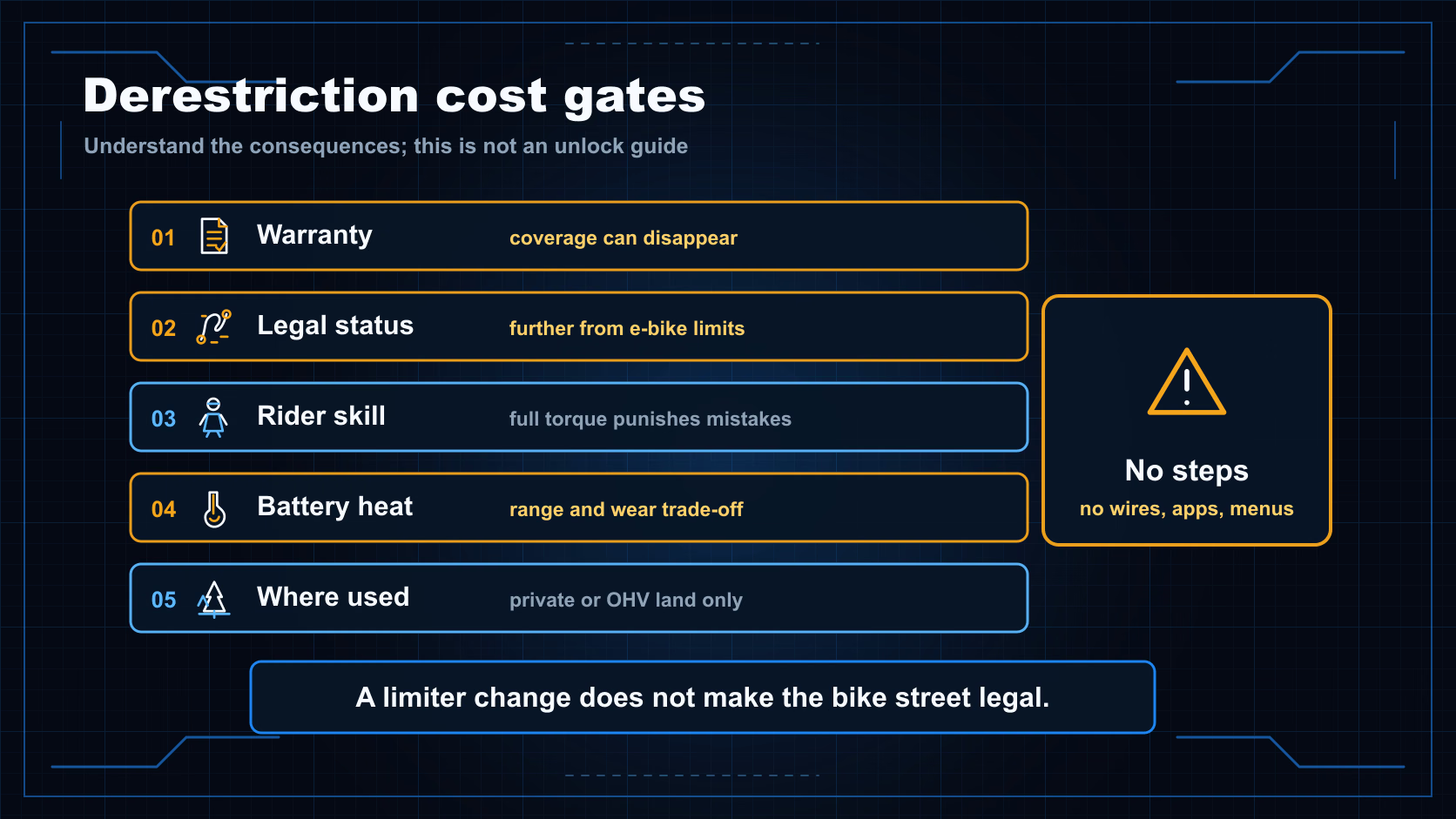
- Warranty. Removing a limiter can void your manufacturer warranty. For a bike you just paid thousands for, that's a real cost.
- Legality. A derestricted bike is further from any street-legal e-bike classification, not closer. It doesn't gain road access — it loses the fig leaf. (These bikes aren't street-legal as sold anyway — see our legality guide.)
- Safety. Full power on a light bike is a lot, fast. It rewards experience and punishes mistakes — the beginner mode exists for a reason, and derestriction is emphatically not for new or young riders.
- Battery and motor. More power means faster battery drain (shorter real range), more heat, and more stress on the drivetrain — potentially shortening component life.
Should you derestrict?
There's no one answer, but a reasonable rule:
- Maybe, if you're an experienced rider, on private or designated OHV land, who understands the warranty/legality/battery trade-offs and wants the performance you paid for.
- No, if you're a beginner, buying for a kid, hoping it makes the bike street-legal (it doesn't), or you value the warranty.
Whatever you decide, do it model-specifically — the right approach and the exact trade-offs vary by bike, so consult your bike's manual and its established owner community rather than a generic tutorial.
The bottom line
Speed limiters are a shipping-and-liability convenience, and most electric dirt bikes have more performance waiting behind them. Derestriction unlocks that — but it can cost you your warranty, adds nothing to your street-legal case, stresses the battery, and demands real skill. It's a legitimate choice for an experienced rider on off-road land who goes in clear-eyed; it's the wrong move for a beginner or anyone hoping it solves the street-legal problem. Choosing a bike with the performance you want out of the box? Our how to choose guide and Find Your Ride configurator can help.
VoltRipper is independent — this is general information, not instructions or legal advice. Modifying a bike's power can void warranties, affect safety, and change its legal status; research your specific model and local laws, and ride only where it's legal. Affiliate disclosure is included on monetized pages.
FAQ
Why is my electric dirt bike speed-limited?
Many trail bikes (Sur-Ron, Talaria, and others) ship with a speed or power limiter — often a ~20 mph 'e-bike' mode — to simplify shipping, customs, and regulatory classification, and to reduce the seller's liability. The bike typically has more speed and power available than the shipped setting allows, which the owner can unlock.
Should I derestrict my Sur-Ron or Talaria?
It unlocks the full performance the bike already has, but it comes with real trade-offs: it can void the warranty, it pushes the bike even further from any street-legal e-bike status, it stresses the battery and motor, and it delivers a lot of power fast. It's reasonable for an experienced rider on private or OHV land who understands those trade-offs — and a bad idea for a beginner or a kid.
Does derestricting void the warranty?
Often, yes. Changing controller settings or hardware to remove a limiter can void the manufacturer's warranty. Check your specific bike's warranty terms before you touch anything — a saved receipt doesn't help if the coverage is voided.
Is a derestricted electric dirt bike street legal?
No — if anything, derestricting makes it less likely to ever qualify as a street-legal e-bike, because it pushes the bike further past the 750W / 20-28 mph limits. These bikes aren't street-legal as sold regardless (see our legality guide); derestriction is purely about off-road performance, not road access.
Sources
Specification sources
- Sur-Ron Light Bee XATV Wholesale Outlet - 2026 Sur-Ron Light Bee X (72V/35Ah, 10 kW), $4,699 from $4,999Checked
- Talaria Sting R MX4Talaria Canada - Sting R MX4 specificationsChecked
- Sur-Ron Ultra BeeVoro Motors — Surron Ultra Bee HP SW 24.5kW 74V 60AhChecked