Tracked price checks
Bikes in this guide
Sur-Ron
Light Bee X
Enormous aftermarket and parts ecosystem — the most-supported e-dirt-bike platform
Trade-off: Advertised range collapses at speed — plan for real-world miles well under the claim
We may earn a commission if you buy through this link, at no extra cost to you.
Check price at ATV Wholesale OutletTalaria
Sting MX5 Pro
72V/2.88 kWh Samsung-cell platform is a real power and range step up from the 60V Sting and X3 family
Trade-off: Ships limited to 20 mph, so the high-speed numbers assume derestriction and local-law risk
We may earn a commission if you buy through this link, at no extra cost to you.
Check price at Luna CycleSegway
Xaber 300
Established brand with a real US dealer network, app ecosystem, and smart-vehicle features rare in this class
Trade-off: New model, so aftermarket parts and owner knowledge are nascent versus Sur-Ron and Talaria
We may earn a commission if you buy through this link, at no extra cost to you.
Check price at SegwayThe short answer
The best electric dirt bike brand isn't the one with the biggest spec sheet — it's the one that will still support your bike in three years. That is the single most useful lens for this question, and it reorders the field: a brand with slightly lower specs but a deep parts network and real dealers is a safer buy than an obscure name that out-specs it and can't get you a controller when one fails.
Here is the honest tier list, built from the bikes we track — and from which brands have the support and staying power that a spec comparison misses.
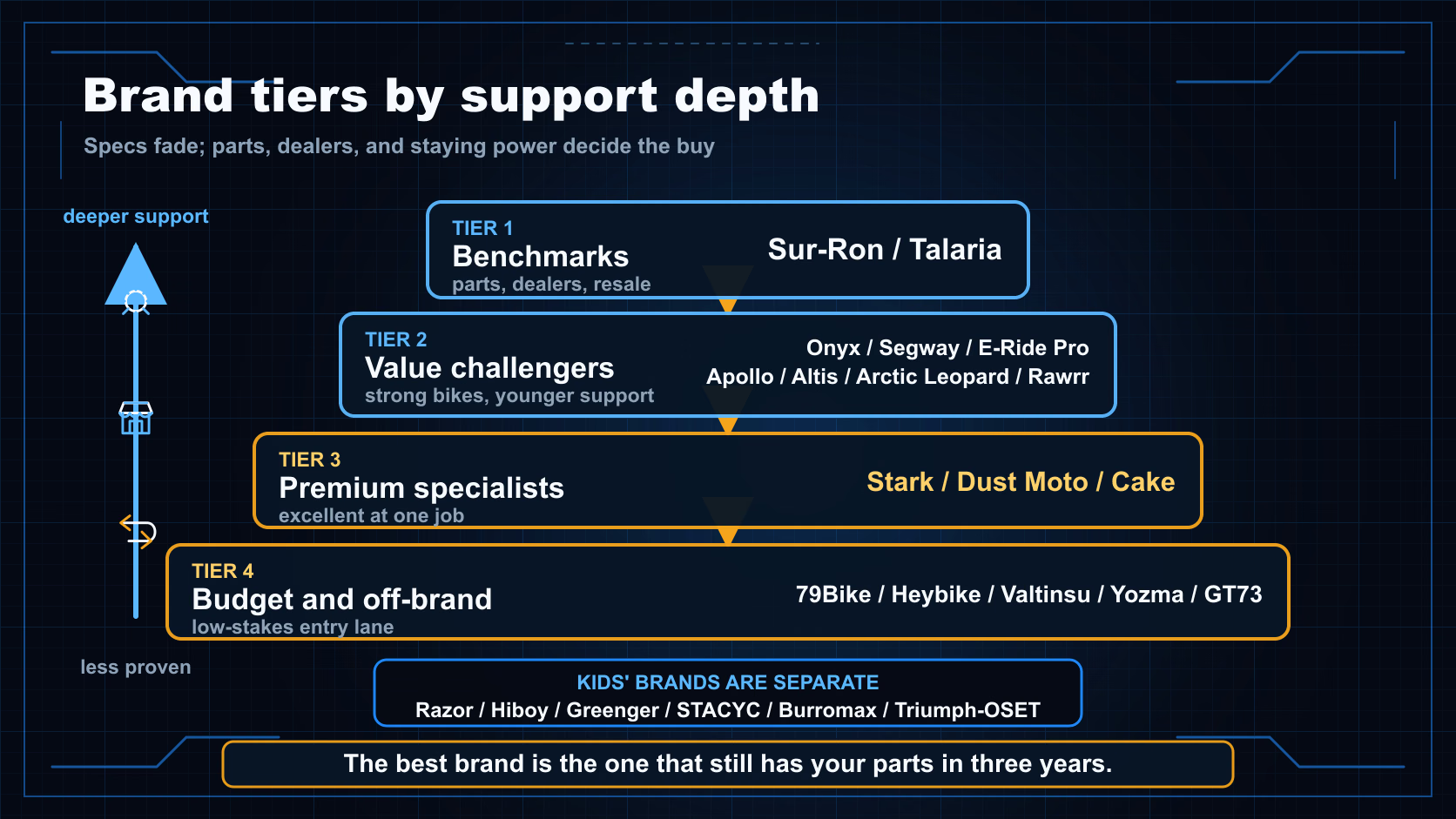
Tier 1 — the benchmarks: Sur-Ron and Talaria
These two define the class, and they earn it on support more than specs.
- Sur-Ron posts top-tier Scores across its lineup (the Ultra Bee at 94, the youth Hyper Bee at 96 — the top score in its own class) and, more importantly, has the deepest aftermarket and parts ecosystem in the category. Nearly every upgrade, spare and bolt-on is built for the Sur-Ron platform first. If you plan to modify, maintain for years, or resell, this is the safest place to be — and it is why a Sur-Ron holds its Score against higher-spec rivals.
- Talaria is the close second: a broad range from the ~$3,099 value Sting to full-size machines, a real dealer network, and sibling-platform familiarity that makes parts and service easier than any newcomer. It is the other brand most riders should start with.
Buy either of these if support, parts and resale matter to you more than squeezing out the last few specs. For most riders, that's the right priority.
Tier 2 — the value challengers: strong bikes, younger support
These brands make genuinely excellent bikes — several out-score the benchmarks on paper — but their aftermarkets and support networks are still maturing. They are the smart pick when you want maximum capability per dollar and are comfortable with a thinner safety net.
- Onyx — the RCR is a near-top-scoring street-friendly dual-sport, chainless and refined.
- Segway — an established brand with a real US dealer network and app ecosystem; its adult Xaber 300 is a top-tier value bike, though its lineup also spans youth models.
- E-Ride Pro, Apollo, Altis, Arctic Leopard, Rawrr — a cluster of feature-loaded, high-scoring value bikes that undercut the benchmarks. Each is a real contender; each asks you to accept a smaller parts network in exchange.
Buy from Tier 2 if you want the most bike for the money and will be your own support network. Just confirm parts availability before you commit — that is the one thing these brands can't yet match Sur-Ron on.
Tier 3 — the premium specialists
Expensive, focused, and not for everyone — but the best at what they do.
- Stark — the Varg is the electric 450 race benchmark, ~$12,000+ and built to replace a gas motocrosser. If you actually race, nothing else here is in the conversation.
- Dust Moto — an American-made full-size machine at premium money, the closest current heir to the ambition Alta had.
- Cake — beautiful, design-led, near-silent, and the one to research hardest before buying: Cake went through bankruptcy and relaunched under new ownership, and its US parts and dealer network is still rebuilding. A gorgeous bike with real brand risk.
Buy premium only for the specific thing each does — racing, American-made presence, or design — and go in eyes-open on the price and, for Cake, the support question.
Tier 4 — budget and off-brand
Cheaper names — 79Bike, Heybike, Valtinsu, Yozma, GT73 and similar — that can be reasonable value for a first or casual bike but trade away support, resale and spec accuracy. A 79Bike Falcon Pro is a lot of spec for the money; the rest are best treated as low-stakes entries, not bikes to rely on for years.
And the honest warning that applies across every tier: watch a brand's staying power, not just its bikes. Several names in this space have gone dark or through turmoil — a company that folds takes its parts supply with it. Prefer a brand you can still call in three years.
The kids' brands are their own category
For young riders, the names change entirely — Razor, Hiboy, Greenger (Honda-built), STACYC, Burromax, Triumph/OSET. These are judged on age-appropriateness, weight limits and safety, not aftermarket depth — and because our Score measures fitness for purpose, a good youth bike scores well on its own terms (the fast Sur-Ron Hyper Bee tops the youth class at 96, and the Honda-licensed Greenger G2 earns an 83). We rank them on their own terms in the best electric dirt bikes for kids guide.
How to actually choose a brand
- You want the safest long-term buy → Sur-Ron or Talaria. Support and resale lead.
- You want the most spec-per-dollar → a Tier 2 value challenger, with parts availability confirmed.
- You race, or want premium/American-made → Stark, Dust Moto (or Cake for design, with the risk priced in).
- First cheap bike or a kid's bike → a budget or kids' brand, eyes open about what you're getting.
- Not sure which brand fits your riding? Run the Find Your Ride configurator, which sizes the right bike regardless of badge.
The bottom line
The best electric dirt bike brand for you depends on whether you value support or specs — and the honest ranking puts Sur-Ron and Talaria on top not because they always win the spec sheet, but because they'll still have your parts in three years. The value challengers can out-spec them for less; the premium names do one thing brilliantly; the budget brands are fine for low stakes. Pick the tier that matches how long and how hard you'll ride, confirm the parts network before you buy from a newer name, and treat a brand's staying power as a spec in its own right — because in this class, it is.
Brand-by-brand, in depth:
- Sur-Ron: The Complete Buyer's Guide
- Talaria: The Complete Buyer's Guide
- Does KTM Make an Electric Dirt Bike?: Yes — But Read the Ownership Story First
- Does Honda Make an Electric Dirt Bike?: The CRF-E2 Story Is More Tangled Than It Looks
- Does Yamaha Make an Electric Dirt Bike?: No — and the 'PW-E' You're Picturing Doesn't Exist
- What Happened to Alta Motors?: The Best Electric Dirt Bike Company That Didn't Make It
- Does MotoTec Make an Electric Dirt Bike?: The Full Range, and the Catch
Browse the whole catalog:
VoltRipper is independent — our tiers come from verified specs, the transparent VoltRipper Score, and support/availability, not commissions. Brand status changes; where a company has gone through bankruptcy or ownership change we say so. We are spec-verified and data-driven rather than hands-on. Affiliate disclosure is included on monetized pages.
FAQ
What is the best electric dirt bike brand?
For most riders, Sur-Ron and Talaria are the benchmark brands — not because they always have the highest specs, but because they have the deepest parts networks, the widest dealer support, and resale that holds up because of it. Sur-Ron's lineup scores near the top of our board — the Ultra Bee at a top-tier 91 and the youth Hyper Bee at a board-leading 96 — but the real reason to start there is the ecosystem, not the spec sheet. If support and staying power matter to you, start there; if you want maximum spec-per-dollar, the value challengers below can beat them on paper.
Which electric dirt bike brands are the most reliable?
Reliability in this class is really about support and parts, not just build quality — a bike you can't get parts for is unreliable no matter how well it's made. The established brands (Sur-Ron, Talaria, Segway) and the ones with real dealer networks are the safest on that measure. Newer brands can make excellent bikes but carry more risk if the company or its parts supply falters, which several have.
Are cheap electric dirt bike brands any good?
The budget brands (79Bike, Heybike, Yozma and similar) can be reasonable value for a first or casual bike, but you trade away support depth and resale, and the specs are often optimistic. For a kid's bike or a low-stakes try they're fine; as a bike you'll rely on for years, spend up to a supported brand. Watch especially for brands that have gone through bankruptcy or ownership turmoil.
Which electric dirt bike brand has the best support network?
Sur-Ron has the deepest aftermarket and parts ecosystem in the class — nearly every upgrade and spare is made for its platform first. Talaria is close behind with a broad dealer network, and Segway brings an established brand with real US dealers and an app ecosystem. Those three are the safest bets if you value being able to get parts and service for years.
Sources
Specification sources
- Sur-Ron Light Bee XATV Wholesale Outlet - 2026 Sur-Ron Light Bee X (72V/35Ah, 10 kW), $4,699 from $4,999Checked
- Talaria Sting MX5 ProTalaria Canada - Sting MX5 Pro specificationsChecked
- Segway Xaber 300Segway - Xaber 300 official specificationsChecked