Tracked price checks
Bikes in this guide
Sur-Ron
Light Bee X
Enormous aftermarket and parts ecosystem — the most-supported e-dirt-bike platform
Trade-off: Advertised range collapses at speed — plan for real-world miles well under the claim
We may earn a commission if you buy through this link, at no extra cost to you.
Check price at ATV Wholesale OutletTalaria
Sting R MX4
Bigger 2,700 Wh (60V/45Ah) LG-cell pack than a stock Sur-Ron — more usable range
Trade-off: Ships factory-limited to 20 mph — needs derestriction to reach its ~40+ mph potential
We may earn a commission if you buy through this link, at no extra cost to you.
Check price at Luna CycleYozma
IN10
One of the cheapest ways into a real electric dirt bike — around $1,079 with full hydraulic brakes and suspension
Trade-off: No-name budget brand — minimal aftermarket, spare parts, or dealer/community support
We may earn a commission if you buy through this link, at no extra cost to you. As an Amazon Associate I earn from qualifying purchases.
Check Amazon priceThe short answer
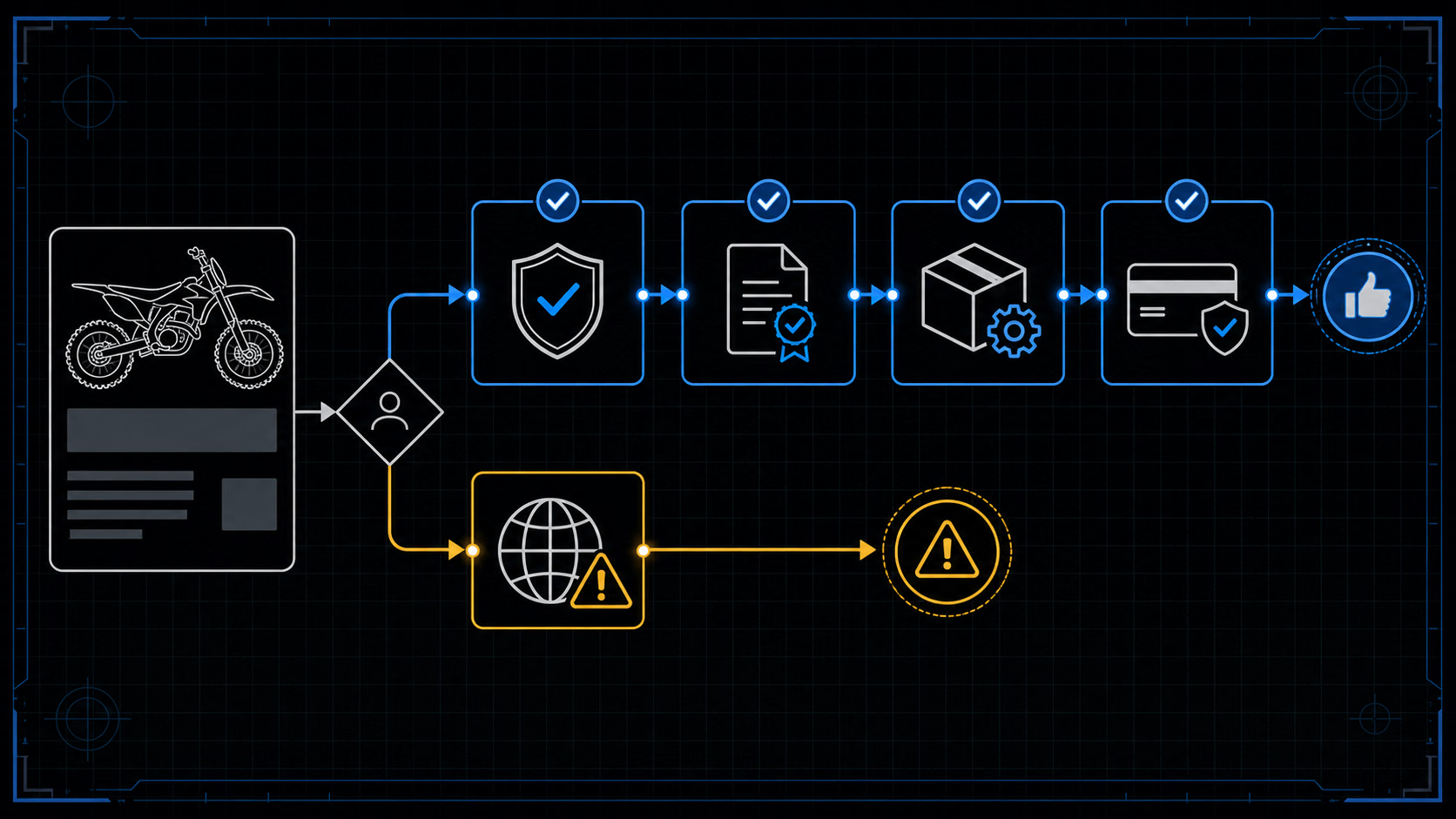
Buy from the manufacturer, an authorized dealer, or a reputable specialist retailer — and verify the warranty and US parts support before you pay. That's it. The channel matters less than the seller's legitimacy: a $4,000 bike from an unknown gray-market importer with no warranty is a worse buy than the same bike from an authorized dealer. Here's how to pick the right channel for what you're buying.
The buying channels, ranked by what you're buying
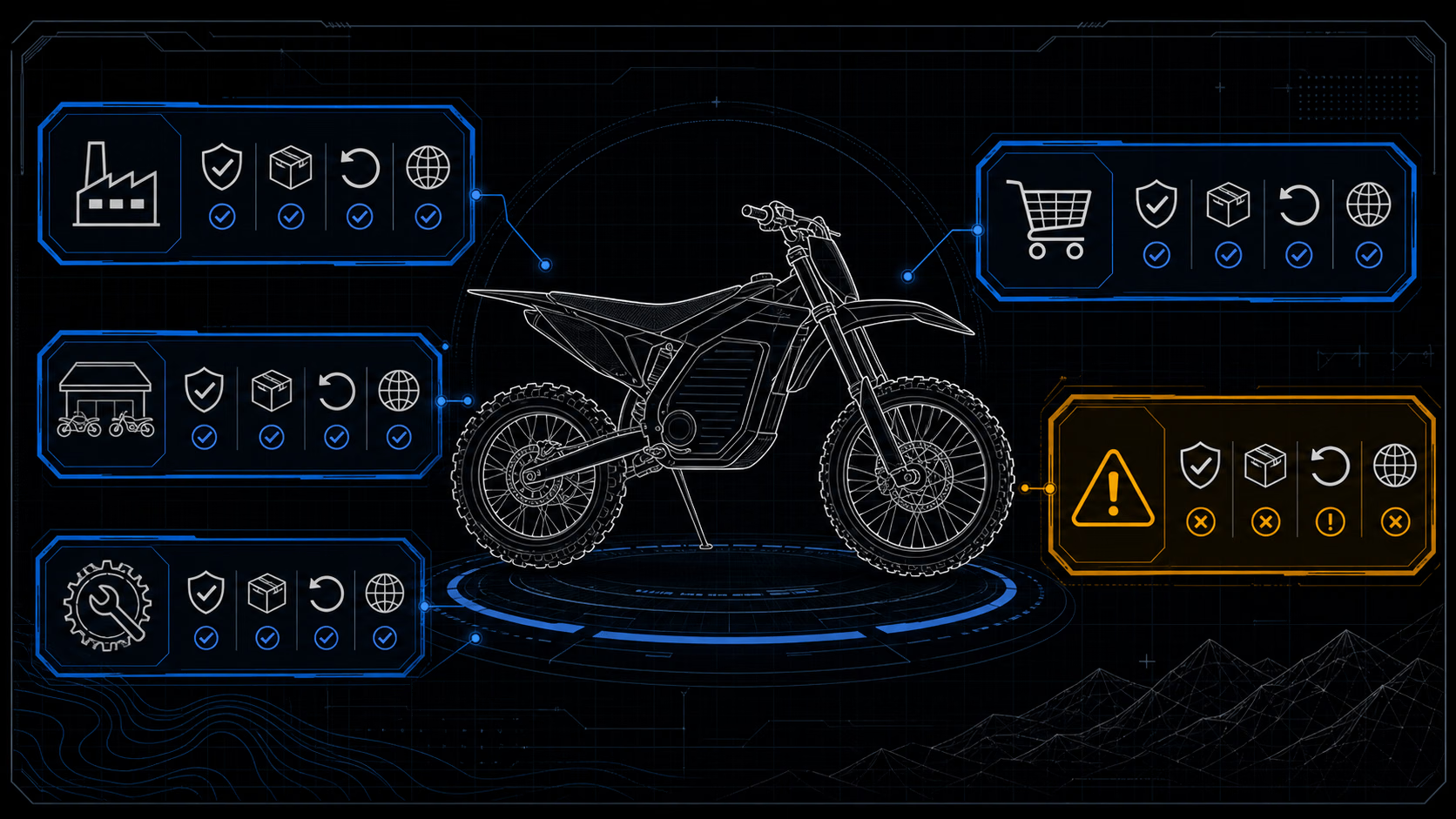
Manufacturer direct (Sur-Ron, Talaria, Stark, Cake, etc.). Buying from the maker's official site guarantees authenticity and warranty. Best when you want the exact, current model with no middleman doubt.
Authorized dealers. A local or online authorized dealer adds real value on premium bikes: assembly, setup, service, and warranty support you can actually reach. For a $4,000–$13,000 bike you plan to keep, this is often the smartest channel — see why support matters in our is a Sur-Ron worth it? guide. Dealers also typically offer financing at checkout — though, honestly, paying cash costs less.
Reputable specialist retailers. Established e-moto specialists (the kind that also sell parts and upgrades) know the products, honor warranties, and can advise on fitment. A strong choice across tiers.
Amazon and big-box (Walmart, Target). Ideal for budget and kids' bikes — the Yozma, GT73, and Razor-class bikes are built to sell here, and easy returns lower your risk on an inexpensive bike. Just confirm the seller and that the listing matches the real specs.
Marketplace / used (Facebook, forums, local). Can save money, but you're on your own for warranty and authenticity. Fine for a savvy buyer who inspects carefully (see the used checklist below); risky for a first-timer.
What to verify before you pay
Whatever the channel, confirm:
- Warranty — honored in the US, in writing. A warranty you can't actually claim is worthless.
- Authorized-seller status. Especially for premium brands; gray-market units may not be covered.
- Parts availability. The bike is only as good as your ability to keep it running (a core reason we favor the Sur-Ron/Talaria ecosystem).
- Real specs, not marketing. Cross-check the listing's claims — budget listings in particular inflate power and range.
- Return policy. Especially online; know your out before you buy.
- Certification. A UL 2272 certified electrical system is a meaningful safety signal, and Illinois now requires one for lawful sale. Ask for the standard number and the testing lab rather than accepting a badge — when we checked 19 bikes in August 2026, only one published a device certification, and several sellers implied one they could not support.
Red flags
- A price that's too good to be true — often gray-market, refurbished, or counterfeit.
- A no-name brand with no findable support, parts, or warranty terms.
- Specs that vary wildly across listings for the "same" bike (a hallmark of resold generics).
- No clear return or warranty policy.
The fake "official" website trap
The most common way electric-dirt-bike buyers get burned isn't a sketchy marketplace — it's a lookalike website pretending to be the brand's official store. Search "Talaria USA" or "buy Sur-Ron" and you can surface slick sites — `talaria.us.com`, `talariausa.us.com`, `sur-ronusa.us.com`, `starkfuture-usa.com`, and endless variations — each using the real brand's name, logo, and product photos, each claiming to be "the official" or "exclusive authorized" seller, and each dangling a too-good "sale" price. Many are unauthorized storefronts that can leave you with the wrong model, no valid warranty, or no recourse at all.
The tells:
- Odd domain endings. Real brands use clean domains; scam lookalikes lean on `.us.com`, `-usa.com`, `usa-` prefixes, `.store`, and `.us`. A `.us.com` address is not an official `.com` — it's a subdomain sold by a third-party registrar, not the brand.
- Everybody's "official." When multiple sites all claim to be "the exclusive official Talaria USA," that proliferation is the warning sign — a real brand has one official presence, not a dozen. Talaria is the worst-spoofed in our research; Sur-Ron and Stark are cleaner but still attract lookalikes, such as `starkfuture-usa.com` versus the real `starkfuture.com`.
- Steep discounts on hot bikes. In-demand models rarely get big "flash sale / 14% off" pricing on a legitimate channel; a suspiciously cheap Sur-Ron, Talaria, or Stark is bait.
- Irreversible payment requests (wire, crypto, Zelle/Venmo), a brand-new domain with no history, or no verifiable authorized-dealer status.
How to find the real thing:
- Start from the brand's verified social media — a checkmarked Instagram or YouTube with a real following — and use the official-site link there, not a search ad or a domain that merely "looks right."
- Buy through an authorized dealer or an established US specialist retailer — the kind that also stocks parts and honors warranties. The dealers and retailers we link to in our reviews are vetted; a random discount site is not.
- Read the domain character by character before you enter a card, and when in doubt, don't.
- Pay with a credit card for chargeback protection. Never wire money, send crypto, or use Zelle/Venmo to a store you can't verify — those transfers are effectively irreversible.
If you've already paid a site that now feels wrong, dispute the charge with your card issuer immediately and report the site. The sooner you act, the better your odds of getting your money back.
The used-bike checklist
If you buy used, check: battery age and cycle count (the main wear item — see how long they last), crash/impact damage to the frame and battery, that parts are still made for the model, and why it's being sold. A used Sur-Ron or Talaria with a healthy battery can be a great value; a used no-name bike with an unknown battery is a coin flip. For the full inspection process, see how to buy a used electric dirt bike.
The bottom line
Where you buy matters most for warranty, authenticity, and support — not price alone. Buy premium bikes from the manufacturer or an authorized dealer, budget bikes from Amazon or big-box (for the easy returns), and used bikes only after inspecting the battery and confirming parts. Verify the warranty is real and US-honored before you spend a dollar. Not sure which bike to buy in the first place? Start with our how to choose guide and the Find Your Ride configurator.
VoltRipper is reader-supported — we may earn a commission on purchases made through our links, at no extra cost to you, and it never affects our rankings or which sellers we'd steer you toward. Affiliate disclosure is included on monetized pages.
FAQ
Where should I buy an electric dirt bike?
From the manufacturer, an authorized dealer, or a reputable specialist retailer — and always verify the warranty and parts support first. For premium bikes (Sur-Ron, Talaria, Stark), an authorized dealer adds service and setup; for budget bikes (Yozma, GT73), Amazon offers easy returns. Avoid unknown sellers and gray-market imports where warranty and support are murky.
Is it safe to buy an electric dirt bike online?
Yes, from reputable sellers — manufacturer sites, authorized dealers, and established specialists. The risk isn't 'online,' it's 'unknown seller': be cautious with no-name marketplaces, gray-market imports, and prices that seem too good to be true. Confirm the seller is authorized and the warranty is honored in the US before you buy.
Can you buy a Sur-Ron on Amazon?
Some listings appear, but buy a Sur-Ron through its authorized channels or dealers to guarantee authenticity, warranty, and parts support — the aftermarket is only an advantage if your bike is the real thing with a valid warranty. Budget bikes like the Yozma and GT73, by contrast, are designed to be sold on Amazon and are safe to buy there.
Should I buy a used electric dirt bike?
It can save real money, but inspect the one thing that ages: the battery. Ask about its age and cycle count, check for crash damage, and confirm parts are still available for the model. A used Sur-Ron or Talaria holds value and has deep support; a used no-name budget bike is a bigger gamble with little recourse if something breaks.
Is a site like talaria.us.com or sur-ronusa.us.com legit?
Treat any '.us.com', '-usa.com', or 'usa-' lookalike domain as unverified until proven otherwise — these are the exact pattern of unauthorized storefronts that copy a real brand's name, logo, and product photos while claiming to be 'the official Talaria/Sur-Ron USA' and dangling discount prices. A real brand has one official presence, not a dozen 'official USA' sites. Find the real store through the brand's verified social media or an authorized dealer, scrutinize the domain, and pay by credit card for chargeback protection. When a deal on a hot bike looks too good on an odd domain, it usually is.
Sources
Specification sources
- Sur-Ron Light Bee XATV Wholesale Outlet - 2026 Sur-Ron Light Bee X (72V/35Ah, 10 kW), $4,699 from $4,999Checked
- Talaria Sting R MX4Talaria Canada - Sting R MX4 specificationsChecked
- Yozma IN10Yozma Sport — IN 10 product pageChecked