Tracked price checks
Bikes in this guide
Sur-Ron
Light Bee X
Enormous aftermarket and parts ecosystem — the most-supported e-dirt-bike platform
Trade-off: Advertised range collapses at speed — plan for real-world miles well under the claim
We may earn a commission if you buy through this link, at no extra cost to you.
Check price at ATV Wholesale OutletTalaria
Sting MX5 Pro
72V/2.88 kWh Samsung-cell platform is a real power and range step up from the 60V Sting and X3 family
Trade-off: Ships limited to 20 mph, so the high-speed numbers assume derestriction and local-law risk
We may earn a commission if you buy through this link, at no extra cost to you.
Check price at Luna CycleCake
Kalk OR
Premium Swedish design and a custom Öhlins air fork with 204 mm of travel
Trade-off: Cake went bankrupt in Feb 2024 and relaunched under new Norwegian ownership (Brages, Mar 2024) — the brand is back and Stockholm operations reopened, but as of mid-2026 the US dealer/parts network is still rebuilding (some US dealers are closing out stock); verify parts and warranty coverage for YOUR market before buying
We may earn a commission if you buy through this link, at no extra cost to you.
Check price at CAKEResale is the cost most buyers forget to price in — and with electric dirt bikes it swings more than almost any other factor. Two bikes at the same new price can be worth wildly different amounts used, depending on the badge and, above all, the battery. Here's how resale actually works in this class, and how to buy so you get more back.
The short answer
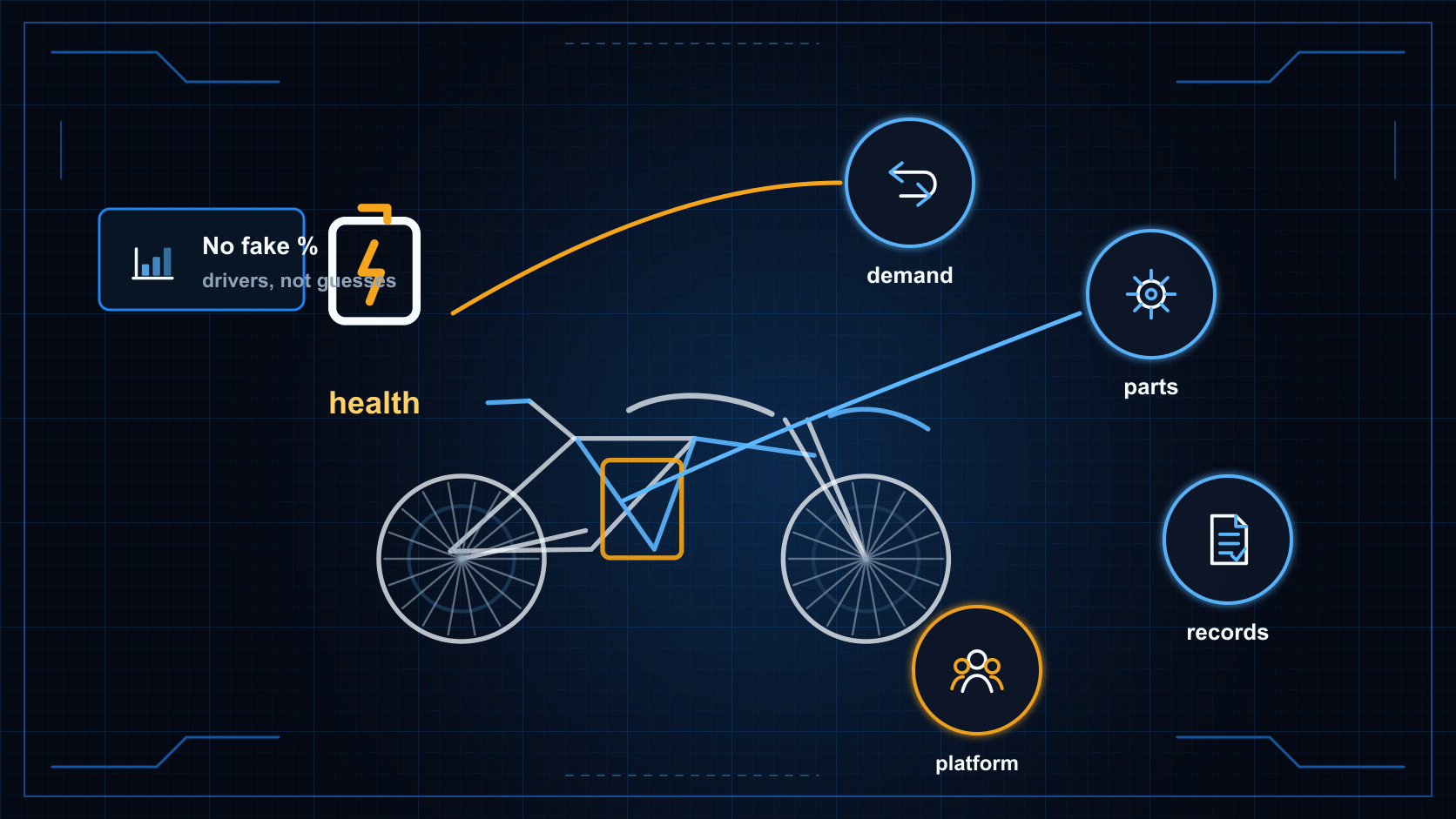
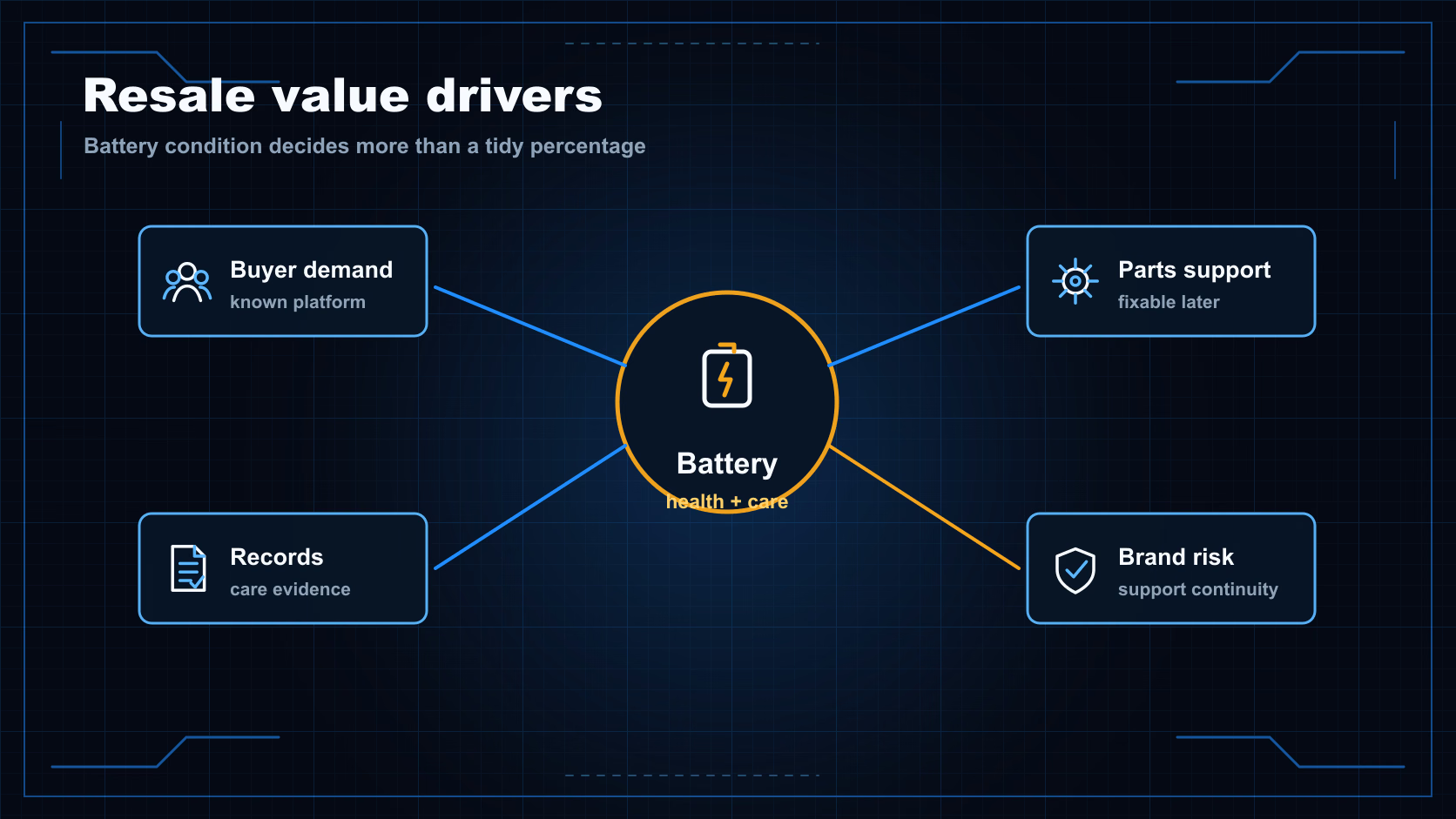
The good brands hold value surprisingly well; the rest don't. A Sur-Ron keeps a strong share of its value; Talaria is a solid second; newer and budget brands depreciate hard. But the biggest single variable is battery health — a used electric bike is worth far more with a healthy pack than one facing a $1,000-$2,500 replacement. Buy a proven brand, mind the battery, and resale becomes an asset instead of a surprise.
The #1 factor is the battery (this is the electric-specific part)
On a gas bike, the engine is durable and the fuel is cheap — resale is mostly about brand and condition. On an electric bike, there's a consumable that slowly degrades and costs a fortune to replace: the battery. A used electric dirt bike's value is, more than anything, a bet on how much battery life is left.
- A pack with plenty of cycles left holds strong resale value.
- A tired pack — noticeably reduced range, lots of hard cycles — tanks it, because the buyer is staring at a $1,000-$2,500 replacement (see how long they last).
So when you buy, favor good battery habits and documentation; when you sell, a healthy, well-cared-for pack is worth real money. This is the variable most first-time sellers underestimate.
Brand demand: why a used Sur-Ron is the easiest to sell
After the battery, resale is about demand and support, and here the class splits sharply:
- Sur-Ron — the easiest to move. The deepest aftermarket, the biggest owner community, and a decade of proven reliability mean a used Sur-Ron has the widest pool of buyers who already know the platform. That is a claim about demand, not a measured retention figure — see below for why we don't publish one. A clean Sur-Ron with a healthy battery sells fast and for a high share of new. That strong resale is a real, often-overlooked reason the Sur-Ron premium is worth paying — you get more of it back. (Is a Sur-Ron worth it?)
- Talaria — close behind on support. The second-deepest aftermarket and a big, active community. We are not going to rank Talaria against Sur-Ron on retention percentage, because in the used listings we can actually see, the two are indistinguishable.
- Newer brands (Apollo, Altis, Arctic Leopard) — the resale gamble. Great spec-per-dollar new, but thinner support and less-certain long-term parts availability soften used demand. They depreciate faster; factor that into the buy.
- Budget/Amazon-tier bikes — hardest depreciation. Little community, thin support, and a "disposable" reputation mean they lose value fast. Buy these to use, not to resell.
Why we don't publish a retention percentage
Plenty of pages will tell you an electric dirt bike holds "80-90% after year one." We won't, and the reason is worth understanding before you trust anyone's number — including ours.
There is no denominator. A retention percentage is the used price divided by what the bike originally sold for. For this class, the original-year price is the part nobody can verify: there is no published price history for a 2022 Light Bee X, and manufacturers quietly reprice mid-year. Divide today's used asking price by today's sticker and you get a number that looks precise and means nothing.
The used market is mostly invisible. On the largest dealer aggregator we checked in July 2026, Sur-Ron had 334 listings, of which 7 were used — about 2%. Three used Talarias existed nationally on the same platform. The real volume trades peer-to-peer on Facebook Marketplace and Craigslist, which publish no sold prices and archive nothing. That is why no used-price index exists for this class, and why the tables you'll find elsewhere don't cite a source.
What we can see doesn't separate the brands. In the handful of priced dealer listings we could verify, a 2024 Light Bee X with 1,404 miles and a 2024 Talaria with 485 miles were asking within a few percent of the same share of their current street prices. Those are asking prices, not sold prices, with no battery-health data — and battery health is the single biggest driver of what a used bike is worth. A sample that small settles nothing.
So here is the honest version: a used Sur-Ron is the easiest bike in this class to sell, because more people are looking for one and the parts to keep it running are everywhere. That is a claim about demand, and it follows from things you can check. Anything more precise would be a number we made up.
The proven-brand safety net
There's a resale risk unique to a young, fast-moving category: a brand can fold. When Cake hit financial trouble, parts and support certainty evaporated overnight — and a bike you can't get parts for is a bike few people want to buy used. Proven, well-capitalized brands (Sur-Ron, Talaria, Honda-backed Greenger) carry far less of this risk. When resale matters, an established brand is cheap insurance.
How to buy (and sell) for the best resale
- Buy a proven brand if resale matters — Sur-Ron or Talaria lead the class.
- Protect the battery. Store at 50-60%, avoid heat, don't habitually run to 0% — good habits directly protect your resale (our charging guide covers this).
- Keep it clean and documented. Service notes, original parts, and honest battery-health info sell a bike.
- Be realistic on newer/budget brands. They can be excellent value new — just price in that you'll get less back.
The bottom line
Electric dirt bikes depreciate more unevenly than almost anything else you'll buy: a Sur-Ron with a healthy battery holds a strong share of its value, while a budget bike with a tired pack is worth a fraction of new. The two levers are brand demand (buy proven — Sur-Ron leads, Talaria follows) and battery health (the #1 factor — treat the pack well). Buy with resale in mind and it becomes part of the value equation, not a nasty surprise. Match a bike to your budget and how long you'll keep it with the Find Your Ride configurator, and weigh the full ownership picture in our cost guide.
VoltRipper is independent and reader-supported — we may earn a commission on purchases through our links, at no extra cost to you. Resale guidance is general; used values vary by market, condition, and battery health. Affiliate disclosure is included on monetized pages.
FAQ
Do electric dirt bikes hold their value?
The good ones do — better than you'd expect — but it varies enormously by brand and battery health. A Sur-Ron holds a strong share of its value thanks to deep demand and the biggest aftermarket in the class; newer and budget brands depreciate much faster. The electric-specific catch: a used bike's value hinges on battery health more than anything else, because a worn pack is a $1,000-$2,500 replacement.
Which electric dirt bike has the best resale value?
The Sur-Ron, most likely — but we want to be straight with you about what that is based on. Its aftermarket, owner community and decade of proven reliability give a used one the widest pool of ready buyers, and Talaria is close behind. Newer brands (Apollo, Altis, Arctic Leopard) and budget bikes are the gamble, because long-term parts support is less certain. What we will not give you is a retention percentage, because nobody in this class publishes the original-year prices you would need to compute one honestly — the sites that print such tables do not say where the numbers came from.
How much does an electric dirt bike depreciate?
It ranges hugely by brand — a Sur-Ron keeps a large share of its value, while a budget Amazon-brand bike can lose most of it quickly. But the single biggest variable isn't the badge, it's the battery: a used bike with a healthy pack (plenty of cycles left) sells far better than an identical one whose battery is worn and due for replacement.
Does the battery affect an electric dirt bike's resale value?
Massively — it's the number-one factor. Unlike a gas engine, the battery is a consumable that slowly loses capacity, and it's the most expensive part to replace ($1,000-$2,500). A buyer is paying largely for the remaining battery life, so a healthy pack is worth real money at resale. Buy and sell with battery health front of mind.
Sources
Specification sources
- Sur-Ron Light Bee XATV Wholesale Outlet - 2026 Sur-Ron Light Bee X (72V/35Ah, 10 kW), $4,699 from $4,999Checked
- Talaria Sting MX5 ProTalaria Canada - Sting MX5 Pro specificationsChecked
- Cake Kalk ORCAKE - Kalk product page (CAKE now lists it as 'Kalk'; specs match our Kalk OR - 11 kW, 2.6 kWh)Checked