Tracked price checks
Bikes in this guide
Segway
Dirt eBike X260
Swappable battery you can hot-swap in seconds for extended range
Trade-off: Advertised 74.6 mi range is a low-speed number — real trail range is a fraction of it
We may earn a commission if you buy through this link, at no extra cost to you.
View official pageRawrr
Mantis X Pro
15 kW peak and 65+ mph — a big step above the base Mantis X for $900 more at $3,899
Trade-off: 65 mph / 15 kW is a lot of bike for newer riders
We may earn a commission if you buy through this link, at no extra cost to you.
Check price at Rawrr (official)Segway
Xaber 300
Established brand with a real US dealer network, app ecosystem, and smart-vehicle features rare in this class
Trade-off: New model, so aftermarket parts and owner knowledge are nascent versus Sur-Ron and Talaria
We may earn a commission if you buy through this link, at no extra cost to you.
Check price at SegwaySur-Ron
Light Bee X
Enormous aftermarket and parts ecosystem — the most-supported e-dirt-bike platform
Trade-off: Advertised range collapses at speed — plan for real-world miles well under the claim
We may earn a commission if you buy through this link, at no extra cost to you.
Check price at ATV Wholesale OutletRawrr
Mantis X
Sur-Ron-class performance (72V, 50 mph) at a value price (~$2,999)
Trade-off: Smaller aftermarket and shorter track record than Sur-Ron
We may earn a commission if you buy through this link, at no extra cost to you.
View official pageThe short answer
Within $100 on the sticker, and nine Score points apart. That gap is unusual at this price, and it is worth understanding before you spend either amount.
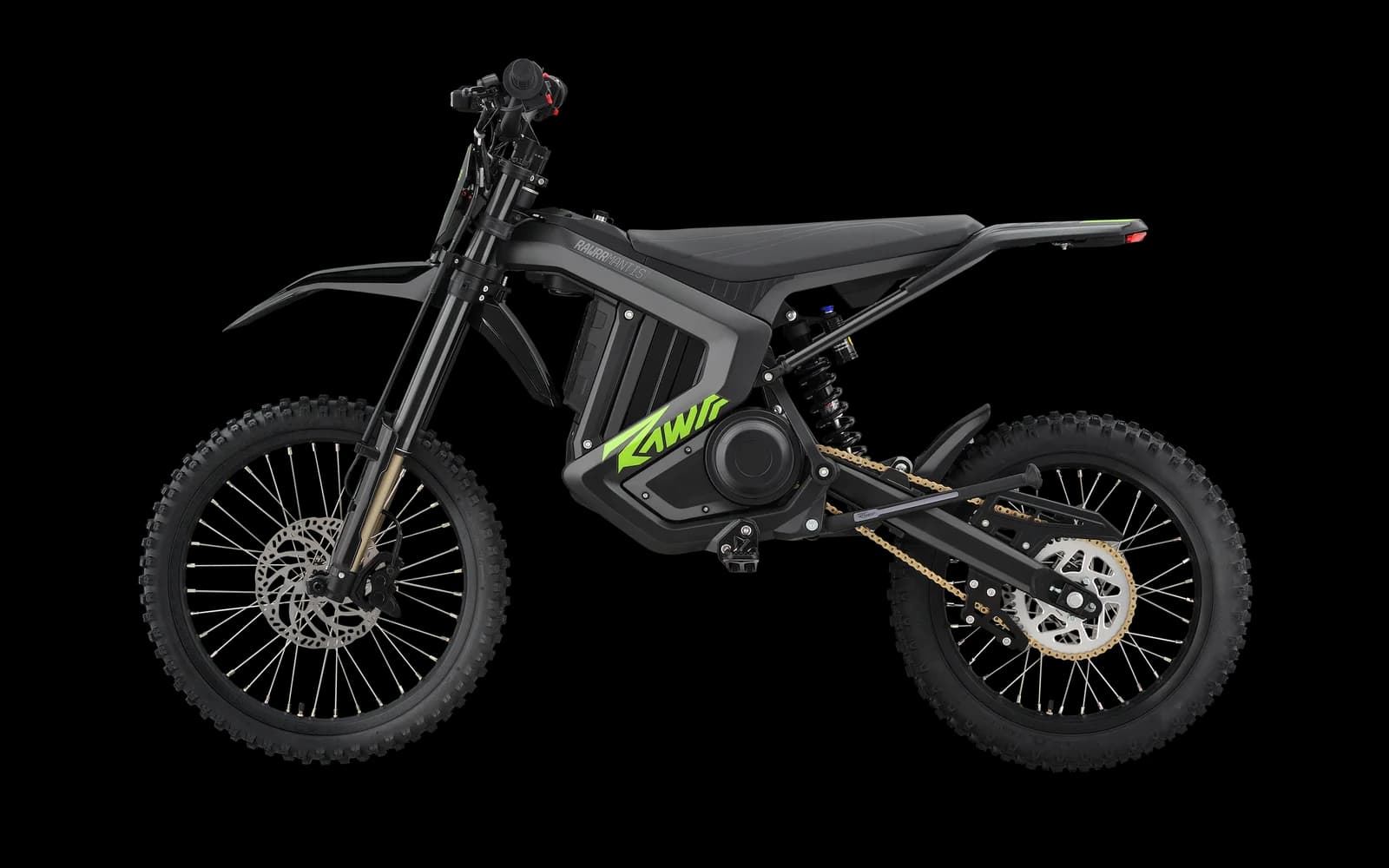
- Buy the Rawrr Mantis X Pro ($3,899 + $200 freight, Score 89) if you can handle it: three times the peak power, 18 mph more, 31% more battery, and 25% more real range.
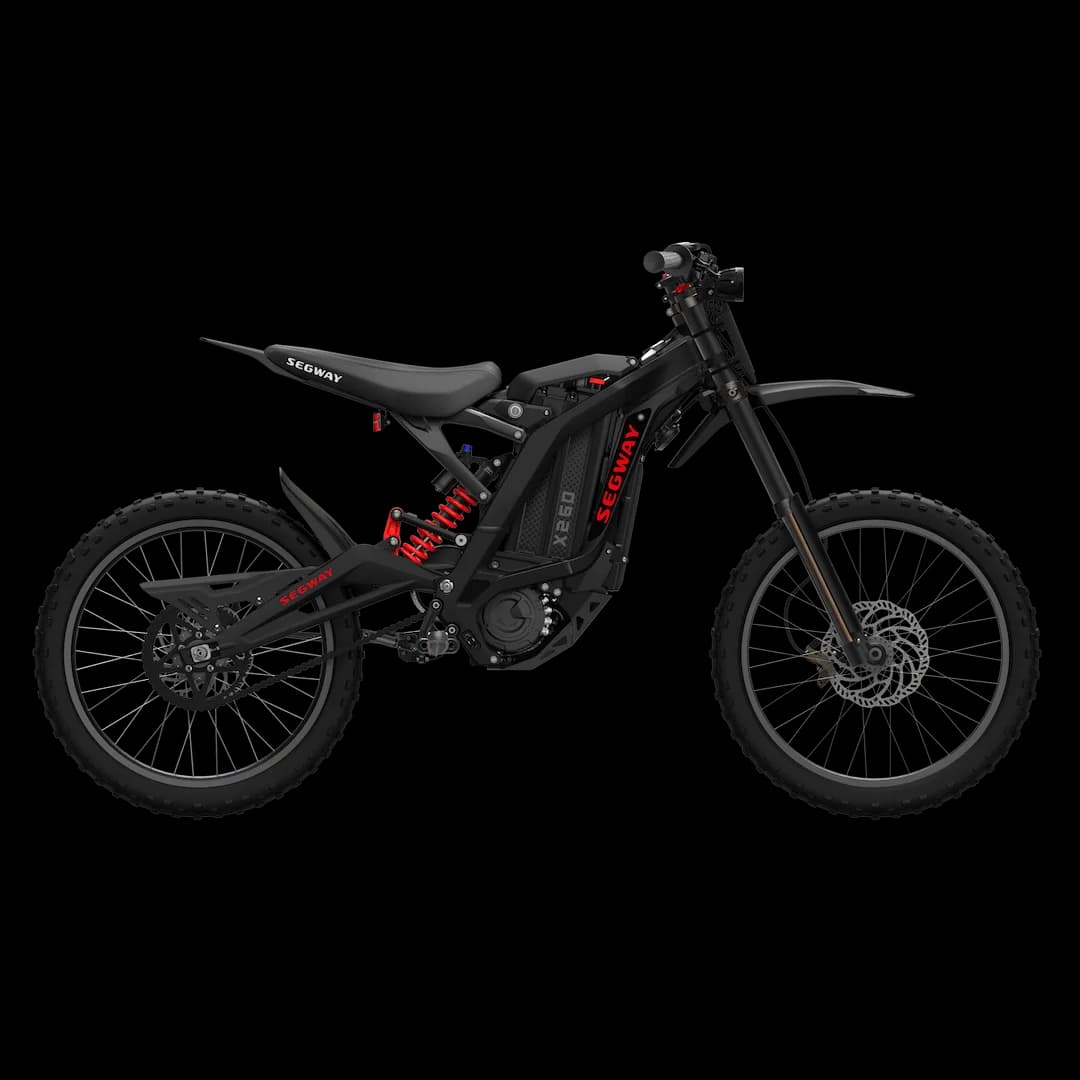
- The Segway X260 ($3,999, Score 80) was the pick if weight or seat height is your constraint — 37.5 lb lighter, seat two inches lower, from a brand with a retail presence. It is discontinued, superseded by the Xaber 300, so it is a used-market buy now and the Xaber is the current Segway answer.
Verified product photo
Verified product photo
Comparison table
Head-to-head spec winners
Awarded spec rows
1-4
Segway Dirt eBike X260 vs Rawrr Mantis X Pro
| Spec | Segway Dirt eBike X260 | Rawrr Mantis X Pro | Winner |
|---|---|---|---|
| Power | 5 kW peak | 15 kW peak | Rawrr Mantis X Pro+10 kW |
| Top speed | 47 mph | 65 mph | Rawrr Mantis X Pro+18 mph |
| Battery capacity | 1.9 kWh | 2.5 kWh | Rawrr Mantis X Pro+600 Wh |
| Real range | 28 mi | 35 mi | Rawrr Mantis X Pro+7 mi |
| Weight | 121 lb | 158.5 lb | Segway Dirt eBike X26037.5 lb lighter |
| Brakes | Dual Hydraulic | Dual Hydraulic | TieSame Dual Hydraulic |
| Suspension | Full | Full | TieSame Full |
| Warranty | Not published | 12 mo | No winner awardedNeeds both published values |
| Delivered price | $3,999 street + shipping unknown | $4,099 delivered ($3,899 + $200 shipping) | No winner awardedShipping unknown |
Power
- Segway Dirt eBike X260
- 5 kW peak
- Rawrr Mantis X Pro
- 15 kW peak
Top speed
- Segway Dirt eBike X260
- 47 mph
- Rawrr Mantis X Pro
- 65 mph
Battery capacity
- Segway Dirt eBike X260
- 1.9 kWh
- Rawrr Mantis X Pro
- 2.5 kWh
Real range
- Segway Dirt eBike X260
- 28 mi
- Rawrr Mantis X Pro
- 35 mi
Weight
- Segway Dirt eBike X260
- 121 lb
- Rawrr Mantis X Pro
- 158.5 lb
Brakes
- Segway Dirt eBike X260
- Dual Hydraulic
- Rawrr Mantis X Pro
- Dual Hydraulic
Suspension
- Segway Dirt eBike X260
- Full
- Rawrr Mantis X Pro
- Full
Warranty
- Segway Dirt eBike X260
- Not published
- Rawrr Mantis X Pro
- 12 mo
Delivered price
- Segway Dirt eBike X260
- $3,999 street + shipping unknown
- Rawrr Mantis X Pro
- $4,099 delivered ($3,899 + $200 shipping)
Score breakdown
Power
/22 pts
Range
/20 pts
Chassis
/18 pts
Value
/15 pts
Support
/12 pts
Ergonomics
/8 pts
Versatility
/5 pts
The claim that points the wrong way
This is the most useful thing on the page, and you would never get it from a spec sheet.
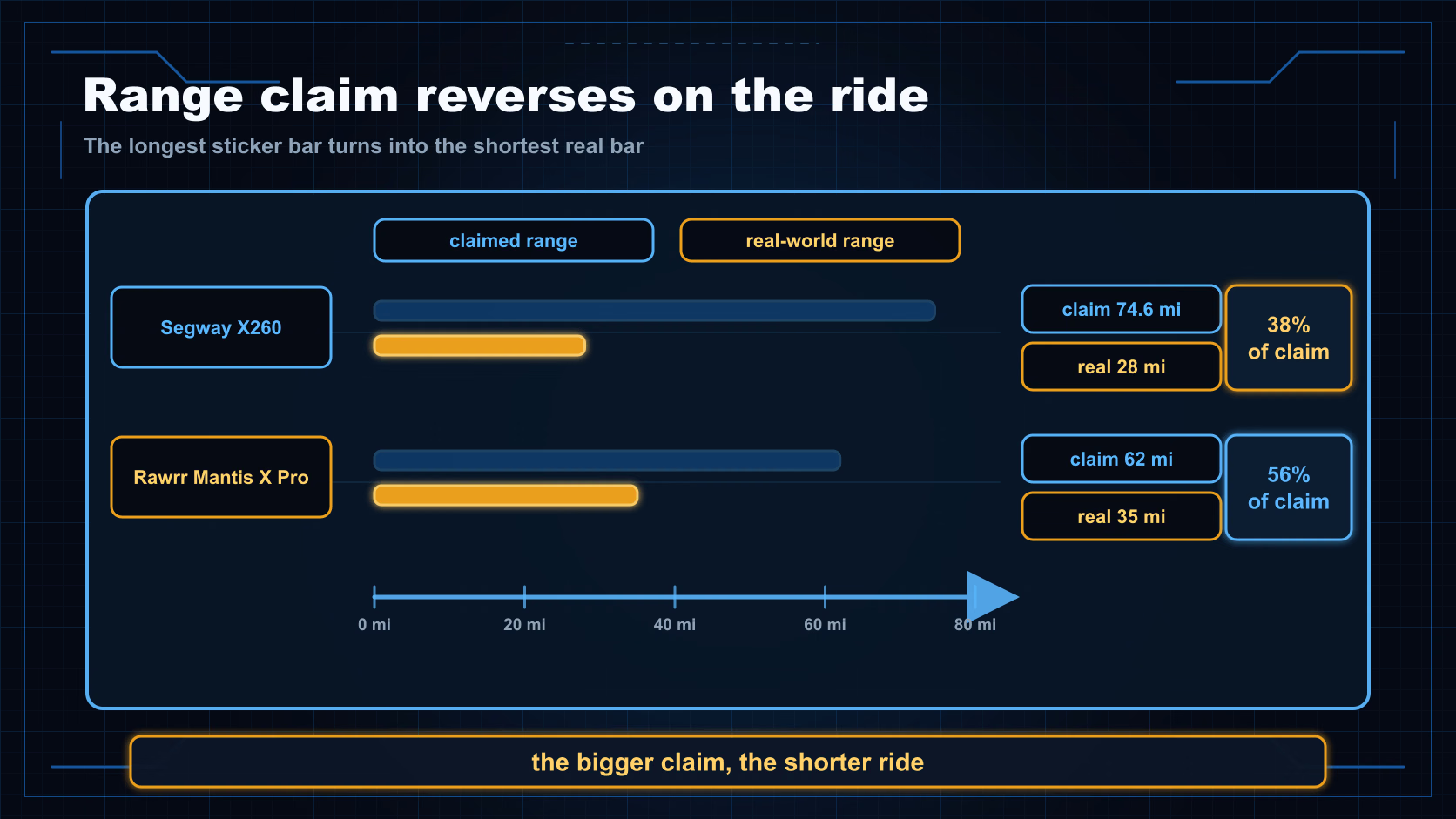
- Segway claims 74.6 miles. We hold a real-world figure of 28.
- Rawrr claims 62 miles. We hold 35.
> The bike advertising 20% more range delivers about 20% less of it.
The X260 delivers about 38% of its claim — the third-weakest ratio among the 31 bikes where we hold both a claim and a real-world figure, against a catalog average of 59%. The Rawrr delivers about 56%, which is ordinary rather than good. Neither number on a box is a plan; only one of these two is even close. (Claimed vs real range →)
The core matchup
| Segway X260 | Rawrr Mantis X Pro | |
|---|---|---|
| VoltRipper Score | 80 | 89 |
| Price | $3,999 | $3,899 |
| System voltage | 60V | 72V |
| Nominal power | 3,000 W | 5,000 W |
| Peak power | 5,000 W | 15,000 W |
| Battery | 1,920 Wh | 2,520 Wh |
| Claimed range | 74.6 mi | 62 mi |
| Real-world range | 28 mi | 35 mi |
| Top speed | 47 mph | 65 mph |
| Wheel torque | 250 N·m | 389 N·m |
| Weight | 121 lb | 158.5 lb |
| Seat height | 31.9 in | 34.0 in |
| Charge time | 4 hr | not published |
| Ingress rating | not published | IP66 |
| Warranty | not published | 12 months |
| Max rider weight | 220 lb | 220 lb |
| Street legal | No | No |
| Availability | Discontinued | Limited |
Head-to-head, factor by factor
Power → Rawrr, overwhelmingly. 15,000 W peak against 5,000 — three times — and 5,000 W nominal against 3,000, which is the figure that describes sustained climbing. Both numbers move together, so this is not a peak-marketing artefact. (Peak vs continuous →)
Speed → Rawrr. 65 mph against 47. That is a different category of bike, not a trim difference.
Real range → Rawrr. 35 miles against 28, from 31% more battery. See above for why the claims say the opposite.
Weight → Segway, decisively, and this is its real case. 121 lb against 158.5 — a 37.5 lb difference, or 24%. That is what you feel picking the bike up, correcting a slide, and loading it alone. On a bike this size it is a genuine, everyday advantage.
Seat height → Segway. 31.9 inches against 34.0 — over two inches. Combined with the weight, the X260 is markedly the more approachable machine, and for a smaller rider that can outweigh everything in the power column.
Published detail → Rawrr, which is the surprise. It publishes an IP66 ingress rating and a 12-month warranty; Segway publishes neither for the X260 — notable given Segway is by far the larger company here. Segway answers with a stated 4-hour charge time, which Rawrr does not publish.
Delivered price → Segway, narrowly, and check this before you buy. The Rawrr's $3,899 sticker carries $200 freight, so it arrives near $4,099 — slightly above the Segway's $3,999 rather than below it. The bikes are effectively the same money delivered. (What these actually cost →)
Brand and support → a genuine split. Segway is a mainstream consumer brand with retail presence and the reassurance that carries; Rawrr is a small specialist. We record both at OK parts availability and equal community support, so the difference is more about how you like to buy than about who will have your part. Note the X260 is recorded as limited availability.
Which should you buy?
- You can handle 65 mph and 15 kW → Rawrr Mantis X Pro (~$4,099 delivered). Three times the power for the same money is not a close call.
- You are smaller, lighter, or newer → Segway X260 ($3,999). The 121 lb and the 31.9-inch seat are the reason, and they are good ones.
- You want the benchmark platform instead → Sur-Ron Light Bee X ($4,499, Score 89), which matches the Rawrr's Score and answers with the deepest parts network in the class. (Mantis X Pro vs Light Bee X →)
- You want to spend less → Rawrr Mantis X ($2,999), the Mantis X Pro's beginner-rated sibling, with a 32-inch seat.
Not sure which fits your size and riding? Run the Find Your Ride configurator.
The honest bottom line
These two are priced like rivals and built like different answers.
Delivered, they cost within about a hundred dollars of each other. For that money the Rawrr gives you three times the peak power, 18 more mph, a third more battery, 25% more real range, a warranty and an ingress rating. On hardware per dollar it is not a contest, and the nine-point Score gap says so plainly.
What the Segway gives you instead is 37.5 fewer pounds and two fewer inches of seat. That sounds like a consolation prize and is not: it is the difference between a bike you enjoy and a bike that intimidates you, and it is the reason we would still recommend it to a smaller or newer rider without hesitation.
So decide on fit first and hardware second — that ordering is unusual, and it is the right one here. And whichever you pick, plan your rides on 28 or 35 real miles, not on 74.6.
VoltRipper is independent — we don't sell Segway, Rawrr, or any bike, and our Score is based on verified specs, not who pays us. Real-world range figures are our own recorded values, not manufacturer claims. Delivered costs include freight where the manufacturer publishes it. Neither bike is road-legal as sold. Affiliate disclosure is included on monetized pages, and we're spec-verified/data-driven rather than hands-on until first-hand testing exists.
FAQ
Should I buy the Segway X260 or the Rawrr Mantis X Pro?
For most riders who can handle it, the Rawrr — it makes three times the peak power (15,000 W against 5,000), runs 18 mph faster, carries 31% more battery, and goes 25% farther in the real world, for essentially the same money. Choose the Segway if weight or seat height is your constraint: it is 37.5 lb lighter (121 against 158.5) with a seat two inches lower, and it comes from a mainstream brand with a retail presence. They score 89 to 80, and that gap is earned on hardware rather than on support.
Which has better range, the X260 or the Mantis X Pro?
The Rawrr, and the claims point the other way — which is the most useful thing on this page. Segway claims 74.6 miles for the X260, the larger of the two claims, but we hold a real-world figure of 28. Rawrr claims 62 and we hold 35. So the bike advertising 20% more range delivers 20% less of it. The X260 delivers about 38% of what it claims — the third-weakest ratio among the 31 bikes where we hold both a claim and a real-world figure; the Rawrr delivers about 56%.
Why does the Segway cost about the same but score nine points lower?
Because the Score weighs what you get for the money, and on hardware the gap is large: 5,000 W peak against 15,000, 3,000 W nominal against 5,000, 47 mph against 65, 1,920 Wh against 2,520. The Segway is not a bad bike — it is lighter, lower, better for a smaller rider, and backed by a real consumer brand — but at $3,999 against $3,899 it is asking similar money for materially less machine.
Which is better for a shorter or lighter rider?
The Segway X260, clearly. Its seat is 31.9 inches against the Rawrr's 34.0 — over two inches — and it weighs 121 lb against 158.5, a 37.5 lb difference. On a bike you will pick up off the ground more than once, that is the single most practical advantage either bike has, and it is worth more than a spec sheet suggests.
What does the Rawrr publish that the Segway does not?
An IP66 ingress rating and a 12-month warranty. Segway publishes neither for the X260, which is notable because Segway is the larger and more established company here. The Rawrr also charges $200 freight, so its $3,899 arrives at about $4,099 — slightly above the Segway's $3,999 rather than below it. Compare delivered cost, not stickers.
Are either of these street legal?
Neither. Both are recorded off-road with no factory lighting and no conversion path in our data, so both are trail and private-land machines. If a plate matters to you, neither of these is the starting point.
Sources
Specification sources
- Segway Xaber 300Segway - Xaber 300 official specificationsChecked
- Rawrr Mantis X ProRide Rawrr — Mantis X ProChecked
- Sur-Ron Light Bee XATV Wholesale Outlet - 2026 Sur-Ron Light Bee X (72V/35Ah, 10 kW), $4,699 from $4,999Checked
- Rawrr Mantis XRide Rawrr — Mantis XChecked