Tracked price checks
Bikes in this guide
Rawrr
Mantis X
Sur-Ron-class performance (72V, 50 mph) at a value price (~$2,999)
Trade-off: Smaller aftermarket and shorter track record than Sur-Ron
We may earn a commission if you buy through this link, at no extra cost to you.
View official pageRawrr
Mantis X Pro
15 kW peak and 65+ mph — a big step above the base Mantis X for $900 more at $3,899
Trade-off: 65 mph / 15 kW is a lot of bike for newer riders
We may earn a commission if you buy through this link, at no extra cost to you.
Check price at Rawrr (official)Sur-Ron
Light Bee X
Enormous aftermarket and parts ecosystem — the most-supported e-dirt-bike platform
Trade-off: Advertised range collapses at speed — plan for real-world miles well under the claim
We may earn a commission if you buy through this link, at no extra cost to you.
Check price at ATV Wholesale OutletThe short answer
These are the same bike at two power levels — and as of July 2026 they're separated by about $900 on the street ($2,999 against the Pro's $3,899), which makes this much less of a toss-up than it used to be:
- Buy the Rawrr Mantis X Pro ($3,899, Score 89) unless you have a specific reason not to. For about $900 more you get more than double the peak power (15 kW vs 6.5), 65 mph vs 50, a bigger battery, app-tunable modes, and a stated 12-month warranty the base bike doesn't have.
- Buy the Rawrr Mantis X ($2,999, Score 83) if that specific reason is size, weight, or nerves — 139 lb vs 158.5, a 32-inch seat vs 34, and a gentle 6.5 kW that Rawrr rates beginner-friendly. For a smaller or brand-new rider those are real advantages, not consolation.
What changed, twice: we first had the Pro at $4,499 — a dealer-marked-up figure — against Rawrr's actual $3,899 MSRP, and that wide gap made the base bike an easy budget recommendation. Correcting the Pro to its real MSRP closed the gap to a narrow sticker difference, which made the Pro the obvious pick. July 2026 moved it again, the other way: the base bike now sells at $2,999 while the Pro holds $3,899, so the street gap is back to about $900. That is no longer helmet money. The Pro still gives you 2.3× the power and a stated warranty, and for most riders it is still the better bike — but it is a decision again, not a formality.
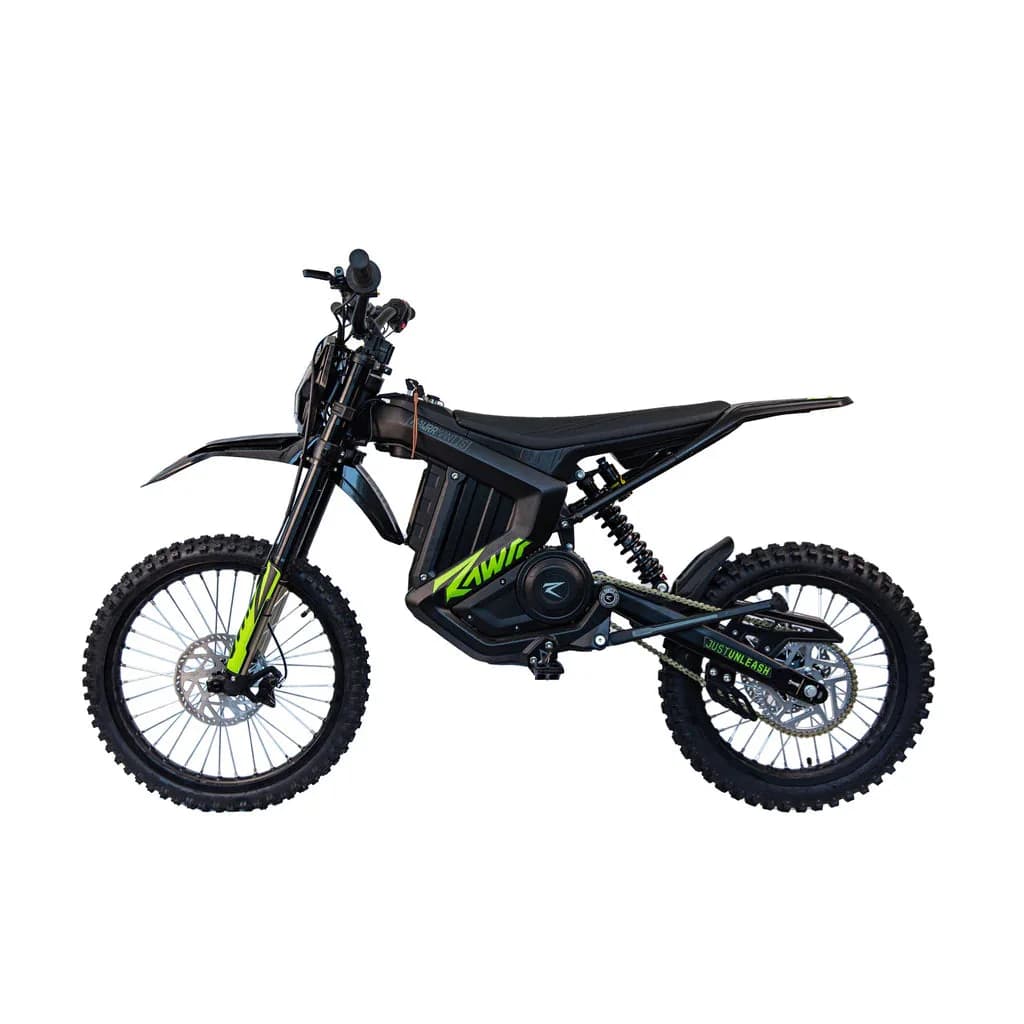
Verified product photo
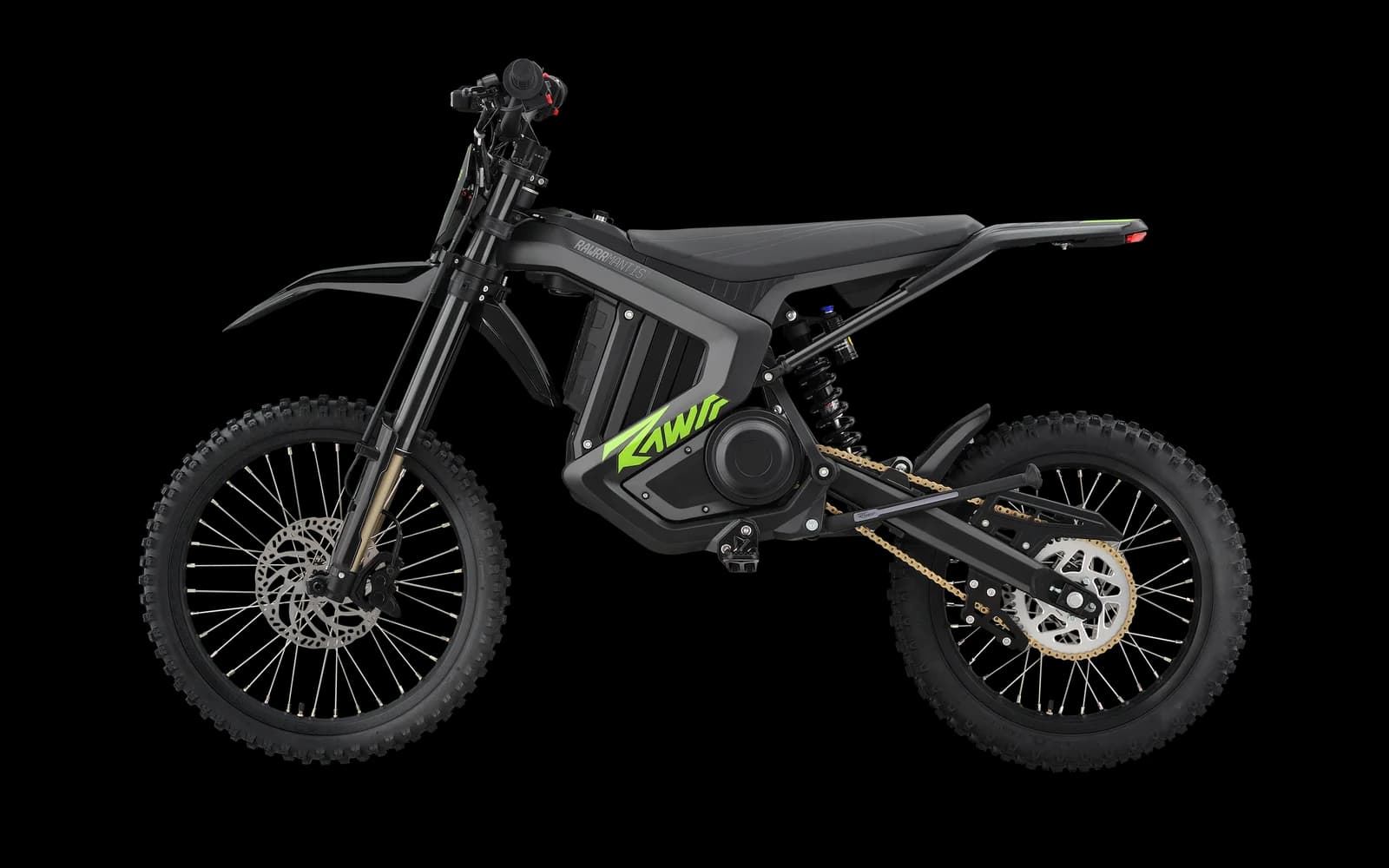
Verified product photo
Comparison table
Head-to-head spec winners
Awarded spec rows
2-4
Rawrr Mantis X vs Rawrr Mantis X Pro
| Spec | Rawrr Mantis X | Rawrr Mantis X Pro | Winner |
|---|---|---|---|
| Power | 6.5 kW peak | 15 kW peak | Rawrr Mantis X Pro+8.5 kW |
| Top speed | 50 mph | 65 mph | Rawrr Mantis X Pro+15 mph |
| Battery capacity | 2.2 kWh | 2.5 kWh | Rawrr Mantis X Pro+360 Wh |
| Real range | 30 mi | 35 mi | Rawrr Mantis X Pro+5 mi |
| Weight | 139 lb | 158.5 lb | Rawrr Mantis X19.5 lb lighter |
| Brakes | Dual Hydraulic | Dual Hydraulic | TieSame Dual Hydraulic |
| Suspension | Full | Full | TieSame Full |
| Warranty | Not published | 12 mo | No winner awardedNeeds both published values |
| Delivered price | $3,199 delivered ($2,999 + $200 shipping) | $4,099 delivered ($3,899 + $200 shipping) | Rawrr Mantis X$900 less |
Power
- Rawrr Mantis X
- 6.5 kW peak
- Rawrr Mantis X Pro
- 15 kW peak
Top speed
- Rawrr Mantis X
- 50 mph
- Rawrr Mantis X Pro
- 65 mph
Battery capacity
- Rawrr Mantis X
- 2.2 kWh
- Rawrr Mantis X Pro
- 2.5 kWh
Real range
- Rawrr Mantis X
- 30 mi
- Rawrr Mantis X Pro
- 35 mi
Weight
- Rawrr Mantis X
- 139 lb
- Rawrr Mantis X Pro
- 158.5 lb
Brakes
- Rawrr Mantis X
- Dual Hydraulic
- Rawrr Mantis X Pro
- Dual Hydraulic
Suspension
- Rawrr Mantis X
- Full
- Rawrr Mantis X Pro
- Full
Warranty
- Rawrr Mantis X
- Not published
- Rawrr Mantis X Pro
- 12 mo
Delivered price
- Rawrr Mantis X
- $3,199 delivered ($2,999 + $200 shipping)
- Rawrr Mantis X Pro
- $4,099 delivered ($3,899 + $200 shipping)
Score breakdown
Power
/22 pts
Range
/20 pts
Chassis
/18 pts
Value
/15 pts
Support
/12 pts
Ergonomics
/8 pts
Versatility
/5 pts
Same platform, two power levels
Both bikes share the DNA that makes Rawrr a value pick: a 72V system, a swappable battery, full suspension, 19-inch wheels, and a chain drive, all for well under a Sur-Ron Light Bee X. Where they split is power and polish. The base Mantis X is tuned as an approachable, sub-$3,600 first bike; the Pro turns the same chassis into a legitimate mid-tier performer with the hardware and warranty to match. Buying decision aside, it's a clean lineup: the base gets you riding cheaply, the Pro gets you Sur-Ron-adjacent performance for less.
The core matchup
| Rawrr Mantis X | Rawrr Mantis X Pro | |
|---|---|---|
| VoltRipper Score | 83 | 89 |
| Price (street) | $2,999 (+$200 freight) | $3,899 (+$900) |
| Peak power | 6.5 kW | 15 kW |
| Top speed | 50 mph | 65 mph |
| Battery | 2,160 Wh (72V) | 2,520 Wh (72V) |
| Weight | 139 lb | 158.5 lb |
| Seat height | 32 in | 34 in |
| Swappable pack | Yes | Yes |
| Ride modes | Standard | App-tunable Eco / Sport / Race |
| Warranty | Unstated | 12-month |
| Skill level | Beginner | Intermediate |
Head-to-head, factor by factor
Power & speed → Pro, decisively. This is the headline and the reason for the price gap: the Pro makes 15 kW peak to the base's 6.5 kW — roughly 2.3× the power — and tops out at 65 mph versus 50. That's not a marginal bump; it's the difference between a friendly trail bike and a genuinely quick one. If outright capability is what you're after, the Pro is in a different league.
Weight & fit → base. The base Mantis X is 139 lb with a low 32-inch seat; the Pro is 158.5 lb with a 34-inch seat. For a smaller, newer, or shorter rider, that 19.5 lb and 2 inches matter — the base is easier to flick, pick up, and plant at a stop. It's a real part of why Rawrr rates the base as the beginner bike and the Pro as intermediate.
Battery & range → Pro, slightly. Both run 72V swappable packs, but the Pro's is a bit larger — 2,520 Wh vs 2,160 Wh — with a 62-mile claim to the base's 50. Treat both as optimistic low-speed figures (plan well under them in real trail riding), but the Pro's bigger pack helps offset its higher power draw. Both let you carry a charged spare, which is the real range play here.
Features & warranty → Pro. The Pro adds the polish: app-tunable Eco/Sport/Race modes (so a newer rider can start gentle and unlock power as skill grows), DOT hydraulic brakes, IP-rated sealing, and — importantly — a stated 12-month warranty. The base Mantis X's warranty is unstated in our data, so on paper the Pro gives you documented coverage the base doesn't.
Price & value → Pro, which is a reversal. The base is still the cheaper bike, but $900 buys an enormous amount here: 8.5 kW more peak power, 15 mph more top speed, 360 Wh more battery, app-tunable modes, and documented warranty coverage. Measured as dollars per watt, the Pro is one of the best upgrade values in the entire catalog. The base only wins this category if $300 genuinely doesn't exist in your budget — a real constraint, but a different one from "the base is the smart-money pick."
Availability → base, in practice. Worth knowing before you decide: as of July 2026 the Pro is sold out at most major online retailers (REVRides, VORO, eMotoZone), with stock concentrated at powersports dealers who typically list above MSRP and add freight and assembly. The $900 street gap assumes you can buy the Pro at its $3,899 MSRP — if the only Pro you can find is $4,400 with fees, the base bike's case comes back.
Score → Pro (89 vs 84). The 5-point gap is honest: the Pro's 2.3× power, higher speed, bigger battery, app modes, and stated warranty add up to a materially more complete bike. But read it right — the base isn't a bad bike, it's a smaller one. For a beginner or a shorter rider, the lower-scoring base can still be the better fit, and a bike you can control beats a bike you can't.
Which should you buy?
- Most riders, if you can find one at MSRP: Rawrr Mantis X Pro — about 2.3× the power, a warranty, and app tuning for $900 more, plus the higher Score - a real decision now rather than the no-brainer it briefly was. (Full review →)
- Beginner, smaller/shorter rider, or the Pro is out of stock near you: Rawrr Mantis X — lighter, lower-seated, and the friendlier first bike. (Full review →)
- Cross-shopping outside the brand? Both go up against the benchmark — see Mantis X Pro vs Sur-Ron Light Bee X and Mantis X Pro vs Talaria MX5 Pro.
Not sure which power level fits your skill and size? Run the Find Your Ride configurator.
The honest bottom line
This used to be a genuine fork in the road. At a $900 spread it is closer to one again: the Mantis X Pro gives you about 2.3× the power, 15 mph more, a bigger battery, app tuning, and a real warranty for what a helmet costs, which is why it scores 89 to the base's 84 and why it's our default pick of the two.
The base Mantis X keeps two honest claims on your money. First, fit — at 139 lb with a 32-inch seat it's a materially easier bike for a smaller, shorter, or brand-new rider to control, and control beats power for anyone still building skill. Second, availability — the Pro is sold out at most online retailers right now, and a dealer Pro at $4,400-plus-fees is a different proposition than a $3,899 one. Buy the Pro at MSRP if you can handle it and find it; buy the base if you want the gentler bike or the Pro isn't actually purchasable near you at its real price.
VoltRipper is independent — we don't sell Rawrr or any bike, and our Score is based on verified specs, not commissions. Affiliate disclosure is included on monetized pages, and we're spec-verified/data-driven rather than hands-on until first-hand testing exists.
FAQ
Is the Rawrr Mantis X Pro worth $900 more than the base Mantis X?
For most riders, the Pro — the gap is about $900 on the street ($3,899 vs $2,999), and that $900 buys more than double the peak power (15 vs 6.5 kW), 65 vs 50 mph, a bigger battery (2,520 vs 2,160 Wh), app-tunable Eco/Sport/Race modes, and a stated 12-month warranty the base bike lacks. Buy the base Mantis X (Score 83) if you specifically want the lighter (139 vs 158.5 lb), lower-seated (32 vs 34 in), beginner-rated bike, or if the Pro isn't in stock near you at its real price — it's sold out at most major online retailers as of July 2026 and dealers often list it higher plus fees. Otherwise buy the Pro (Score 91).
What's the difference between the Rawrr Mantis X and Mantis X Pro?
Same 72V, swappable-pack, full-suspension platform — but the Pro makes about 2.3x the peak power (15 vs 6.5 kW), adds ~15 mph (65 vs 50), carries a bigger battery (2,520 vs 2,160 Wh), and adds app Eco/Sport/Race modes, IP-rated sealing, and a 12-month warranty. The trade-offs: it costs $900 more, weighs 19.5 lb more (158.5 vs 139 lb), and has a 2-inch-taller seat (34 vs 32 in). The base is the lighter, cheaper, beginner-friendly version of the same bike.
Which Rawrr Mantis X is best for a beginner?
The base Mantis X. It's the one Rawrr rates as beginner-friendly, it's lighter at 139 lb with a lower 32-inch seat, and its 6.5 kW / 50 mph is more manageable for a new rider than the Pro's 15 kW / 65 mph. If you want room to grow, the Pro can be dialed back in its Eco mode — but for a pure first bike on a budget, the base is the friendlier, cheaper start.
Are the Rawrr Mantis X and Mantis X Pro street legal?
No — both ship as off-road machines with no factory street path, so they can't be ridden legally on roads, sidewalks, or bike paths as sold. Riding on pavement would require a conversion kit where your state allows it, plus registration and insurance. Plan on private land or OHV parks, and check your state's rules first.
Sources
Specification sources
- Rawrr Mantis XRide Rawrr — Mantis XChecked
- Rawrr Mantis X ProRide Rawrr — Mantis X ProChecked
- Sur-Ron Light Bee XATV Wholesale Outlet - 2026 Sur-Ron Light Bee X (72V/35Ah, 10 kW), $4,699 from $4,999Checked