For the outright lightest, nothing here touches the Torp at ~64 lb — but it is an expert, race-focused bike at a premium price, and Torp no longer sells it complete, so it is a used-market find rather than a purchase you can plan. For a light bike most people can actually live with, the sweet spot is the ~120-130 lb trail class: the benchmark Sur-Ron Light Bee X (130 lb) and the value 79Bike Falcon Pro (130 lb). The earlier picks in this band, the Talaria Sting MX3 and the Arctic Leopard XF Pro, were both discontinued in August 2026 (see below). The rule: buy the lightest bike that's still capable and supported — not the lightest bike, period.
Why weight matters (and why it isn't everything)
A lighter bike is easier to control, flick on the trail, pick up after a fall, and load into a truck bed or onto a hitch rack (how to transport one). For a smaller or newer rider, weight is one of the biggest confidence factors — you learn faster on a bike you can physically manage. That's the real case for going light.
But here's the honest catch most "lightest e-bike" lists skip: some bikes are light because they're small, cheap, and underbuilt. A featherweight with weak brakes, a tiny battery, and no parts network isn't a bargain — it's a bike you'll outgrow or can't fix. The goal isn't minimum weight; it's the lightest bike that still has the power, brakes, range, and support you actually need.
The benchmark: flickable, forgiving, and the deepest parts network anywhere
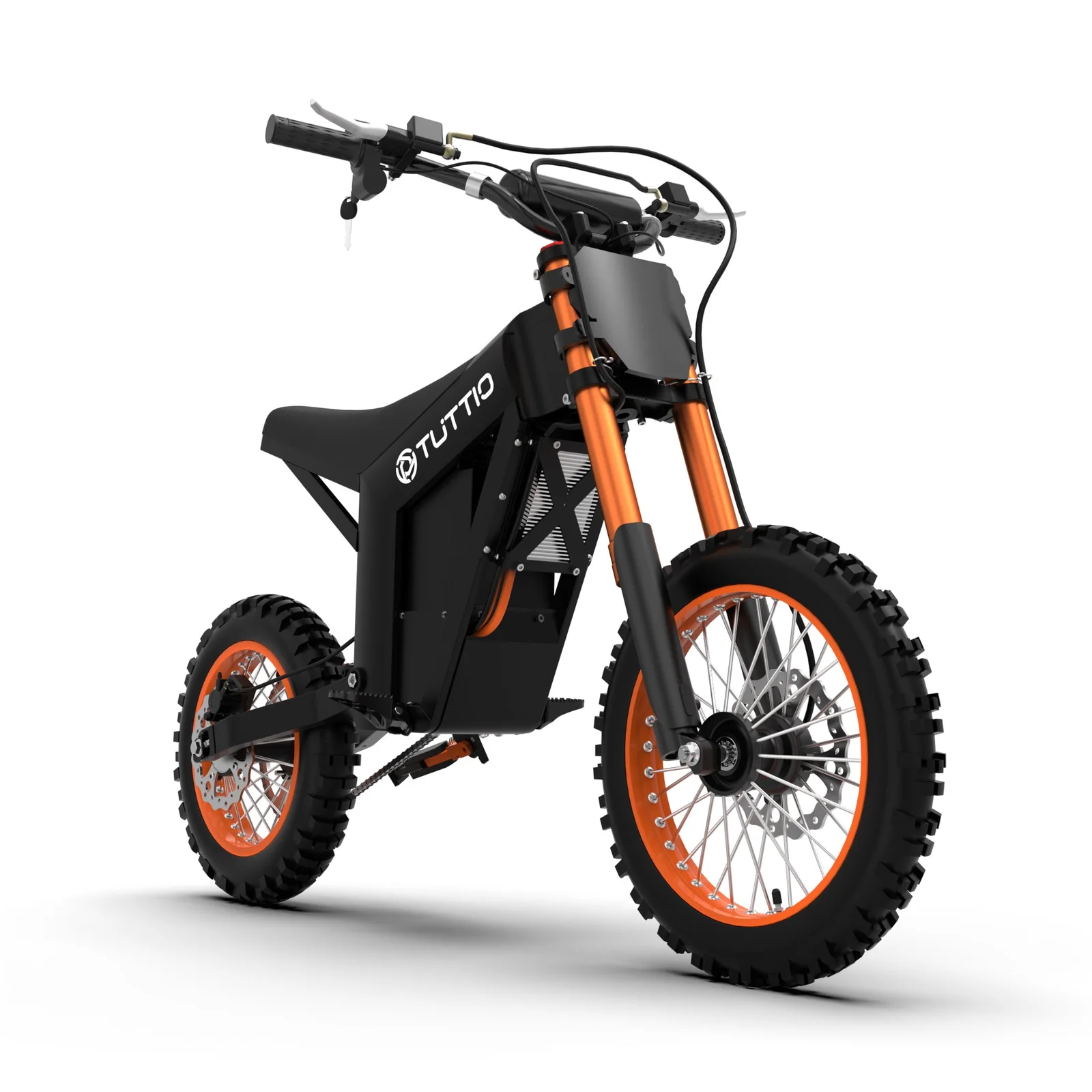
Ultra-light — Torp. ⚠️ No longer sold as a complete bike. Torp Motors now builds powertrain components — controllers and motors for Sur-Ron and Talaria upgrades — rather than the bike itself, so this is a used-market find and parts support runs through the component business. Read the rest as a description of what it is, not a buying recommendation. At ~64 lb it's roughly half a Sur-Ron, with the best power-to-weight in the catalog. It's genuinely special — and genuinely niche: a 15 kW machine in a featherweight frame is an expert's tool, and at ~$7,900 it's priced like one. Buy it if minimum weight and maximum agility are the whole point and you can handle the power. (Full review →)
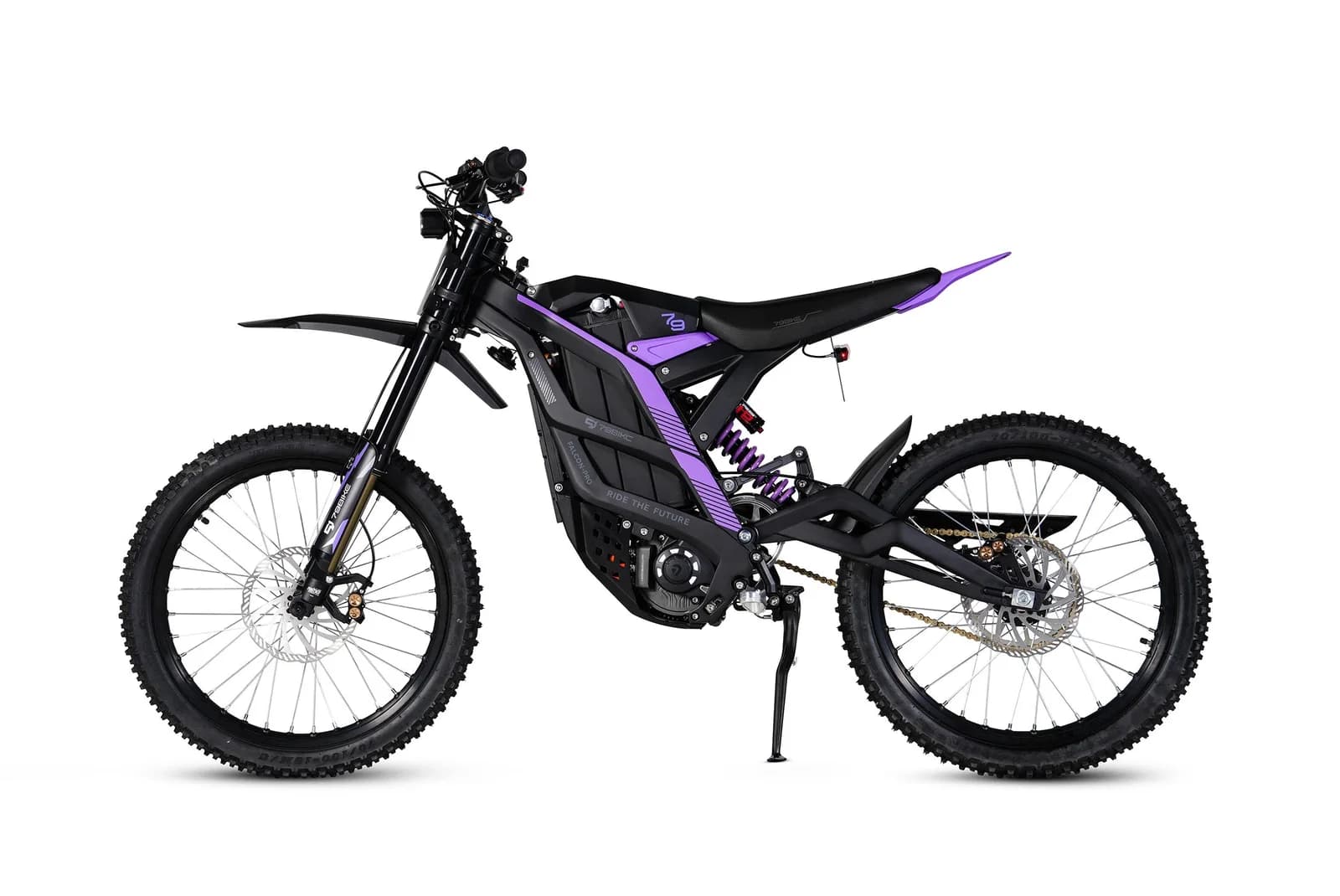
Light + capable — 79Bike Falcon Pro. Every earlier pick in this slot has gone out of production. For most riders the real sweet spot is a compact ~120-130 lb trail bike, light enough to manage but still capable and cheap. Until August 2026 that meant the Arctic Leopard XF Pro or the Talaria Sting MX3. Both are now out of production: Arctic Leopard has removed the XF from its catalogue and its product page returns a 404, and Talaria replaced the MX3 with the Sting R MX4. The Talaria X3 that took over this slot is discontinued too. The live answer is the 79Bike Falcon Pro (Score 82): ~130 lb, 10 kW peak, a 300 lb rider rating, and $3,599 on 79Bike's Amazon storefront, which is the Light Bee X's weight for $900 less. Two things to weigh: 79Bike's warranty covers only bikes bought on its own site, which charges more than Amazon, and 79Bike has no dealer network. If you want the cheapest real bike near this band, the Rawrr Mantis X is 139 lb and $2,999, in stock at Rawrr.
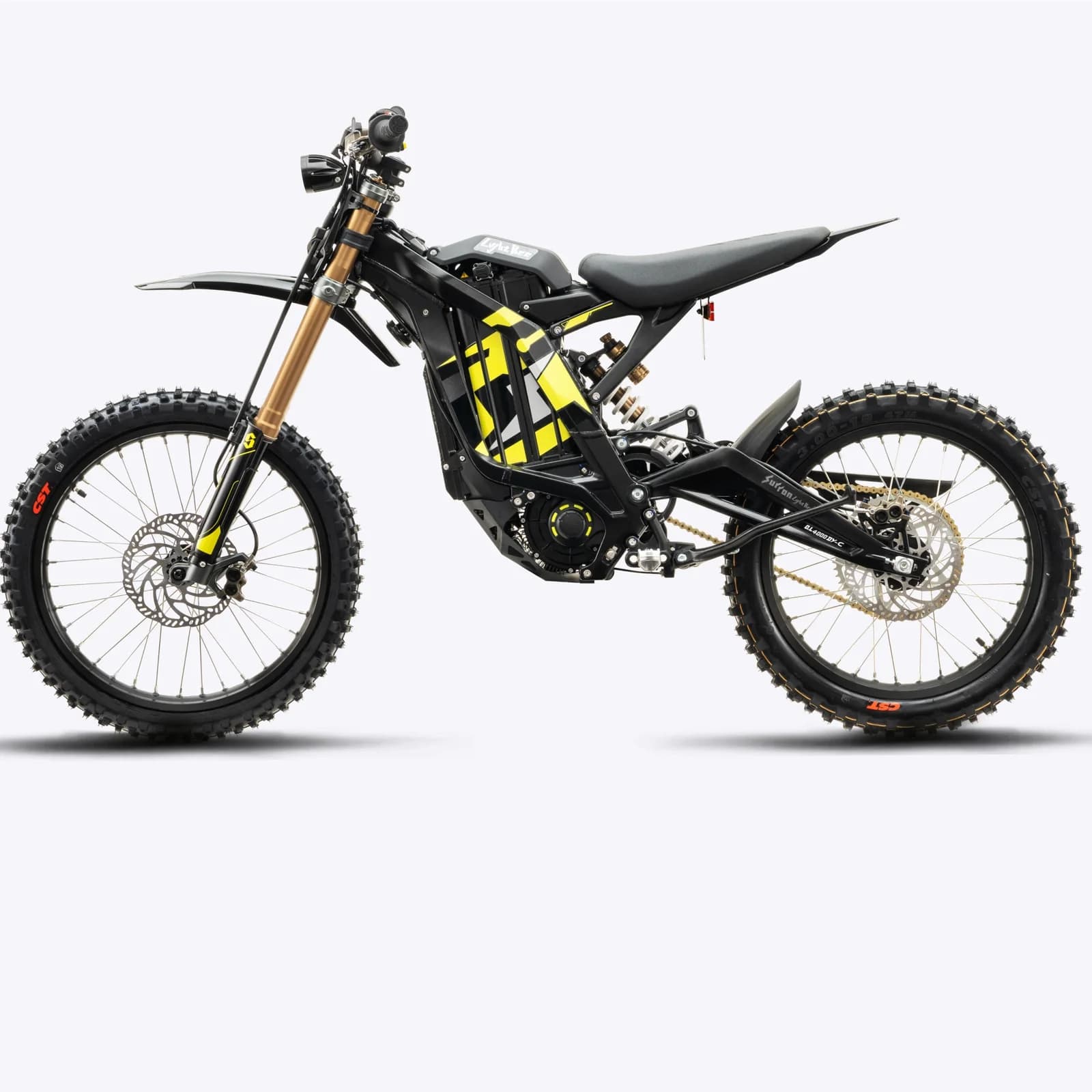
Best-supported light bike — Sur-Ron Light Bee X. At ~130 lb it's the manageable benchmark the whole class is measured against — flickable and forgiving, with the deepest aftermarket and resale in the sport. A few pounds heavier than the cheapest options, but the support and quality are worth it. (Full review →)
What to skip if you want light
The full-size and moto bikes — Sur-Ron Storm Bee (~280 lb), Stark Varg (~260 lb), Sur-Ron Ultra Bee (~195 lb) — are heavy on purpose, built for size and speed, not manageability. And the cheapest no-name ultra-lights are light for the wrong reasons (small, underbuilt, no support). If weight is a priority, stay in the ~120-140 lb trail class from a brand with real parts and quality.
The bottom line
If you want the absolute lightest, it's the Torp — but it's an expert bike, and one you can no longer buy new. For most riders, the smart move is the lightest bike that's still capable and supported: the 79Bike Falcon Pro for value, or the Sur-Ron Light Bee X for the best-supported package. Weight is one of the biggest manageability and confidence factors there is — especially for smaller and newer riders — so weigh it heavily, but not alone. Match a manageable bike to your size and skill with the Find Your Ride configurator. Want the opposite — a real motorcycle-scale machine? See our best full-size electric dirt bike picks.
VoltRipper is independent — our picks come from verified specs and the transparent VoltRipper Score, not commissions. Affiliate disclosure is included on monetized pages, and we are spec-verified/data-driven rather than hands-on until first-hand testing exists.
FAQ
What is the lightest electric dirt bike?
The Torp Bike is the featherweight of the class at about 64 lb — roughly half the weight of a Sur-Ron — but it's an expert, race-focused machine at ~$7,900. For a light bike most riders can actually live with, the practical sweet spot is the ~120-130 lb trail class: the Sur-Ron Light Bee X (130 lb) and the 79Bike Falcon Pro (130 lb), both still sold new.
Why does weight matter on an electric dirt bike?
A lighter bike is easier to control, flick around on trails, pick up after a fall, and load into a truck or on a rack. For a smaller or newer rider, weight is one of the biggest confidence factors — a 130 lb Sur-Ron is manageable; a 280 lb Storm Bee is a lot of machine to handle when things go wrong. Light also usually means more agile and forgiving.
How much does an electric dirt bike weigh?
It ranges enormously — from about 64 lb for the ultra-light Torp to ~280 lb for a full-size Sur-Ron Storm Bee. The adult trail class (Sur-Ron Light Bee, Talaria) sits around 120-140 lb, which is the manageable sweet spot for most riders. Full-size moto and race bikes run 195-280 lb and are a genuine handful.
Is a lighter electric dirt bike better?
For control and manageability, yes — but light alone isn't the goal. Some of the lightest bikes are light because they're small, cheap, and underbuilt, trading away brakes, support, and durability. The real target is light AND capable AND supported: the Sur-Ron/Talaria trail class hits it. Buy the lightest bike that still has the power, brakes, and parts network you need.