The short answer
A controller is the biggest single "more power" upgrade you can make to a Sur-Ron Light Bee X — and the reason it beats a motor swap, which is the upgrade most riders reach for first and should reach for last — and the one riders most often reach for first and shouldn't. It unlocks real acceleration and torque from the motor you already have, but it comes with trade-offs the marketing skips: more stress on the battery and motor, more heat, faster battery drain, and potential hits to warranty and street-legal status.
Buy one if you'll genuinely use the power and you're ready to support it. Do your suspension, brakes, and tires first if you haven't — they make you faster and safer at any power level, without the trade-offs.
What a controller actually does
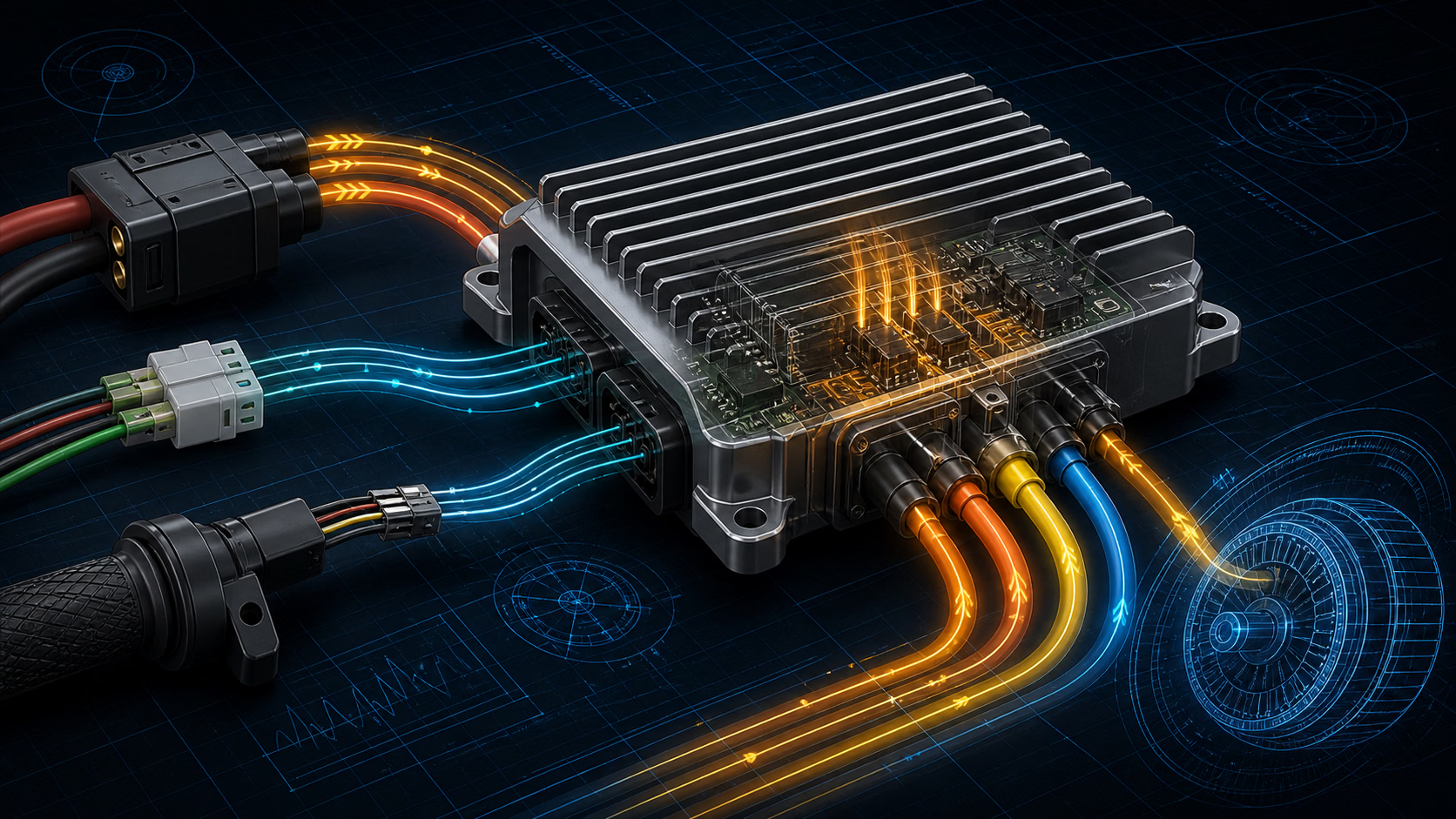
The controller is the brain between the battery and the motor: it decides how much current the motor is allowed to draw. The stock controller is tuned conservatively for reliability, warranty, and battery life. A bigger aftermarket controller raises that current ceiling, so the same motor makes noticeably more acceleration and torque — and, depending on the setup, more top speed.
That's the appeal, and it's real. But "more current" is also the source of every trade-off below, because the extra power has to come from somewhere and the heat has to go somewhere.
The benchmark: EBMX X-9000
For the Sur-Ron and Talaria platforms, the EBMX X-9000 is the benchmark: a plug-and-play high-performance controller that's the basis for most serious builds in the class. It's the upgrade experienced riders name first, and it's designed to install without cutting into the bike's wiring.
It is not cheap, and it earns its full benefit only when the rest of the bike can support it — which is the honest catch with any controller.
On an Ultra Bee, Torp's app-tuned controller is the other benchmark:
A dedicated display lets you watch controller and battery data without a phone (Torp controllers):
The trade-offs, honestly
This is the upgrade where the fine print matters most:
- It stresses the battery. More current means the pack works harder and drains faster. On a stock battery, you'll get a fraction of the potential gain and add wear — which is why a controller and a high-power battery are usually done together.
- It adds heat. More power through the motor and controller means more heat. Occasional trail riders are fine; riders pushing hard or racing should plan for cooling.
- It can affect your warranty. Power and electrical mods commonly fall outside manufacturer coverage. Read your terms first.
- It can change your legal status. Adding power or speed can push a bike out of whatever e-bike class it qualified for and change what's required to ride it legally — see derestriction and, if road use is your goal, the street-legal guide. More speed is also more responsibility.
None of this means "don't" — it means go in with eyes open and support the upgrade properly.
What you need to support it
To get the full, reliable benefit:
- A high-power battery that can supply the current — otherwise the pack is the limiter. Start with our battery upgrade guide.
- Adequate charging to handle the faster drain without doubling your downtime — see the charging guide.
- Cooling, for riders running high power hard or racing.
- Quality, not the cheapest option. A no-name controller pushing big current into your motor and battery is exactly where you don't cut corners.
And wire it properly — a high-current build needs a correctly-sized fuse and real high-current connectors, the unglamorous parts people skip (this is where cut corners become fires):
When it's worth it (and when it isn't)
Worth it if you already out-ride the stock bike, you race or ride aggressively, and you'll pair it with a battery that can keep up. This is a build-your-dream-bike upgrade, and the Sur-Ron's deep aftermarket is exactly why it's the platform to do it on.
Skip it (for now) if the bike already feels like plenty, if you haven't done suspension and brakes yet, or if you want the gain without the battery/heat/warranty trade-offs. More power is harder to ride, not automatically better — match it to your skill.
The bottom line
Want every platform + the full product list? See the complete controller & performance round-up.
A controller is the most power for your money on a Sur-Ron — and the upgrade with the most strings attached. The EBMX X-9000 is the benchmark, but it's only as good as the battery feeding it, and it can cost you warranty and legal standing. Do the safety trio first, support the controller with a real battery, respect the trade-offs — and it transforms the bike. Not sure the Light Bee X is the right base to build on? The upgrades guide covers the full order of operations, and the Find Your Ride configurator matches a bike to how you actually ride.
VoltRipper is independent — we don't sell parts and our recommendations aren't pay-to-play. Power and electrical modifications can affect safety, reliability, warranty, and street-legal status; research your specific bike and local laws before modifying. Affiliate disclosure is included on monetized pages, and we're spec-verified/data-driven rather than hands-on until first-hand testing exists.
FAQ
What does a controller upgrade do on a Sur-Ron?
The controller is the brain that decides how much current the battery sends to the motor. A bigger aftermarket controller lets more current flow, unlocking significantly more acceleration and torque from the motor you already have - the single biggest 'more power' upgrade you can make. The trade-off is that it also stresses the battery and motor, adds heat, and drains the pack faster, so it's a real commitment, not a bolt-on.
Is the EBMX X-9000 worth it?
For riders who genuinely use the power, the EBMX X-9000 is the benchmark plug-and-play controller for the Sur-Ron and Talaria platforms - it's the upgrade most serious builds are based on. At around $1,149 it's not cheap, and it delivers its full benefit only when paired with a battery that can feed it. It's worth it if you'll actually use the extra power and can manage the trade-offs; it's overkill if the stock bike already feels like enough.
Will a controller upgrade void my warranty or make the bike illegal?
It can do both. Power and electrical modifications commonly affect warranty coverage, and adding power or speed can change how your bike is classified under state law - potentially pushing it out of any e-bike category it qualified for. Check your manufacturer's warranty terms and your state's rules before you upgrade, and understand that a faster, more powerful bike is also a bigger responsibility to ride.
What else do I need with a bigger controller?
To get the full benefit and keep it reliable: a high-power battery that can supply the current (the stock pack becomes the limiter), adequate charging, and - for hard or sustained use - motor cooling. A big controller on a stock battery gives you a fraction of the gain and stresses the pack. Controller and battery upgrades are usually done together on serious builds.