Tracked price checks
Bikes in this guide
Sur-Ron
Light Bee X
Enormous aftermarket and parts ecosystem — the most-supported e-dirt-bike platform
Trade-off: Advertised range collapses at speed — plan for real-world miles well under the claim
We may earn a commission if you buy through this link, at no extra cost to you.
Check price at ATV Wholesale OutletOnyx
RCR
Moped-style comfort with a seat, lights, and a street kit — the most commuter-friendly bike here
Trade-off: Heavy (~155 lb) and moped-shaped — less capable in technical off-road than a true dirt bike
We may earn a commission if you buy through this link, at no extra cost to you.
Check price at Onyx Motors (official)Segway
Xaber 300
Established brand with a real US dealer network, app ecosystem, and smart-vehicle features rare in this class
Trade-off: New model, so aftermarket parts and owner knowledge are nascent versus Sur-Ron and Talaria
We may earn a commission if you buy through this link, at no extra cost to you.
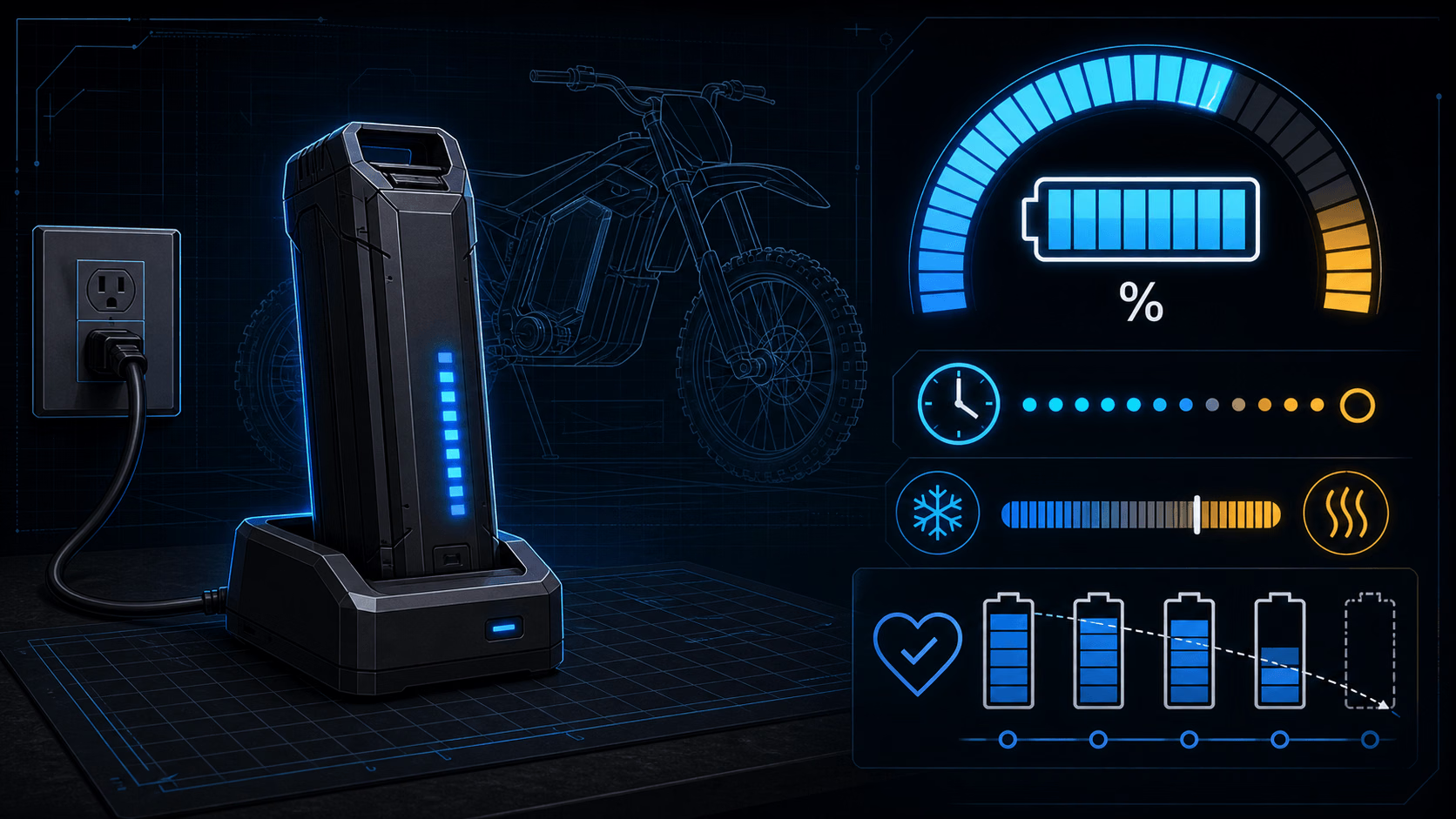
Check price at SegwayCharging an electric dirt bike is refreshingly simple — plug it into a normal wall outlet and wait. No gas station, no special charger, no wiring upgrade. The only things worth understanding are how long it actually takes, what it costs (almost nothing), and the handful of habits that make the expensive battery last for years instead of seasons.
The short answer
Use the charger that came with the bike and a standard 110V household outlet. From near-empty, expect 3-8 hours depending on battery size. It costs pennies — roughly $0.30-$0.75 of electricity per full charge. And the single best thing you can do for the battery is not leave it sitting at 100% or 0%. That's it.
How long it takes (by battery size)
Charge time scales with the size of the pack, and every bike ships with a charger matched to it:
- Small trail packs (~1.5-2.5 kWh) — Sur-Ron Light Bee, Talaria: about 3-4 hours from empty.
- Mid packs (~2.5-3.5 kWh) — Xaber, Apollo, Onyx RCR: about 4-6 hours.
- Big moto packs (5-7 kWh) — Storm Bee, Stark Varg: about 6-8 hours.
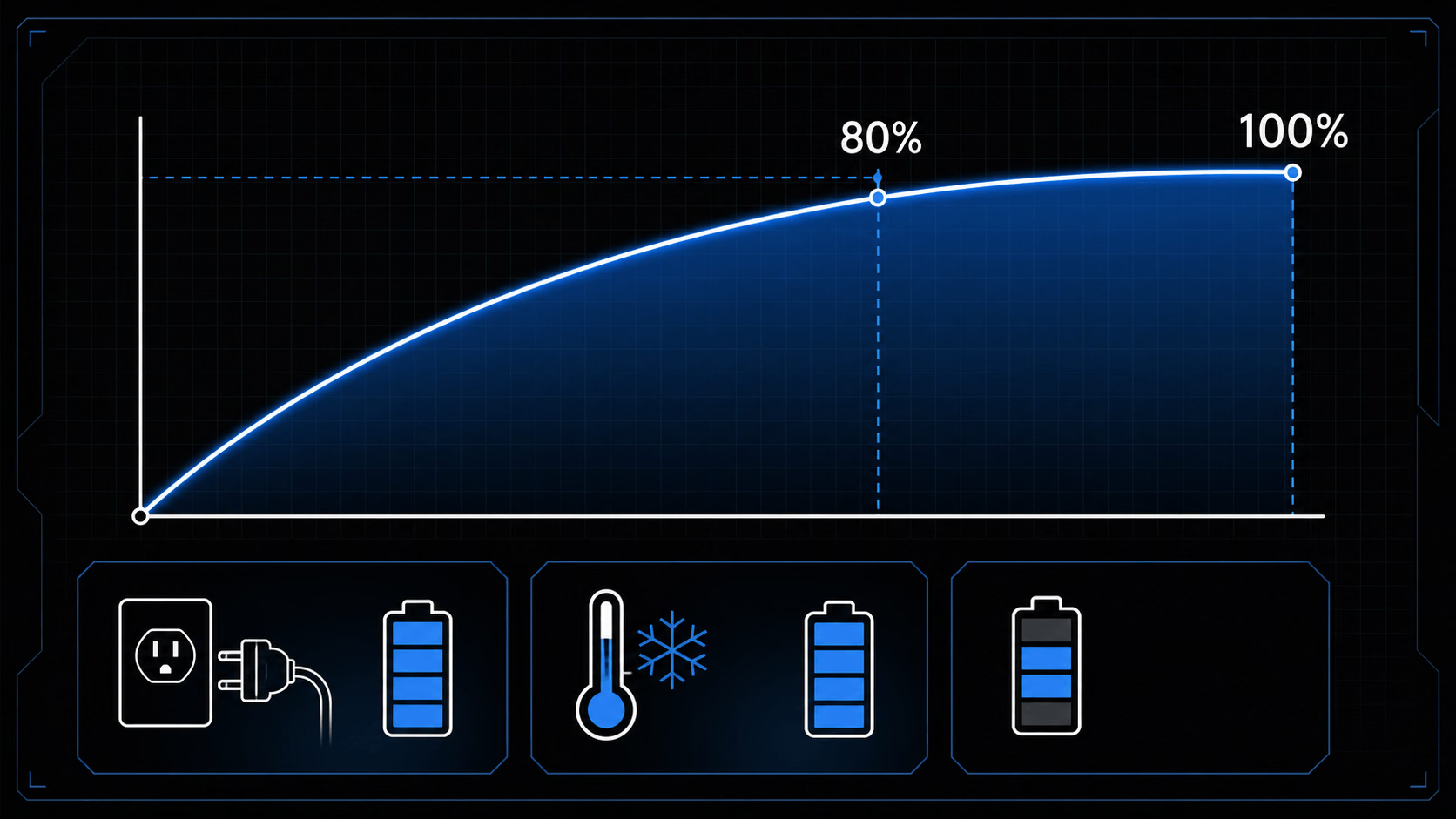
Most bikes charge quickly to ~80% and then taper the last 20% to protect the cells, so the final stretch is the slowest. If you only need a top-up before a ride, the first 80% comes fast.
What it costs
Almost nothing — and this is a real ownership advantage. A full charge draws a few kilowatt-hours of electricity, which at typical US rates is $0.30-$0.75. Compare that to a tank of gas plus oil changes, and the running-cost gap is one of the biggest reasons electric pencils out over years (more in our cost guide).
Is fast charging worth it?
Some models offer an optional fast charger (higher amps) that can meaningfully cut charge time. It's genuinely useful for a quick turnaround between rides or motos. The trade-off: fast charging runs hotter and wears the battery faster. Use it when you need speed, but make the standard charger your everyday default — the battery will thank you with a longer life.
Charging on the trail (extending your day)
You can't refuel an electric bike in seconds like gas, so range planning matters — but there are ways to stretch a day:
- Carry a spare battery. Bikes with a swappable pack (Segway, E-Ride Pro, Rawrr, Cake) let you hot-swap a charged battery on the trail, effectively doubling your range. This is the closest thing to a "fill-up."
- Charge at a trailhead or camp if there's an outlet — even a partial top-up buys more riding.
- Ride in eco/low-power mode to make the charge you have go further (see our range guide).
Charge it safely (the part most charging guides skip)
A lithium pack fails rarely, but when it does it fails fast and it is not a fire you put out with an extinguisher. Every rule below costs you nothing and is worth more than any charging-speed trick on this page.
- Charge attended. Be awake and in the building. Do not charge overnight while you sleep, and do not leave a pack charging in an empty house or garage. This is the single rule that matters most, and it is the one people break first because charging takes 3–8 hours and overnight is convenient.
- Charge on a hard, non-flammable surface, away from your exit. Concrete, tile, or a steel bench — not carpet, not a wooden bench, not the hallway you would need to walk down to get out. If it is indoors, that matters more, not less.
- Use the charger that came with the bike, or a manufacturer-specified replacement. Mismatched voltage or a cheap generic charger is one of the most common causes of a pack fire.
- Never charge a damaged pack. Crashed hard, dented, swollen, unusually hot, hissing, leaking, or smelling odd — isolate it outdoors and away from anything that burns, and get it inspected. A compromised cell does not heal.
- Let it cool first. Charging a pack straight off a hard ride, while it is still hot, stresses cells that are already at their limit. Twenty minutes costs you nothing.
- Unplug at full. A good BMS stops the charge, but leaving a pack on the charger for days is how a marginal charger finds its failure mode.
Renting, or in an apartment? Check your lease and your renter's insurance before you buy. A growing number of leases and HOAs restrict indoor lithium charging outright, and some insurers exclude it. If indoor charging is your only option, a removable pack and a certified charger are close to mandatory rather than nice to have.
The battery-care habits that matter
The lithium pack is the most expensive part on the bike to replace, so a few free habits pay off directly:
- Don't store it full or empty. For anything more than a day or two, leave it around 50-60% (storing for the off-season? see how to store your bike).
- Avoid extreme temperatures. Charge in moderate conditions; don't charge a hot pack straight off a hard ride — let it cool first — and don't charge a frozen one.
- Use the OEM charger. The included charger is matched to the pack's chemistry and BMS; a mismatched charger is a real risk.
- Don't habitually run to 0%. Deep discharges age lithium faster than shallow ones; top up before it's dead.
Do these and a quality pack should hold up for years and hundreds of cycles — see how long electric dirt bikes last for the full lifespan picture.
The bottom line
Charging is the easy part of electric ownership: plug into a wall outlet, wait 3-8 hours, pay pennies. Buy a swappable-battery bike if you ride all day, reserve fast charging for when you genuinely need it, and protect your investment with a few simple habits — moderate temps, the right charger, and not living at 100% or 0%. Want a bike whose real range fits your rides so you charge less often? Match one to your riding with the Find Your Ride configurator.
VoltRipper is independent and reader-supported — we may earn a commission on purchases through our links, at no extra cost to you, and it never affects our advice. Battery-care guidance is general; always follow your specific bike and charger's manual. Affiliate disclosure is included on monetized pages.
FAQ
How long does it take to charge an electric dirt bike?
Plan on 3-8 hours from near-empty with the standard charger, scaling with battery size: a small trail pack (~2 kWh) takes about 3-4 hours, while a big moto pack (5-7 kWh) can take 6-8. Many bikes charge faster to 80% and slow down for the last 20% to protect the cells. Some models support optional fast chargers that cut those times, at the cost of more heat and battery wear.
How do you charge an electric dirt bike?
Plug it into a standard 110V household outlet with the charger that came with it — no special station or wiring needed. Many bikes (Segway, E-Ride Pro, Rawrr) have a removable battery you can carry inside to charge, which is a big help if you park in a garage or apartment away from an outlet. Charging indoors raises the stakes, though: charge while you are awake and in the building, on a hard non-flammable surface, away from your exit route, and never overnight while you sleep.
Can you fast charge an electric dirt bike?
Some models support an optional higher-amp fast charger that can cut charge time significantly. It's convenient, but fast charging generates more heat and accelerates battery wear over time, so use it when you need a quick turnaround, not as your everyday charger. For daily use, the standard charger and a bit of patience keep the battery healthier for longer.
How do you make an electric dirt bike battery last longer?
A few simple habits add years: don't leave it sitting at 100% or run it to 0% regularly; for storage, keep it around 50-60%; charge in moderate temperatures (not freezing, not baking); let a hot pack cool before plugging in; and use the charger that came with the bike. Lithium packs are the single most expensive part to replace, so these habits pay off directly.
Sources
Specification sources
- Sur-Ron Light Bee XATV Wholesale Outlet - 2026 Sur-Ron Light Bee X (72V/35Ah, 10 kW), $4,699 from $4,999Checked
- Onyx RCROnyx Motors — RCR 80V 45AhChecked
- Segway Xaber 300Segway - Xaber 300 official specificationsChecked