Tracked price checks
Bikes in this guide
Onyx
RCR
Moped-style comfort with a seat, lights, and a street kit — the most commuter-friendly bike here
Trade-off: Heavy (~155 lb) and moped-shaped — less capable in technical off-road than a true dirt bike
We may earn a commission if you buy through this link, at no extra cost to you.
Check price at Onyx Motors (official)Apollo (RFN)
RFN Ares Rally Pro
Marketed as a 'Sur-Ron killer' — 12.5 kW peak 'rocket mode' is big power for the money
Trade-off: Newer brand with a smaller aftermarket than Sur-Ron/Talaria
We may earn a commission if you buy through this link, at no extra cost to you.
Check price at REVRidesThe short answer
Making a Sur-Ron street legal is possible in some states, impossible in others, and a real project everywhere it's allowed. A Sur-Ron (or Talaria, Stark, etc.) ships as an off-road machine with none of the DOT equipment and, critically, often no title path — so "converting" it means adding the required equipment and getting a DMV to title, register, and insure it as a motorcycle. Below is the real process. But read Step 1 first: for many riders the honest answer is "don't bother — buy a bike that's already street-legal."
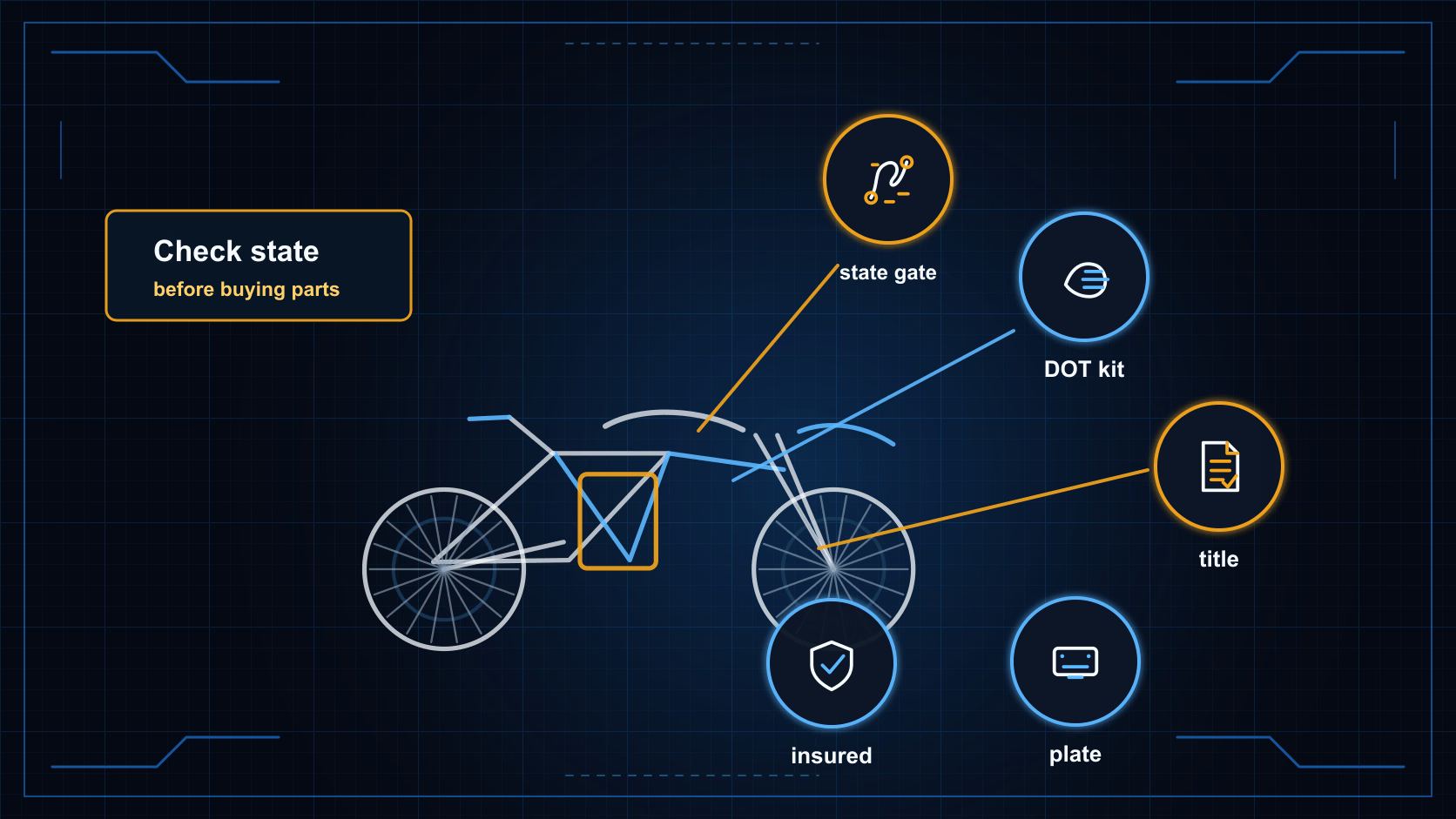
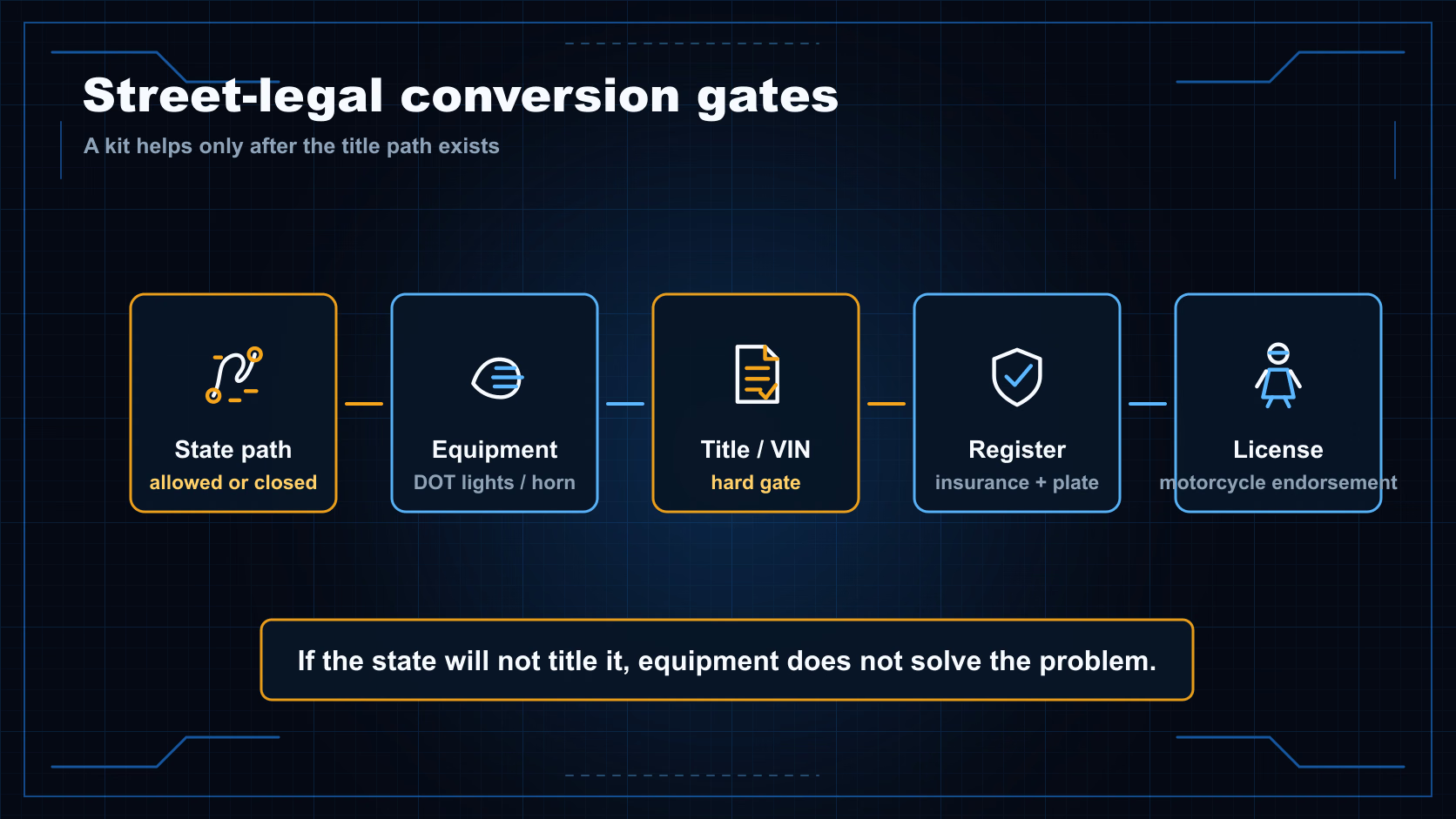
Step 1: Check your state — before you spend a dollar
This is the step that decides everything, and skipping it wastes money. States fall into three buckets:
- No path: some states won't title an off-road bike for the street at all — California explicitly bars it under SB-586, and Florida, North Carolina, and others are effectively closed.
- A real conversion path: states like Texas, Arizona, Washington, and especially Tennessee have an achievable route (Tennessee is one of the friendliest).
- Restricted / local-exception: states like Virginia technically allow it but make titling difficult.
Start on our full legality index and your state's page. If your state is a "no path" state, stop here and skip to the alternatives.
Step 2: The equipment checklist
Where conversion is allowed, you'll generally need to add and verify:
- DOT headlight with high and low beam
- Brake-activated taillight
- Front and rear turn signals
- At least one mirror (some states require two)
- A horn (some states specify audible from ~200 ft)
- DOT-approved street/dual-sport tires
- A license-plate light and reflectors
- Sometimes a speedometer/odometer
Street-legal conversion kits exist for Sur-Ron-class bikes and bundle most of this. Budget a few hundred dollars plus install time.
Step 3: Get a VIN and a title — the hard part
This is where most conversions die. To register a motorcycle you need a VIN and a title. If your bike came with an MSO (Manufacturer's Statement of Origin) or an off-road title, some states will convert it; if it didn't, or your state won't title an off-road vehicle, there may be no legal path at all. This is exactly why the state matters more than the bike.
Step 4: Register and insure it as a motorcycle
With a title and the equipment in place, you register it as a motorcycle at the DMV (plate + fees) and get motorcycle insurance (usually required for road use). Some states require a safety inspection confirming the equipment works — Tennessee, for example.
Step 5: Get your motorcycle license
You (the rider) need the right license — typically a Class M / motorcycle endorsement — to legally operate it on the road. Off-road riding doesn't require this, but street riding does.
The reality check
Be honest with yourself about the effort: a full conversion can run $300–$1,000+ in parts, plus registration, insurance, and — the real gatekeeper — a DMV willing to title an off-road bike. In many states you'll do all the work and still be turned away at titling. That's not a reason to give up if you're in a friendly state; it is a reason to confirm the path exists first.
The easier paths {#the-easier-paths}
For most riders who want pavement, there are two better options than converting a Sur-Ron:
- Buy a bike that ships street-legal. The Stark Varg EX is the high-performance road-legal enduro, the Delfast Top 3.0 — discontinued, with no purchasable path we can find, so treat it as a used-market option only — is the no-conversion long-range road option, and the Onyx RCR and Apollo RFN Ares come with lights, making a kit-based conversion far more realistic. See our best street-legal picks.
- The out-of-state registration route (a gray area). Some riders register through Montana (often via an LLC or registration agent) to obtain a plate. It's a real practice, but a legal gray area that may not survive a challenge in your home state and doesn't change local traffic law. Be careful with older advice that names South Dakota as the same kind of shortcut: South Dakota's current road-legal OHV rules require a qualifying home-state plate/home-state road legality and list 120 cc for two-wheel OHVs while listing electric only for four-wheel OHVs, so it is not a clean no-cc two-wheel electric dirt bike plate path.
The bottom line
You can make a Sur-Ron street legal where your state allows it — add the DOT equipment, title/register/insure it as a motorcycle, and carry a motorcycle license. But check your state first, because in much of the country the DMV simply won't title an off-road bike, and no amount of kit changes that. If pavement is the goal and your state is difficult, the honest move is to buy a street-legal bike rather than fight the conversion. Match a bike to your legal situation with the Find Your Ride configurator.
This guide is general information, not legal advice — laws and DMV practices change and vary by state and locality. Confirm every step with your state DMV before buying equipment or riding on public roads. Affiliate disclosure is included on monetized pages.
FAQ
Can you make a Sur-Ron street legal?
In some states, yes — by adding the required equipment (DOT lights, signals, mirror, horn), then titling, registering, and insuring it as a motorcycle and holding a motorcycle license. In other states (like California under SB-586) you legally cannot register it for the street at all. The single biggest variable is your state, so check that before spending anything.
What equipment do you need to make a dirt bike street legal?
Typically: a DOT headlight (high/low beam), a brake-activated taillight, front and rear turn signals, at least one mirror, a horn, DOT-approved street tires, and often a license-plate light and reflectors. Requirements vary by state — some also require a speedometer. Then you need a VIN/title, registration, insurance, and a motorcycle license.
Is it worth making a Sur-Ron street legal?
For most riders, no — it's expensive, involved, and often impossible depending on the state, because many DMVs won't title an off-road-only bike. If you truly need pavement access, buying a bike that ships street-legal (like the Stark Varg EX or Delfast Top 3.0) is far simpler than converting a Sur-Ron.
What is the Montana / out-of-state registration loophole?
Some riders register a vehicle out of state, most commonly through Montana or a Montana LLC, because Montana is more permissive about titling and plating. It's a real practice but a legal gray area — it may not hold up if your home state challenges it, and it doesn't change your local traffic laws. Do not assume South Dakota works the same way for a Sur-Ron-class bike: its current road-legal OHV rules do not create a no-cc two-wheel electric shortcut.
Sources
Specification sources
- Onyx RCROnyx Motors — RCR 80V 45AhChecked
- Apollo (RFN) RFN Ares Rally ProRFN by Apollo — Rally ProChecked