The short answer
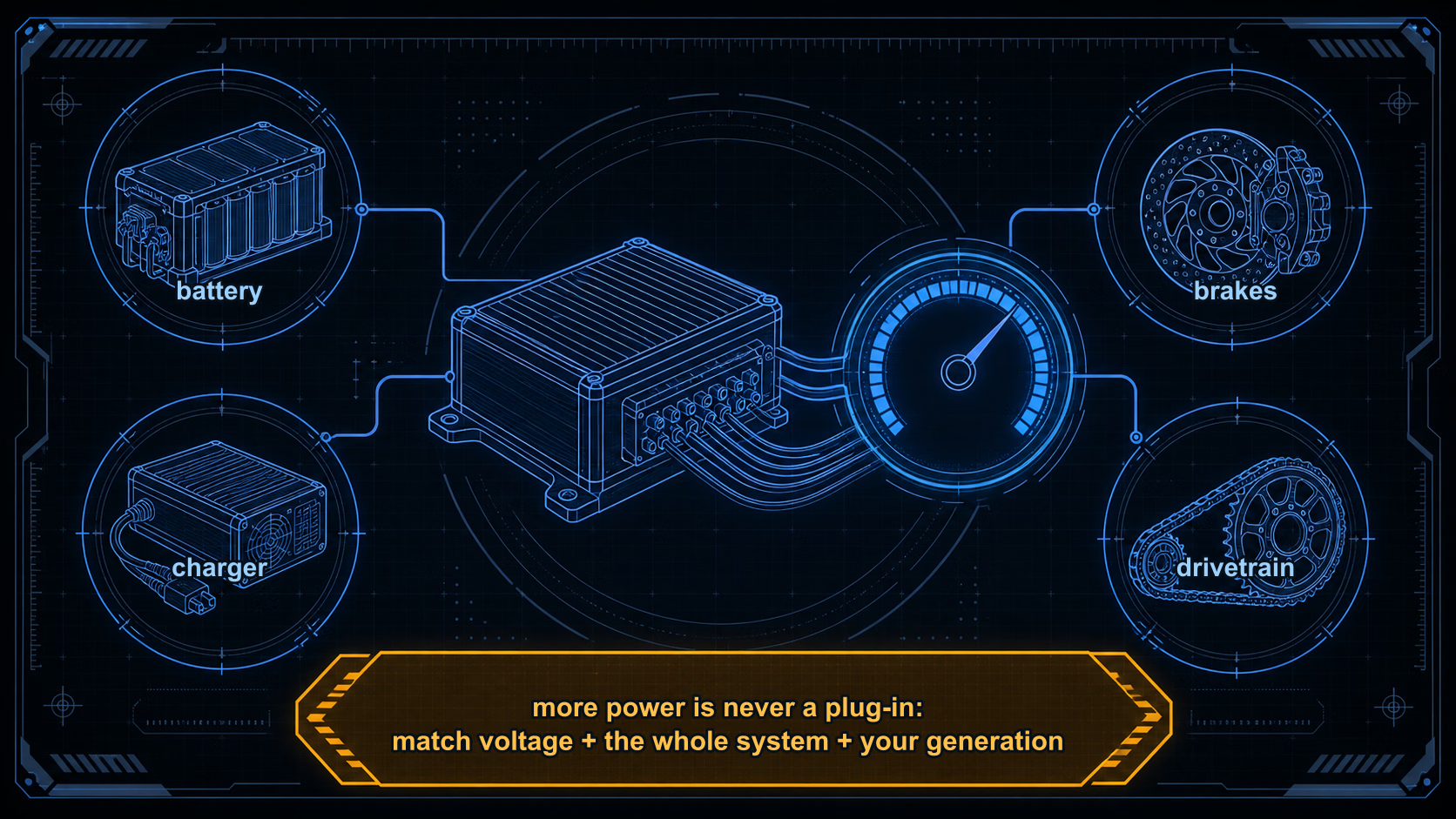
A controller is how you unlock real power on a Sur-Ron or Talaria — but "more power" is the most misunderstood upgrade on the bike, because it is never just a plug-in. Three rules govern it, and ignoring them bricks bikes or starts fires:
- Match the voltage across the whole system — a 72V build needs a 72V pack and charger, not just a controller.
- The whole bike has to keep up — a controller that pulls more current needs a battery that can deliver it, brakes that can stop it, and tires that can hold it.
- Generation fitment is a trap — the newest bikes (esp. the 2026 Light Bee X) use CAN-bus; a controller must match your exact generation and harness.
Here's how to do it right.
The rules (read before you spend $1,000+)
Voltage matches across the system. The controller runs at the pack's voltage. A 72V conversion moves the pack, charger, and controller together — see the battery & charger guide for the fire-safety spine.
The battery has to deliver the current. A high-output controller can pull huge battery amps. The pack and its BMS must be rated to deliver them, or you'll trip protections or stress the cells. Plan battery and controller together.
Brakes and tires have to keep up. More speed needs better brakes and appropriate tires. A fast bike that can't stop is the most common — and most dangerous — half-finished build.
Confirm your generation. A controller listed generically "for Sur-Ron" may not fit the newest CAN-bus bike. Confirm the seller pins your model year and pick the exact harness/adapter. We don't claim a controller fits a bike we can't confirm — which is why the EBMX below is scoped to the bikes it's verified for, and not the 2026 Light Bee X.
Just want stock power back? (OEM replacement)
Not every controller upgrade is about more power — sometimes you just need to replace a failed stock unit. A like-for-like OEM controller keeps everything stock:
Performance controllers by platform
Talaria Sting (MX3/MX4/MX5) — an app-tuned controller with published power/current (note it can't talk to the SCUD stock BMS):
Sur-Ron Ultra Bee — two proven high-power ecosystems:
The EBMX X-9000 V3 is a full ecosystem (display, throttle, Bluetooth) for the Ultra Bee, Talaria, and E-Ride — with the mandatory harness/adapter chosen for your bike. It is not confirmed for the 2026 CAN-bus Light Bee X.
Tuning & displays
App tuning is where a modern controller earns its keep. A dedicated display lets you watch controller and battery data without a phone (Torp controllers only):
Throttles
A worn throttle makes a powerful bike feel vague. A stock OEM replacement for the Talaria:
A dual-Hall upgrade throttle for aftermarket-controller builds — must be calibrated, and remember more response can outpace your brakes:
The wiring you must NOT skip
This is the unglamorous part that keeps a powerful bike from becoming a hazard. Fuse the build — sized to your wire gauge and controller current:
For 12V accessories (lights, horn — see the street-legal parts guide), step the voltage down properly instead of tapping the pack:
And use real high-current connectors, crimped or soldered correctly with polarity checked:
Wire it right, or have someone who knows high-voltage systems do it — this is where corners cut become fires.
The order to build (don't skip it)
- Battery that can deliver the current — see the battery guide.
- The controller — matched to your voltage and generation.
- Brakes — upgrade them to match the new speed.
- Tires and suspension — to hold and control it.
Doing the controller first on an otherwise stock bike is how people get hurt.
The bottom line
Riding a Sur-Ron specifically? See the focused Sur-Ron controller-upgrade guide.
A controller unlocks the power these bikes are famous for — but only as part of a system. Match the voltage across pack/charger/controller, confirm the pack can deliver the current, pin your exact generation and harness, upgrade brakes and tires to match, and fuse and wire it properly. Build it in that order and it's transformative; skip a step and it's unsafe (or illegal — big power affects warranty and street-legality). Keep it maintained with the maintenance guide, and if you're still choosing a bike, run the Find Your Ride configurator.
VoltRipper is independent — we don't sell parts and our recommendations aren't pay-to-play. Performance electronics are voltage- and safety-critical: match the controller to your pack/charger voltage and exact bike generation, confirm the pack's current rating, upgrade brakes and tires to match the power, and fuse and wire the build correctly. Big-power mods can affect warranty and street-legality. Affiliate disclosure is included on monetized pages, and we're spec-verified/data-driven rather than hands-on until first-hand testing exists.
FAQ
Will a new controller make my Sur-Ron faster?
It can unlock a lot more power, but only if the rest of the bike can keep up — a controller alone on an otherwise stock bike is the wrong way to do it. A performance controller lets the motor draw far more current, which means your battery has to be able to deliver that current, your brakes have to stop the extra speed, and your tires have to hold the extra grip and heat. On top of that, big power stresses the drivetrain and can affect your warranty and street-legality. So yes, a controller is how you make real power, but treat it as one part of a system upgrade: battery that can deliver the current first, then the controller, then brakes and tires. Done as a package it's transformative; done alone it can be unsafe.
Do I need a matching battery and charger for a performance controller?
Yes — voltage has to match across the whole system, and current capacity has to match the controller's demand. A controller runs at the pack's voltage, so a 72V build needs a 72V pack and a 72V charger, not just a 72V controller; mismatched voltage anywhere is how things get bricked or catch fire. Beyond voltage, a high-output controller can pull huge battery current, so the pack (and its BMS) must be rated to deliver it — a controller that wants more amps than your battery can safely give will trip protections or stress the cells. Plan the battery and controller together, match the charger to the pack, and confirm the pack's continuous current rating against the controller's draw before you turn the power up.
Will an aftermarket controller fit my exact bike?
Only if it's confirmed for your exact model and generation — and this is a real trap on the newest bikes. Controllers mount, connect, and communicate differently across generations; the current bikes (notably the 2026 Light Bee X) use CAN-bus systems that older controllers may not support, and the correct harness or adapter is model-specific. A controller listed generically 'for Sur-Ron' may not fit the newest CAN-bus bike, and the wrong harness can mean it simply won't work — or worse. So confirm the seller pins your bike and model year, choose the exact harness/adapter, and if a listing can't confirm your generation, treat that as a reason to keep looking. We deliberately don't claim a controller fits a bike we can't confirm.
What wiring do I need for a high-power e-moto build?
The safety wiring people skip is exactly the wiring that prevents fires: a correctly-sized fuse, high-current connectors, and — for 12V accessories — a proper DC-DC converter, all installed with the right gauge, polarity, and strain relief. A high-output controller moves enormous current, so a properly rated fuse sized to your wire and controller is essential fault protection, and quality high-current connectors (crimped or soldered correctly, polarity checked) prevent the hot-joint failures that cause fires. If you're adding lights or accessories, step the voltage down with a real DC-DC converter rather than tapping the pack. This is not the glamorous part of a build, but it's the part that keeps a powerful bike from becoming a hazard — do it properly or have someone who knows high-voltage systems do it.