Tracked price checks
Bikes in this guide
Sur-Ron
Light Bee X
Enormous aftermarket and parts ecosystem — the most-supported e-dirt-bike platform
Trade-off: Advertised range collapses at speed — plan for real-world miles well under the claim
We may earn a commission if you buy through this link, at no extra cost to you.
Check price at ATV Wholesale OutletSur-Ron
Ultra Bee
Big 4.4 kWh (74V/60Ah) pack, ~24.5 kW HP listings, and a 59 mph top end — a real step up from the Light Bee
Trade-off: Heavier (~195 lb) and more bike than a beginner needs
We may earn a commission if you buy through this link, at no extra cost to you.
Check price at Boca ScootersSegway
Xaber 300
Established brand with a real US dealer network, app ecosystem, and smart-vehicle features rare in this class
Trade-off: New model, so aftermarket parts and owner knowledge are nascent versus Sur-Ron and Talaria
We may earn a commission if you buy through this link, at no extra cost to you.
Check price at SegwayThe short answer
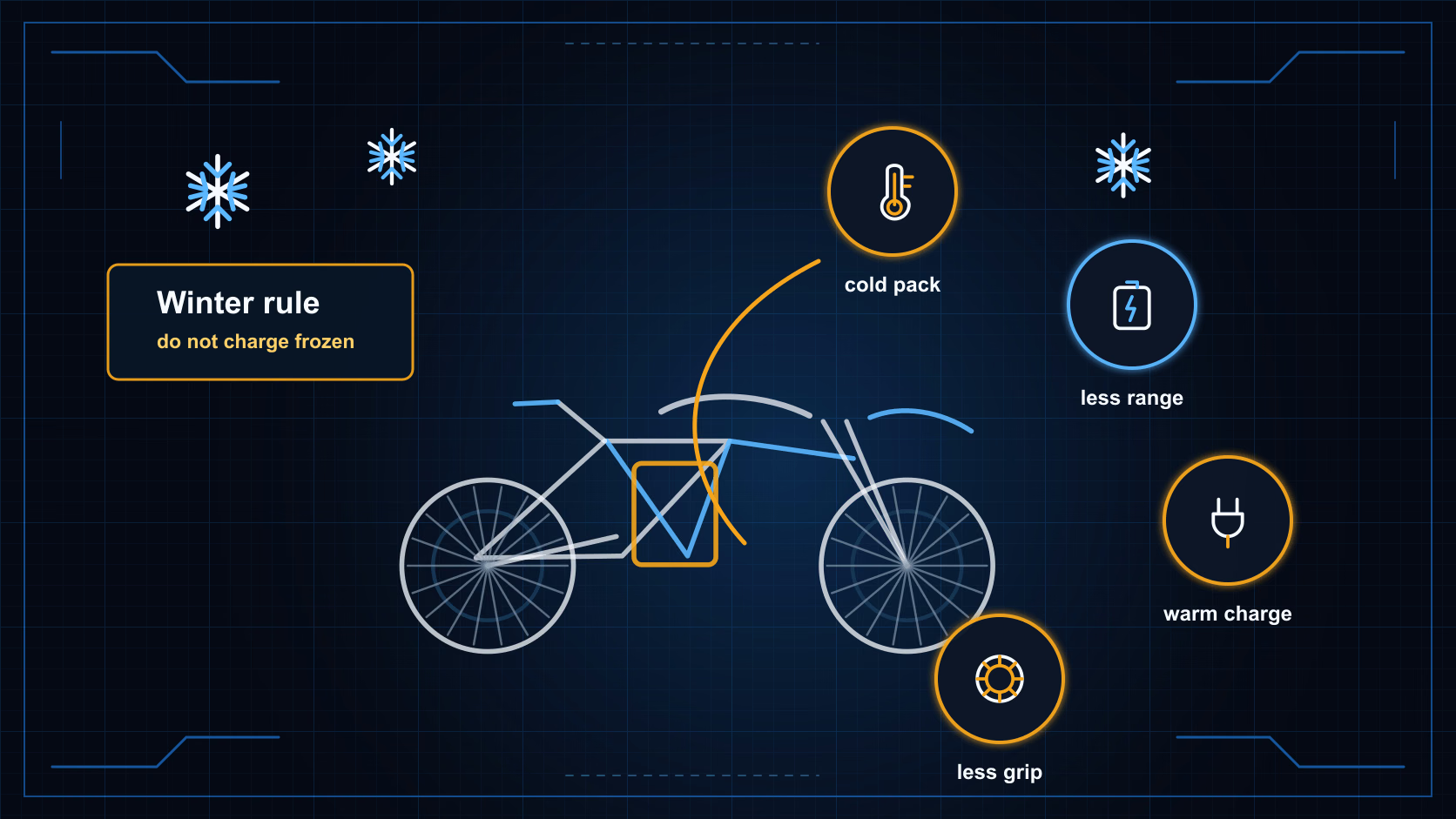
You can absolutely ride an electric dirt bike in the cold — the powertrain doesn't mind winter the way a cold gas engine does. But cold changes three things: your range drops, your peak power softens until the pack warms, and — the one that actually damages hardware — charging a frozen battery can wreck it. Get those right and winter riding is easy.
Here's what cold weather does and how to handle it.
1. Expect less range — plan for it
Lithium batteries deliver less usable energy when they're cold. That means winter range is meaningfully lower than the same bike's summer figure — and remember claimed range is already optimistic before you subtract the cold penalty.
Here is the arithmetic, and we will be precise about which half of it we actually know.
Two factors stack. The first is measured: across the 31 bikes where we hold both a manufacturer claim and a credible real-world figure, real range averages 59.4% of the claim — that is computed from our own catalogue, not a rule of thumb. The second is an assumption: our range estimator applies a 0.80 factor below 40°F, and it labels that a VoltRipper assumption rather than a measurement, because it is one.
Multiply them and a claimed figure becomes roughly 47% of itself in winter:
| bike | claimed | realistic cold-weather range |
|---|---|---|
| Sur-Ron Light Bee X | 47 mi | ~22 mi |
| Talaria Sting R MX4 | 46 mi | ~22 mi |
| Segway Dirt eBike X260 | 74.6 mi | ~35 mi |
A 47-mile bike is a 22-mile bike in the cold. Plan the loop around that number, not the box.
What we do not have, and would rather say: of 103 claim-versus-reality checks across our catalogue, not one concerns temperature. We hold no measured cold-weather range figures for any bike we track. The 0.80 above is a planning assumption we publish openly, not a finding — treat it as a starting point and log your own first winter ride, because your number will beat ours.
Run the range estimator with the cold setting before you plan the loop; it shows its arithmetic and labels its own guesses.
Don't get stranded banking on a warm-weather number. Keep the pack as warm as you reasonably can (store and charge it indoors, then install it just before riding), start with a full charge, and shorten your planned loop in deep cold. If range is your priority, our long-range picks and a battery upgrade both help — but nothing beats simply planning for less.
2. The one charging rule that matters most
This is the part that protects your expensive battery: do not charge a lithium pack below freezing if you can avoid it. Charging a cold lithium battery below 0°C / 32°F can cause permanent internal damage.
- Let the battery warm to room temperature before charging. Bring it inside and give it time.
- Charge indoors, above freezing — never in a frozen garage or shed.
- Never fast-charge a cold pack. Heat plus cold-damaged chemistry is the worst combination.
Using the battery in the cold is fine — it just delivers less until it warms. It's charging cold that does the harm. The rest of the safe-charging routine (attended, hard surface, right charger) is in the charging guide.
3. Power comes back as the pack warms
A cold battery is less willing to deliver peak current, so the bike can feel softer for the first few minutes. Ride gently to let the pack warm into its normal temperature range, and it'll come back to full performance. Don't hammer a stone-cold battery from the first throttle input.
4. Water, salt and the rating almost nobody publishes
Winter riding is wet riding — slush, road salt, meltwater — and this is where a spec gap bites. Only 6 of the 52 bikes we track publish an IP water-resistance rating at all. For the other 46 the honest answer is that the manufacturer has not told you, and an unpublished rating is not a good rating; it is an unknown one.
Treat every one of them as rain-tolerant and submersion-intolerant, which is the standing rule anyway. Salt is the specific winter addition: it is far harder on connectors, fasteners and brake hardware than plain water, so rinse with fresh water after a salted ride and dry the connectors rather than leaving them wet under a cover.
5. Grip is the real winter hazard
The bike is the same in winter; the ground isn't. Cold, wet, frozen, or snowy terrain offers far less grip, and braking distances stretch out.
- Ride smoother and slower, with gentler throttle and brake inputs.
- Match tires and pressure to the surface — see our tires and wheels guide. Lower pressure can help on loose cold ground; ice is its own problem entirely.
- Respect reduced traction as the genuine risk — more than the cold itself.
If it's also wet, the electronics care in our riding in the rain guide applies here too.
6. Store it right over winter
If the bike will sit through the cold months, storage is where cold does slow, invisible damage:
- Store indoors at a moderate temperature, not in a freezing shed.
- Leave it at a partial charge — not full, not empty — and top it up periodically.
- Cold plus a low state of charge is hard on a lithium pack, so don't park it nearly-empty for months in the cold.
Full off-season routine — charge level, temperature, and checks — is in the storage guide.
7. Gear for the cold — without giving up protection
Cold hands and feet end rides fast and dull your control inputs. Layer for warmth, add windproof outer layers, and consider heated grips or gloves — but never trade protective gear for warmth. You still want a DOT helmet, goggles, gloves, boots, and body protection; winter just means warm layers under them. See the safety gear guide.
The bottom line
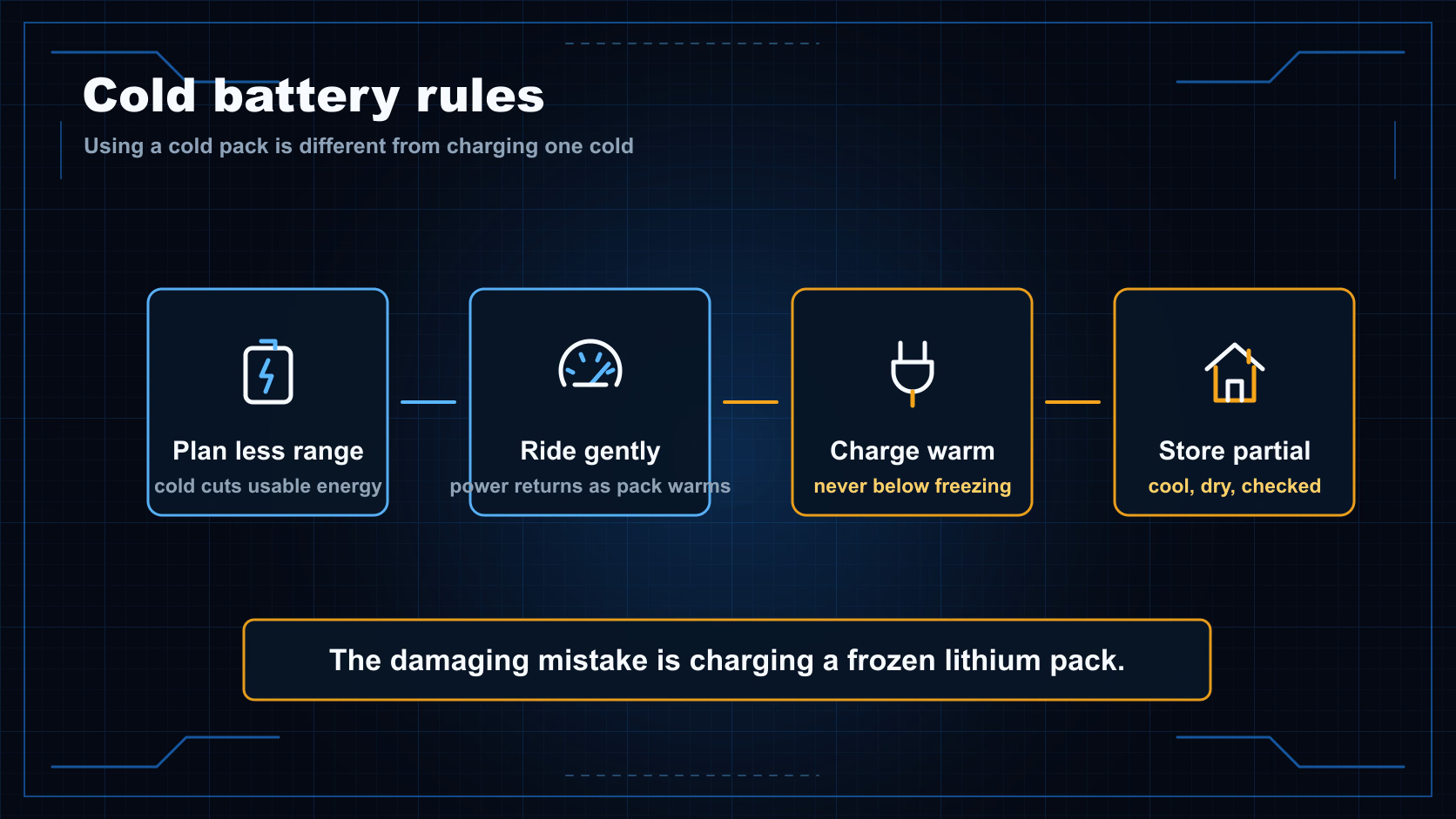
Cold weather doesn't stop an electric dirt bike, but it does three things: cuts your range, softens power until the pack warms, and punishes a battery charged or stored while frozen. Plan for less range, warm the battery before you charge it, ride smooth for grip, store it indoors at a partial charge, and gear up for the cold over your protective kit. Do that and winter is just another season to ride. New to the category or picking a bike for a cold climate? Run the Find Your Ride configurator.
VoltRipper is independent — our guidance comes from verified specs and general lithium-battery best practice, not commissions. Follow your battery and charger manufacturers' temperature and charging specifications, which take precedence over general advice. Affiliate disclosure is included on monetized pages, and we're spec-verified/data-driven rather than hands-on until first-hand testing exists.
FAQ
Does cold weather reduce electric dirt bike range?
Yes, noticeably. Lithium batteries deliver less usable energy when they're cold, so winter range is meaningfully lower than the same bike's summer range - on top of the fact that claimed range is already optimistic. Plan for a real-world hit in the cold, keep the pack as warm as you reasonably can before and during a ride, and don't get caught out far from home banking on a warm-weather range number.
Can I charge my electric dirt bike battery in freezing temperatures?
Avoid charging a lithium pack below freezing if you possibly can - charging a cold lithium battery below 0C/32F can cause permanent damage. Let the battery warm up to room temperature before you charge it, charge indoors where it's above freezing, and never fast-charge a cold pack. This is the single most important cold-weather rule for battery longevity and safety.
Does cold weather hurt the battery long-term?
Using a battery in the cold is fine; charging it cold and storing it in extreme cold are what cause harm. Ride it cold if you want - performance just drops until it warms. But charge it warm, and store it indoors at a moderate temperature and a partial charge over winter rather than leaving it in a freezing shed. Cold storage plus a low state of charge is hard on a lithium pack.
Is it harder to ride an electric dirt bike in winter?
The bike is the same, but the conditions are harder: cold, wet, frozen, or snowy ground offers far less grip, so traction and braking distances change. Ride smoother and slower, adjust tire choice and pressure for the surface, gear up for the cold without giving up protective gear, and treat reduced grip as the real winter hazard - more than the bike itself.
Sources
Editorial sources
Specification sources
- Sur-Ron Light Bee XATV Wholesale Outlet - 2026 Sur-Ron Light Bee X (72V/35Ah, 10 kW), $4,699 from $4,999Checked
- Sur-Ron Ultra BeeVoro Motors — Surron Ultra Bee HP SW 24.5kW 74V 60AhChecked
- Segway Xaber 300Segway - Xaber 300 official specificationsChecked