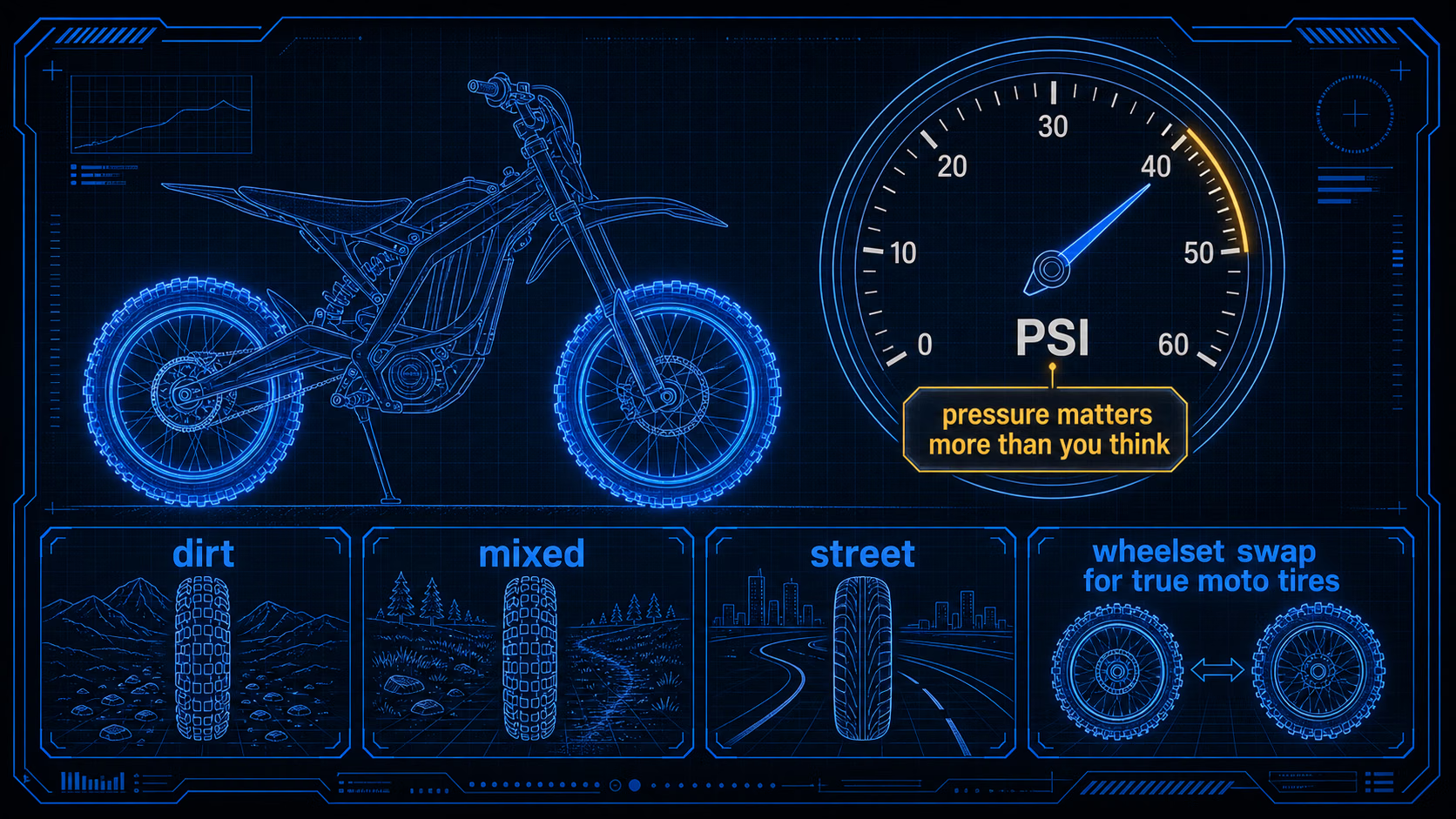
The short answer
Tires are the cheapest upgrade that changes how a Sur-Ron Light Bee X actually rides. The right knobby for your terrain dramatically improves grip and confidence, and it costs a fraction of a suspension or controller upgrade. Before you spend big anywhere else, make sure the bike has the right rubber and the right pressure.
Most riders never need to touch the wheels — a better tire on the stock hoops gets you most of the way. You upgrade the wheels only when you want to run a full range of true moto tires, build a supermoto, or want stronger rims.
Pick the tire for your terrain, not the label
The mistake is buying the most aggressive-looking knobby regardless of where you ride. Match the tire to the ground:
- Soft, loose, sandy, or muddy: a taller, more open knobby that digs in and clears mud.
- Rocky or hardpacked trail: a harder compound with more surface contact and durable knobs — an open mud tire squirms and wears fast here.
- Mixed or pavement use: a DOT-approved dual-sport tire that survives the road without giving up all its dirt grip.
Grip on the surface you actually ride beats a race tire that's wrong for it. Match the size to your Sur-Ron (many run a 70/100-19 front, a 3.00-18 rear on the Light Bee X) — an off-road knobby, or a DOT dual-sport if you ever touch pavement (most MX knobbies are not street-legal):
The front and rear don't have to be identical — many riders run a grippier front for steering confidence.
Pressure is free tuning
The tire is half the equation; pressure is the other half, and it's free.
- Lower pressure off-road grows the contact patch and grip on loose or rocky ground.
- Higher pressure resists pinch flats and rolls better on hardpack and pavement.
There's no universal number — it depends on the tire, terrain, your weight, and your pace. Start in the tire's recommended range, drop it for grip in the dirt, raise it for pavement or if you're pinch-flatting. Carrying a small pump and a plug kit (see the accessories guide) means you can tune pressure at the trailhead and fix a flat far from home.
When a wheelset upgrade is worth it
A tire swap fits the stock wheels. A wheelset upgrade is a bigger project, and it's worth it when you want to:
- Run true moto tires the stock size can't mount — a proper 19/16 or full-size 21/18 setup opens up the whole dirt-tire catalog.
- Build a supermoto — smaller street wheels and sticky road tires for a pavement machine.
- Get stronger rims for hard riding, jumps, and rough terrain.
For a bolt-on that opens up real off-road tire choice, the Warp 9 wheel-and-tire combo is a popular option — a complete wheelset built for the Sur-Ron and E-Ride platforms that lets you run true off-road rubber rather than being limited by the stock hoops.
A note on supermoto and street use
A supermoto conversion (street wheels + sticky road tires) makes the bike a pavement weapon — see the supermoto wheels guide for the wheelset, paired with a DOT street tire:
But a supermoto setup does not make the bike street-legal. Riding on public roads still requires lighting, registration, and compliance with your state's rules, which is a separate project entirely. If road use is the goal, start with the street-legal guide and your state's page, not just a wheel swap.
The bottom line
Want every platform + the full product list? See the complete best e-moto tires round-up.
Tires and pressure are the highest-value, lowest-cost tuning on a Sur-Ron — match the tire to your terrain, dial pressure for grip or durability, and you'll transform the bike before spending a dollar on power. Upgrade the wheels only when you want the full moto-tire range, a supermoto, or stronger rims. Doing the whole build? The upgrades guide lays out the order of operations, and the Find Your Ride configurator matches a bike to your terrain.
VoltRipper is independent — we don't sell parts and our recommendations aren't pay-to-play. Tire and wheel choice affects handling and safety; follow tire pressure and load ratings and confirm road-legal requirements separately before street use. Affiliate disclosure is included on monetized pages, and we're spec-verified/data-driven rather than hands-on until first-hand testing exists.
FAQ
What are the best tires for a Sur-Ron?
The best tire is the one that matches your terrain, not the most aggressive one you can find. Soft, loose, or muddy ground wants a taller, more open knobby; rocky or hardpacked trails want a harder compound with more surface contact; pavement or mixed use wants a DOT-approved dual-sport tire. Grip on the surface you actually ride beats a race knobby that's wrong for it - and correct tire pressure matters as much as the tire itself.
Do I need to change wheels to run better tires?
Not always. You can fit a better tire to the stock wheels and get most of the benefit for the least money. You'd upgrade the wheels themselves if you want to run a full range of true moto tires the stock size can't take, build a supermoto (street) setup, or want stronger rims for hard riding. A wheelset is a bigger spend aimed at riders who've outgrown what the stock hoops can mount.
What tire pressure should I run on a Sur-Ron?
Lower pressure off-road increases the contact patch and grip on loose or rocky ground; higher pressure resists pinch flats and rolls better on hardpack and pavement. There's no single number - it depends on the tire, the terrain, your weight, and your pace. Start at the tire's recommended range, drop pressure for grip in the dirt, and raise it for pavement or when you're getting pinch flats. Adjusting pressure is the cheapest tuning you can do.
Can I make a Sur-Ron a supermoto?
Yes - a supermoto conversion swaps to smaller street-oriented wheels with sticky road tires, turning the bike into a pavement-focused machine. It's a wheelset-and-tire project, and if the goal is riding on public roads it's a separate question from being street-legal (lighting, registration, and state law still apply). See our street-legal guidance before assuming a supermoto setup makes a bike road-legal.