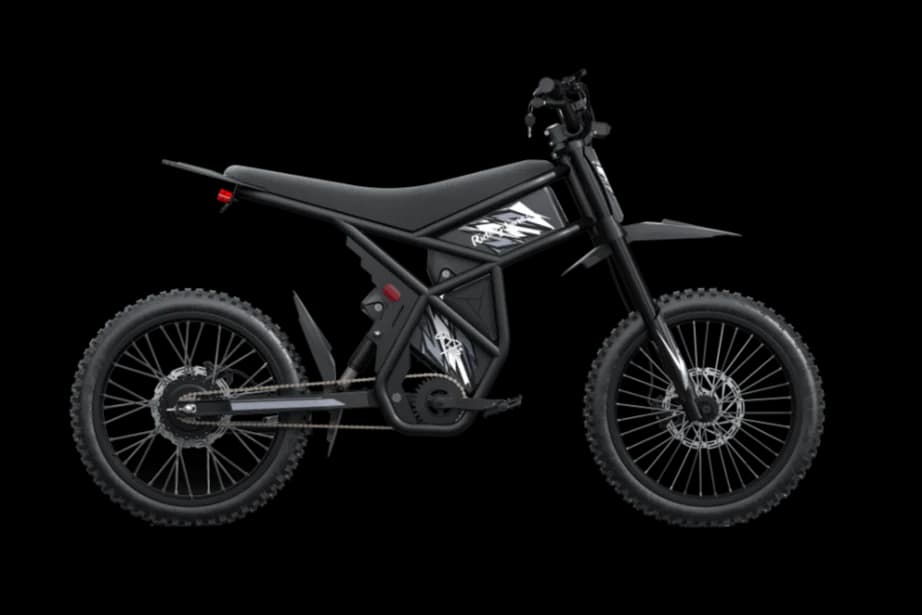
buyers who want an established-brand alternative to Sur-Ron and Talaria with dealer support, riders who value premium suspension and brakes out of the box
Trade-off: New model, so aftermarket parts and owner knowledge are nascent versus Sur-Ron and Talaria
$5,299
We may earn a commission if you buy through this link, at no extra cost to you.
If you're a heavier or bigger rider, the spec that matters most is the rider-weight rating, and it trips up more buyers than power or range. If you need the highest published capacity, start with the GT73 at 330 lb. If you want the best budget middle ground, the VALTINSU EM-5 Pro pairs a 287 lb rating with a much lower price. If you want capacity and real power, the 79Bike Falcon Pro is the cheapest bike we track that combines a 300 lb rating with 10 kW — the Talaria Komodo (353 lb, 32 kW) and Segway Xaber 300 (330 lb, 21 kW) clear that bar too, for $2,200 and $1,500 more on the sticker. The E-Ride Pro SS 3.0 and SS 2.0 are strong bikes, but be clear about what they are here: their official rating is 265 lb, the lowest on this page, and the Komodo and Xaber 300 both beat them on power and capacity for $300-$1,000 more. Buy an E-Ride because you want that specific bike, not because it is the fast one — on this page, it isn't.
The thing almost no one tells you: the best-known bikes - every Sur-Ron and the full-size Storm Bee - are rated to only 220 lb.
The trap: most e-dirt-bikes top out at 220 lb
Here's the finding that should change how a bigger rider shops. The Sur-Ron Light Bee X is rated to 220 lb (100 kg) - and so is the full-size Sur-Ron Storm Bee and the Talaria Sting. Same 220 lb ceiling, whether the bike is compact or full-size. It's a load rating, not a size thing.
Why it matters: a 210 lb rider in boots, a helmet, armor, and a pack is over 220 lb, and exceeding the rating:
stresses the frame, swingarm, and suspension beyond design load,
saps performance because the motor works harder to move the extra mass,
and can void the warranty if something breaks.
Most "best e-dirt-bike for big guys" lists never mention this. We're leading with it because it's the single most important filter for a heavier rider, and it quietly rules out the two best-known brands for some buyers. We pulled the published rating for every bike in our catalog in electric dirt bike weight limits — eleven land on exactly 220 lb, and 22 publish nothing at all.
What a heavy rider actually needs
Three things, in order:
A rider-weight rating that covers you with gear, plus margin. Weigh yourself kitted up and add a buffer.
Enough power to move the mass. A heavier rider on an underpowered bike feels sluggish and struggles on hills; you want real kilowatts, not a 2 kW throttle bike.
Robust, adjustable suspension. More rider weight compresses the suspension more; you want stiffer springs or adjustable preload so it doesn't bottom out.
Rare 265 lb official rating; repriced in July 2026, so no longer the budget play
Highest capacity, and the most power - Talaria Komodo. New to this page, and it takes both crowns at once: Talaria publishes a 353 lb max load for the Komodo - the highest rating in our catalog - alongside 32 kW and 65 mph. Nothing else here comes close to that combination. At $5,999 it is the most expensive pick on the page, and it is a lot of machine at 216 lb, so it suits a confident rider rather than a first bike. (Full review)
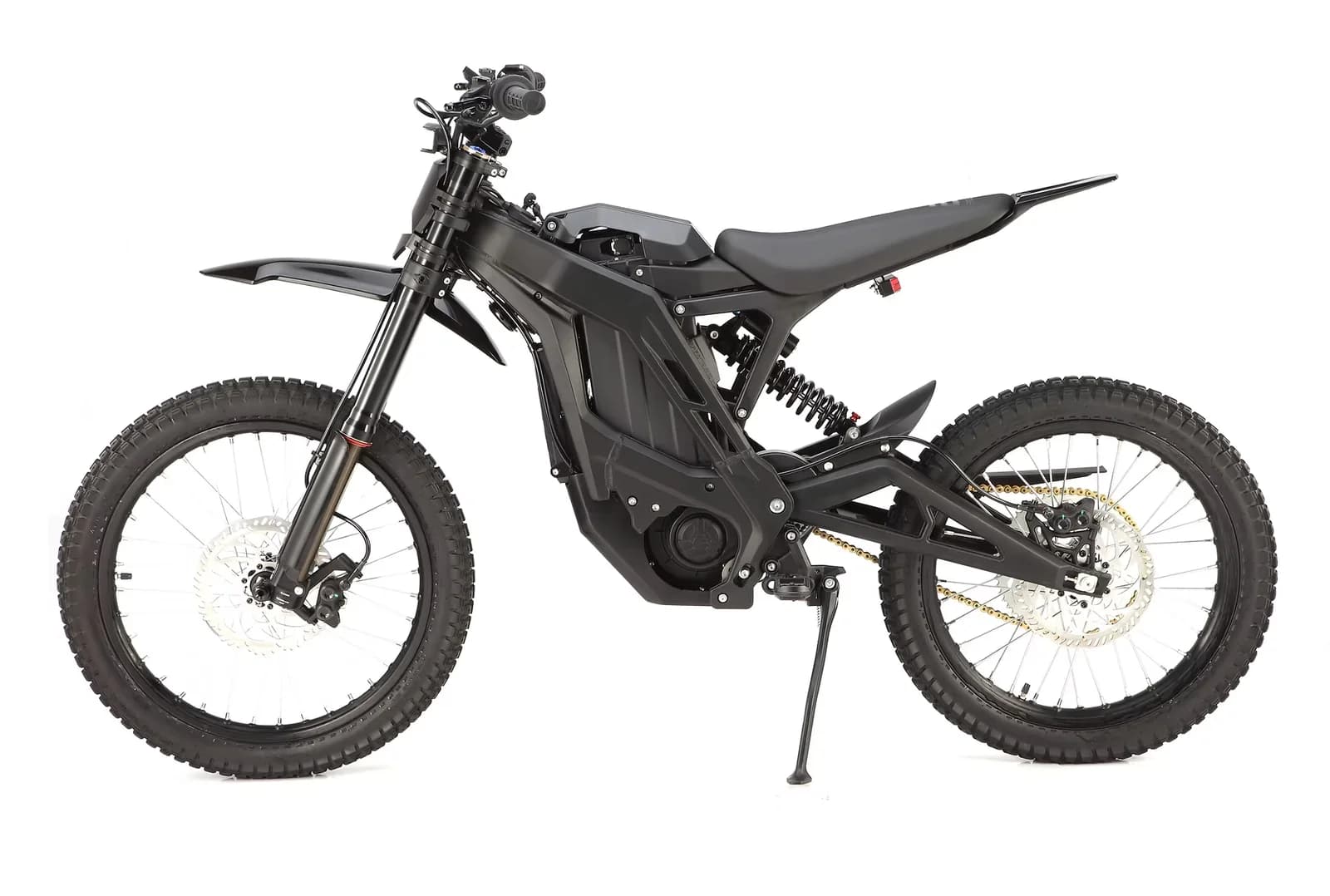
Most capacity per dollar - GT73. With a 330 lb limit it carries nearly as much for a fraction of the price, but be honest about the trade-off: at 2.4 kW and 35 mph it is underpowered, and a very heavy rider will feel it on hills. Consider it if capacity is the first constraint and you are content with gentle riding. (Full review)
Best capacity and power together - 79Bike Falcon Pro. This is the value answer to the trade-off running through the rest of this page. The GT73 carries the most but makes 2.4 kW; the E-Ride pair make real power but are officially rated to 265 lb. The Falcon Pro is rated to 300 lb and makes 10 kW / 56 mph for $3,599 - by some distance the cheapest way to get real power and a rating above 287 lb. If your geared-up weight lands between 265 and 300 lb, this is the bike to start with.
Buy it with three things in mind, none of which are on 79Bike's product page. It is a $3,849 bike, not a $3,599 one - $250 shipping, disclosed only in 79Bike's shipping policy and charged on its Amazon storefront too. The 12-month warranty applies only if you buy directly from 79Bike, so a dealer purchase at the same price is materially worse. And 79Bike is a small brand that has already erased a model: the Falcon Pro's predecessor, the Falcon M, had its product page deleted rather than discontinued with notice. None of that outweighs being the cheapest bike that fits a 280 lb rider who wants real power - the Segway Xaber 300 ($5,299) and Talaria Komodo ($5,999) clear the same bar for $1,500 and $2,200 more - but you should know it going in. (Full review)
Nearly as capable, $700 cheaper - Segway Xaber 300. Segway publishes a 150 kg payload - 330 lb and pairs it with 21 kW and 60 mph. It gives up 23 lb of rating and a chunk of power to the Komodo, but costs $700 less and comes with a broader dealer network, which matters more than the spec gap for most buyers. It is 187 lb, so it is still a lot of machine to pick up. (Full review)
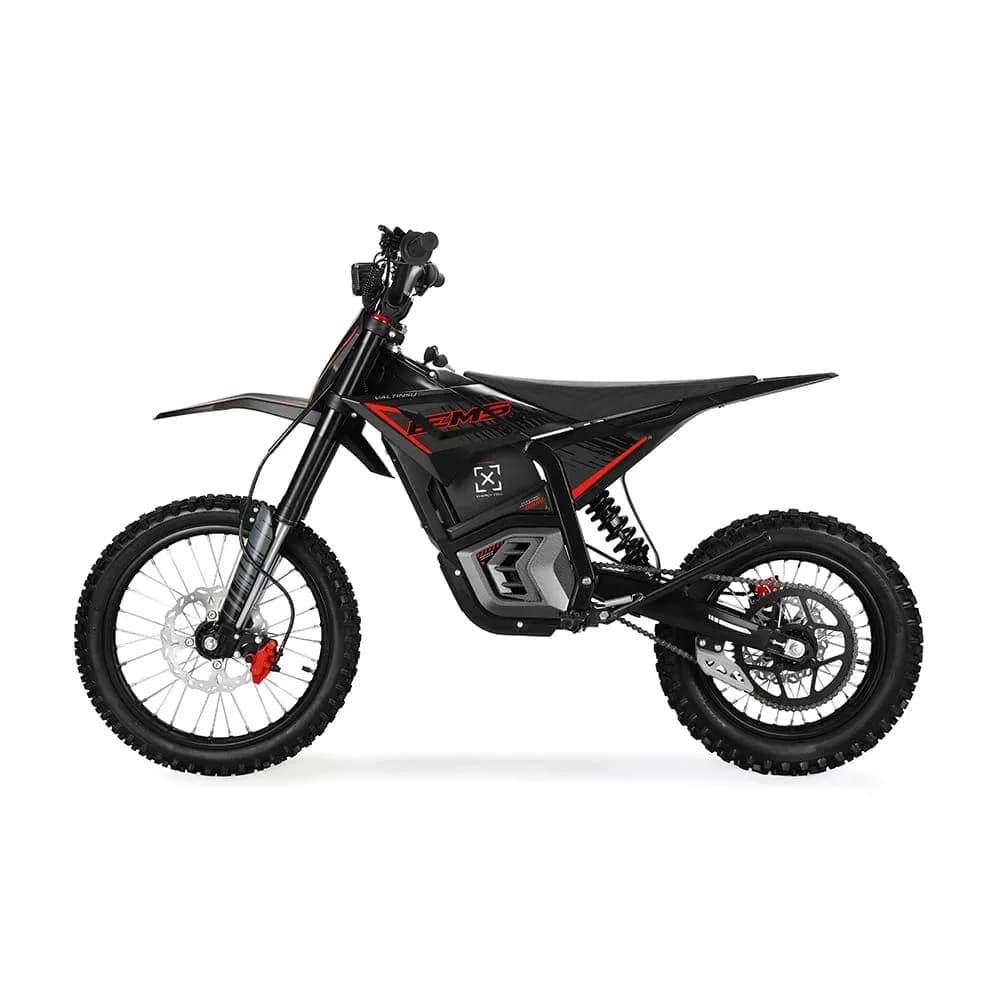
Best value with a real rating - VALTINSU EM-5 Pro. At ~$1,699 it pairs a genuine 287 lb rating with strong spec-per-dollar and 52 mph. The power is not E-Ride-level, but the rating and the price make it a practical pick for heavier budget buyers. Note we withdrew an earlier safety-certification claim for this bike: VALTINSU publishes no UL certification, only a CE-certified charger. (Full review)
Lowest rating here - E-Ride Pro SS 3.0. A genuinely capable bike - 15.8 kW, 60 mph, full suspension, and a big 72V/50Ah pack - but it no longer leads this page on anything. The Talaria Komodo makes twice the power (32 kW), runs 65 mph, and is rated 88 lb higher, for $1,000 more; the Xaber 300 is rated 65 lb higher with more power for $300 more. And the fit catch is real: E-Ride's official spec is 265 lb while dealer pages may cite 302 lb, so it is not the right answer if your geared-up weight is above the manufacturer rating. (Full review)
Same rating, more power - Apollo RFN Ares. Worth putting beside the E-Rides rather than buried: RFN publishes the same 265 lb max load and pairs it with 12.5 kW at $4,799, in stock at both US sellers we track as of 2026-07-20. Against the SS 2.0 at $4,599 plus a stated $300 shipping - $4,899 delivered - the Apollo is the cheaper bike on what you actually pay, with slightly more power. RFN does not publish a shipping cost, so that comparison could narrow. (Full review)
Budget performance if you fit - E-Ride Pro SS 2.0. The SS 2.0 is still the lower-cost E-Ride value play with 12 kW and a 60 mph top speed. Current dealer pages still cite 300 lb, but E-Ride's current official SS 2.0 page lists 120 kg / 265 lb, so VoltRipper uses the conservative manufacturer number until E-Ride clarifies the discrepancy. (Full review)
Before you buy a Sur-Ron or Talaria
If you had your eye on a Sur-Ron or Talaria - the default recommendations for almost everyone - weigh yourself in full gear first. If you're near or over 220 lb, you're at or past their rating, and you'll be happier, safer, and still under warranty on a higher-rated bike. It's the one case where the class's best-known bikes may be the wrong answer.
The bottom line
For a heavier rider, buy the rating first, then the bike. The Talaria Komodo carries the most at 353 lb and is also the most powerful, the GT73 carries nearly as much for a quarter of the price, the VALTINSU EM-5 Pro is the value pick, and the E-Ride Pro SS 3.0 or SS 2.0 is the performance choice only if your geared-up weight fits the official 265 lb limit. Between those two poles - over 265 lb but still wanting real power - the 79Bike Falcon Pro is the cheapest of the three bikes in our catalog that do both, at 300 lb and 10 kW (the Talaria Komodo and Segway Xaber 300 clear the same bar for more money). Whatever you do, don't assume a Sur-Ron or Storm Bee is built for you - at 220 lb, it may not be. Check your fit and rating with the Find Your Ride configurator, or see every published figure in our weight-limits guide.
VoltRipper is independent - our picks come from verified specs and the transparent VoltRipper Score, not commissions. Affiliate disclosure is included on monetized pages, and we are spec-verified/data-driven rather than hands-on until first-hand testing exists.
FAQ
What is the best electric dirt bike for a heavy rider?
If maximum published capacity is the deciding spec, the GT73 leads at 330 lb, but it makes only 2.4 kW. If you want capacity and real power together, the 79Bike Falcon Pro is the cheapest of the three bikes we track that do both - 300 lb and 10 kW, against $1,500 more on the sticker for a Segway Xaber 300 (330 lb, 21 kW) and $2,200 more for a Talaria Komodo (353 lb, 32 kW) - which makes it the pick for most riders between 265 and 300 lb who do not want to spend $5,000-plus. Under E-Ride's official 265 lb rating, the E-Ride Pro SS 3.0 or 2.0 is quicker than the Falcon Pro, though the Komodo is both faster and far higher rated. VALTINSU's EM-5 Pro is the value middle ground at 287 lb and a much lower price.
What is the weight limit on a Sur-Ron?
220 lb (100 kg) - and here's the surprise: it's the same 220 lb rating on the Light Bee X, the much bigger full-size Storm Bee, and the Talaria Sting. Rider plus gear can quietly exceed that, which strains the frame, suspension, and motor and can void the warranty. If you're near or over 220 lb geared up, check the rating before you buy a Sur-Ron or Talaria.
Can a 250 lb person ride an electric dirt bike?
Yes, but choose deliberately. A 250 lb rider plus gear is well past the 220 lb rating of a Sur-Ron or Talaria, so look at higher-rated bikes such as the GT73 (330 lb), 79Bike Falcon Pro (300 lb), VALTINSU EM-5 Pro (287 lb), or E-Ride Pro SS 3.0/2.0 (265 lb official). Beyond the rating, a heavier rider also wants more power to move the mass and robust, adjustable suspension that won't bottom out.
Do electric dirt bikes have a weight limit?
Yes, and it's often lower than people expect - around 220 lb for the popular Sur-Ron and Talaria bikes. Exceeding it stresses the frame, suspension, and motor, hurts handling, and can void the warranty. Match the rating to your weight with gear and a margin, and favor bikes with more power and adjustable suspension if you're a bigger rider.