The short answer
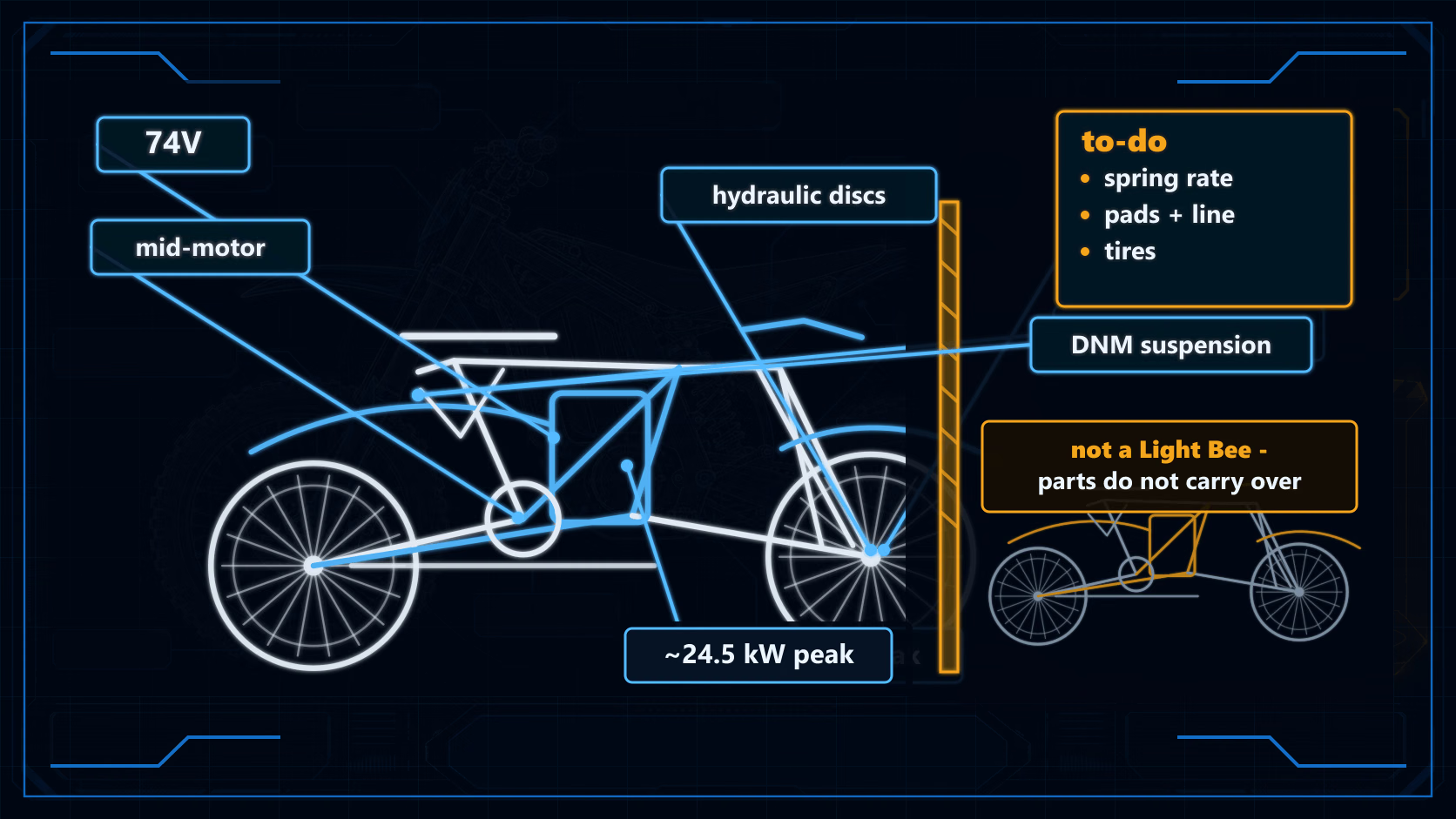
The most important thing to know about upgrading a Sur-Ron Ultra Bee is what it isn't: it's not a bigger Light Bee. It's a 74V, mid-motor, moto-class bike that ships mostly built — real power, hydraulic brakes, and DNM suspension out of the box. That changes the whole plan:
- You tune it, you don't rebuild it. Stage 1 is smaller because it comes with the good stuff.
- Light Bee parts do NOT fit it. Different frame, mid-motor, 74V, taller seat — the clone-family parts bin doesn't apply.
- It rarely needs more power. ~24.5 kW peak is already a lot.
So the Ultra Bee "build" is mostly dialing what it has and maintaining a heavier, faster bike properly. Here's the honest list.
The mistake to avoid first: Light Bee parts don't fit
This is the costly one. The Light Bee X, Talaria Sting, Segway X260, and the E-Ride/Rawrr/Apollo clones share a frame family, and parts cross-fit among them. The Ultra Bee is not in that family. It has a different frame, a mid-mounted motor, a 74V system, and a taller seat, so:
- Its suspension, brakes, seat, battery, and controller are all Ultra-Bee-specific.
- The upgrade fork, big-rotor kit, seat riser, and moto brake kit that fit the clone family do not fit the Ultra Bee.
Before you buy any structural or electrical part, confirm it's listed specifically for the Ultra Bee — never infer it from "it's a Sur-Ron." Our parts compatibility guide explains exactly why mechanical fit follows the chassis and electrical fit follows the voltage.
What actually helps: dial what it already has
Because the Ultra Bee ships with strong power, hydraulic discs, and DNM suspension, the high-value moves are tuning, not replacing:
- Suspension setup. The stock DNM suspension is genuinely capable — the win is springs and setup for your weight (geared up), not a whole new fork. Get the sag and damping right before you spend on hardware.
- Brakes. It already has hydraulic discs, so you're looking at fresh pads and braided lines for bite and feel, not a big-rotor conversion. Keep the fluid fresh.
- Tires. As on any bike, terrain-correct tires are the cheapest ride-changer.
- Ergonomics. It already has a taller 35.8-inch seat, so the Light Bee seat-riser fix doesn't apply — dial the bars and controls to fit instead.
- Cooling, if you push it. If you ride the ~24.5 kW hard, thermal management matters more than more power.
The Ultra-Bee-specific hardware for those moves — a 550 lb rear spring (KKE rates it for riders up to about 190–200 lb in normal riding; the stock spring is 450 lb, and a 500 lb version covers lighter riders), fresh moto pads, and a braided brake line — all pinned to the Ultra Bee, never the clone family:
Drivetrain. The Ultra Bee runs a 520 chain — a fast, heavy bike chews drivetrains, so the chain and sprockets are genuine wear items worth keeping fresh (and a tooth change retunes the gearing for your terrain):
Protection. A mid-motor, 74V bike is worth guarding — a skid plate for the motor (a premium billet plate or a value UHMW one), a front-rotor guard, frame protectors, handguards, and a shock cover, all Ultra-Bee-specific:
If you want a stronger wheelset (an 18/21 setup opens the full moto-tire catalog), that's a bigger step covered in the wheels & motors guide — a rebuild-tier move, not a dial-it-in one.
Power: you probably don't need it
The controller-and-battery path that transforms a Light Bee is usually unnecessary on the Ultra Bee, which already makes moto-class power. Money is better spent making that performance usable and reliable — suspension, brakes, cooling — than chasing a bigger number the chassis already delivers.
If you genuinely do want more, it's an Ultra-Bee-specific project, not a Light Bee parts swap — an app-tuned controller (with its matching display) is the honest first step:
Beyond that sits a full motor conversion — the top of the build pyramid, which also needs a battery able to feed it; it's covered in the wheels & motors guide.
Maintaining a heavier, faster bike
The Ultra Bee is around 195 lb and quick, so ownership leans harder on the basics — and these items genuinely fit it:
A weight-rated stand is worth more here than on a light bike; make sure any stand or lift is rated comfortably above the Ultra Bee's weight:
Keep the chain and fasteners honest. A quick chain routine and a torque wrench on the bolts a fast, heavy bike shakes loose are the cheapest reliability you'll buy.
Carry a trailside flat kit — a heavier bike is a longer walk home — and apply the electric-specific care: dielectric grease on the connectors, and never a pressure washer at the controller, motor, or battery seams.
And a spare or faster 74V charger matched to the Ultra Bee cuts downtime between rides — never substitute a Light Bee or Talaria charger, even at a similar voltage:
The full routine is in the chain-maintenance and tool-kit guides, and the protective gear that a faster bike deserves is worth getting right.
Every Ultra Bee part on this page, cheapest first
The Ultra Bee is a $6,499 bike, so the column that matters is what each part costs against it:
| Part | Job | Price | Share of bike |
|---|---|---|---|
| Maxima chain wax | Consumable | $9.99 | 0.2% |
| DirtyBike 520/13T front sprocket | Gearing | $17.00 | 0.3% |
| Warp 9 neoprene shock cover | Protection | $17.00 | 0.3% |
| Sur-Ron OEM brake pads | Consumable | $29.99 | 0.5% |
| Moose Racing tire repair kit | Tools | $37.32 | 0.6% |
| Heavy Hitter 520 rear sprocket | Gearing | $42.99 | 0.7% |
| FactoryZ braided brake line | Braking | $44.99 | 0.7% |
| Warp 9 handguards | Protection | $45.00 | 0.7% |
| eDirtyBike 520 X-ring chain | Wear item | $47.50 | 0.7% |
| Trackside MX lift stand | Tools | $49.97 | 0.8% |
| RTech bi-material frame protectors | Protection | $59.99 | 0.9% |
| BikeMaster torque wrench | Tools | $60.95 | 0.9% |
| Puget Sound front rotor guard | Protection | $69.00 | 1.1% |
| KKE 550 lb rear shock spring | Suspension | $79.89 | 1.2% |
| SXS UHMW skid plate | Protection | $135.00 | 2.1% |
| Torp LCD display | Electrical | $158.00 | 2.4% |
| Heavy Hitter Outlaw skid plate | Protection | $249.89 | 3.8% |
| FactoryZ 74V 12A charger | Charging | $489.99 | 7.5% |
| EBMX X-9000 V3 controller | Power | $1,149.00 | 17.7% |
| Torp TC1000 2.0 controller | Power | $1,395.00 | 21.5% |
| All twenty | $4,188.46 | 64.4% |
Two parts are 61% of this page
The two controllers come to $2,544 — 60.7% of everything listed here, and 39.1% of the price of the bike. Every other part on the page put together, all eighteen of them, comes to $1,644.46.
That is the shape of Ultra Bee ownership in one number, and it is why "what should I upgrade?" is really two separate questions:
- Are you adding power? Then the controller is the decision and everything else is
rounding. You are spending $1,149 or $1,395 before you have bought a single guard.
- Are you not adding power? Then this page costs you $1,644.46 at the absolute most, and
realistically far less — the thirteen items under $70 total $540.75, or 8.3% of the bike, and they cover gearing, brakes, chain, guards, tools and consumables.
The honest recommendation is the second list. The Ultra Bee already makes 24.5 kW. A rider who cannot use that does not become faster by buying a bigger controller; they become faster by gearing it for their terrain, being able to stop, and not breaking a lever on the first tree. That is what $540.75 buys.
The third-most-expensive item is worth calling out separately because it is easy to misread as a power part: the $489.99 FactoryZ 74V 12A charger does not make the bike quicker. It makes it available sooner, which is the upgrade that matters if you ride twice in a day.
The bottom line
The Ultra Bee is the rare bike in this class you tune rather than rebuild — it ships with the power, brakes, and suspension the smaller bikes have to buy. So the "upgrade" plan is: don't buy Light Bee parts (they don't fit), dial the suspension and brakes it already has to your weight and riding, skip the power mods it doesn't need, and maintain a heavier, faster bike properly. Building or cross-shopping instead? The upgrades guide sets the order of operations, and the Find Your Ride configurator helps you choose.
VoltRipper is independent — we don't sell parts and our recommendations aren't pay-to-play. Confirm every part against the Ultra Bee specifically — its frame, motor layout, and 74V system mean Light Bee parts do not transfer. Match braking and suspension to any power change, and follow manufacturer fitment and torque specs. Affiliate disclosure is included on monetized pages, and we're spec-verified/data-driven rather than hands-on until first-hand testing exists.
FAQ
Do Sur-Ron Light Bee parts fit an Ultra Bee?
Mostly no, and assuming they do is the most expensive mistake an Ultra Bee owner makes. The Ultra Bee is a different machine from the Light Bee — a different frame, a mid-mounted motor, a 74V system, and a taller seat — so its suspension, brakes, seat, battery, and controller are all Ultra-Bee-specific and do not carry over from a Light Bee. The clone-family parts that fit a Light Bee X, a Talaria Sting, and a Segway X260 do not fit the Ultra Bee. Universal wear items like grips or generic hardware still fit; anything structural or electrical must be confirmed as Ultra-Bee-specific.
What should I upgrade first on an Ultra Bee?
Less than you'd think, because the Ultra Bee ships closer to 'already built' than any of the smaller bikes. It comes with strong power (around 24.5 kW peak), hydraulic disc brakes, and real DNM suspension out of the box, so the usual Stage 1 fixes are smaller. The highest-value moves are dialing what it already has — suspension springs and setup for your weight, fresh brake pads and braided lines, and terrain-correct tires — rather than replacing whole systems. It's a bike you tune, not one you rebuild.
Does the Ultra Bee need a power upgrade?
Usually not. The Ultra Bee already makes around 24.5 kW peak — it's a genuine moto-class bike, not a fast bicycle, so the controller-and-battery power path that transforms a Light Bee is often unnecessary here. If you push it hard, cooling and keeping the suspension and brakes dialed matter more than more power. Spend the money on making the performance it already has usable and reliable, not on chasing a bigger number the chassis already delivers.
Is the Ultra Bee harder to work on than a Light Bee?
It's heavier and its parts are its own, but not fundamentally harder — just different. At around 195 lb it's a lot more bike to lift, so a properly weight-rated stand matters, and its mid-motor layout and 74V electrics mean you source Ultra-Bee-specific parts rather than grabbing from the big clone-family parts bin. The maintenance itself — chain, brakes, connectors, fasteners — is the same routine as any bike in the class, and the same electric-specific care (dielectric grease, no pressure-washing the electronics) applies.