The short answer
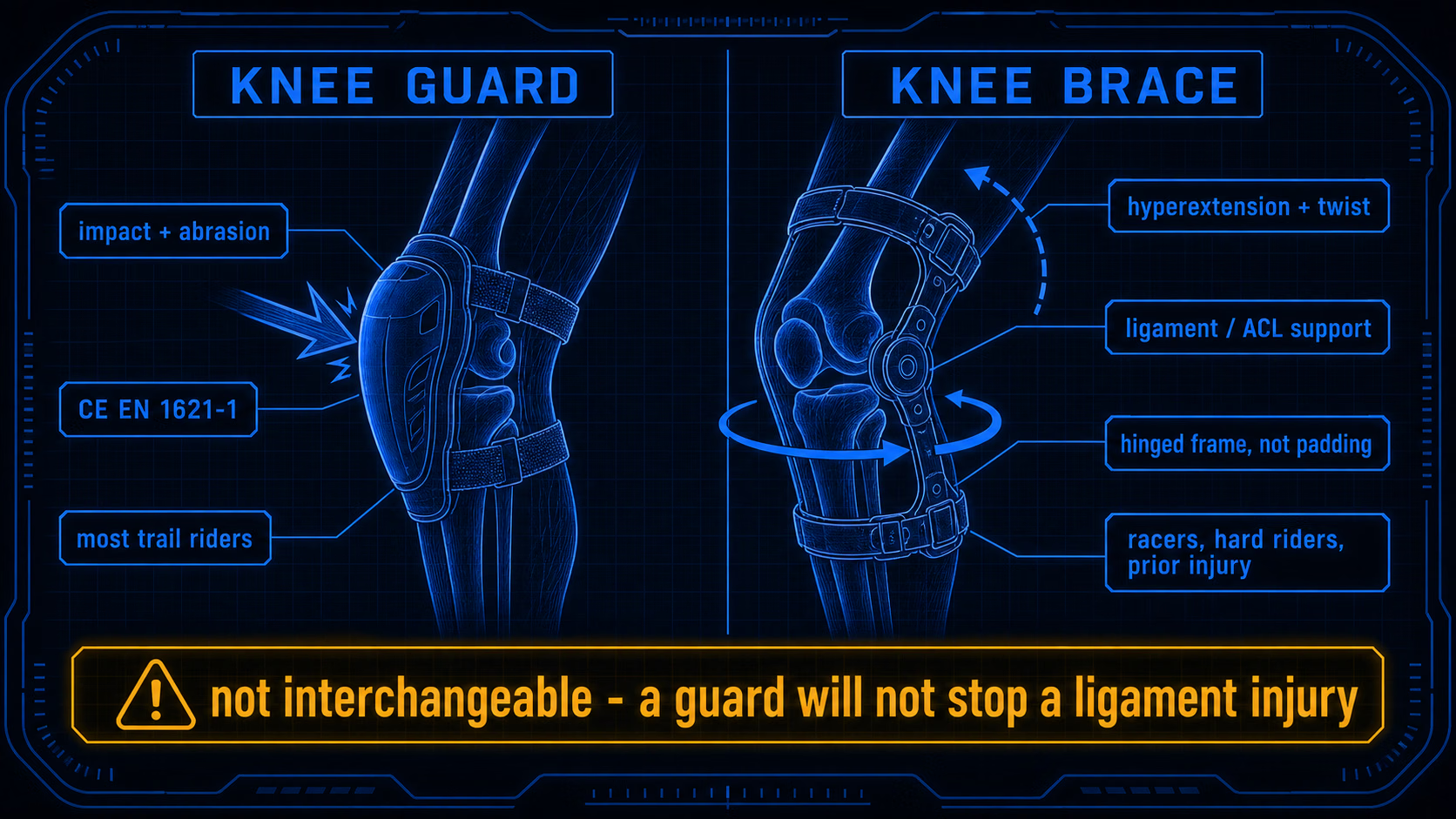
"Knee guards" and "knee braces" get used interchangeably, and they shouldn't be — they protect against different injuries:
- Knee guards = impact and abrasion protection. A padded or hard-capped guard, ideally CE EN 1621-1 certified. Shields the knee from hits and scrapes.
- Knee braces = structural protection. A hinged frame that resists hyperextension and twisting to help protect the ligaments (ACL and friends).
A guard won't stop a ligament injury; a basic brace isn't primarily impact padding. So the real question is which injury you're protecting against — and for most riders, the answer is guards, with braces for the fast and the previously-injured.
Knee guards: impact protection for most riders
For trail riding, a good pair of CE EN 1621-1 Level 1 knee guards is the right call — real impact coverage in a comfortable, affordable package. This pick uses D3O armor and is clearly a guard, not a brace (impact protection, not ligament support).
The thing to check: many soft knee sleeves are comfort-and-abrasion pieces with no impact certification. If impact protection is the point, look for the EN 1621-1 mark.
Knee braces: structural protection for hard riders
A knee brace is a different product — a hinged structural frame that resists the hyperextension and twisting that cause ligament injuries. This one pairs a structural brace with a CE EN 1621-1 kneecup for impact, and carries medical-device registrations for the brace itself.
Braces are a serious, high-ticket, specialty item — genuinely valuable for fast, aggressive, or racing riders, and anyone protecting a previous knee injury, and overkill for mellow trail. The honest caveat: a brace reduces injury risk, it doesn't eliminate it.
Which do you need?
- Trail rider, no knee history → CE-certified knee guards (Fox Launch). Real impact protection, comfortable, affordable.
- Fast, aggressive, racing, or a previous knee injury → knee braces (Leatt X-Frame Hybrid). The structural protection guards can't provide.
- Not sure? Start with guards; step up to braces if you ride hard or your knees have a history.
- Kids → youth knee guards are part of the kids gear kit; braces are an adult/serious-rider item.
Fit them with your boots
Whichever you choose, plan the fit with your boots: a brace (and to a lesser degree a guard) shares space at the shin and calf with tall MX boots. Size them together as a system — a bulky brace and a tight boot can conflict. Check the maker's boot-compatibility guidance, and if you already own boots, size the brace around them.
The bottom line
Don't shop for "knee protection" as one thing. Guards protect against impact (get CE EN 1621-1) and suit most trail riders; braces protect against ligament and hyperextension injuries and are for fast, aggressive riders or protecting a previous injury. They're not interchangeable, and a brace can't guarantee it prevents injury. Match the product to the risk, fit it with your boots, and round out the kit with the safety-gear guide. Still choosing a bike? Run the Find Your Ride configurator.
VoltRipper is independent — we don't sell gear and our recommendations aren't pay-to-play. Knee protection is safety-critical: confirm the certification (CE EN 1621-1 for guards), size braces with your boots as a system, and follow the manufacturer's fitting guidance. Braces reduce but do not eliminate injury risk. Certifications are cited from manufacturer and retailer information; we don't give medical or legal advice. Affiliate disclosure is included on monetized pages, and we're spec-verified/data-driven rather than hands-on until first-hand testing exists.
FAQ
What's the difference between knee guards and knee braces?
They protect against different injuries and are not interchangeable. Knee guards are impact-and-abrasion protection — a padded or hard-capped guard, often CE EN 1621-1 certified, that shields the knee from hits and scrapes. Knee braces are structural devices that resist hyperextension and help protect the ligaments (like the ACL) in a twisting or over-extension injury; a brace is a hinged frame, not just padding. A guard won't stop a ligament injury, and a basic brace isn't primarily about impact padding — so the question isn't 'guard or brace is better,' it's which injury you're protecting against.
Do I need knee braces for a Sur-Ron?
Most trail riders are well served by CE-certified knee guards; knee braces are for faster, more aggressive riders, racers, and anyone who's had a knee injury. Braces are a serious, high-ticket, specialty item that resist the hyperextension and twisting that cause ligament damage — genuinely valuable if you ride hard or are protecting a previous injury, and overkill for mellow trail riding. If you're not sure, start with good knee guards; step up to braces if you ride fast, jump, race, or your knees have a history. A brace also can't guarantee it prevents injury — it reduces risk, it doesn't eliminate it.
Are knee guards CE certified?
Good ones are — look for CE EN 1621-1, which is the limb-protector impact standard, with a Level 1 or Level 2 rating. Many soft knee sleeves are comfort-and-abrasion pieces with no impact certification, so if impact protection is the point, look for the EN 1621-1 mark. Knee braces are a different category: they're judged on their structural design, and a quality brace may carry a CE impact rating on its kneecap plus medical-device registrations for the brace itself — but the brace's core job (ligament/hyperextension protection) isn't what the impact standard measures.
Can I wear knee braces under my boots?
Yes, and you should plan the fit together — the brace has to fit inside the boot top, and the two are sized as a system. Knee braces and tall MX boots share space at the shin and calf, so a bulky brace and a tight boot can conflict; size them together, and check the brace maker's guidance on boot compatibility. The same goes for guards to a lesser degree. If you already own boots, take them into account when sizing braces, and if you're buying both, buy them with the fit relationship in mind.