The short answer
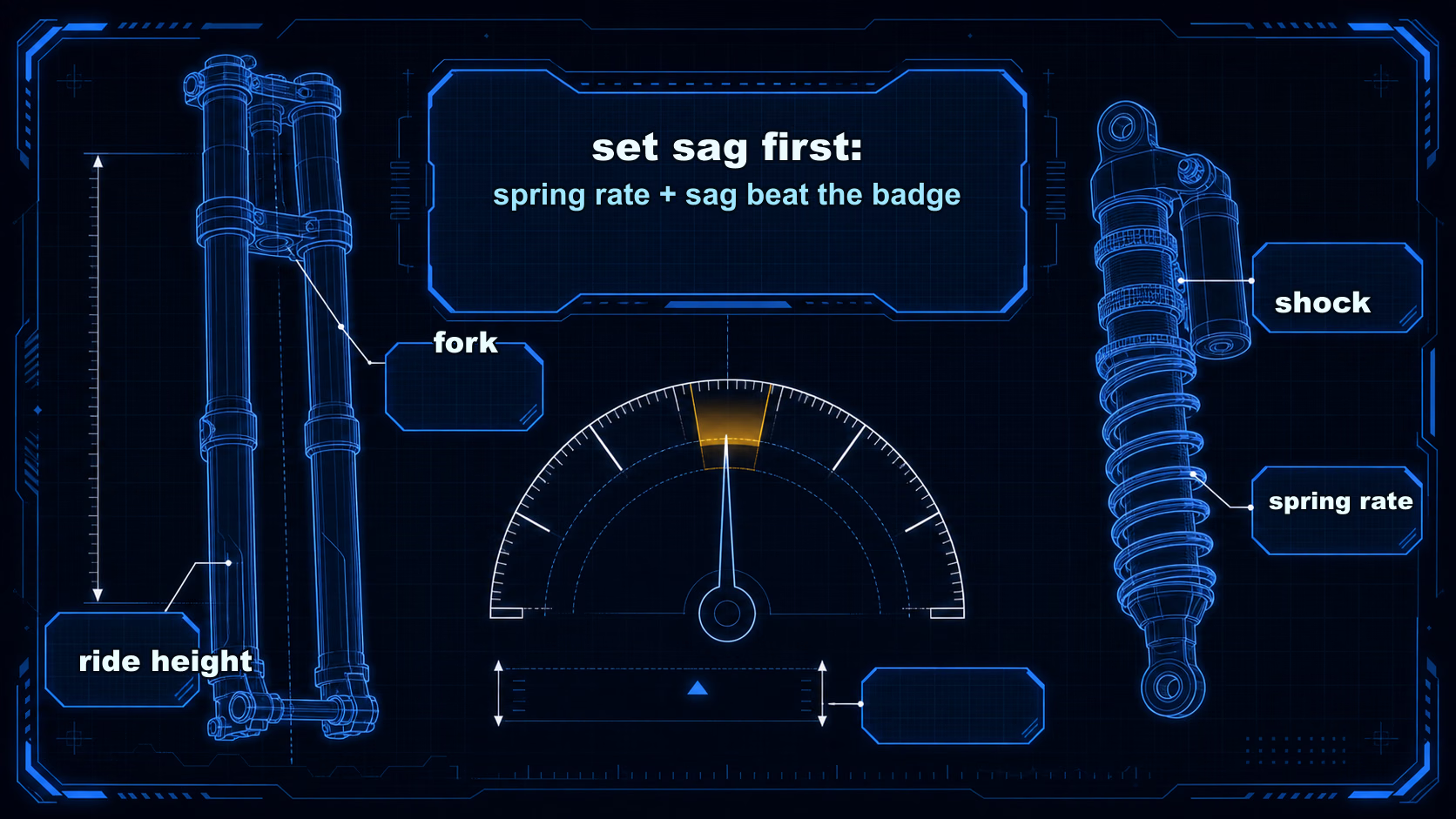
On most Sur-Ron- and Talaria-class bikes, the stock suspension is the weak point — a budget fork and shock, sprung for a light average rider, that dive and blow through travel when you push. Suspension is the Stage-2 handling upgrade. But one rule beats every brand:
> Spring rate and sag matter more than the badge. A premium fork sprung wrong rides worse than a cheap one set up right.
And fitment is bike- and generation-specific — a fork or shock for a Light Bee X isn't automatically right for an Ultra Bee, Talaria, or Segway. Here's the menu, cheapest-win first.
The rule: spring for your weight, then set sag
Suspension springs are chosen for rider weight in gear. The fanciest adjustable fork or shock will pack down, blow through travel, or ride harsh if the spring is wrong for you. So before the brand seduces you:
- Confirm the part comes in a spring rate for your weight (use the maker's rider-weight chart).
- Plan to set static and rider sag after install (a tape measure and ten minutes).
A correctly sprung mid-tier unit beats a premium one that's wrong for you. This is the single most-skipped step in suspension buying.
The cheapest win: re-spring the stock shock
For a heavier rider, the biggest complaint — bottoming and wallowing — is often fixed for ~$35–$80 by fitting the right-rate spring in the stock shock. Match it to your bike's stock shock:
Sur-Ron Light Bee X (stock DNM/KKE shock):
Sur-Ron Light Bee X / Segway X160–X260 (stock KKE shock — not the Talaria's FastAce):
Sur-Ron Ultra Bee (stock spring is 450 lb per dealer; KKE rates this 550 lb for riders up to about 190–200 lb in normal riding — a 500 lb version on the same page covers lighter riders):
Pick the rate from your weight, not the bike — and set sag after.
Front: fork upgrades
A better fork adds real damping control and adjustability. Three tiers:
Value — a proven coil fork (choose the spring by weight):
Fully adjustable — high/low-speed compression, rebound, preload (note the taller travel option raises the front):
Turnkey by weight — a FastAce with a custom spring/seal/oil tune matched to you (LBX and Talaria, not MX5):
Rear: shock upgrades
When a re-spring isn't enough, a proper aftermarket shock adds adjustability and control. By budget and platform:
Budget entry — a new take-off upgrade shock (LBX/Talaria):
Mid, air + coil (LBX/Segway):
Talaria, with linkage:
Premium, fully adjustable (LBX/Talaria, not MX5):
Every one of these needs the right spring rate for your weight — buy the rate, not just the shock.
Ride height: lower or raise it
Shorter riders can drop the seat height — just verify tire and subframe clearance at full compression:
To raise the rear (more ground clearance / geometry tuning), a lift linkage — but don't overdo it, or you'll hurt the geometry. The Warp 9 link below is the 0.75 in version: on stock, 16/19 or 18/21 wheels it steepens the front to plant it in turns and cut wheelie on climbs. Warp 9's 1.5 in version is only for a bike already running a 21 in front wheel — on stock wheels it tips the bike nose-down:
Keep forks healthy
Forks live or die on their seals. When one weeps, first try the cheap fix — a seal cleaner that clears trapped grit:
When a seal is actually worn, replace it — and match the seal to the fork, not the bike. The SKF kit below is the 37 mm one: right for the Ultra Bee's stock KKE fork and for any FastAce ALX13RC (the fork on FastAce-equipped Talaria Sting MX3/MX4s, and a common Light Bee upgrade). It is not the seal for a stock Light Bee X — the DNM USD-8 is 35 mm and takes Charged Cycle Works' separate "DNM Volcano" kit — nor for the 38 mm Talaria "Factory" fork some Stings ship with. One kit does one leg; buy two:
Every suspension part on this page, cheapest first
Against a $4,499 Light Bee X, because the share of the bike is the number that makes this category make sense:
| Part | Type | Price | Share of bike |
|---|---|---|---|
| Motion Pro Seal Mate | Maintenance | $7.95 | 0.2% |
| Luna upgraded rear shock spring | Spring | $35.00 | 0.8% |
| SKF 37 mm fork seal kit (one leg) | Maintenance | $39.99 | 0.9% |
| KKE 550 lb rear shock spring | Spring | $44.99 | 1.0% |
| KKE 550 lb rear shock spring (Ultra Bee) | Spring | $79.89 | 1.8% |
| Warp 9 lift linkage, 0.75 in | Geometry | $83.00 | 1.8% |
| FastAce rear shock (take-off) | Shock | $143.99 | 3.2% |
| Tarazon seat lowering kit | Geometry | $149.95 | 3.3% |
| RFloXa RAB53RV rear shock | Shock | $220.00 | 4.9% |
| FastAce ALX13RC 2.0 fork | Fork | $649.99 | 14.4% |
| Luna / FastAce 2.0 fork, custom valved | Fork | $775.00 | 17.2% |
| RFloXa Hawk31 PRO fork | Fork | $899.00 | 20.0% |
| TECH ER30 rear shock + linkage | Shock | $975.00 | 21.7% |
| EXT Arma MX rear shock | Shock | $1,150.00 | 25.6% |
The spread is 48x, and the cheap end fixes the common problem
A rear spring matched to your weight plus a $7.95 seal tool is $42.95, or 1.0% of the bike. A premium fork and shock together are $2,049, or 45.5% — you would be spending nearly half the price of the machine on two components.
Forty-eight times the money, and it does not fix forty-eight times as much. The most common suspension complaint on these bikes is not that the damping is unsophisticated. It is that the stock spring is wrong for the rider — they are sprung for an average weight nobody is — and the sag was never set. A $35 spring and an afternoon fixes that. A $1,150 shock fitted over the same wrong spring rate fixes considerably less than you paid for.
That is why this page leads with re-springing and setting sag, and it is worth restating here in money rather than advice: do the $42.95 thing first, ride it, and then decide whether you still have a suspension problem. Most riders find the problem was the setup.
The premium end is not a con. A fully adjustable fork is genuinely better hardware and the riders who need it know why. But at 20.0% of the bike for a fork and 25.6% for a shock, it is a decision to make deliberately, after the cheap fix, rather than the first thing you buy because the bike felt harsh on one ride.
Which upgrade is for you?
- Heavier rider, tight budget → re-spring the stock shock and set sag. Biggest bang for the buck.
- Want adjustability / ride hard → an upgraded fork and/or shock, sprung for your weight.
- Shorter rider → a lowering kit (check clearance).
- Leaky fork → try the seal cleaner first, then a seal kit.
The bottom line
Riding a Sur-Ron specifically? See the focused Sur-Ron suspension-upgrade guide.
Stock suspension is where these bikes feel cheap, and fixing it is one of the best handling upgrades — but only if you respect the rule: spring for your weight and set sag before you chase brands. Start by re-springing the stock shock if you're heavy, step up to an adjustable fork and shock if you ride hard, and match every part to your exact bike and generation. Keep it serviced with the maintenance guide, stock the consumables shelf, and if you're still choosing a bike, run the Find Your Ride configurator.
VoltRipper is independent — we don't sell parts and our recommendations aren't pay-to-play. Suspension is fitment- and safety-relevant: buy forks/shocks/springs that match your exact bike and generation, choose the spring rate for your rider weight and set sag, and verify clearance at full compression before lowering a bike. Affiliate disclosure is included on monetized pages, and we're spec-verified/data-driven rather than hands-on until first-hand testing exists.
FAQ
What's the best suspension upgrade for a Sur-Ron?
It depends on your weight and how you ride, but the highest-value first move for many riders is the cheapest one: a correct-rate spring in the stock shock. Stock suspension on these bikes is a budget unit sprung for a light average rider, so a heavier rider who fits the right spring rate fixes the biggest complaint — blowing through the travel — for a fraction of the cost of a new shock. From there, an upgraded fork and a proper aftermarket rear shock add adjustability and control for aggressive or fast riding. The order that works for most people: re-spring for your weight and set sag first, then upgrade the fork and shock if you ride hard. Buy the part that fits your exact bike and generation.
Does spring rate really matter more than the brand of fork?
Yes — a top fork sprung wrong rides worse than a cheap fork set up right, which is why spring rate and sag are the whole game. Suspension springs are chosen for rider weight (in gear), and the fanciest adjustable fork or shock will pack down, blow through travel, or ride harsh if the spring is too soft or too stiff for you. So before you're seduced by a brand, confirm the part is available in a spring rate for your weight, and plan to set static and rider sag after install. A correctly sprung mid-tier unit beats a premium one that's wrong for you. If you're not sure of your rate, use the maker's rider-weight chart and set sag with a tape measure.
Can I lower a Sur-Ron for a shorter rider?
Yes, with a seat-lowering kit or lowering hardware, but there are trade-offs to check. Lowering brackets drop the seat height for shorter riders, which improves confidence and control at stops, but lowering changes geometry and reduces ground clearance, so you must verify tire and subframe clearance at full suspension compression before riding. The alternative for reach is a lower seat or shaving foam. Whatever route you choose, confirm the kit lists your exact bike, check clearance under full compression, and be aware that a big drop can affect handling and bottoming. Done within reason, a lowering kit is a genuine fit fix for shorter riders.
How do I know a fork or shock fits my electric dirt bike?
Match the part to your exact bike and generation, because forks and shocks are model-specific — mount, length, axle, and steerer all have to line up. A fork or shock listed for a Sur-Ron Light Bee X is not automatically right for an Ultra Bee, a Talaria, or a Segway; sellers list the specific bikes each unit fits, and you should confirm yours is named. Rear shocks in particular are length- and linkage-specific, so a shock for one platform can be the wrong eye-to-eye or need a different linkage on another. Confirm the exact fitment, pick the right spring rate for your weight, and if a listing can't pin your generation, treat that as a reason to keep looking.