The short answer
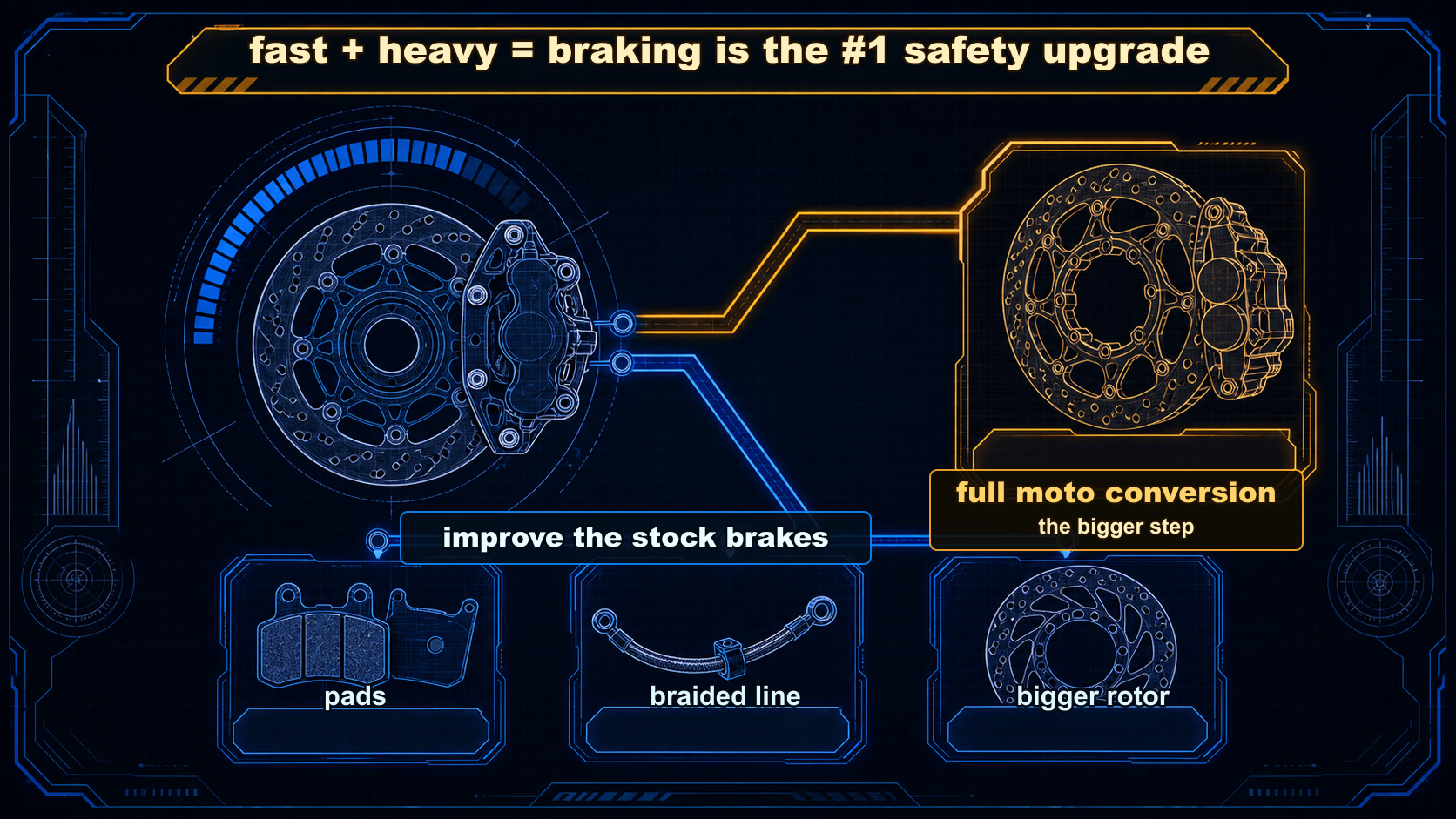
These bikes are fast and heavy for their size, but many ship with MTB-style (mountain-bike) brakes — which is exactly why braking is the #1 safety upgrade on a Sur-Ron or Talaria. There are two honest paths:
- Path A — improve the stock brakes: better pads, a bigger rotor, fresh fluid. Cheap, high-value.
- Path B — full moto-brake conversion: a real motorcycle caliper, rotor, and hose. The big upgrade.
Two rules govern both, and getting them wrong is dangerous.
The two rules (read before you buy)
Brakes are caliper- and generation-specific. A pad or line for a stock MTB-style brake is not the same as one for a moto-brake conversion — they use different pads, hoses, brackets, and bleed hardware. Never mix them, and confirm the part lists your exact bike and model year.
Match the fluid to the system — this one destroys seals if you get it wrong. Many stock MTB-style brakes use mineral oil; moto-brake conversions typically use DOT fluid. Putting DOT in a mineral-oil brake (or vice-versa) damages the seals and can cause brake failure. Identify your system, use only the specified fluid, and keep separate tools for each.
Path A: better pads (the cheapest safety win)
Worn pads are the most common cause of weak braking, and fresh ones are the cheapest upgrade there is. Buy the pad that matches your bike's stock caliper:
Sur-Ron Light Bee X — the official OEM pad, or an upgraded sintered/ceramic option:
Sur-Ron Ultra Bee (a different OEM caliper from the Light Bee):
Talaria Sting (MX3/MX4/XXX) — a better compound for the stock caliper (not the MX5):
Segway X260:
Path A: bigger rotors (more leverage)
A larger rotor adds stopping leverage and heat capacity — but it needs the included relocation bracket, and front and rear bolt patterns differ (a front kit won't fit the rear).
Sur-Ron Light Bee X front — two options:
Talaria (MX3/MX4/XXX) — a matched front-and-rear set, or a bigger 250mm kit:
Path A: fresh lines & fluid
A tired stock hose and old fluid sap braking feel. Replace the stock Talaria hose (choose front/rear and caliper version):
For the right fluid and how to bleed it, see the consumables shelf — and remember the mineral-oil-vs-DOT rule above. (The braided lines below are for moto-brake systems, not stock MTB-style hand brakes.)
Path B: the full moto-brake conversion
For fast or heavy riding, a moto-brake conversion is often the single best safety upgrade — it replaces the bicycle-style caliper with a real motorcycle caliper, rotor, and hose. Understand that it moves your whole brake ecosystem to the moto standard (pads, hoses, fluid, and bleed all change).
A front conversion kit (caliper + master cylinder + 250mm rotor + bracket + pads):
A lower-cost rear single-caliper kit:
The matching braided lines for a moto/Ultra Bee system (not for stock MTB-style hand brakes) and a foot-brake conversion line:
A conversion is a life-safety install — many riders have the bleed done professionally.
Bleeding & service
Whatever you run, brakes need periodic bleeding. A simple one-way bleeder for hydraulic systems:
A dedicated moto-brake bleed kit for converted systems (keep mineral-oil and DOT tools separate):
Every brake part on this page, cheapest first
| Part | Type | Fits | Price |
|---|---|---|---|
| Sur-Ron Light Bee brake pads (OEM) | Pads | 1 | $7.50 |
| Talaria stock brake hose | Line | 3 | $15.00 |
| Motion Pro hydraulic bleeder | Tool | — | $15.99 |
| TB Electric OEM-style pads (X260) | Pads | 1 | $16.00 |
| Kool-Stop disc brake pads | Pads | 3 | $20.00 |
| Prickly Motorsports LBX pads | Pads | 1 | $28.00 |
| Sur-Ron Ultra Bee pads (OEM) | Pads | 1 | $29.99 |
| FactoryZ moto brake bleed kit | Tool | — | $29.99 |
| FactoryZ braided brake line | Line | 1 | $44.99 |
| FactoryZ foot-brake line | Line | 4 | $45.00 |
| Luna 220mm front rotor kit | Rotor | 1 | $50.00 |
| KKE 220mm front disc + adapter | Rotor | 7 | $59.99 |
| Luna 220mm floating rotor set | Rotor | 3 | $115.00 |
| EBMX 250mm rotor kit | Rotor | 2 | $149.00 |
| FactoryZ moto rear kit (240mm) | Conversion | 4 | $279.99 |
| Volar Sport front brake kit | Conversion | 6 | $625.99 |
The two paths cost 7x different, and they are not the same purchase
Path A — better pads, a bigger rotor, a braided line — comes to about $132.98. Path B, the full moto conversion front and rear, is $905.98. That is 6.8 times the money, and on a $4,499 Light Bee X it is 20.1% of the bike.
The mistake is reading that as "Path B stops 6.8 times better." It does not. What Path B actually buys is a different control layout — a foot brake and moto-spec calipers, which is what you want if you are riding moto-style and your right foot expects a brake pedal. The stopping improvement is real but it is not the reason to spend $906.
Path A is the safety upgrade. Path B is the ergonomics upgrade. They get confused because both live under "brakes".
The cheapest thing here is the one to buy first
Pads run $7.50 to $29.99 — the cheapest is 0.16% of a Light Bee X. Pads are a wear item that most riders never change until something goes wrong, and worn pads are the single most common reason an e-moto stops badly.
If you do one thing off this page, it is not the $625.99 kit. It is checking your pads, and replacing them costs less than a tank of fuel for the bike you did not buy.
The KKE 220mm disc and adapter at $59.99 fits seven platforms, the widest fitment of any rotor here, which makes it the default answer if you want more leverage and are not sure your exact model is covered elsewhere.
Which path is for you?
- Quick safety win → fresh pads + a proper fluid service. Cheapest, biggest bang.
- More bite → a bigger rotor (with its bracket), plus pads.
- Ride hard or fast → a full moto-brake conversion, front and/or rear.
The bottom line
Riding a Sur-Ron specifically? See the focused Sur-Ron brake-upgrade guide.
Braking is the #1 safety upgrade on a bike that's fast and heavy but often brakes like a bicycle. Start with fresh pads and the right fluid (mineral oil vs DOT — confirm your system), step up to a bigger rotor with its bracket, and go to a full moto-brake conversion if you ride hard. Always buy the part that matches your exact bike and caliper, and treat a brake job as the life-safety work it is. Keep everything dialed with the maintenance guide, stock the consumables shelf, and if you're still choosing a bike, run the Find Your Ride configurator.
VoltRipper is independent — we don't sell parts and our recommendations aren't pay-to-play. Brakes are life-safety: buy pads, rotors, and lines that match your exact bike and caliper, never mix mineral-oil and DOT fluids or tools, use the relocation bracket for oversize rotors, and have conversions installed and bled properly if you're not equipped to do it. Affiliate disclosure is included on monetized pages, and we're spec-verified/data-driven rather than hands-on until first-hand testing exists.
FAQ
What's the best brake upgrade for a Sur-Ron?
Start with the cheapest, highest-value change: fresh, better pads and a proper fluid service, because worn pads and old fluid are the most common cause of weak braking. From there the two real paths are a bigger rotor (more leverage and heat capacity, using the included relocation bracket) or a full moto-brake conversion kit that replaces the bicycle-style caliper with a real motorcycle caliper, rotor, and hose. Match the upgrade to how you ride: pads and fluid for a quick safety win, a bigger rotor for more bite, and a full conversion if you ride fast or heavy and want motorcycle-grade stopping. Whatever you choose, brakes are life-safety — buy the part that matches your exact bike and caliper, and bleed it properly.
Do Sur-Ron and Talaria use mineral oil or DOT brake fluid?
It depends on the brake system, and using the wrong one destroys the seals — so you must confirm before you touch it. Many of these bikes ship with MTB-style (mountain-bike) hydraulic brakes, and a lot of those use mineral oil, not DOT fluid; moto-brake conversion systems typically use DOT fluid. Putting DOT fluid in a mineral-oil brake, or vice-versa, damages the seals and can cause brake failure. So identify your exact brake system, read the reservoir/manual, use only the specified fluid, and keep separate tools for mineral-oil and DOT service so you never cross-contaminate. If you're not certain which your bike uses, find out before opening the system.
Is a big-brake kit worth it on an electric dirt bike?
For fast, heavy, or hard-riding use, yes — a moto-brake conversion is a genuine safety and performance upgrade, but understand what it changes. A big-brake kit swaps the bicycle-style caliper for a real motorcycle caliper with a larger rotor and a proper hose, which dramatically improves stopping power and heat handling. The trade is that it replaces the whole brake ecosystem: after conversion your pads, hoses, bleed fluid, and service all move to the moto-brake standard, and it's a life-safety install that many riders have done professionally. If you mostly putt around, fresh pads and fluid may be enough; if you ride hard or fast, the conversion is often the single best safety upgrade you can make.
Can I put a bigger brake rotor on my Sur-Ron?
Yes, but a bigger rotor needs a caliper-relocation bracket, and front and rear are not interchangeable. A larger rotor moves the braking surface outward, so the caliper has to be repositioned with the adapter/bracket that comes in a proper rotor kit — don't fit an oversize rotor without it. Just as important, the front and rear wheels use different bolt patterns, so a front rotor kit will not fit the rear and vice-versa; buy the kit that specifies your wheel. Confirm the kit lists your exact bike and model year, use the included bracket, and check rotor thickness against your caliper clearance. Done right, a bigger rotor adds real stopping leverage for modest money.