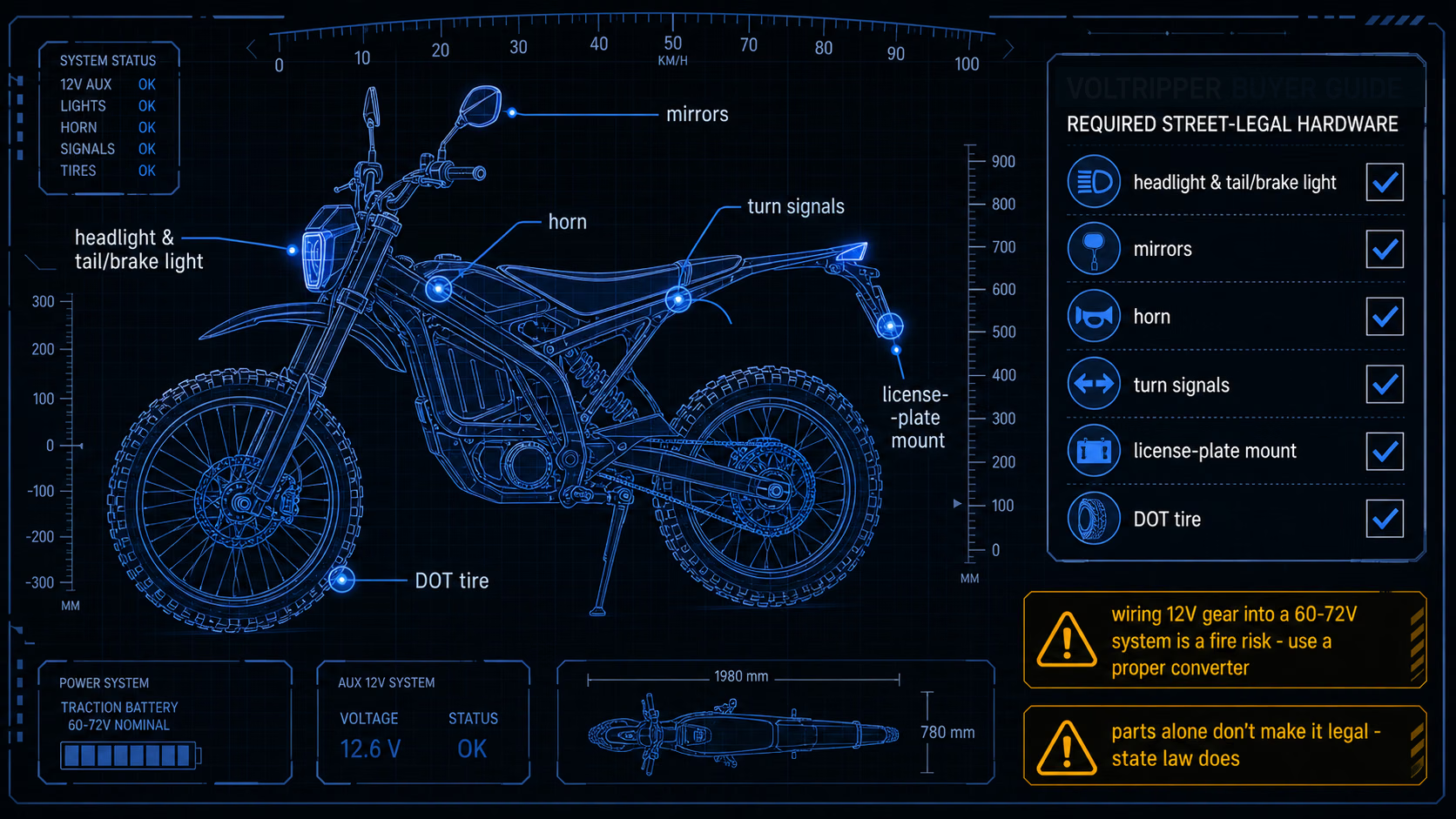
The short answer
Making a Sur-Ron or Talaria street-legal has two halves, and this page is the hardware one:
- The parts — a lighting kit (head/tail/brake/signals), mirrors, and a horn.
- The legal side — registration, a plate, insurance, and your state's rules (covered in the street-legal guide).
Two things to get right before you buy: the wiring is a fire risk if done wrong, and parts alone don't make the bike legal.
The rule that matters most: 60-72V wiring
This is the safety point that outweighs everything else. These bikes run 60-72V drive systems, but lighting kits, horns, and 12V accessories are built for 12V — you cannot tap them into the main pack. Do it right:
- A proper DC-DC converter to step the voltage down to 12V.
- A fuse, correctly gauged wire, and sealed weatherproof connectors.
- Routing kept away from battery/controller heat and abrasion.
Cheap or careless wiring into a high-voltage system is a genuine fire risk. Treat the electrical work seriously, or have someone who knows high-voltage systems do it.
The lighting kit
A complete enduro kit gets you the equipment — headlight-ready wiring, LED turn signals, a taillight/brake light, a horn, switches, and a harness:
Note it's built for 12V motorcycles, so on an e-moto it's the 12V-conversion work above that makes it safe — it's not plug-and-play.
Mirrors
Use folding/breakaway mirrors — a converted dirt bike still gets tipped over and parked tight, and rigid bar-end mirrors snap off:
Check whether your bike has mirror perches (many don't) — you may need a thread adapter or clamp mount.
The horn
A loud 12V horn completes the equipment list — wired, again, through a proper fused 12V circuit:
The part people forget: parts ≠ legal
Fitting the equipment does not make the bike legal. Road use also needs registration, a plate, insurance, often a VIN/inspection, and a state that allows it — and the rules vary enormously. Some states have a genuine path; many don't. Fit the parts, then do the legal work, and confirm your state first — see the street-legal guide. (A supermoto wheelset makes the bike ride better on pavement, but it's the same story: a nicer street ride, not a street license.)
The bottom line
The street-legal hardware is straightforward — a lighting kit, folding mirrors, and a horn — but two rules govern it: wire 12V gear into the 60-72V system safely (DC-DC converter, fuse, sealed connectors) or it's a fire risk, and remember the parts don't make it legal without registration, insurance, and your state's blessing. Do both halves. Keep the bike maintained with the maintenance guide, and if you're choosing a bike for the street, run the Find Your Ride configurator.
VoltRipper is independent — we don't sell parts and our recommendations aren't pay-to-play, and we don't give legal advice. Wiring 12V accessories into a 60-72V system is safety-critical — use a proper DC-DC converter, fuse, gauge, and sealed connectors — and street-legality depends on your state's registration and equipment rules, which you must confirm. Affiliate disclosure is included on monetized pages, and we're spec-verified/data-driven rather than hands-on until first-hand testing exists.
FAQ
What parts do I need to make a Sur-Ron street legal?
On the hardware side: a headlight, a taillight/brake light, front and rear turn signals, a horn, and mirrors — usually sourced as a lighting kit plus mirrors. But hardware is only half of it: street-legality also requires registration, a plate, insurance, often a VIN and inspection, and a state that actually allows the bike on the road. So a lighting kit gets you the equipment, but it does not by itself make the bike legal. Fit the parts, then handle the paperwork and confirm your state's rules — and know that some states have a real path while many don't.
Is it safe to wire lights onto a 60-72V Sur-Ron?
Only if you do it correctly — this is the single most important safety point on the whole conversion. Sur-Ron, Talaria, and E-Ride-class bikes run 60-72V drive systems, but lighting kits, horns, and 12V accessories are built for 12V, so you can't just tap them into the main pack. You need a proper DC-DC converter to step the voltage down to 12V, a fuse, correctly gauged wire, sealed weatherproof connectors, and routing kept away from battery/controller heat and abrasion. Cheap or careless wiring into a high-voltage system is a genuine fire risk, so treat the electrical work seriously or have it done by someone who knows high-voltage systems.
Does adding lights make my dirt bike street legal?
No — lights are necessary but not sufficient. Adding a lighting kit gives the bike the required equipment, but legal road use also depends on registration, a license plate, insurance, and your state or local rules, which vary enormously. Some states have a genuine path to register an off-road bike for the street; many do not, and a few make it effectively impossible. So fit the equipment, then do the legal work — and confirm your specific state's requirements before riding on the road. Riding an unregistered bike on public roads is a legal risk regardless of how many lights it has.
What mirrors are best for a converted dirt bike?
Folding or breakaway mirrors, because a converted dirt bike still gets ridden and parked like a dirt bike. Rigid bar-end mirrors get snapped off in the inevitable tip-overs and tight parking of off-road-capable bikes, so fold-away designs that give when knocked are the practical choice for a street-legal conversion. Check whether your bike has mirror perches — many dirt bikes don't, so you may need a thread adapter or a clamp mount to fit them. Position them for a real rearward view, since that's the point of the legal requirement, not just a checkbox.