Tracked price checks
Bikes in this guide
Talaria
Sting MX5 Pro
72V/2.88 kWh Samsung-cell platform is a real power and range step up from the 60V Sting and X3 family
Trade-off: Ships limited to 20 mph, so the high-speed numbers assume derestriction and local-law risk
We may earn a commission if you buy through this link, at no extra cost to you.
Check price at Luna CycleTalaria
Sting R MX4
Bigger 2,700 Wh (60V/45Ah) LG-cell pack than a stock Sur-Ron — more usable range
Trade-off: Ships factory-limited to 20 mph — needs derestriction to reach its ~40+ mph potential
We may earn a commission if you buy through this link, at no extra cost to you.
Check price at Luna CycleSegway
Xaber 300
Established brand with a real US dealer network, app ecosystem, and smart-vehicle features rare in this class
Trade-off: New model, so aftermarket parts and owner knowledge are nascent versus Sur-Ron and Talaria
We may earn a commission if you buy through this link, at no extra cost to you.
Check price at SegwayThe verdict
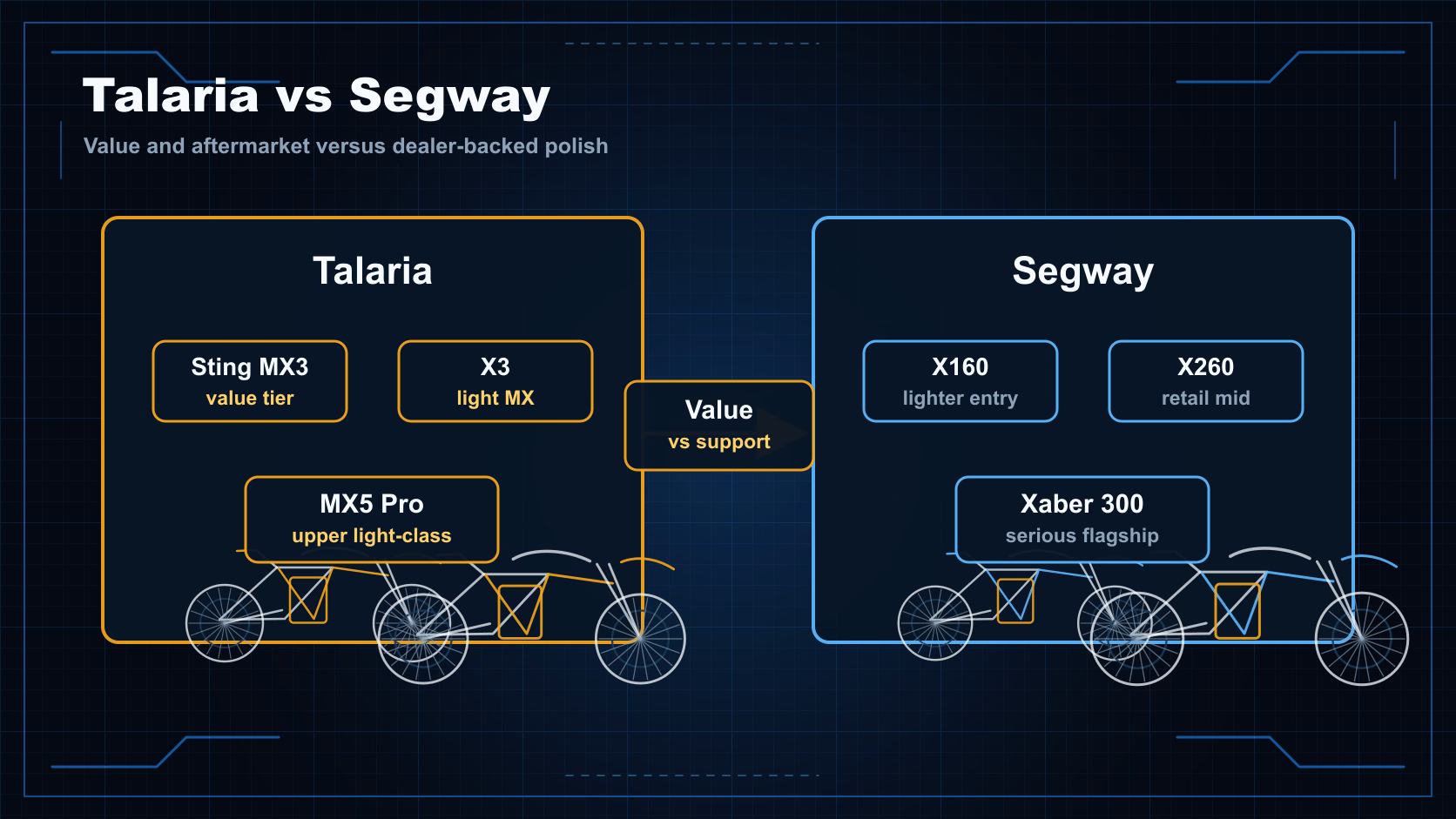
If you're cross-shopping Talaria and Segway — the two big non-Sur-Ron names in the light e-moto class — the honest answer is that Talaria wins for most riders. Model for model, Talaria brings more power, a bigger battery, a stronger aftermarket, and a lower price. The Talaria Sting MX3 scores 86 and costs ~$3,700; the comparable Segway X260 scores 80 and costs ~$3,999. Segway's real appeal is its brand recognition and retail/dealer network — which matters to some buyers — but you pay a premium for it, not for capability.
The quick comparison
| Talaria Sting MX3 | Talaria X3 | Segway X260 | Segway X160 | |
|---|---|---|---|---|
| VoltRipper Score | 86 | 88 | 80 | 90 |
| Price | $3,700 | $3,550 (last US price) | $3,999 | $2,999 |
| Peak power | 6 kW | 6.5 kW | 5 kW | 3 kW |
| Battery | 2,280 Wh | 2,400 Wh | 1,920 Wh | 960 Wh |
| Top speed | 47 mph | 47 mph | 47 mph | 31 mph |
| Real-world range | 28 mi | 32 mi | 28 mi | 22 mi |
| Aftermarket / parts | Strong | Strong | OK | OK |
Where Talaria wins
- More performance for less money. The Sting has more peak power and a bigger battery than the pricier X260 — and the X3 pushed further still (6.5 kW, 2,400 Wh, ~32 mi real range) until it was discontinued.
- A stronger aftermarket. Talaria has become the default Sur-Ron alternative, so parts, upgrades, and community support run deep — closer to Sur-Ron's ecosystem than Segway's. That matters for maintenance and modding.
- More of an MX bike. Talaria's positioning and geometry lean harder into dirt/moto use, which is what most buyers in this class actually want.
- Value. The Sting is one of the cheapest genuinely good adult e-motos you can buy — see our best under $4,000 picks.
Where Segway wins
- Brand and retail presence. Segway is a large, established consumer brand with a dealer/retail and warranty footprint that a buyer nervous about a China-direct purchase may value. That support network is a real, if intangible, advantage.
- Published fit specs. Segway lists seat heights (X260 ~31.9″, X160 ~29.9″), which makes sizing a rider easier — Talaria is less consistent about publishing them.
- The X160 as a lighter entry. If you specifically want a lighter (~106 lb), slower, more manageable first bike for a smaller or newer rider, the X160 fills that niche — though its 960 Wh battery and 31 mph ceiling are quickly outgrown.
The 2026 upper-tier bikes change the top of the matchup
The comparison above is the mainstream, value-tier fight — Sting/X3 vs X260 — and Talaria wins it clearly. But both brands now field stronger 2026 upper-tier light bikes that picture misses:
- Talaria Sting MX5 Pro — Score 89, ~$4,990: a 72V, 13.4 kW Sting that out-specs even the Sur-Ron Light Bee X.
- Segway Xaber 300 — Score 89, ~$5,299: Segway's most serious dirt bike yet — a genuine 21 kW / 60 mph high-power machine, a world apart from the mild X260.
This is the real 2026 story: Segway finally built an upper-tier light e-moto that trades blows at the top of this comparison. The Xaber 300 closes almost the entire performance gap the X260 left open. But Talaria still holds a narrower edge than it did — the MX5 Pro now ties the Xaber at 89 and costs about $310 less (both bikes were repriced in July 2026, which closed most of the gap) — so Talaria's value advantage survives, but only just. The Xaber 300's counter is raw power (21 kW to the MX5 Pro's 13.4) and the Segway brand and retail network. If you're shopping the top of this light-class cross-shop it's closer than ever, but the MX5 Pro is still the value pick. (MX5 Pro review · Xaber 300 review)
Which should you buy?
- Most riders → Talaria. More bike, more support, less money. The Sting MX3 was the value pick until it was discontinued in August 2026 — its successor is the Sting R MX4. The MX4 is sold out at both US sellers we track, as of 2026-09-14. The X3 was the slightly stronger step up until it was discontinued too.
- Brand-and-dealer buyers → Segway Xaber 300. If a known brand and a retail/warranty network are worth the premium to you, the Xaber 300 ties the MX5 Pro at 89 for about $310 more. The X260 held this slot until Segway discontinued it.
- A lighter first bike → Segway X160. Only if its lower speed and weight are exactly the point; otherwise the Talaria gives more room to grow.
The bottom line
Talaria and Segway both make real, capable light e-motos in the ~$3,000–$4,000 range, but they're not evenly matched: Talaria delivers more power, more battery, and a deeper aftermarket for less money. Buy a Talaria unless Segway's brand and dealer network specifically matter to you. The Sting MX3 and X3 that won the value-tier fight are both discontinued, and so is the X260. The live matchup now is the Sting MX5 Pro against the Xaber 300, and the MX5 Pro is still the value pick. Still deciding across the whole class? Our Find Your Ride configurator matches bikes to your budget and riding, and our Sur-Ron vs Talaria comparison covers the other side of the cross-shop.
VoltRipper is independent and spec-verified — scores are computed from verified specs, not commissions, and real-world range figures are our own estimates, clearly labeled. Affiliate disclosure is included on monetized pages.
FAQ
Is Talaria better than Segway?
For most riders, yes. The Talaria Sting and X3 offer more peak power, a bigger battery, and a notably stronger aftermarket than the comparable Segway X260 — and the Sting actually costs less. Segway's real advantages are brand recognition, a retail/dealer presence, and published fit specs. On performance-per-dollar and long-term support, Talaria wins.
Talaria Sting vs Segway X260 — which is the better value?
The Talaria Sting MX3 (~$3,700) both costs less and scores higher on the VoltRipper Score (86 vs 80) than the Segway X260 (~$3,999). It has more peak power (6 kW vs 5 kW), a bigger battery (2,280 Wh vs 1,920 Wh), and a stronger aftermarket. For value, the Talaria is the clear pick.
Why is the Segway more expensive than the Talaria?
You're paying partly for the Segway brand and its retail/dealer network, not for more capability. The X260 has less peak power and a smaller battery than a cheaper Talaria Sting. That brand backing has real value to some buyers — but you are paying a premium for it, not for performance.
Is the Segway X160 a good beginner bike?
It's a lighter (~106 lb), slower (~31 mph) entry bike — a reasonable gentle introduction, especially for smaller or newer riders who want a name-brand bike. But for similar money the Talaria Sting gives you far more room to grow, so the X160 mainly makes sense if its lower speed and weight are exactly what you want.
Sources
Specification sources
- Talaria Sting MX5 ProTalaria Canada - Sting MX5 Pro specificationsChecked
- Talaria Sting R MX4Talaria Canada - Sting R MX4 specificationsChecked
- Segway Xaber 300Segway - Xaber 300 official specificationsChecked