The short answer
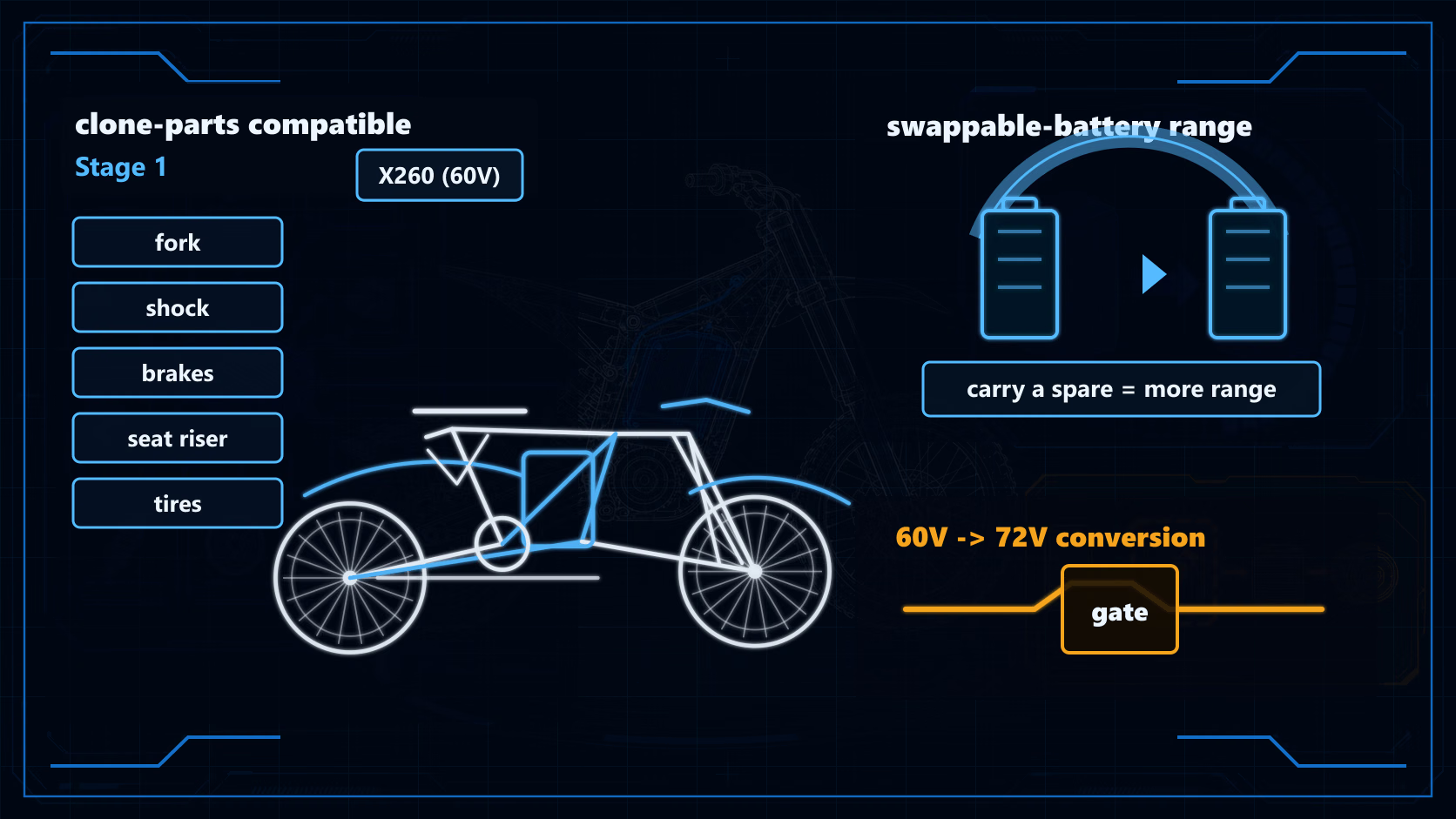
The Segway Dirt eBike X260 has two things going for it as a build platform, and they shape the whole plan:
- It's one of the most clone-parts-compatible bikes outside the Sur-Ron line — forks, brake kits, even seat risers made for the Light Bee-class frame fit it. So Stage 1 is exceptional value.
- It has a swappable battery — which makes range an easier, safer win than power.
So the X260 build is mostly a great-value Stage 1 chassis build, with range solved by a spare pack rather than an electrical conversion. Here's the path.
Stage 1: the chassis — the X260 is a clone-parts bargain
Because the X260's geometry sits so close to the Light Bee-class frame, the same mechanical upgrades that fit a Sur-Ron fit it — and unusually, that even extends to the seat riser.
Suspension. The clone-family upgrade forks and rear shock fit the X260 — the same fix for the same soft-stock suspension. Match spring rate to your weight:
Brakes. Fresh pads for the stock caliper, the cheap big-rotor disc, and the full moto conversion all fit the X260 — bite first, then more rotor:
Fit. The clone-family CNC riser raises the seat for taller riders; a seat-lowering kit does the opposite for shorter ones — a genuine both-ways cross-fit many bikes in this class don't get:
Tires. Terrain-correct rubber is the cheapest ride-changer — the X260 runs a 70/100-19 front; a knobby for dirt or a trials-friendly tread for mixed use, plus a heavy-duty tube for the abuse:
Protection and cockpit. A clone-family skid plate guards the motor, a rear disc guard protects the rotor, handguards save your levers, and a horn-delete plate cleans up the front end on a bike you'll ride hard:
Drivetrain and lighting. A different-tooth rear sprocket retunes the gearing for your terrain, and a real LED bar fixes the weak stock light for dusk riding:
Keep the chain clean, and a Stage 1 X260 rides and stops like a much pricier bike. This is the highest-value money on it, and for most owners it's the whole build.
The X260's trick: solve range with a spare pack, not a conversion
Here's where the X260 differs from a fixed-pack Sur-Ron or Talaria. It's built to swap batteries — so the cleanest way to add range is simply a second OEM pack you carry and swap. No conversion, no electrical risk, no rebuild:
That's a real advantage: on a fixed-pack bike, more range means a costly battery upgrade; on the X260, it means carrying a spare. If your complaint is "I run out of trail before I run out of fun," the swappable battery is the honest fix — budget your range off real riding, not the spec sheet, and carry a second pack for long days.
Power: a 60V conversion, or leave it alone
The X260 is a 60V bike, so — like the Talaria Sting — real added power means a 72V conversion: a new pack, a matching controller, and a matching 72V charger together, never a single 72V part bolted onto the 60V system (a mismatched charger is a fire risk — see the compatibility guide).
For most X260 owners, the better return is Stage 1 chassis plus the swappable-battery range trick, leaving power alone. If you specifically want more speed, weigh a full conversion against simply stepping up to a bike that's more powerful from the factory, such as the Sur-Ron Light Bee X.
Fitment: confirm the part, never cross the voltage
- Mechanical clone parts fit; 60V electrical parts are X260-specific. A Sur-Ron fork may fit; a Sur-Ron 72V battery or charger will not.
- Confirm each part is listed for the X260 and your model year — cross-fit is a per-part fact, not a guarantee.
Both rules are covered in the parts compatibility guide.
Every X260 part on this page, cheapest first
The X260 is a $3,999 bike making 5 kW. That denominator changes how several of these read:
| Part | Job | Price | Share of bike |
|---|---|---|---|
| GritShift horn cover | Bodywork | $14.89 | 0.4% |
| TB Electric OEM-style brake pads | Consumable | $16.00 | 0.4% |
| GritShift Blinder headlight | Lighting | $32.99 | 0.8% |
| Talaria Canada rear sprocket | Gearing | $35.99 | 0.9% |
| Warp 9 handguards | Protection | $45.00 | 1.1% |
| Kenda K760 Trakmaster front | Tire (DOT) | $52.94 | 1.3% |
| KKE 220mm front disc + adapter | Braking | $59.99 | 1.5% |
| Luna CNC seat riser | Ergonomics | $75.00 | 1.9% |
| Dunlop Geomax MX34 front | Tire (off-road) | $82.95 | 2.1% |
| NTC shark-fin disc guard | Protection | $89.99 | 2.3% |
| Heavy Hitter Nomad skid plate | Protection | $139.99 | 3.5% |
| Tarazon seat lowering kit | Ergonomics | $149.95 | 3.7% |
| RFloXa RAB53RV rear shock | Suspension | $220.00 | 5.5% |
| Volar Sport front brake kit | Braking | $625.99 | 15.7% |
| FastAce ALX13RC 2.0 fork | Suspension | $649.99 | 16.3% |
| KKE 35mm 5.5 fork | Suspension | $699.00 | 17.5% |
| RFloXa Hawk31 PRO fork | Suspension | $899.00 | 22.5% |
The suspension maths on a $3,999 bike
The three front forks are alternatives to one another, so nobody buys all of them — but any one of them is a serious fraction of the machine. The cheapest is 16.3% of the bike. The dearest is 22.5%. Add the rear shock and you are at $1,119, or 28%.
Now put that next to what the money buys elsewhere:
| Build | Price | Score | Peak |
|---|---|---|---|
| X260 + Hawk31 fork + rear shock | $5,118 | 80 | 5 kW |
| Segway Xaber 300 | $5,299 | 89 | 21 kW |
| Onyx RCR | $4,699 | 94 | 15 kW |
A fully re-suspended X260 lands at $5,118. A Segway Xaber 300 is $5,299 — the same brand, nine Score points higher, and more than four times the peak power. An Onyx RCR is $4,699 and scores fourteen points higher. You are within a couple of hundred dollars of both.
That is not an argument that the forks are bad. It is an argument about when to fit one. The X260 is Segway's approachable 5 kW entry bike, and the suspension is the part most worth improving on it — but if you are contemplating the $899 fork before you own the bike, you are choosing between a heavily modified entry machine and a standard bike from a class above, for the same money, and the standard bike wins on our board by nine to fourteen points.
Buy the fork if you already own the X260 and it is the thing holding you back. Do not plan the fork into the purchase.
The rest of this page is where an X260 owner should actually spend. Everything above the suspension block — pads, sprocket, handguards, tires, disc, guards, skid plate — totals about $520 and covers every wear and protection item the bike has.
The bottom line
The Segway X260 is a clone-parts value build: Stage 1 suspension, brakes, tires, and fit use the same great-value parts a Sur-Ron does, and because the battery swaps, range is a spare pack away rather than a conversion project. Leave power alone unless you're committed to a 72V conversion — Stage 1 plus a second battery is a lot of usable bike. Keep it running with the maintenance guide, and if you're still choosing, run the Find Your Ride configurator.
VoltRipper is independent — we don't sell parts and our recommendations aren't pay-to-play. Confirm every part against your exact X260 model and year, match the voltage of any electrical part exactly, and upgrade braking and suspension alongside any power increase. Affiliate disclosure is included on monetized pages, and we're spec-verified/data-driven rather than hands-on until first-hand testing exists.
FAQ
Do Sur-Ron parts fit a Segway X260?
Many mechanical ones do — the X260 is one of the most clone-compatible bikes outside the Sur-Ron line. Its geometry is close enough to the Light Bee-class frame that upgrade forks, big-rotor brake kits, moto brake conversions, and even seat risers are sold to fit it. What does not cross over is anything electrical: the X260 is a 60V bike, so 72V Sur-Ron batteries, chargers, and controllers are not compatible. Confirm each mechanical part is listed for the X260, and never mix a 72V electrical part into the 60V system.
How do I get more range on a Segway X260?
Use its best feature: the swappable battery. Unlike a fixed-pack bike, the X260 is built to swap packs, so the cleanest way to add range is simply a second OEM battery you can carry and swap — no conversion, no electrical risk, no rebuild. That's genuinely easier and safer than the battery-upgrade path on a fixed-pack bike, and it's the X260's real advantage. Ride harder or faster, budget your range off real riding rather than the spec sheet, and carry a second pack for long days.
Can you make a Segway X260 faster?
You can, but on the 60V X260 real power is a conversion, not a bolt-on. A serious power step means converting to a 72V system — a new pack, matching controller, and matching 72V charger together — which is a committed project that climbs toward the cost of a faster bike. For most X260 owners, the better return is Stage 1 chassis upgrades plus using the swappable battery for range, and leaving power alone. If you specifically want more speed, weigh a conversion against simply stepping up to a bike that's more powerful from the factory.
What should I upgrade first on a Segway X260?
The chassis — suspension, brakes, tires, and fit — and the X260 is especially rewarding here because so many clone-family parts fit it. An upgrade fork, a bigger brake rotor, better tires, and a seat riser transform how it rides and stops for far less than a power mod, and they help every rider. Start there; combined with the swappable-battery range trick, a Stage 1 X260 is a lot of usable bike without ever touching the motor or controller.