Tracked price checks
Bikes in this guide
Sur-Ron
Light Bee X
Enormous aftermarket and parts ecosystem — the most-supported e-dirt-bike platform
Trade-off: Advertised range collapses at speed — plan for real-world miles well under the claim
We may earn a commission if you buy through this link, at no extra cost to you.
Check price at ATV Wholesale OutletSegway
Xaber 300
Established brand with a real US dealer network, app ecosystem, and smart-vehicle features rare in this class
Trade-off: New model, so aftermarket parts and owner knowledge are nascent versus Sur-Ron and Talaria
We may earn a commission if you buy through this link, at no extra cost to you.
Check price at SegwayTalaria
Sting R MX4
Bigger 2,700 Wh (60V/45Ah) LG-cell pack than a stock Sur-Ron — more usable range
Trade-off: Ships factory-limited to 20 mph — needs derestriction to reach its ~40+ mph potential
We may earn a commission if you buy through this link, at no extra cost to you.
Check price at Luna CycleThe short answer
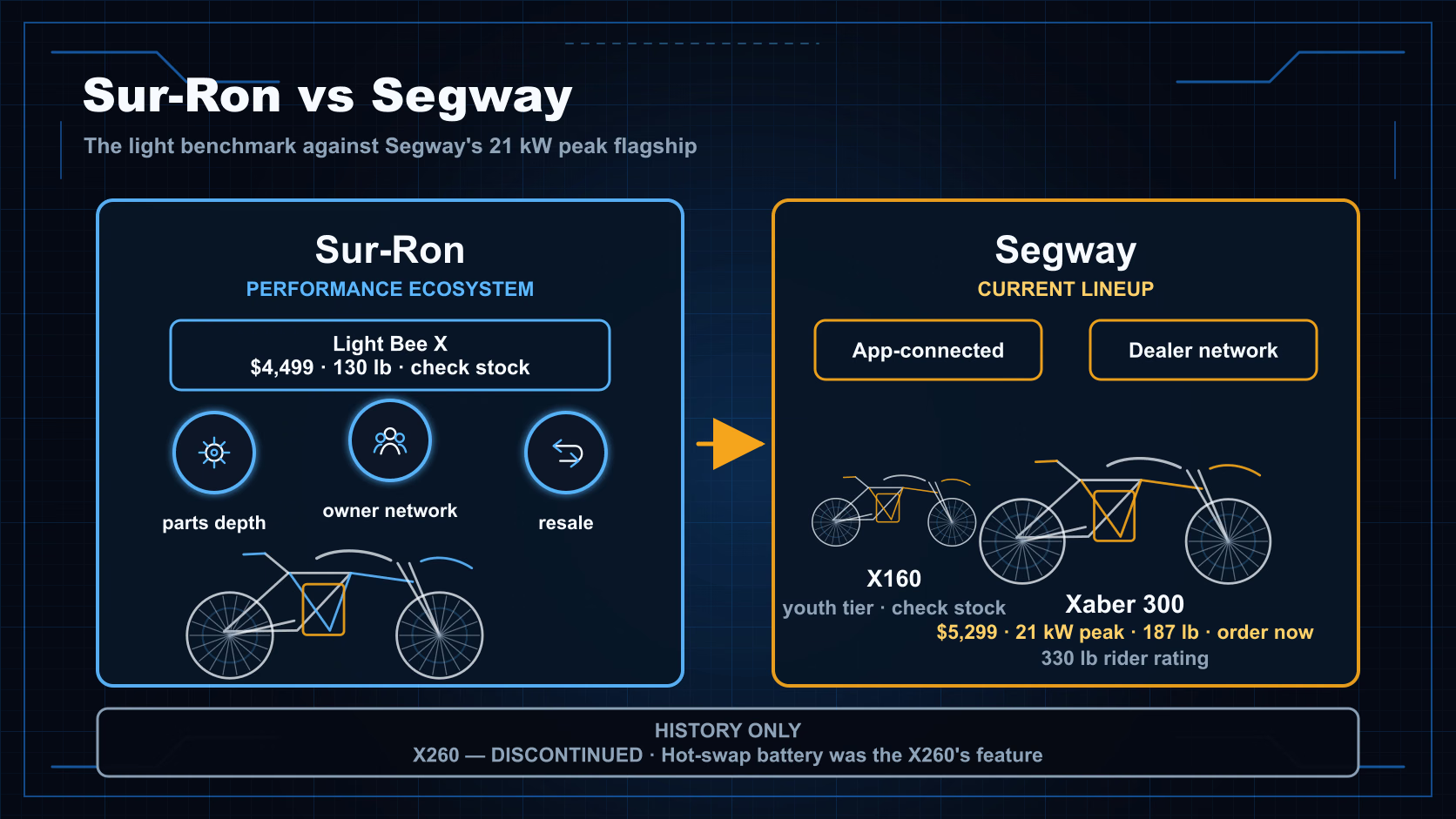
Segway's current adult bike, the Xaber 300, ties the Sur-Ron Light Bee X at a VoltRipper Score of 89/100, and the two get there in opposite ways. The Xaber brings the power: about 21 kW peak, a 3,168 Wh pack, an app, and a 330 lb rider rating. The Light Bee X brings the ownership case: it is 57 lb lighter and $800 cheaper than the Xaber, and it sits on the deepest aftermarket in the class.
Most Sur-Ron vs Segway comparisons still describe the X260, and it is discontinued. The X260 was the cheaper, app-connected Segway with a hot-swappable battery. Segway replaced it with the Xaber 300 rather than a like-for-like successor. If you find a remaining X260, the swap pack is still its headline; otherwise the choice today is the Xaber or the Sur-Ron. Pick by what you actually value.
Why compare these two
Sur-Ron is the enthusiast benchmark. Segway is the big-brand challenger — it brought tech-company polish and a big-brand dealer network to a niche that had been all specialist shops. They attract different buyers, which is exactly why they're worth weighing head to head.
The core matchup: Light Bee X vs Xaber 300
| Sur-Ron Light Bee X | Segway Xaber 300 | |
|---|---|---|
| VoltRipper Score | 89 | 89 |
| Price | $4,499 | $5,299 |
| Peak power | 10 kW | 21 kW |
| Battery | 2,520 Wh (removable) | 3,168 Wh (fixed) |
| Top speed | 50 mph | 60 mph |
| Weight | 130 lb | 187 lb |
| Max rider weight | 220 lb | 330 lb |
| Real-world range | ~30 mi | ~35 mi |
| Power modes | 2 | 4 |
| Companion app | No | Yes |
| Availability | Limited | Available |
| Aftermarket | Biggest in the class | Smaller |
Head-to-head, factor by factor
Power & speed → Segway, now. The Xaber 300 makes about 21 kW peak and tops out near 60 mph. The Light Bee X makes 10 kW and tops out near 50 mph. That is roughly double the peak power. The old Sur-Ron-wins-on-power verdict was written about the X260, which made about 5 kW.
Weight & handling → Sur-Ron, by a lot. The Light Bee X weighs about 130 lb. The Xaber 300 weighs about 187 lb, which is 57 lb more to hold up at a stop, pick up after a fall and lift into a truck. On tight singletrack that difference decides more than the power figure does.
Rider capacity → Segway. The Xaber 300 publishes a 330 lb rider rating. The Light Bee X is rated for 220 lb. For a heavier rider in boots and armor, that alone can decide it; see our heavy riders picks.
Battery & charging → a real split. The Xaber 300's 3,168 Wh pack is the larger one, good for about 35 real-world miles. The Light Bee X's 2,520 Wh pack is good for about 30 real-world miles (see our range guide). The difference you live with is charging: the Xaber's pack is fixed, so it charges in the bike, while the Light Bee X's comes out to charge indoors. The hot-swap battery that made Segway's name in this class belonged to the X260, which Segway has discontinued. If trailside swaps are the point, the Rawrr Mantis X and Mantis X Pro still offer them.
Tech & refinement → Segway. The Xaber 300 has a companion app, four power modes and a polished, buttoned-up out-of-box experience. The Light Bee X has no app and two power modes; it is deliberately a platform to build on rather than a finished consumer product.
Buying & support → different strengths. Segway is easy to buy, with a big-brand dealer network, and refined on day one. Sur-Ron is easy to own long-term — the biggest aftermarket and community in the segment means parts, upgrades, and answers are everywhere. That is also how the Score's factors split them: support and versatility favour the Light Bee X, while power, value and ergonomics favour the Xaber, and the totals land level at 89.
Price → Sur-Ron, now. The Light Bee X is $4,499. The Xaber 300 is $5,299, about $800 more, though it brings roughly twice the peak power for the money. The X260 used to win this row for Segway, until Segway discontinued it.
Beyond the flagships
- Segway also offers the smaller X160, a youth bike (Score 90) that Segway rates for a 176 lb rider, for lighter and newer riders. See which Segway to buy to choose between the X160 and the Xaber 300. The X260 is discontinued.
- Sur-Ron climbs to the Ultra Bee (Score 94) and Storm Bee (Score 96) — the Storm Bee still tops anything Segway makes, while the Xaber 300 still lands five points behind the Ultra Bee (89 to 94) at the flagship-vs-flagship level (see our head-to-head Segway Xaber 300 vs Sur-Ron Ultra Bee).
If Segway was on your shortlist because the X260 cost less than a Sur-Ron, that bike is discontinued. The cheaper cross-shops now are in our Talaria vs Segway guide, and the Rawrr Mantis X keeps the swappable pack the X260 was known for.
Which should you buy?
- A light, flickable bike to modify, resell and own for years: Sur-Ron Light Bee X. (Full review →)
- Maximum power, a 330 lb rider rating, an app and big-brand refinement: Segway Xaber 300. (Full review →)
- A pack you can swap on the trail: the X260 was Segway's answer until it was discontinued; today it is the Rawrr Mantis X or Mantis X Pro.
- A polished bike for a lighter or newer rider on a budget: Segway X160.
Want a pick tailored to your size, experience, and riding? Run the Find Your Ride configurator — or see our full Segway alternatives and Sur-Ron alternatives.
The honest bottom line
The Sur-Ron Light Bee X and the Segway Xaber 300 tie on our Score at 89, and they are built for different riders. The Light Bee X is the lighter, cheaper, more upgradable bike on the deepest ecosystem in the class. The Xaber 300 is the more powerful, more refined bike, with the bigger rider rating and a big-brand dealer network behind it. The X260 that most comparisons still describe is discontinued, so neither its lower price nor its hot-swap battery applies to what Segway sells today. Neither current bike is a mistake; buy the one whose trade-offs match how you ride.
VoltRipper is independent — we sell neither bike, and our Score is based on verified specs, not who pays us. Affiliate disclosure is included on monetized pages, and we are spec-verified/data-driven rather than hands-on until first-hand testing exists.
FAQ
Is a Sur-Ron or a Segway more powerful?
It depends which Segway. The Xaber 300, Segway's current adult bike, makes about 21 kW peak and tops out near 60 mph. The Sur-Ron Light Bee X makes 10 kW and tops out near 50 mph, so the Xaber has roughly double the peak power. The discontinued X260 made about 5 kW, which is why older comparisons call the Sur-Ron the stronger bike.
Does the Segway X260 really have a swappable battery?
It did — that was its headline feature: the X260's pack hot-swaps in seconds, so a charged spare effectively doubles your range with no downtime. The X260 is discontinued. Its replacement, the Xaber 300, has a fixed pack that stays in the bike to charge. If a trailside swap is what you want in this class, the Rawrr Mantis X and Mantis X Pro have swappable packs. The Sur-Ron's battery is removable for charging but isn't designed for quick trailside swaps.
Which has better range, Sur-Ron or Segway?
The Segway Xaber 300 goes further: its 3,168 Wh pack covers about 35 real-world miles. The Sur-Ron Light Bee X carries 2,520 Wh and covers about 30 real-world miles. The practical difference is charging: the Xaber's pack is fixed, so it charges in the bike. The Light Bee X's pack comes out, so you can charge it indoors.
Which is easier to buy and support?
Different strengths. Segway brings a big-brand dealer network and a bike that comes app-connected and refined out of the box. Sur-Ron has by far the larger aftermarket and rider community, so it's easier to upgrade and service over years of ownership.
Are the Sur-Ron and Segway street-legal?
No — both ship as off-road machines and neither is street-legal as sold. The Light Bee X has a documented kit path where a state allows the conversion. We have not found one for the Xaber 300. Check our street-legal guide and your state's rules.
Sources
Specification sources
- Sur-Ron Light Bee XATV Wholesale Outlet - 2026 Sur-Ron Light Bee X (72V/35Ah, 10 kW), $4,699 from $4,999Checked
- Segway Xaber 300Segway - Xaber 300 official specificationsChecked
- Talaria Sting R MX4Talaria Canada - Sting R MX4 specificationsChecked