Tracked price checks
Bikes in this guide
Sur-Ron
Light Bee X
Enormous aftermarket and parts ecosystem — the most-supported e-dirt-bike platform
Trade-off: Advertised range collapses at speed — plan for real-world miles well under the claim
We may earn a commission if you buy through this link, at no extra cost to you.
Check price at ATV Wholesale OutletOnyx
RCR
Moped-style comfort with a seat, lights, and a street kit — the most commuter-friendly bike here
Trade-off: Heavy (~155 lb) and moped-shaped — less capable in technical off-road than a true dirt bike
We may earn a commission if you buy through this link, at no extra cost to you.
Check price at Onyx Motors (official)STACYC
20eDRIVE
The gold-standard kids' electric balance bike — the on-ramp to real dirt riding for ages 11–12
Trade-off: Short 30–60 min runtime per battery
We may earn a commission if you buy through this link, at no extra cost to you. As an Amazon Associate I earn from qualifying purchases.
Check Amazon priceThe short answer
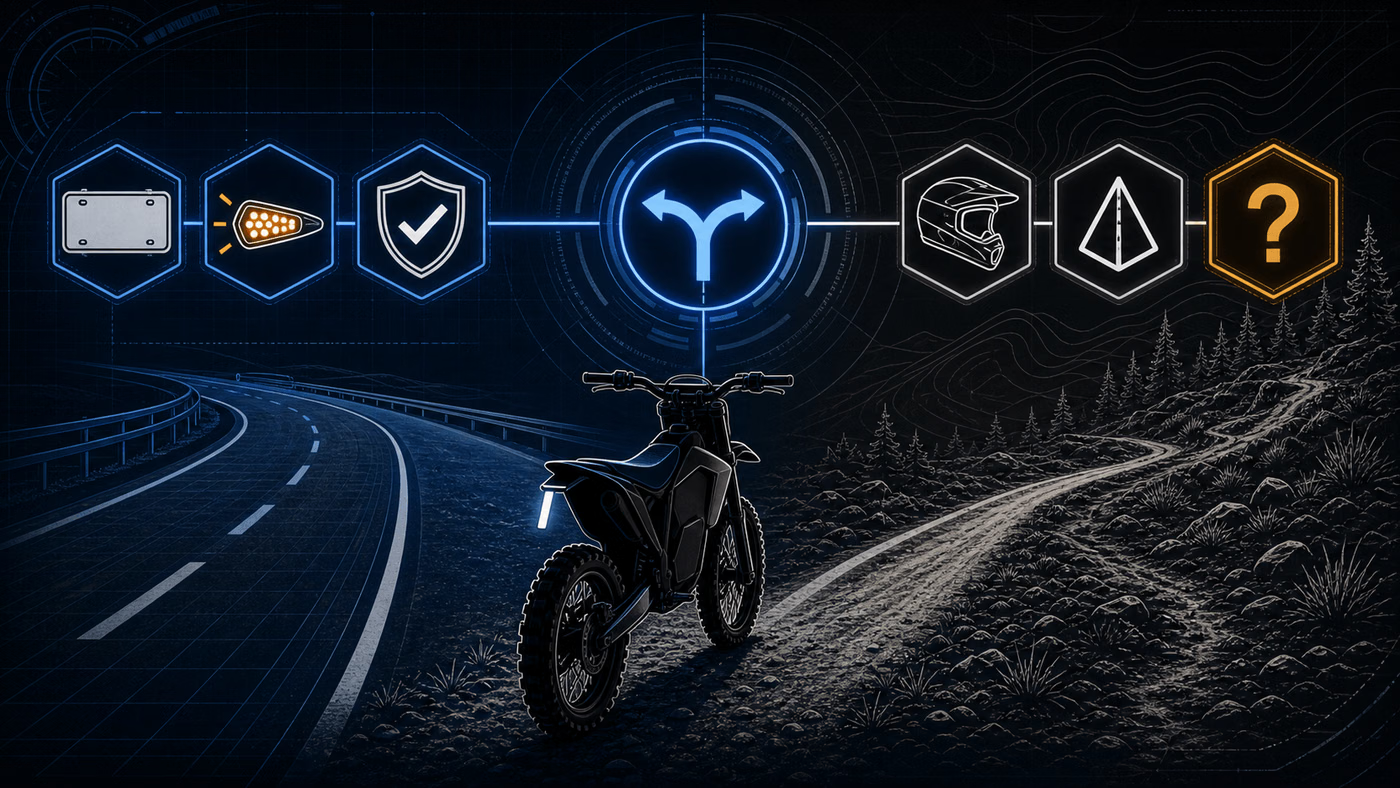
Off-road, you generally don't need a license. On the street, you would — but that's usually moot. Ride a Sur-Ron-class electric dirt bike on private property or at a designated OHV area and no driver's license is required (some states ask for an OHV safety certificate, especially for younger riders). Ride it on a public road and you'd need a motorcycle license — except these bikes aren't street-legal as sold, so in most states road use isn't an option without a full conversion the state may not even allow. Here's the full picture.
Off-road: no driver's license needed
This is where nearly everyone rides these bikes, and the rule is simple: on private land (with permission) or at designated OHV parks and trails, you do not need a driver's license. The main caveats are:
- OHV safety certificates. Some states require an off-highway-vehicle safety education card to ride public OHV land — often specifically for minors or young operators.
- OHV registration ≠ a license. Several states require you to register the bike for off-highway use (a decal or sticker) — that's a registration for the machine, not a license for you.
Because these rules are state-specific, check your state's legality page for the exact OHV certificate and registration requirements where you ride — for example California, Texas, or New York.
Street/road use: a motorcycle license — but read this
To legally ride any motorcycle-class vehicle on public roads, you need a motorcycle license or endorsement (a Class M, in most states). But here's the catch that makes this mostly theoretical for electric dirt bikes:
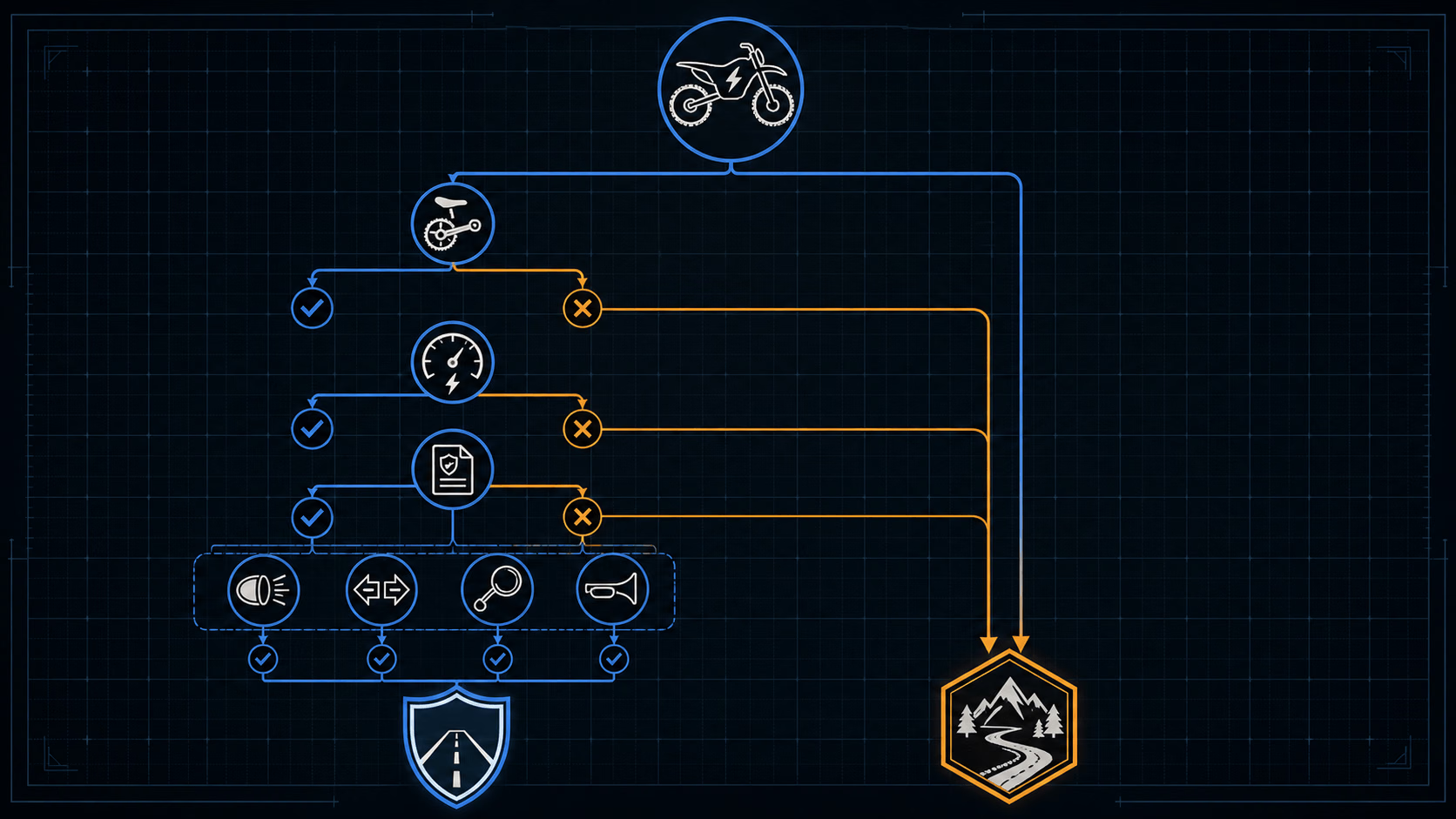
A Sur-Ron-class bike isn't street-legal as sold. Before the license even matters, the bike would need a full street-legal conversion — DOT lighting, signals, a VIN/title, registration, and insurance — and many states don't allow registering these bikes for the road at all (see our state-by-state legality guide). So in practice, for most owners the sequence never gets to the license question: you ride off-road, and no license is required.
Kids and young riders
For children riding off-road, no driver's license is required — but the rules that do apply matter more:
- Age and helmet rules vary by state and by venue; many OHV areas set minimum ages and require youth safety certificates.
- No electric dirt bike is street-legal for a minor to ride on public roads.
- Supervise and keep young riders on private property or designated trails. See our kids guide and safety gear guide.
"No licence" does not mean "no requirement"
This is the single most common misreading of the off-road answer, and it catches adults more often than parents.
Utah requires an OHV education certificate from every operator on public land, roads or trails — including adults. There is an adult course for riders 18 and over and a youth certificate for those under 18. No driver's licence is involved, and you are still not legal on public land without it.
That is a certificate, not a licence, which is exactly why it goes unnoticed. Several states run the same pattern under different names, and the requirement usually attaches to public land rather than to the machine. Riding your own property is a different question from riding a state trail.
The age rules are stricter than most parents expect
Where states regulate young riders, they tend to regulate three separate things at once — a certificate, supervision, and where the child may go — and it is easy to satisfy one and miss the others.
- Michigan needs no driver's licence for off-road ORV use, but a rider
under 16 must hold an ORV safety certificate and stay under an adult's direct visual supervision, and an operator under 12 may not cross a street or county road at all.
- Maine attaches youth training and accompaniment requirements to riders from
age 10.
- Utah requires the youth certificate for anyone under 18, on top of the adult
requirement above.
"Direct visual supervision" is the phrase to read carefully. It does not mean being at the trailhead.
Even where conversion is allowed, approval is not guaranteed
The road answer has a second layer that most guides skip. Converting the bike, registering it and holding the right licence is the process; it is not the same as the outcome.
New York is explicit about this: a Sur-Ron-class bike is not street-operable without a NY title, registration, insurance and a motorcycle licence — and approval is not guaranteed even after a conversion.
Compare that with the states where the answer is simply no. Pennsylvania cannot license one for public roads at all, because the bike exceeds the ≤750W / 20 mph "pedalcycle with electric assist" definition and there is no other class it fits. California is blunter still: these bikes cannot be registered for street use.
Where a conversion path does exist, Texas is the clean version — no licence off-highway, a Class M licence once the bike is converted and on public streets.
Read your own state before you buy a licence course, a conversion kit, or the bike. Each state page shows what we verified and when.
Why the confusion exists
People assume "electric = no license" because street-legal e-bikes — capped at 750W (1 hp), with functional pedals and a ~20-28 mph assist limit — genuinely don't require a license in most states. But a Sur-Ron, Talaria, or Segway dirt bike has a multi-kilowatt motor, no pedals, and does 45+ mph. It falls outside the e-bike definition and is treated as an off-road motor vehicle, so the e-bike license exemption simply doesn't apply. "It's electric" doesn't make it license-free on the road.
It varies by state
Licensing, OHV certificates, and registration rules differ everywhere, and they change. We maintain per-state pages with the specific license and registration notes for each state — check yours before you ride.
The bottom line
For how almost everyone actually uses these bikes — off-road, on private land or OHV trails — you don't need a driver's license, though you may need an OHV safety certificate and to register the machine for off-highway use. A motorcycle license only enters the picture for street riding, which most electric dirt bikes can't legally do as sold anyway. Want a bike you can ride on the road with a motorcycle license? Look at street-legal models like the Onyx RCR — and always confirm your state's rules first.
VoltRipper is independent — this is general information, not legal advice. Licensing, OHV, and registration rules vary by state and change over time; verify current requirements with your state DMV/OHV authority before riding. Affiliate disclosure is included on monetized pages.
FAQ
Do you need a license to ride an electric dirt bike?
It depends where you ride. Off-road on private land or at designated OHV areas, you generally do NOT need a driver's license (though some states require an OHV safety certificate, especially for young riders). On public roads, you WOULD need a motorcycle license — but a Sur-Ron-class bike isn't street-legal as sold, so road use isn't an option in most states without a full conversion anyway.
Do you need a license for a Sur-Ron?
Not to ride it off-road on private property or designated OHV trails. To ride it on the street you'd need both a motorcycle license/endorsement AND to make the bike street-legal first — and most states don't allow registering a Sur-Ron-class bike for the road at all. So in practice, the license question is usually moot: you ride it off-road, no license required.
Do kids need a license for an electric dirt bike?
No driver's license is required for children riding off-road on private land or OHV areas. But age, helmet, and supervision rules vary by state and by riding venue, and no electric dirt bike is street-legal for a minor to ride on public roads. Keep young riders on private property or designated trails.
Why do people think you don't need a license?
Because street-legal electric bicycles (capped at 750W, with pedals and a ~20-28 mph assist limit) genuinely don't require a license in most states. But a Sur-Ron-class electric dirt bike isn't an e-bike — it's a multi-kilowatt off-road motor vehicle — so the e-bike license exemption doesn't apply to it.
Sources
Specification sources
- Sur-Ron Light Bee XATV Wholesale Outlet - 2026 Sur-Ron Light Bee X (72V/35Ah, 10 kW), $4,699 from $4,999Checked
- Onyx RCROnyx Motors — RCR 80V 45AhChecked
- STACYC 20eDRIVESTACYC — 20eDRIVE product page ("Perfect for 9-12yr olds under 115lbs"), read 2026-09-14Checked