The short answer
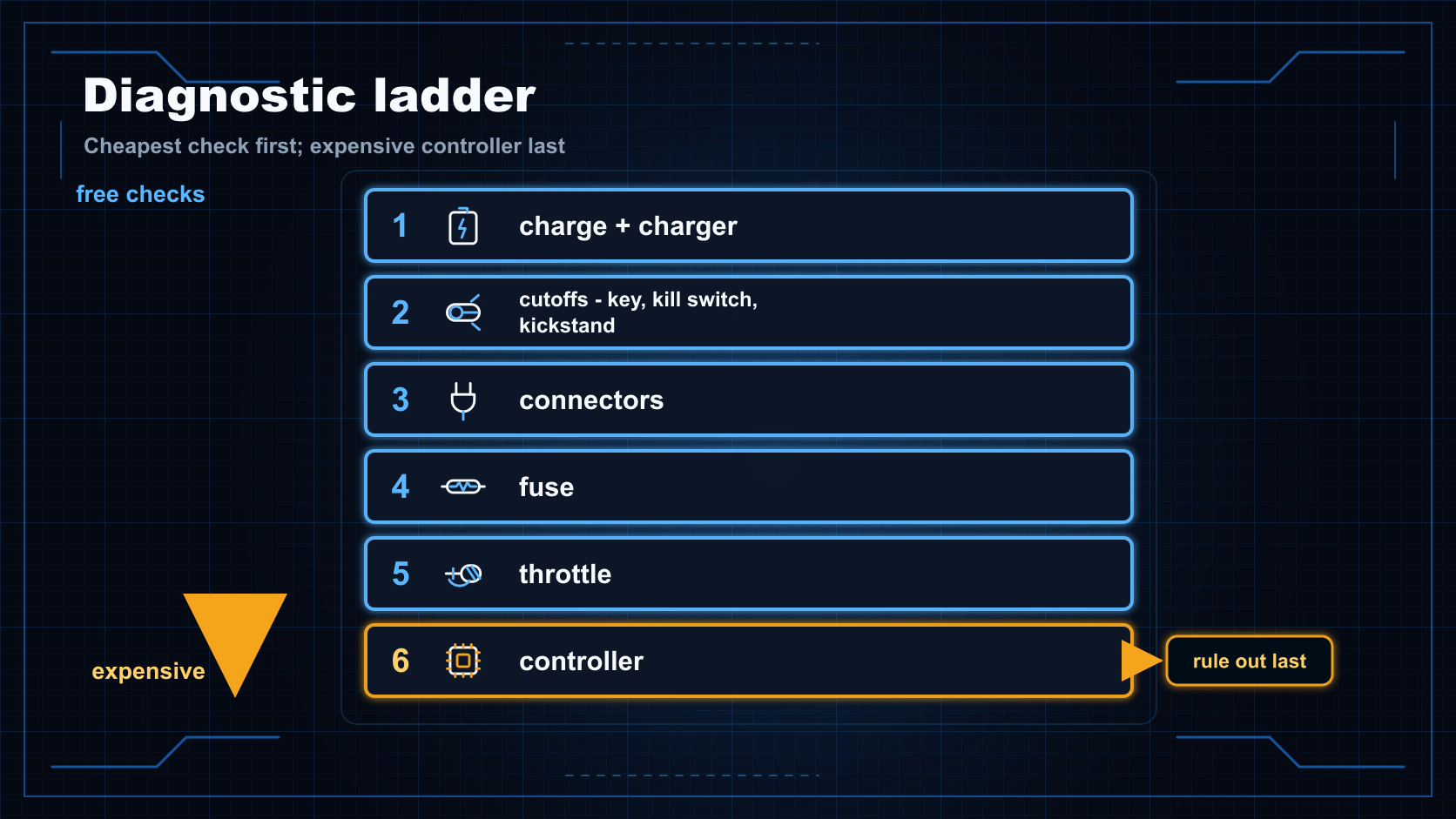
A dead electric dirt bike is almost always one of a handful of things, and the smart move is to work from the free checks to the parts you replace — not to start by buying a controller. Run this order on a Sur-Ron, Talaria, or Razor:
- Charge and battery — is the pack actually charged, and does the charger work?
- Cutoffs — kill switch, key, and (on some bikes) kickstand/seat/brake sensors.
- Connectors — loose or corroded main leads.
- Fuse or breaker.
- Throttle — a common, cheap failure.
- Controller — the expensive one, ruled out last.
A multimeter to read pack voltage takes most of the guessing out of it.
1. Charge and battery — start here
The most common cause, especially after the bike has sat:
- Confirm it's charged. Plug in the charger and watch for the correct indicator. If the light never changes or the charger stays cold, the charger may be dead — test with a known-good one if you can.
- Lead-acid bikes (Razor Dirt Rocket) die if stored flat. An SLA pack left discharged loses capacity or won't take a charge — the fix is usually a fresh pack (matched to the exact 24V MX350 or 36V MX650 system; see the Razor replacement guide).
- Read the voltage with a multimeter. A pack reading far below its nominal voltage is flat or failing; a pack that reads fine but won't deliver power points you downstream.
2. Cutoffs — the free fix people miss
Before you suspect anything expensive, check the things designed to stop the bike:
- Kill switch on, key in/on.
- Kickstand, seat, or brake cutoffs — many bikes cut power with the stand down, and some cut power when the brake lever is pulled (a failed brake-lever switch can make a bike act dead).
- Wiggle-test each — an intermittent switch is a classic "sometimes it works" cause.
3. Connectors — loose or corroded
Electric bikes live and die on their connectors. A loose or corroded main lead, or a battery connector that isn't fully seated, will kill power:
- Inspect the main battery and controller connectors — unplug, look for corrosion or a melted pin, reseat firmly.
- A dab of dielectric grease keeps moisture and corrosion out (the electric-specific maintenance a gas bike doesn't need — see the tool kit).
4. Fuse or breaker
Many bikes have a main fuse or resettable breaker. A blown fuse cuts everything — check it, and if it blew, find out why before you just replace it (a repeated blow points to a short).
5. Throttle — the cheap part to suspect
If the bike has power (lights/display come on) but won't drive, the throttle is the first suspect. Throttles are a common wear item — sticky, worn, or failed — and cheap to replace. On a Razor, the throttle (and on later models a throttle/control kit) is a routine fix; match the exact model and version. Confirm the throttle before you suspect the controller.
6. Controller — the expensive one, last
The controller is the costly component, so rule out everything above first. Point to it when the battery, connectors, fuse, and throttle all check out but the bike still won't run, or when a display shows a controller-specific error code. On the premium bikes a controller is a serious spend (see the controller guide); diagnose carefully before replacing it.
Fix vs replace — and the safety rule
- Connectors, fuses, throttles — cheap, replace them.
- Battery — a wear item; a fresh pack on a kids' bike is routine, a lithium pack is a bigger but still-a-replacement spend.
- Controller — expensive; diagnose first.
The rule that never bends: match every part to your exact bike, and every electrical part to the exact voltage. A mismatched charger or wrong-voltage part is a safety risk, not just a fit problem — our compatibility guide covers why.
The bottom line
Need a battery or charger? See the batteries & chargers buyer's guide for the right voltage-matched pack/charger.
A dead bike is usually a cheap fix, not a dead bike — work the order: charge and battery, cutoffs, connectors, fuse, throttle, then controller. Free checks first, the expensive controller last, and every replacement matched to your exact model and voltage. Keep it from happening again with the maintenance routine, and if you're weighing a different bike, run the Find Your Ride configurator.
VoltRipper is independent — we don't sell parts and our recommendations aren't pay-to-play. Electrical diagnosis and battery work are safety-critical: match parts to your exact bike and voltage, never force a mismatched charger, and if you're unsure about high-voltage components, consult a qualified technician. Affiliate disclosure is included on monetized pages, and we're spec-verified/data-driven rather than hands-on until first-hand testing exists.
FAQ
Why won't my Sur-Ron turn on?
Most no-power problems come down to a handful of causes, and you should work from the free checks to the expensive ones: a dead or deeply discharged battery, a cutoff (kill switch, key, kickstand or seat sensor on some bikes), a loose or corroded connector, a blown fuse, a failed throttle, or a failed controller. Start by confirming the battery is charged and the charger actually works, check the obvious switches, then inspect the main connectors. A multimeter to read pack voltage saves a lot of guessing. The throttle and connectors are cheap fixes; the controller is the expensive one, so rule out everything else first.
Why won't my Razor Dirt Rocket turn on or go?
On a Razor MX350 or MX650 it's almost always the battery, the charger, or a cutoff. The sealed lead-acid batteries die if the bike is stored flat, so a Dirt Rocket that 'won't go' after sitting usually needs a charge or a fresh pack — and if the charger indicator never turns green, the charger itself may be dead. Also check that the kill switch is on and the throttle and brake lever (which cuts power on many models) are working. If a full charge doesn't fix it, the battery pack, charger, or throttle are the usual replacements — see our Razor Dirt Rocket replacement-parts guide, and match the exact 24V (MX350) or 36V (MX650) part.
How do I know if it's the throttle or the controller?
Rule out the cheap part first: the throttle. A failed throttle often shows as no power delivery even though the display or lights come on, intermittent cutting, or a bike that won't respond to twist/press. Throttles are a common wear item and cheap to replace, so if the bike has power but won't drive, the throttle is the first suspect. The controller is the expensive culprit and usually the last thing you replace — signs point to it when the throttle, battery, connectors, and fuse all check out but the bike still won't run, or when a display shows a controller-specific error code. Confirm connectors and the throttle before spending on a controller.
Should I fix it or replace the part?
It depends which part, and the costs are very different. Connectors, fuses, and throttles are cheap and usually worth replacing rather than nursing. A battery is a wear item — on a lead-acid kids' bike a fresh pack is routine; on a lithium bike a failed pack is a bigger spend but still a replacement, not a repair. A controller is the expensive component, so diagnose carefully before replacing it. Whatever the part, match it to your exact bike and (for electrical parts) the exact voltage — a mismatched charger or a wrong-voltage part is a safety risk, not just a fit problem.