The short answer
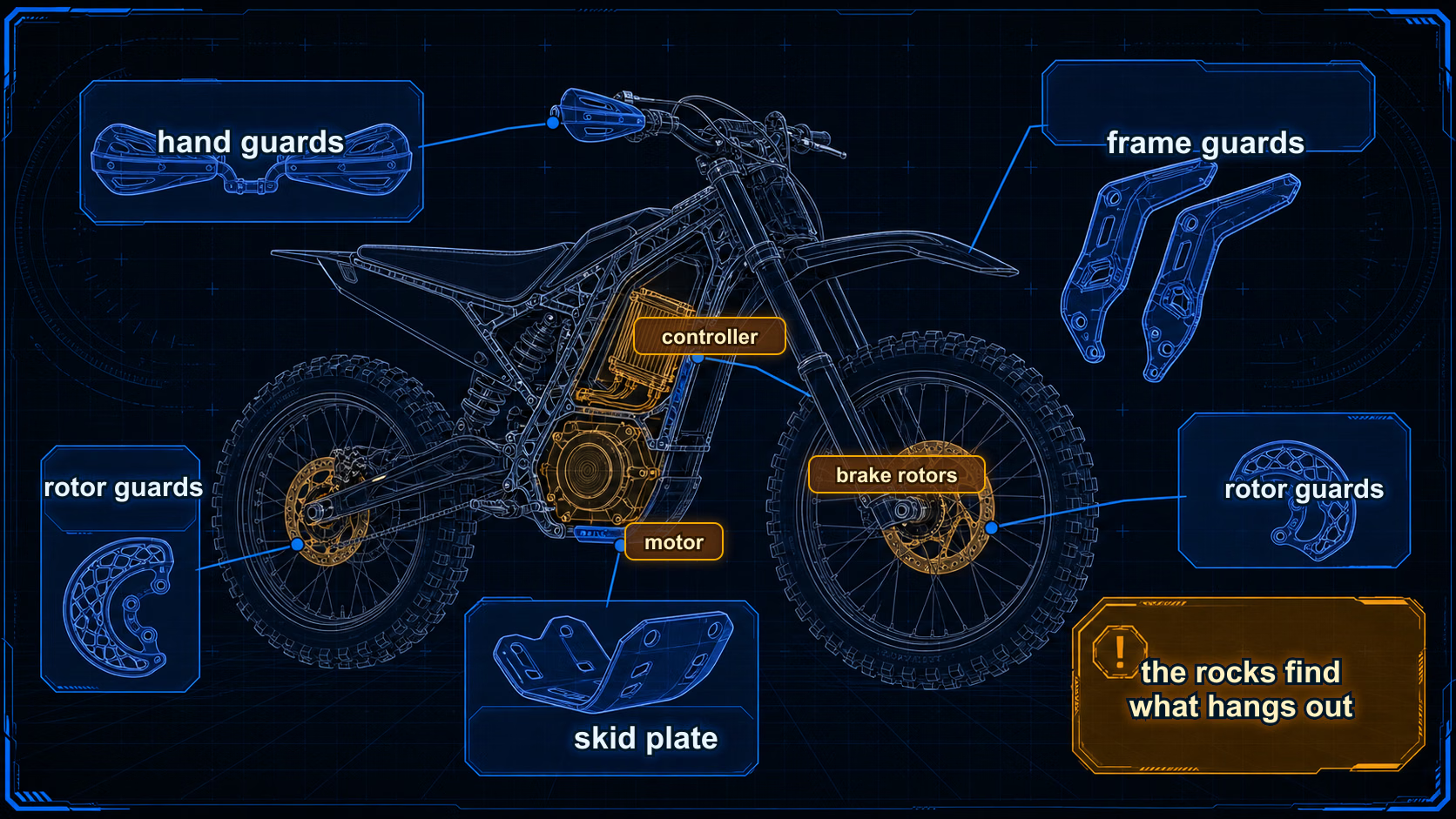
A Sur-Ron or Talaria is expensive, and it hangs its motor, controller, and brake rotors right out where the rocks are. Guards are cheap insurance for pricey, sometimes safety-critical parts. Two things to get right:
- Fitment is bike- and generation-specific — a skid plate or rotor guard is cut for a specific frame/hub. Confirm your model and year.
- Know what each guard actually protects — a skid plate takes impacts; a frame guard is mostly rub/grip, not crash armor. That distinction runs through the whole category, and we take it apart in frame protection and bodywork, where two of the three frame protectors we track say in their own seller copy that they are not impact armour.
Here's the protection, by job.
Skid plates (protect the motor & controller)
The highest-value guard: it shields the motor — and often the controller and phase wires — from rocks and logs. Billet takes bigger hits; UHMW composite slides and costs less. Match it to your platform and check airflow/service access.
Sur-Ron Light Bee X / Segway:
Light Bee X / Ultra Bee (composite):
Talaria Sting:
Ultra Bee (protects motor, phase wires, controller):
Hand guards (protect hands, levers & controls)
Open deflectors block brush and wind and fit almost anything:
Wrap-around bark busters add an aluminum spine that saves your levers in a fall — but need bar-end room and lever/throttle clearance:
Frame guards (protect the finish — not crash armor)
These stop boot rub and scuffs and add grip for your legs. Honest framing: rub/grip protection, not impact armor. By platform:
Rotor guards (protect a safety-critical part)
A bent rotor means no brakes on that wheel — and the rotors sit exposed. A rotor guard is cheap insurance for a safety-critical part. Buy the one for your exact bike, position, and caliper (they pair naturally with a brake upgrade):
Cheap add-ons worth it
Keep grit off the shock shaft (a worn shaft kills a shock) — a few dollars:
If you've removed the horn, a cover/delete plate keeps dirt and water out of the opening:
Every guard on this page, compared
| Guard | Protects | Fits | Price |
|---|---|---|---|
| GritShift horn cover / delete plate | Horn opening from debris | Light Bee X, Segway X160/X260 | $14.89 |
| Warp 9 neoprene shock cover | Shock shaft | Measure 10.5 in bolt-to-bolt | $17.00 |
| Warp 9 E-Moto handguards | Hands, levers, controls | Open deflector, wide fitment | $45.00 |
| TB Electric LBX carbon protector | Frame finish (rub only) | Light Bee X | $59.99 |
| RTech bi-material protectors | Frame finish (rub only) | Ultra Bee 2023–2025 | $59.99 |
| Puget Sound front rotor guard | Front brake rotor | Ultra Bee | $69.00 |
| Puget Sound rear rotor guard | Rear brake rotor | Talaria MX3/MX4/XXX | $79.99 |
| Puget Sound rear disc guard | Rear brake rotor | Light Bee X | $79.99 |
| NTC Designs shark-fin disc guard | Rear disc + caliper | Segway X160/X260 | $89.99 |
| Acerbis X-Factor handguards | Hands and levers on impact | Universal, needs bar-end room | $125.96 |
| SXS UHMW skid plate | Motor underside | Light Bee X, Ultra Bee | $135.00 |
| Heavy Hitter Nomad V1.5 (billet) | Motor underside | Light Bee X class | $139.99 |
| MXworks coated frame guards | Frame finish (rub only) | Talaria MX3/MX4, made to order | $179.99 |
| Heavy Hitter V2 (billet, vented) | Motor + controller | Talaria Sting only | $199.89 |
| Heavy Hitter Outlaw (billet) | Motor, phase wires | Ultra Bee only | $249.89 |
What the prices say about our priorities
Average each group and a pattern falls out that is worth arguing with:
| Guard type | Average | What it protects |
|---|---|---|
| Rotor guards | $79.74 | The brake that stops you |
| Frame guards | $99.99 | Paint and anodising |
| Skid plates | $181.19 | The motor that moves you |
Protecting the part that stops the bike costs less than half what protecting the part that moves it costs — $79.74 against $181.19, a 2.3x gap. Frame guards, which protect nothing but the finish, sit between them.
That ordering is backwards from the risk. A bent rotor is a brake that drags, pulls under load, or fails inspection; a scarred motor case is usually cosmetic until something actually punches through it. The skid plate is the more satisfying purchase and the rotor guard is the more consequential one, and this page priced them the other way round because the market did.
A complete set for a Light Bee X — UHMW skid plate, open handguards, frame protector, rear disc guard, shock cover and horn cover — is $351.87, or 7.5% of the bike. That is the whole argument for this category in one number.
Which protection first?
- Rocky / wooded trails → a skid plate and rotor guards first — they protect the priciest and most safety-critical parts.
- Tight, brushy trails → add hand guards (wrap-around if you crash).
- Keeping it clean & grippy → frame guards (just don't mistake them for crash armor).
The bottom line
For cheap money, guards protect the most expensive and safety-critical parts of an e-moto: a skid plate for the motor and controller, rotor guards for the brakes, hand guards for your levers, and frame guards for the finish and grip. Buy each for your exact bike, year, and brake setup, and remember a frame guard is rub-and-grip protection, not crash armor. Keep the bike dialed with the maintenance guide, and if you're still choosing a bike, run the Find Your Ride configurator.
VoltRipper is independent — we don't sell parts and our recommendations aren't pay-to-play. Guard fitment is bike- and generation-specific — confirm your exact model, year, and (for rotor guards) brake setup before buying — and frame guards are rub/grip protection rather than certified impact armor. Affiliate disclosure is included on monetized pages, and we're spec-verified/data-driven rather than hands-on until first-hand testing exists.
FAQ
Do I need a skid plate on a Sur-Ron?
If you ride anywhere with rocks, roots, or logs, yes — it's cheap insurance for the most expensive parts of the bike. On an electric dirt bike the skid plate protects the motor, and often the controller and phase wires, which sit low and exposed where a hard hit can do real damage; that's a very different job from a gas-bike engine guard. Billet aluminum plates take bigger hits, while UHMW composite plates slide over obstacles and cost less. Look for one that shields the components your bike exposes, keeps airflow to the motor, and still allows service access. If you only ride smooth ground you can skip it, but for trail and enduro use it's one of the highest-value protection parts you can add.
What's the difference between open handguards and wrap-around bark busters?
Open deflectors block brush and roost but flex out of the way, while wrap-around bark busters have an aluminum spine that shields your levers and hands from real impacts — and they need more room to fit. Open handguards mount to the bar and the controls and are easy to fit on almost any e-moto, which is enough for trail brush and cold-wind protection. Wrap-around guards bolt to the bar end as well as the clamp, so the aluminum bar takes an impact (a tree, a fall) without smashing your levers, but they require bar-end mounting room and clearance around the throttle and levers. Choose open for light brush and simplicity, wrap-around for aggressive terrain where lever protection matters.
Are electric dirt bike frame guards protective?
They protect the frame from wear, scuffing, and boot rub, and add grip — but most are not impact armor, so set expectations accordingly. Frame protectors (often carbon, plastic, or a bi-material with a grippy surface) keep your boots and trail debris from scratching and wearing the frame's finish, and the textured ones give your legs something to grip against, which genuinely helps control. What they generally do not do is absorb a hard crash impact the way a skid plate or a helmet does. So think of frame guards as appearance-and-grip protection that keeps a bike looking new and easier to ride, not as crash protection, and pair them with a skid plate and rotor guards for the parts that actually take hits.
Why would I put a guard on my brake rotor?
Because a bent or snapped rotor means no brakes on that wheel, and the rotors on these bikes sit exposed to exactly the rocks and sticks that bend them. A rotor guard is a metal shield, usually aluminum, that mounts near the disc and takes the hit from stones, roots, and debris that would otherwise catch and bend the rotor — a cheap part protecting a safety-critical one. Front and rear are different, and you often choose a variant to match your caliper setup and rotor size, so buy the guard that fits your exact bike and brake. For anyone riding rocky or wooded trails, rotor guards are inexpensive insurance against a ride-ending, safety-critical failure.