The short answer
Changing sprockets is the cheapest way to change how a Sur-Ron or Talaria feels — but it's a trade, not free speed. You're moving the balance between top speed and torque, not adding power:
- Taller gearing (bigger front or smaller rear) → more top speed, less acceleration.
- Shorter gearing (smaller front or bigger rear) → more torque and climbing, less top speed.
Pick the direction that matches your riding, and know the limits before you swap.
How gearing works
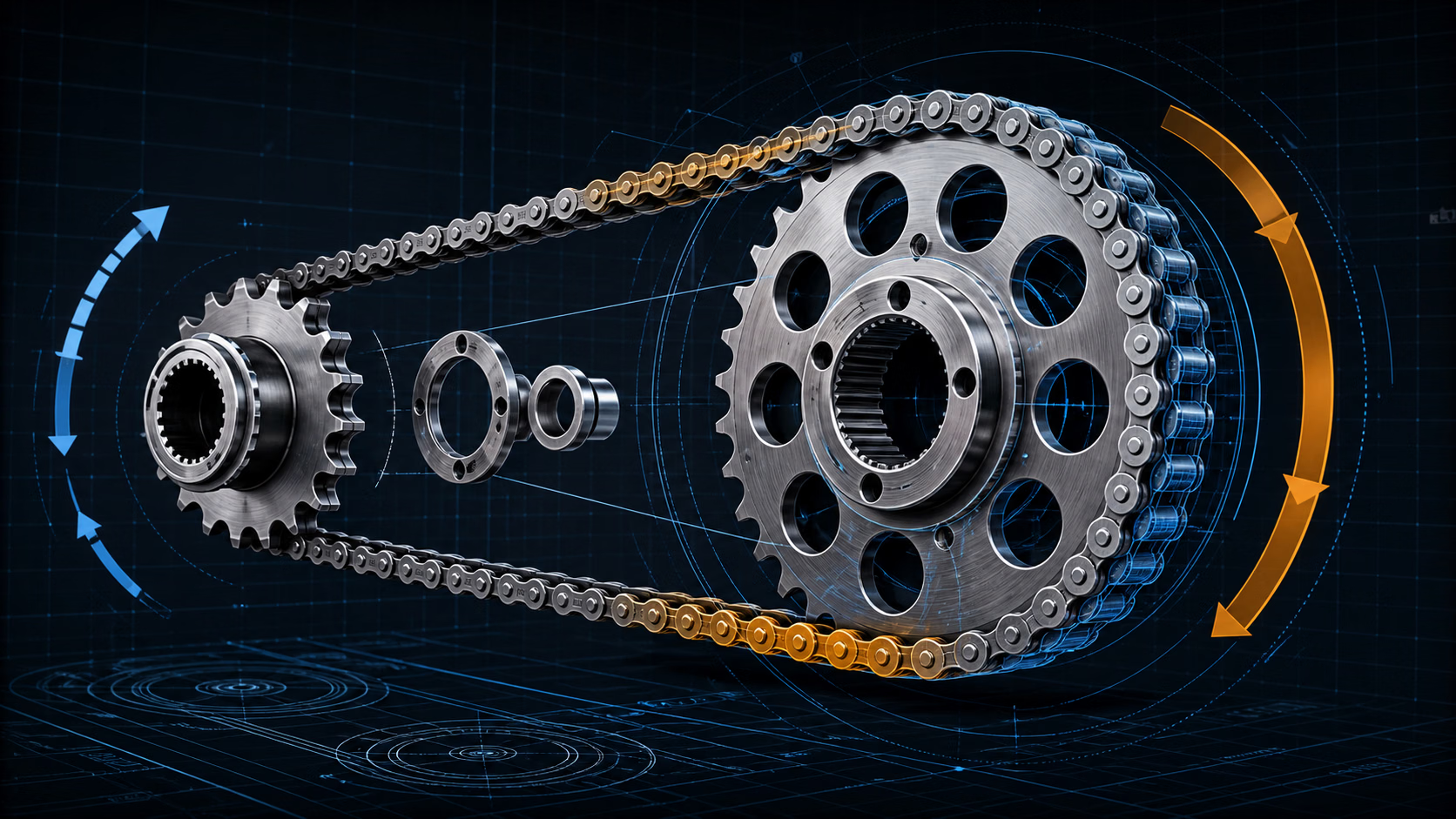
Your bike's final drive ratio is the rear sprocket teeth divided by the front. Change either sprocket and you change the ratio:
- Smaller front / larger rear = shorter (lower) gearing. The bike accelerates harder and climbs better, tops out sooner.
- Larger front / smaller rear = taller (higher) gearing. The bike reaches a higher top speed, but pulls lazier off the line.
Gearing doesn't create power — it redistributes the power you have across the speed range.
Which way should you go?
- You want more grunt / better hill climbing / snappier trail riding → gear shorter. This is what most trail and technical riders actually want, and it's the cheapest way to get it.
- You want a higher top speed on flat, open terrain → gear taller. A tooth or two raises the top end.
- You're happy with the balance → leave it. Stock gearing is a reasonable all-round compromise.
The honest note: if your real complaint is "it runs out of power," gearing won't fix that — that's a controller and battery job. Gearing fixes "it runs out of grunt on climbs" or "I want a bit more top end," cheaply.
Front or rear — and the chain
- Front (countershaft) sprocket — the cheaper, faster change, and where one tooth makes a noticeable difference. A good place to test the direction.
- Rear sprocket — a bigger, more precise change for fine-tuning; more work, and more likely to need a chain adjustment.
A significant sprocket change alters the chain length you need. A small change often works with your existing chain (or a link added/removed); a bigger one may need a longer chain. Match the pitch to your bike and get the length right — our chain-size reference has the verified data by model. Re-check chain tension after any sprocket or chain change.
The limits worth knowing
- Too tall and the motor bogs — it can't pull the ratio, so you lose acceleration without gaining usable top speed.
- Too short and it revs out — you hit the limiter early and give up too much top end.
- Gearing works within the motor and controller's limits; it can't exceed the bike's actual power.
Small changes (a tooth or two) are the safe way to feel the effect before committing.
The bottom line
Ready to buy? See the drivetrain round-up for sprockets, chains, and belt kits by platform.
Sprockets are the cheapest tuning change on the bike: shorter for torque and climbing, taller for top speed — a redistribution of power, not more of it. Start with a front-sprocket change to test the direction, dial it in with the rear if needed, match the chain length and re-check tension. If you actually want more power, that's the controller and battery. Building the rest of the bike? The upgrades guide sets the order, and the Find Your Ride configurator helps you choose a bike.
VoltRipper is independent — we don't sell parts and our recommendations aren't pay-to-play. Match sprocket and chain sizes to your exact bike, adjust chain length and tension after any change, and stay within your motor/controller limits. Affiliate disclosure is included on monetized pages, and we're spec-verified/data-driven rather than hands-on until first-hand testing exists.
FAQ
How do I make my Sur-Ron faster (top speed) with sprockets?
Gear it taller — a larger front sprocket or a smaller rear sprocket raises the top speed, at the cost of acceleration and low-end pull. Gearing is a trade, not free speed: taller gearing lets the bike reach a higher top end but makes it lazier off the line and weaker on climbs, and if you go too tall the motor bogs and struggles to pull the taller ratio. It's the cheapest way to chase top speed, but it doesn't add power — for real added power you're looking at a controller and battery. For a modest top-speed bump on flat, open terrain, a tooth or two of taller gearing is the low-cost move.
How do I get more torque or better hill climbing?
Gear it shorter — a smaller front sprocket or a larger rear sprocket increases torque and low-end pull, at the cost of top speed. Shorter gearing makes the bike accelerate harder and climb better, which is what most trail and technical riders actually want, and it's the cheapest way to get it. The trade is a lower top speed and a motor that revs out sooner. If your complaint is 'it runs out of grunt on climbs' rather than 'it's not fast enough,' shorter gearing is usually the fix — and it's far cheaper than chasing power with electronics.
Should I change the front or rear sprocket?
The front (countershaft) sprocket is the cheaper, faster change and a good place to start, since one tooth there makes a noticeable difference. A smaller front sprocket shortens the gearing (more torque); a larger one taller (more top speed), and it's inexpensive and quick to swap. The rear sprocket is a bigger, more precise change and lets you fine-tune, but it's more work and often needs a chain-length adjustment. Many riders start with a front-sprocket change to test the direction, then dial it in with the rear if needed.
Do I need a new chain if I change sprockets?
Sometimes — a significant sprocket-size change alters the chain length you need, so plan for it. A small tooth change often works with your existing chain or a link added/removed, but a bigger change (especially a larger rear sprocket) may require a longer chain. Match the chain pitch to your bike, count or measure the length after the sprocket change, and add or remove links as needed. See our chain-size reference for the verified pitch and link data by model, and always re-check chain tension after any sprocket or chain change.