The short answer
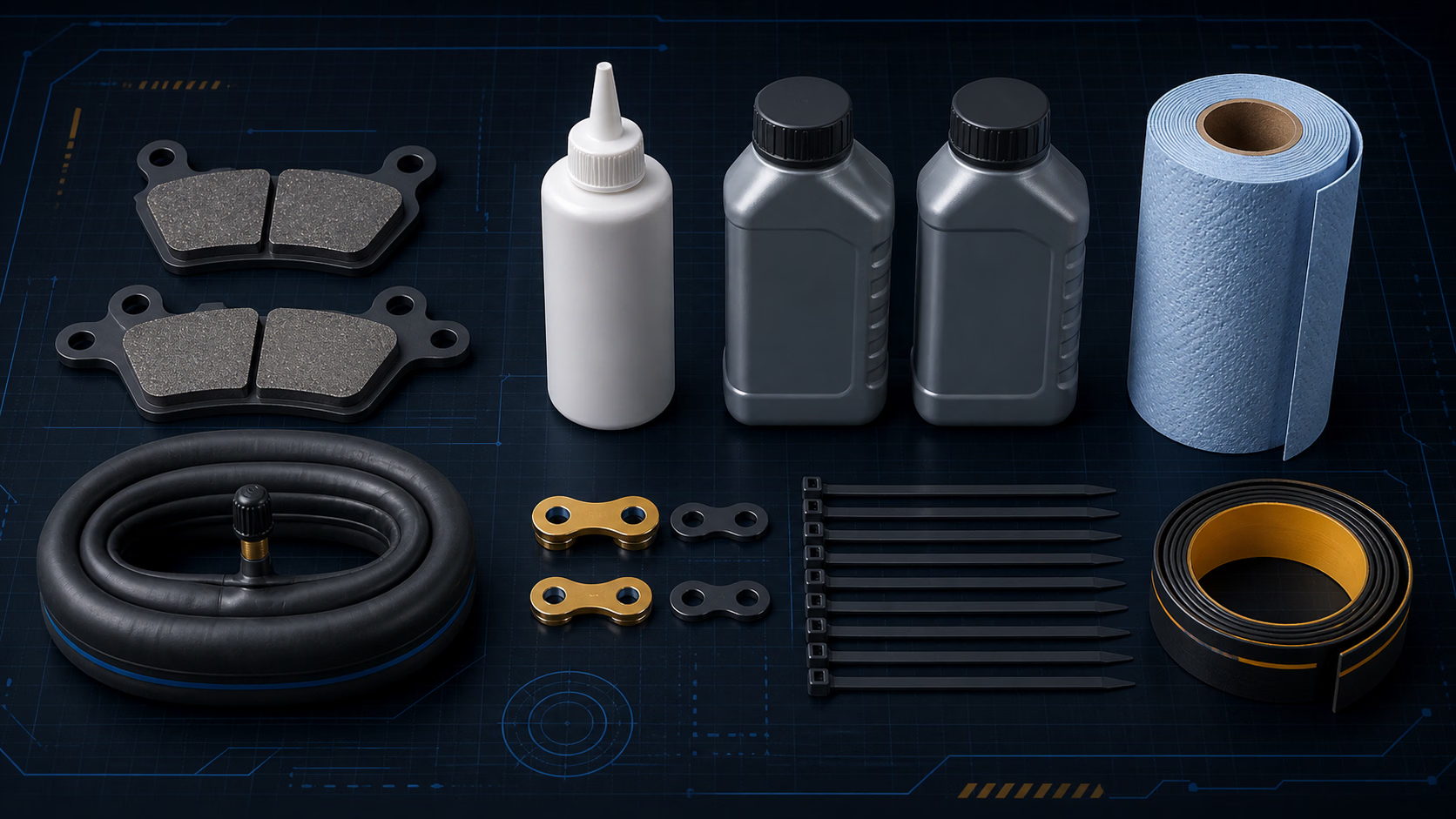
An electric dirt bike is low-maintenance, but there's still a small shelf of consumables you restock — the fluids, greases, cleaners, and repair spares that keep a Sur-Ron, Talaria, or Segway alive. This is the complete list, organized by job.
Two electric-specific rules run through all of it:
- Keep solvents and water off the electronics — no carb/brake cleaner near wiring; plastic-safe cleaner only.
- Match every fluid to its system — the right DOT rating, the right fork weight, never a generic default.
Drivetrain consumables
The chain is the one part that needs regular attention. Clean it, then lube it — cleaner first, wax after, never one without the other:
Keep the spray and rinse water off the battery, controller, and motor seals. The full routine is in the chain-maintenance guide. Carry a spare master link sized to your exact chain — a 420 clip link won't fit a 428 chain:
Electrical consumables (the electric-specific two)
These are the items a gas-bike shelf doesn't have, and the ones these bikes genuinely need. Dielectric grease seals connector boots against moisture — power off and pull the battery first, and don't overpack terminals:
For cleaning contacts and connectors, use a plastic-safe electronic cleaner — never carb or brake cleaner near wiring. Let it fully evaporate before reconnecting:
Fasteners: threadlocker & anti-seize
These bikes shake bolts loose, so blue (medium-strength, removable) threadlocker where the manual calls for it is cheap insurance — on clean metal threads, not plastic, and not the permanent red:
A little anti-seize stops corrosion-prone threads from seizing on a bike that sees water and mud — used sparingly, kept off rotors and pads. Remember lubricated threads change the effective torque, so follow the manual:
Fluids — match the system, don't guess
Buy these only if your bike has the system, and only to its spec. For hydraulic brakes, match the DOT rating on the reservoir cap (many are DOT 4); don't mix in DOT 5, and keep fluid off paint, rotors, pads, and tires:
For serviceable forks, the oil weight and fill height are fork-specific — use your service data, not another bike's numbers:
Many entry e-motos use non-hydraulic/MTB-style brakes or non-serviceable forks — confirm what your bike actually has before buying either.
Grease for the water-prone points
A waterproof bearing/assembly grease protects axles, linkage, and seals on a bike that gets hosed and ridden wet — where the manual allows grease, and kept off braking surfaces:
Tire & tube consumables
If you run tube tires, a dirt-bike tube sealant is a low-cost hedge against tread punctures — within its limits (not for tubeless, sidewalls, bead leaks, or highway speed). Slime sells two 16 oz bottles: the tube-only 10004 below and a 2-in-1 (10193) that adds tubeless capability for about $1.60 more — on a tubed dirt-bike tire they seal the same 1/8 in hole, so buy the cheaper one:
Know your tube size before you need it (the tire-size reference covers why it's model-specific) and keep a spare heavy-duty tube matched to your wheel:
The repair spares you carry
Sealant can't fix everything, so carry the tools to do a real trailside repair. Tire levers to break the bead and get a tube in or out — protect the rotor and sensor wires:
CO2 to air back up (big tires need several cartridges — carry a gauge):
And for a broken chain far from the truck, a chain breaker that handles 420–530 — paired with the right master link above:
The whole consumables kit, by job
| Item | Job | Price |
|---|---|---|
| Orbit clip master link (420) | Drivetrain | $3.99 |
| Liqui Moly DOT 4 brake fluid | Brakes | $6.95 |
| Loctite Threadlocker Blue 242 | Fasteners | $8.98 |
| Maxima chain wax (O/X/Z-ring safe) | Drivetrain | $9.99 |
| Permatex dielectric grease | Electrical | $10.49 |
| Maxima chain cleaner | Drivetrain | $13.99 |
| Slime tube sealant (10004) | Tires | $14.29 |
| Maxima waterproof grease | Bearings | $16.99 |
| Maxima fork fluid (5WT, 1 L) | Suspension | $17.99 |
| CRC QD electronic cleaner | Electrical | $19.99 |
| Tusk tire iron kit | Tires | $24.99 |
| Mini CO2 tire inflator | Tires | $24.99 |
| Motion Pro chain breaker | Drivetrain | $49.99 |
| All thirteen priced items | $223.62 |
By job, so you can buy a section rather than a list:
| Area | Cost |
|---|---|
| Drivetrain | $77.96 |
| Tires | $64.27 |
| Electrical | $30.48 |
| Fasteners and bearings | $25.97 |
| Suspension | $17.99 |
| Brakes | $6.95 |
Everything here costs about a fifth of one performance part
$223.62 buys every consumable on this page — chain, brakes, tires, suspension, electrical, and the tools to use them. That is 5.0% of a $4,499 Light Bee X, and 20% of the cheapest controller upgrade we track at $1,095.
Put another way: you could maintain the bike properly for years for about a fifth of what one power part costs, and the power part will not help you if the chain is dry and the pads are gone.
The cheapest item on the page is the one that stops you
Brake fluid is $6.95 — 0.15% of the bike, the cheapest thing here, and the only fluid on this page whose neglect can hurt you. DOT 4 absorbs water from the air, its boiling point drops as it does, and the failure mode is a lever that goes soft exactly when you are braking hardest and heating it most.
Nothing else on this list has that property. Dry chain wax costs you a chain. Old fork fluid costs you comfort. Old brake fluid costs you the brakes, on the one descent where you needed them.
Two items on this page have no published price, the Permatex anti-seize and the BikeMaster heavy-duty inner tube, so the $225.32 is a floor rather than a complete figure. We would rather show the gap than invent a number.
The bottom line
The consumables shelf for an e-moto is short and cheap: chain cleaner and wax plus a spare master link, the electric-specific dielectric grease and plastic-safe cleaner, threadlocker and anti-seize for the fasteners these bikes shake loose, the right brake fluid and fork oil matched to your actual system, waterproof grease, and the tube/sealant/levers/CO2/chain-breaker to fix a flat or a broken chain. Restock it once and the bike stays healthy for pennies. The maintenance guide covers the routine, the tool-kit covers the durable tools, and the Find Your Ride configurator is there if you're still choosing a bike.
VoltRipper is independent — we don't sell parts and our recommendations aren't pay-to-play. Match brake fluid to the DOT rating your system specifies and fork oil to your fork's service data; use plastic-safe cleaner and keep solvents and water off the battery, controller, and connectors. Affiliate disclosure is included on monetized pages, and we're spec-verified/data-driven rather than hands-on until first-hand testing exists.
FAQ
What consumables does an electric dirt bike actually need?
Fewer than a gas bike — no engine oil, no fuel, no air filter — but a real short list you restock. For the drivetrain: chain cleaner and chain lube, plus a spare master link. Electric-specific: dielectric grease for the connectors and a plastic-safe electronic cleaner. For fasteners: blue threadlocker and a little anti-seize. Fluids only where your bike has them: DOT 4 brake fluid if the system is hydraulic and calls for it, and fork oil of the right weight if you service the forks. Add waterproof grease for bearings, tube sealant or a spare tube if you run tubes, and CO2. That's the shelf — small, cheap, and it keeps the bike alive.
Can I use regular contact or brake cleaner on a Sur-Ron's electronics?
No — this is the electric-specific rule that matters most. Carburetor cleaner and standard brake cleaner can attack plastics and leave residues or damage that you don't want anywhere near connectors, controllers, or a battery. Use a plastic-safe electronic/contact cleaner instead, disconnect power and remove the battery when practical, and let the cleaner fully evaporate before you reconnect anything. The same care applies to degreaser and wash water: keep it off the battery, controller, motor seals, and connector boots. On a high-voltage bike, sloppy chemical choices around the electronics are a real risk, not a cosmetic one.
What brake fluid and fork oil does a Sur-Ron take?
Whatever the specific system specifies — never a generic default. For brakes, match the DOT rating stamped on the reservoir cap or given in the manual (many motorcycle systems are DOT 4), don't mix silicone DOT 5 into a DOT 3/4/5.1 system, and keep fluid off paint, rotors, pads, and tires. For forks, the oil weight and the fill height/volume are fork-specific, so use your fork or bike service data rather than copying another bike's numbers — the wrong weight changes how the suspension behaves. Note that many entry e-motos use non-hydraulic or MTB-style brakes and non-serviceable forks, so confirm what your bike actually has before buying either fluid.
Is tube sealant a good idea on an electric dirt bike?
It's useful flat-prevention on tube tires, within clear limits. A dirt-bike tube sealant can seal small tread-area punctures (roughly up to 1/8 inch) and buy you time, but it is not a fix for tubeless tires, sidewall damage, bead leaks, badly pinched tubes, or sustained highway speed, and overusing it can complicate future tube changes. So it's a sensible low-cost hedge against thorn and tread punctures on a trail bike, not a substitute for a proper repair or a spare tube. Know your tube size before you need it, and pair sealant with the levers, a spare tube, and CO2 so you can actually fix a flat that sealant can't.