Tracked price checks
Bikes in this guide
Sur-Ron
Light Bee X
Enormous aftermarket and parts ecosystem — the most-supported e-dirt-bike platform
Trade-off: Advertised range collapses at speed — plan for real-world miles well under the claim
We may earn a commission if you buy through this link, at no extra cost to you.
Check price at ATV Wholesale OutletTalaria
Sting MX5 Pro
72V/2.88 kWh Samsung-cell platform is a real power and range step up from the 60V Sting and X3 family
Trade-off: Ships limited to 20 mph, so the high-speed numbers assume derestriction and local-law risk
We may earn a commission if you buy through this link, at no extra cost to you.
Check price at Luna CycleSur-Ron
Ultra Bee
Big 4.4 kWh (74V/60Ah) pack, ~24.5 kW HP listings, and a 59 mph top end — a real step up from the Light Bee
Trade-off: Heavier (~195 lb) and more bike than a beginner needs
We may earn a commission if you buy through this link, at no extra cost to you.
Check price at Boca ScootersBuying used is one of the smartest ways into this class — electric dirt bikes are simple, and a proven bike like a Sur-Ron holds value and stays supported for years. But there's one thing that can turn a bargain into a money pit, and it's not the engine (there isn't one). It's the battery. Here's how to check a used electric dirt bike properly so you buy a deal, not a problem.
The short answer
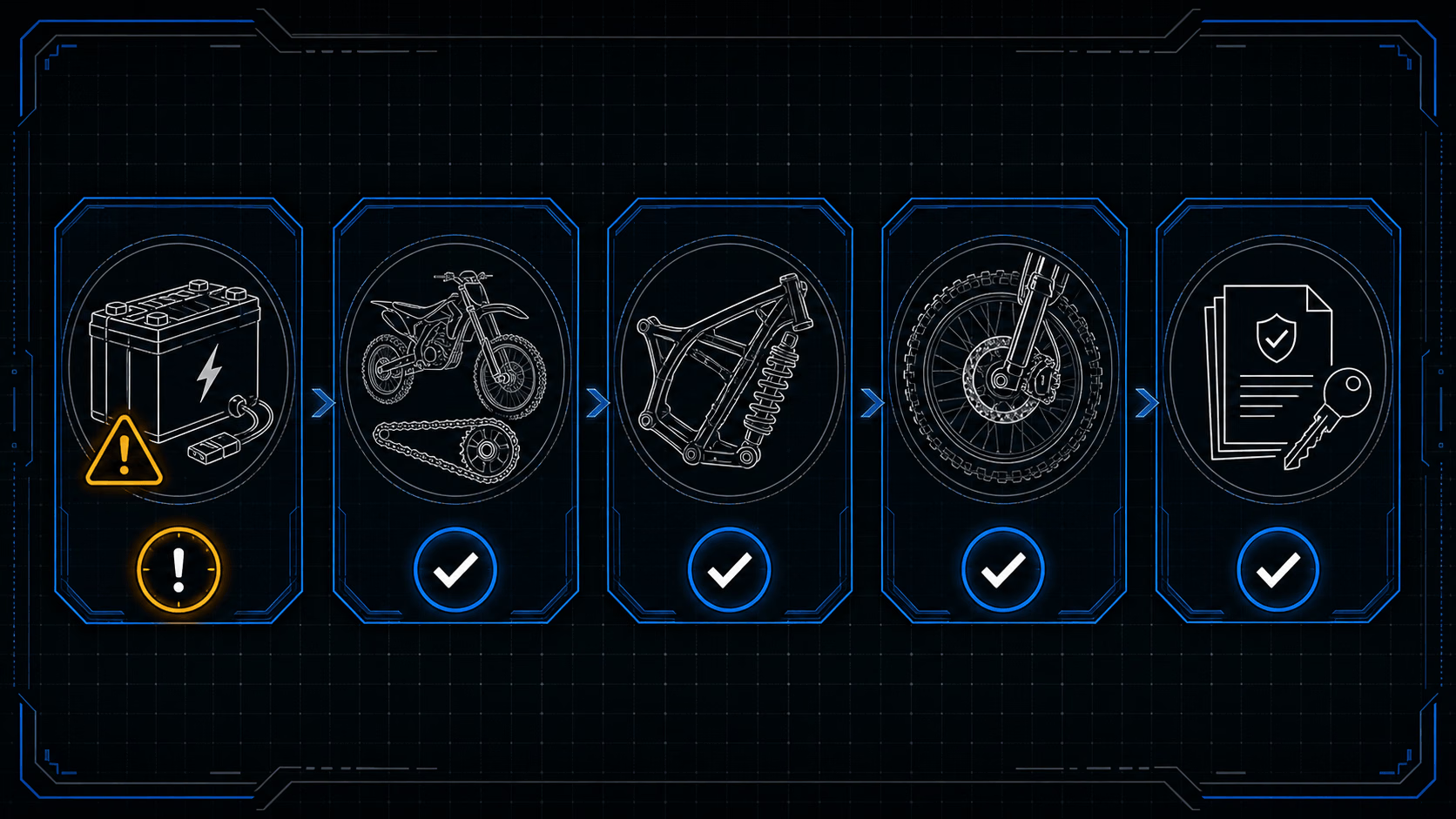
Check the battery first — it's the most expensive part and the biggest risk. Then test-ride for a smooth, error-free motor and controller, inspect the frame/suspension/brakes for crash damage, confirm the paperwork, and make sure it isn't stolen. A clean, documented bike from a proven brand with a healthy battery is a great buy; anything else needs a hard look or a hard negotiation.
#1: the battery (this is 80% of the decision)
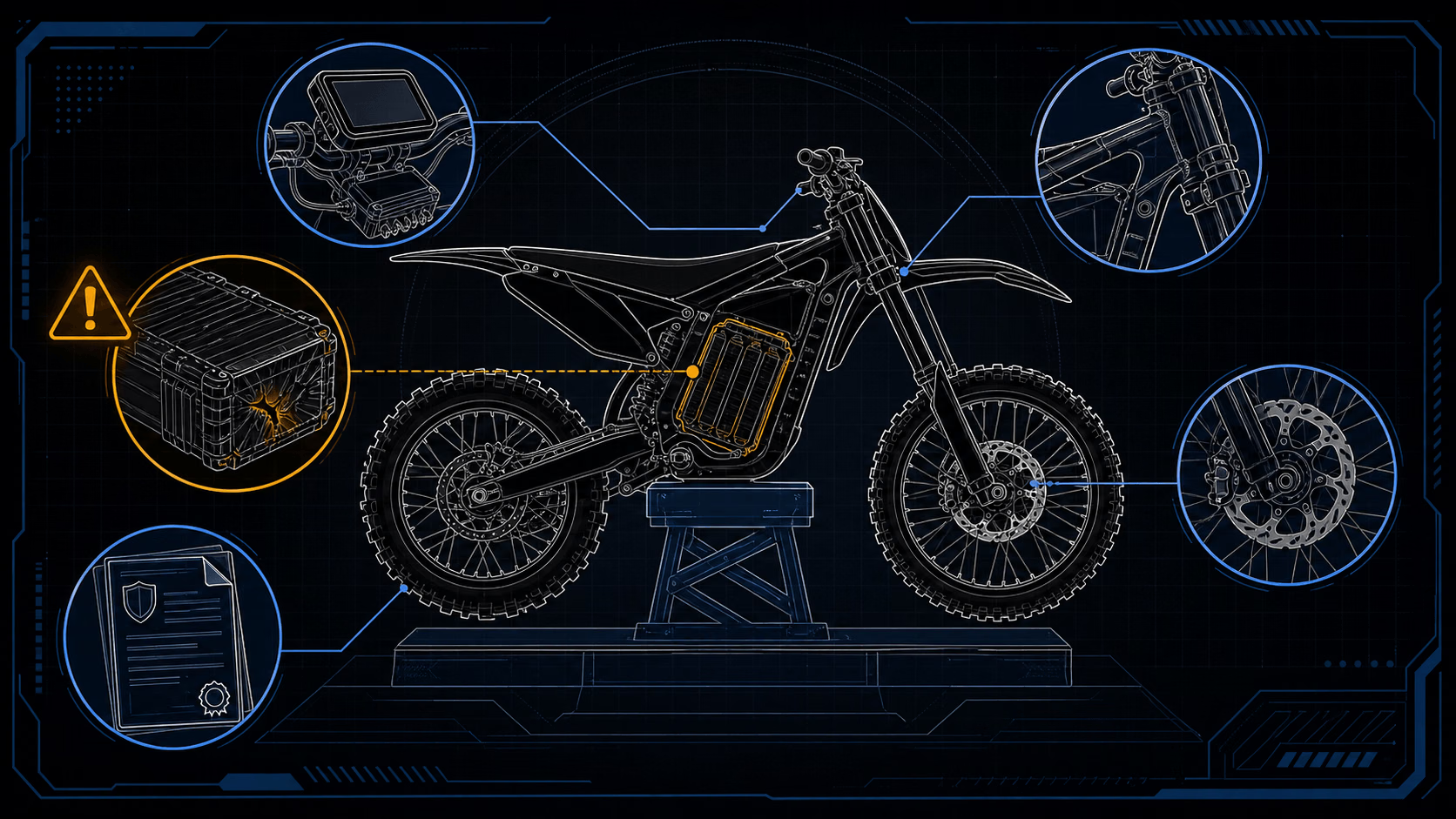
On a gas bike you'd worry about engine hours. On an electric bike, the battery is the consumable that quietly ages and costs a fortune to replace — so it's the single most important thing to assess. It also can't be judged from a photo. Do this:
- Ask its age and rough charge cycles. A pack with light use holds strong value; one that's several years old or has hundreds of hard cycles is nearer replacement (see how long they last).
- Take a real test ride. A degraded battery reveals itself as noticeably reduced range and earlier voltage sag — the bike feels strong then fades, or the display drops volts fast under load.
- Inspect the pack. Look for swelling, dents, corrosion, or moisture around the battery and its connectors — any of those is a walk-away or a deep discount.
- Price the risk. A tired pack means a $1,000-$2,500 replacement — negotiate that off the price or move on.
#2: the test ride (motor + controller)
Ride it. Electric drivetrains are simple, so problems show up fast:
- Power should come on smoothly and pull cleanly — no hesitation, cutting out, or sudden loss of power.
- Watch the display for error codes and any overheating warnings.
- Listen for grinding or clunks from the motor, chain, or bearings.
- Be extra cautious with a bike that's been de-restricted or over-volted — more voltage than stock stresses the controller, motor, and battery, and shortens their life.
#3: the physical inspection
- Frame & suspension: look for cracks, bent forks, tweaked triple clamps, worn linkage, or leaking fork/shock seals — signs of a hard crash.
- Brakes: pad life, disc wear, firm lever feel, no leaks.
- Wheels & tires: true wheels, good bearings, tread left.
- Electronics: test lights, display, throttle, and all switches; check connectors for water intrusion or corrosion.
- Chain/belt & sprockets: stretch and wear (cheap to replace, but a bargaining chip).
#4: paperwork & theft check
- Proof of ownership and any service/battery records — documentation is worth paying a little more for.
- Verify it isn't stolen — check the serial/VIN and be wary of a deal that's too good with a seller in a hurry.
- Beware imported "fire-sale" bikes — water- or fire-damaged imports occasionally surface cheap; the battery risk is severe.
#5: the seller, if the seller is a website
Most used bikes trade person-to-person, but search "used Sur-Ron" and you will also find sites that look like dealers. Some are. The failure mode here is different from a bad bike: you pay, and nothing ships.
Know what the real prices are, because the fake ones are obvious once you do. Checking US dealer listings in July 2026, used Light Bee X and Light Bee S asking prices ran roughly $2,600 to $4,100 across model years, and a nearly-new Ultra Bee HP asked a little under six thousand. Those are asking prices from a small sample, not a market index — but they set the floor. A used Light Bee X advertised at a quarter of those numbers is not a bargain; it is a bike that does not exist.
Three checks that take two minutes:
- Domain age. Paste the site into a lookup like ScamAdviser or a WHOIS tool. A storefront selling $4,000 machines that registered its domain a few weeks ago deserves your suspicion, and a hidden WHOIS registration on a business that claims a physical address deserves more.
- Does the dealership exist? If the site claims a showroom, search the address and phone independently. A real powersports dealer has a map listing, reviews, and a phone someone answers.
- Pay so you can claw it back. A credit card or a payment method with buyer protection. If a seller pushes you to a bank transfer, a gift card, or a "friends and family" transfer, that is the whole warning.
A live example, as of July 2026. `surronvault.com` ranks in search results for used Sur-Ron listings and advertises used Sur-Ron stock at roughly a third of the lowest legitimate asking price we found. ScamAdviser gives it a trust score of 0 and a "Likely Unsafe" verdict, citing a domain registered about two months ago and an owner hiding their identity on WHOIS. We have not bought from it and are not calling it a fraud — we are telling you what the public checks show, and that its prices sit at roughly a third of every legitimate listing we could find. Run the same three checks on any site before you send money to it, including ones we have not named.
Brand matters more used than new
A used bike is only as good as its parts availability. Proven brands (Sur-Ron, Talaria, Honda-backed Greenger) are the safest used buys — parts are everywhere, communities can help, and resale stays strong. Newer and budget brands are riskier used — if support is thin or the brand is shaky, a needed part can be hard to find (the same resale-value logic applies to buying, not just selling). When in doubt, buy the benchmark used.
The bottom line
A used electric dirt bike can be a genuinely great buy — often the smartest way into a proven platform — as long as you check the battery, test-ride the drivetrain, inspect for crash damage, and confirm clean paperwork. Favor a documented bike from a proven brand, price in any battery risk honestly, and walk away from red flags. Do that and you'll get a benchmark bike for well under new money. Not sure which model or size fits you? Run the Find Your Ride configurator, and see our where to buy guide for new-vs-used channels.
VoltRipper is independent and reader-supported — we may earn a commission on purchases through our links, at no extra cost to you. Used-buying guidance is general; always inspect a specific bike in person and verify ownership. Affiliate disclosure is included on monetized pages.
FAQ
What should I check when buying a used electric dirt bike?
The battery first — it's the most expensive part and the biggest risk: ask its age and rough charge cycles, take a real test ride to gauge remaining range and power, and look for swelling or damage. Then test-ride the motor and controller (smooth pull, no cutting out or error codes), inspect the frame, suspension, and brakes for crash damage, check the lights/display/throttle and connectors, confirm ownership documents, and verify it isn't stolen.
How do you check the battery on a used electric dirt bike?
Ask how old the pack is and roughly how many charge cycles it has. Take a genuine test ride and see whether range and power match expectations — a degraded pack shows noticeably reduced range and earlier voltage sag under load. Look for any swelling, dents, corrosion, or moisture around the pack and connectors. If the battery is tired, factor a possible $1,000-$2,500 replacement into the price, or walk.
Is it safe to buy a used Sur-Ron?
Yes — and it's often the smart move. Sur-Rons are proven, parts are widely available, and a used one is easy to sell on again, so a clean example is among the best value buys in the class. Just do the battery and test-ride checks, confirm it isn't stolen or a fire-damaged import, and be cautious with heavily-modded bikes — an over-volted controller can stress the battery and motor. A documented, well-cared-for used Sur-Ron is a great buy.
What are the red flags when buying a used electric dirt bike?
A seller who won't let you test-ride or won't have it charged; vagueness about the battery's age or cycles; a suspiciously low price; visible battery swelling, damage, or corrosion; a heavily-modded bike with no documentation; and budget/no-name brands where parts are hard to source. Any one of these is a reason to negotiate hard or walk away.
Sources
Specification sources
- Sur-Ron Light Bee XATV Wholesale Outlet - 2026 Sur-Ron Light Bee X (72V/35Ah, 10 kW), $4,699 from $4,999Checked
- Talaria Sting MX5 ProTalaria Canada - Sting MX5 Pro specificationsChecked
- Sur-Ron Ultra BeeVoro Motors — Surron Ultra Bee HP SW 24.5kW 74V 60AhChecked