Tracked price checks
Bikes in this guide
Talaria
Sting MX5 Pro
72V/2.88 kWh Samsung-cell platform is a real power and range step up from the 60V Sting and X3 family
Trade-off: Ships limited to 20 mph, so the high-speed numbers assume derestriction and local-law risk
We may earn a commission if you buy through this link, at no extra cost to you.
Check price at Luna CycleTalaria
Komodo
32 kW peak output, 65 mph capability, and a 97.2V/45Ah pack make it Talaria's step above the Sting MX5 Pro
Trade-off: Current US dealer listing is off-road only; the L3e street trim should not be assumed for US buyers
We may earn a commission if you buy through this link, at no extra cost to you.
Check price at Ronster RidesThe short answer
The Komodo leads these two Talarias 91 to 89 — but do not read two points as "the same bike, twice." They are opposite machines, and the tie is the point: each wins where the other gives ground, and the two sets of strengths cancel almost exactly. The gap between the riders they suit is far wider than the gap between their Scores, which is zero.
- Buy the Talaria MX5 Pro ($4,990) if you want a light, nimble, cheaper 72V e-moto in the Sur-Ron Light Bee format.
- Buy the Talaria Komodo ($5,999) if you want a bigger, far more powerful full-size bike that steps toward the Ultra Bee class.
The decision is really about size and power tier, not brand — so match it to your body and your riding, not to which one is "better."
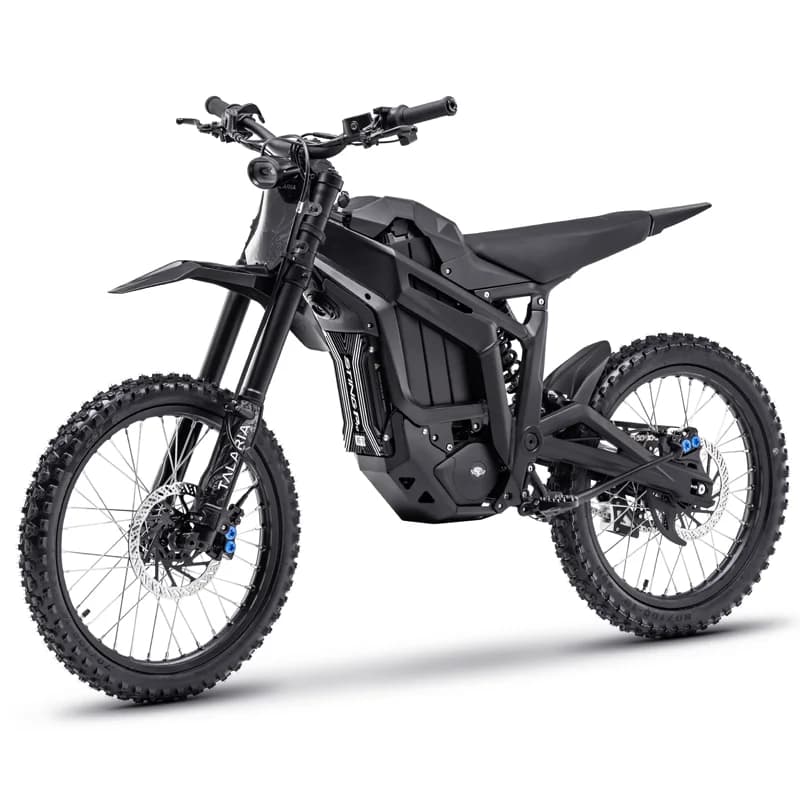
Verified product photo
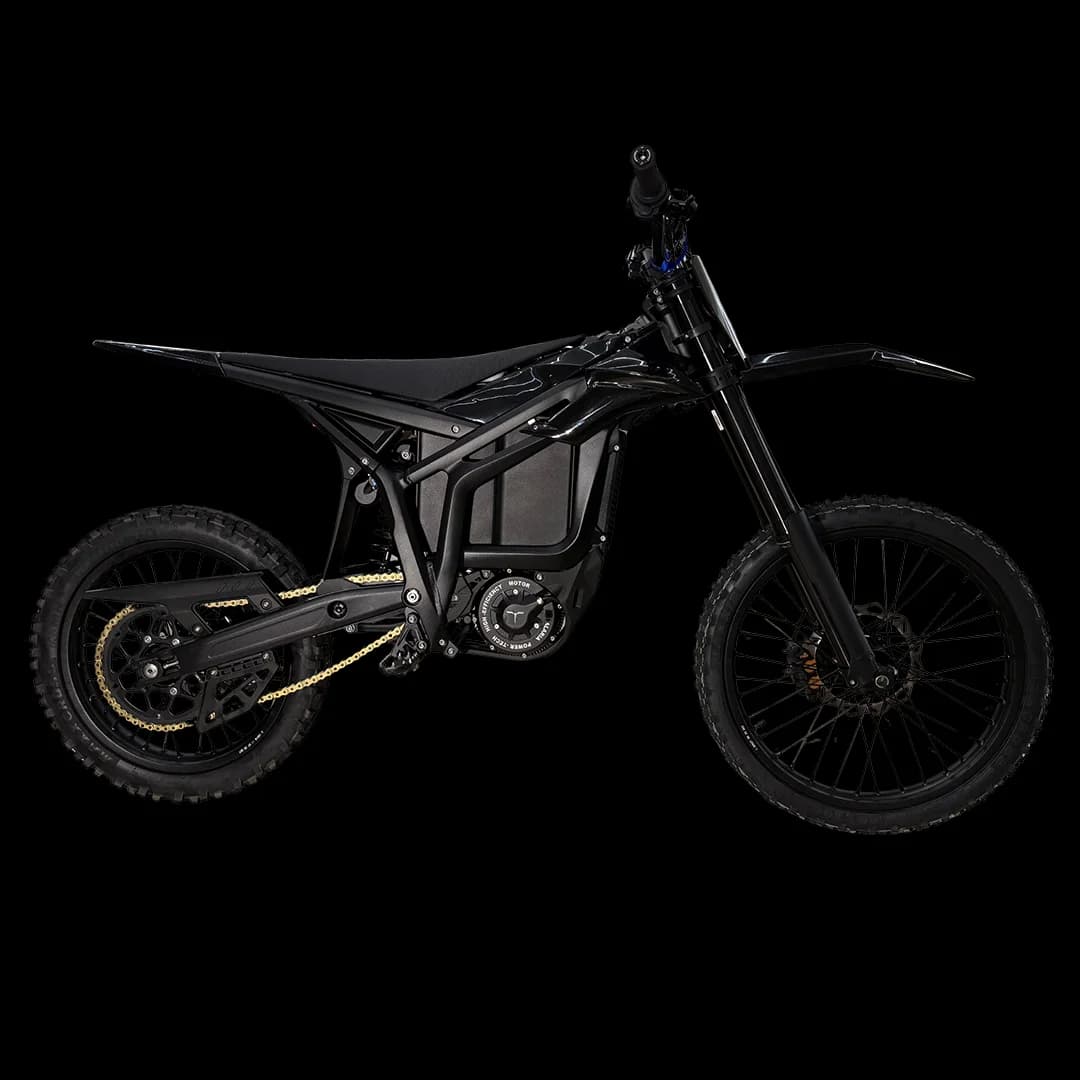
Verified product photo
Comparison table
Head-to-head spec winners
Awarded spec rows
1-3
Talaria Sting MX5 Pro vs Talaria Komodo
| Spec | Talaria Sting MX5 Pro | Talaria Komodo | Winner |
|---|---|---|---|
| Power | 13.4 kW peak | 32 kW peak | Talaria Komodo+18.6 kW |
| Top speed | 59 mph | 65 mph | Talaria Komodo+6 mph |
| Battery capacity | 2.9 kWh | 4.4 kWh | Talaria Komodo+1.5 kWh |
| Real range | 35 mi | Not published | No winner awardedNeeds both published values |
| Weight | 165 lb | 216 lb | Talaria Sting MX5 Pro51 lb lighter |
| Brakes | Dual Hydraulic | Dual Hydraulic | TieSame Dual Hydraulic |
| Suspension | Full | Full | TieSame Full |
| Warranty | 12 mo | 12 mo | TieSame 12 mo |
| Delivered price | $4,990 street + shipping unknown | $5,999 street + shipping unknown | No winner awardedShipping unknown |
Power
- Talaria Sting MX5 Pro
- 13.4 kW peak
- Talaria Komodo
- 32 kW peak
Top speed
- Talaria Sting MX5 Pro
- 59 mph
- Talaria Komodo
- 65 mph
Battery capacity
- Talaria Sting MX5 Pro
- 2.9 kWh
- Talaria Komodo
- 4.4 kWh
Real range
- Talaria Sting MX5 Pro
- 35 mi
- Talaria Komodo
- Not published
Weight
- Talaria Sting MX5 Pro
- 165 lb
- Talaria Komodo
- 216 lb
Brakes
- Talaria Sting MX5 Pro
- Dual Hydraulic
- Talaria Komodo
- Dual Hydraulic
Suspension
- Talaria Sting MX5 Pro
- Full
- Talaria Komodo
- Full
Warranty
- Talaria Sting MX5 Pro
- 12 mo
- Talaria Komodo
- 12 mo
Delivered price
- Talaria Sting MX5 Pro
- $4,990 street + shipping unknown
- Talaria Komodo
- $5,999 street + shipping unknown
Score breakdown
Power
/22 pts
Range
/20 pts
Chassis
/18 pts
Value
/15 pts
Support
/12 pts
Ergonomics
/8 pts
Versatility
/5 pts
The head-to-head
| Talaria MX5 Pro | Talaria Komodo | |
|---|---|---|
| VoltRipper Score | 89 | 91 |
| Price | $4,990 | $5,999 |
| Peak power | 13.4 kW (72V) | 32 kW (97.2V) |
| Top speed | 59 mph* | 65 mph |
| Battery | 2,880 Wh | 4,374 Wh |
| Weight | 165 lb | 216 lb |
| Seat height | 33.1 in | 35.8 in |
| Format | Light e-moto | Full-size |
| Real-world range | ~35 mi | not yet verified |
*The MX5 Pro ships limited to 20 mph; the 59 mph figure assumes derestriction — see below.
Where the MX5 Pro wins: weight, price, manageability
The MX5 Pro's whole case is that it is the lighter, cheaper, easier bike. At about 165 lb it is roughly 50 lb lighter than the Komodo, with a lower 33.1-inch seat — which translates directly into a bike you can pick up, load into a truck, flat-foot at a stop, and flick around a trail without fighting it. It is priced at $4,990, a thousand dollars less than the Komodo, and it delivers a verified ~35 miles of real range.
For a smaller rider, a newer rider, or anyone who values agility and a lighter hit to the wallet over outright power, the MX5 Pro is the smarter Talaria. It has genuine high-end pace (13.4 kW peak, ~59 mph unlocked) in a package that stays friendly.
Where the Komodo wins: power, battery, size
The Komodo is a different animal — Talaria's step above the MX5 Pro, and it shows in the numbers that matter to a bigger or faster rider:
- 32 kW peak against the MX5 Pro's 13.4 kW — about 2.4 times the power, from a higher-voltage 97.2V system.
- A 4,374 Wh battery, roughly 50% larger, feeding a 65 mph top speed.
- 21/18 wheels, full suspension, reverse, regen and four ride modes — a spec closer to the Sur-Ron Ultra Bee class than to the light e-moto tier.
Priced at $5,999, it asks about $1,000 more than the MX5 Pro and gives you a genuinely bigger, more capable machine for it. If you are a larger rider or you want full-size presence and power, the Komodo is the one — just know you are buying 216 lb of bike to get it.
The caveats that could decide it
Two honest points, one on each bike:
- The MX5 Pro ships limited to 20 mph. Its ~59 mph potential requires derestriction, with the usual warranty, legality and insurance consequences. Factor in whether you are comfortable unlocking it.
- The Komodo's range is unverified, and its street-legal status should not be assumed in the US — its listing is off-road only, and the L3e street trim is not a given for US buyers. Its 71.5-mile range claim stays caveated until we have real data.
Both are off-road as sold, so neither is a plug-and-play street bike.
Which should you buy?
- Smaller/lighter rider, budget matters, you value agility → MX5 Pro. Lighter, cheaper, lower seat, verified range.
- Bigger rider, or you want full-size power and presence → Komodo. Double the power, bigger battery, closer to the Ultra Bee class.
- You want the most power per dollar between these two → Komodo, for the 32 kW at a $1,000 premium.
- You want the easiest bike to live with → MX5 Pro, for the 50 lb it saves you.
- Cross-shopping outside Talaria too? See the MX5 Pro against the Sur-Ron Light Bee X, or narrow it with the Find Your Ride configurator.
The bottom line
The Talaria Komodo (91) finishes two points ahead of the MX5 Pro (89), and the gap is narrower than the machines are different: the MX5 Pro is the light, affordable, manageable e-moto, and the Komodo is the big, powerful full-size step up. Two points is not a verdict — there is a right bike for your size, budget and riding. Take the MX5 Pro if you want nimble and cheaper; take the Komodo if you want power and presence and can handle the extra 50 lb. Just weigh the MX5 Pro's 20 mph factory limit and the Komodo's unverified range before the spec sheet makes the call for you.
VoltRipper is independent — our Scores come from verified specs and the transparent VoltRipper Score, not commissions. The MX5 Pro's top speed assumes derestriction from its 20 mph factory limit, and the Komodo's range is unverified. Neither should be assumed street-legal in the US. We are spec-verified and data-driven rather than hands-on. Affiliate disclosure is included on monetized pages.
FAQ
What's the difference between the Talaria MX5 Pro and the Komodo?
Size and power class. The Talaria MX5 Pro is a light 72V e-moto — 165 lb, 13.4 kW peak, $4,990 — in the Sur-Ron Light Bee format. The Komodo is a full-size machine — 216 lb, 32 kW peak, 97.2V, $5,999 — that sits closer to the Sur-Ron Ultra Bee class. The Komodo scores 91 to the MX5 Pro's 89: the MX5 Pro wins on weight and price, but the Komodo's power and battery carry it by two points.
Is the Talaria Komodo worth the extra money over the MX5 Pro?
If you want a bigger, more powerful bike, yes: the Komodo makes 32 kW to the MX5 Pro's 13.4 kW and carries a much larger 4,374 Wh pack, for about $1,000 more. If you want a light, flickable bike that is easier to manage and cheaper, the MX5 Pro is the better buy. The Komodo is a size and power step up, not just a pricier MX5 Pro.
Which Talaria is lighter, the MX5 Pro or the Komodo?
The MX5 Pro, by a lot — about 165 lb against the Komodo's 216 lb, a roughly 50 lb difference. That makes the MX5 Pro far easier to pick up, load, and ride at trail pace, and gives it a lower 33.1-inch seat versus the Komodo's 35.8 inches. For a smaller rider or anyone who values agility, the MX5 Pro's weight is its biggest advantage.
Are the Talaria MX5 Pro and Komodo street legal?
Neither should be assumed street-legal in the US as sold. The MX5 Pro is sold off-road and ships limited to 20 mph, so its higher speeds assume derestriction. The Komodo's current US listing is off-road only, and its L3e street trim should not be assumed for US buyers. Treat both as off-road machines and check your state's rules before planning road use.
Sources
Specification sources
- Talaria Sting MX5 ProTalaria Canada - Sting MX5 Pro specificationsChecked
- Talaria KomodoRonster Rides - Talaria Komodo dealer listingChecked