Tracked price checks
Bikes in this guide
Sur-Ron
Light Bee X
Enormous aftermarket and parts ecosystem — the most-supported e-dirt-bike platform
Trade-off: Advertised range collapses at speed — plan for real-world miles well under the claim
We may earn a commission if you buy through this link, at no extra cost to you.
Check price at ATV Wholesale OutletSur-Ron
Ultra Bee
Big 4.4 kWh (74V/60Ah) pack, ~24.5 kW HP listings, and a 59 mph top end — a real step up from the Light Bee
Trade-off: Heavier (~195 lb) and more bike than a beginner needs
We may earn a commission if you buy through this link, at no extra cost to you.
Check price at Boca ScootersThe Sur-Ron Light Bee 2 is real, it is shipping in Australia and New Zealand, and it is on pre-order at six US dealers. That is worth stating plainly, because the page currently ranking for its release date says it arrives in 2027 at the earliest and that specifications are unreleased. Both were wrong by the time we checked.
Here is what Sur-Ron and its official distributors actually publish, and what it means if you are choosing between this and the Light Bee X you can buy today.
The numbers, verified
| Light Bee X | Light Bee 2 | |
|---|---|---|
| Peak power | 10 kW | 24 kW |
| Pack | 72 V, 35 Ah, 2,520 Wh | 78.54 V nominal, 45 Ah, 3.53 kWh |
| Cell type | lithium-ion | semi-solid-state |
| Wheel torque | 295 Nm | 434 Nm |
| Top speed | 50 mph | 90 km/h (55.9 mph) |
| Kerb weight | 130 lb | 65 kg (143 lb) |
| Ride modes | 2 | 7, with traction control |
Light Bee 2 figures are from Sur-Ron's official New Zealand distributor spec table and Sur-Ron's own US model page, both checked 2026-09-08. Light Bee X figures are our own verified catalog record for the current 72 V generation — note that Sur-Ron's US site still serves an older 60 V Light Bee page alongside the current one, which is the most common way this comparison gets written wrong.
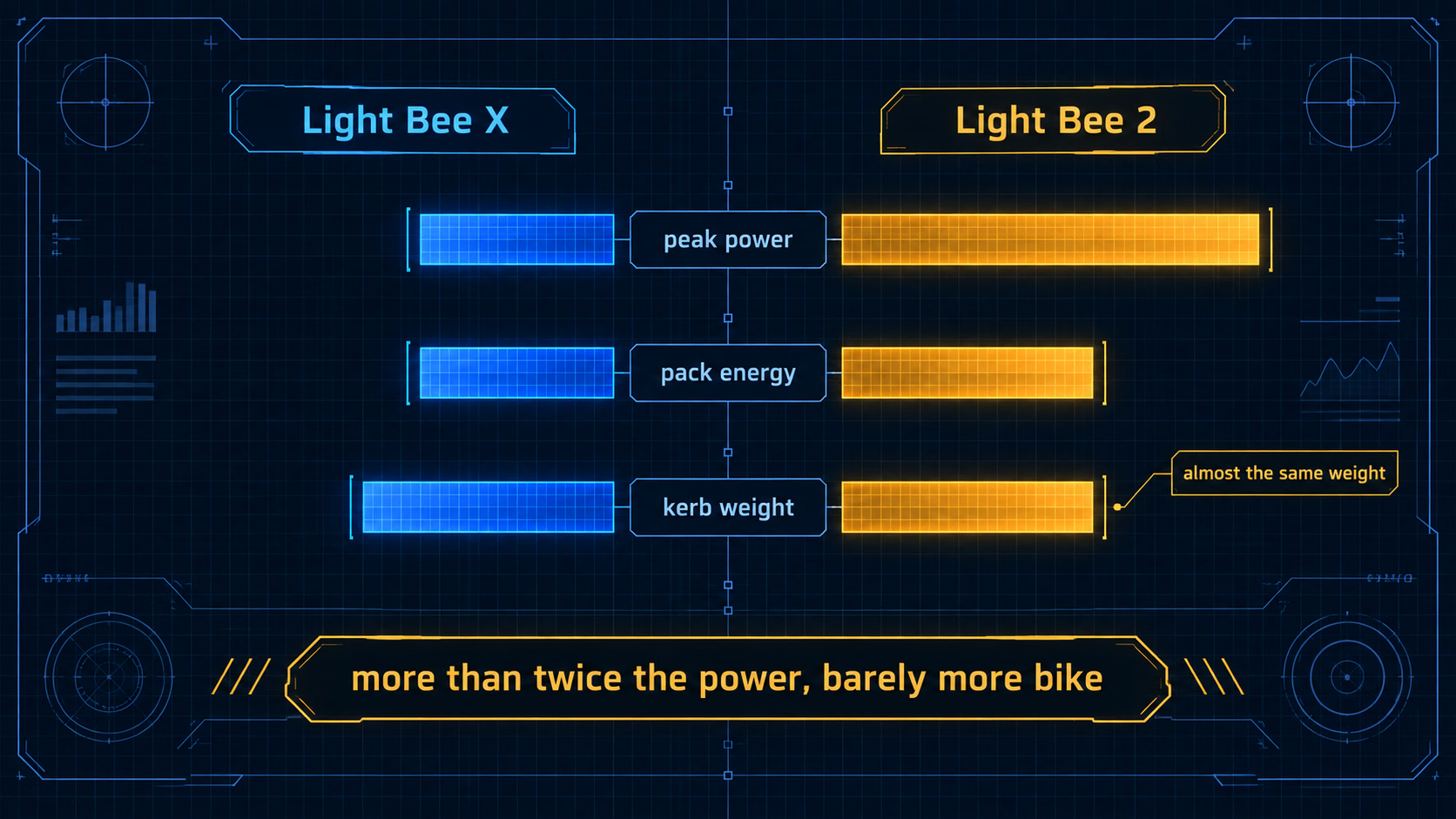
The headline is the ratio, not the number. Two and a half times the peak power for about ten percent more weight, and nearly half again the pack energy. That is a different class of machine wearing a familiar silhouette, which is exactly the trap this class of bike sets — the Light Bee 2 looks like a Light Bee and rides like something considerably angrier.
Why we have not given it a VoltRipper Score
Two reasons, and both are the reason to trust the number when it does arrive.
Sur-Ron has published no US MSRP. Our Score divides by street price, so a bike with no price has no value component. Dealer pre-order prices we found span $4,999 to $6,099 for the same machine, and at least one listing renders $199, which is a deposit rather than a price. Scoring against any one of those numbers would be inventing the result.
No US unit has shipped in volume. Every US listing we found is a pre-order or a deposit with delivery estimates spread from September to mid-November 2026.
We will score it when Sur-Ron publishes a US price and bikes are in customers' hands. Until then this page is a specification comparison, not a ranking.
What actually changes for a rider
Power delivery, not just peak. Seven ride modes with traction control is a different proposition from the Light Bee X's two, and on a bike making 434 Nm at the wheel the modes stop being a convenience and start being how the bike is made usable.
Range, materially. 3.53 kWh against 2,520 Wh is a bigger jump than the power figure suggests for most riders, because trail riding is limited by pack size far more often than by peak power. For context, our own verified figure for the Light Bee X is 47 miles claimed against about 30 real. The distributor claims 160 km-plus, which should be treated as a manufacturer number and discounted the way every range claim in this category should be.
The pack is the story. Semi-solid-state cells at a claimed 320 Wh/kg is genuinely new in this class, and it is what lets the bike carry 40% more energy at a similar weight. It is also the part with no field history — nobody has run these packs through three winters yet.
The part nobody is telling you: your parts do not carry over
This is the practical cost of switching and it is larger than it looks.
The pack is 78.54 V nominal against the Light Bee X's 72 V. That rules out chargers immediately, and a mismatched charger is a fire risk rather than an inconvenience. It also affects controllers, DC-DC converters and most electrical accessories.
The chassis and wheels changed, which reaches the suspension, brake and wheel parts that the entire Light Bee aftermarket is built on. The Light Bee X has the deepest parts catalogue of any bike in this class — we track 21 Amazon-sourced parts that fit it alone — and a Light Bee 2 buyer starts that collection again.
If you already own a Light Bee X with money in it, that is a real argument for staying put, and it is the argument nobody selling a Light Bee 2 will make to you.
Which to buy
Buy the Light Bee X if you want a bike you can ride this month at a known price, with the largest parts ecosystem in the category and four years of known reliability behind it. Ten kilowatts is not a limitation for most trail riding, and the money saved buys the suspension and brake upgrades that change the bike more than power does.
Wait for the Light Bee 2 if you want the pack, want the power, and can tolerate being early on a new battery chemistry with no US price yet. Being first on this platform means being the field test.
Buy an Ultra Bee if what you actually wanted was more bike rather than a newer bike. It is available now, it is scored, and it sits between the two on power with a known price.
What we will do next
We will add the Light Bee 2 to the catalog and score it when Sur-Ron publishes a US MSRP and units reach customers. If you are pre-ordering before then, confirm in writing what the price includes, whether the figure quoted is a deposit, and what the dealer's position is if the delivery estimate slips — three of the six US listings we found had already moved their dates once.
*VoltRipper is independent and spec-verified — we do not sell bikes and we have not ridden a Light Bee
- Every figure above is from Sur-Ron or an official distributor, dated in our sources.*
FAQ
Is the Sur-Ron Light Bee 2 real?
Yes. It is on Sur-Ron's own US site, it is shipping in Australia and New Zealand as of late August 2026, and it is on pre-order at six US dealers. Pages still saying it arrives in 2027 or that specifications are unreleased are out of date — the official distributor spec table publishes 24 kW peak, a 3.53 kWh pack, 434 Nm of wheel torque and 90 km/h.
Does the Light Bee 2 replace the Light Bee X?
Not yet. Sur-Ron's US site still lists the Light Bee X alongside it, and the two are separated by more than a model year — 24 kW against 10 kW is a tier apart, not a refresh. Treat the Light Bee 2 as a new step above the Light Bee X rather than its successor, at least until Sur-Ron delists the older bike.
How much does the Sur-Ron Light Bee 2 cost in the US?
Sur-Ron has published no US MSRP. Dealer pre-order prices we found span $4,999 to $6,099 for the same machine, and at least one listing shows a $199 figure that is a deposit rather than a price. Until an MSRP exists, compare dealers carefully and confirm what the number includes.
Will Light Bee X parts fit the Light Bee 2?
Assume not until proven otherwise. The Light Bee 2 runs a 78.54 V nominal pack against the Light Bee X's 72 V, which rules out chargers and most electrical accessories immediately, and the wheel and chassis changes affect the parts the Light Bee aftermarket is built around. This is the single biggest practical cost of switching.
Sources
Editorial sources
Specification sources
- Sur-Ron Light Bee XATV Wholesale Outlet - 2026 Sur-Ron Light Bee X (72V/35Ah, 10 kW), $4,699 from $4,999Checked
- Sur-Ron Ultra BeeVoro Motors — Surron Ultra Bee HP SW 24.5kW 74V 60AhChecked