Tracked price checks
Bikes in this guide
Sur-Ron
Light Bee X
Enormous aftermarket and parts ecosystem — the most-supported e-dirt-bike platform
Trade-off: Advertised range collapses at speed — plan for real-world miles well under the claim
We may earn a commission if you buy through this link, at no extra cost to you.
Check price at ATV Wholesale OutletSur-Ron
Ultra Bee
Big 4.4 kWh (74V/60Ah) pack, ~24.5 kW HP listings, and a 59 mph top end — a real step up from the Light Bee
Trade-off: Heavier (~195 lb) and more bike than a beginner needs
We may earn a commission if you buy through this link, at no extra cost to you.
Check price at Boca ScootersTalaria
Sting R MX4
Bigger 2,700 Wh (60V/45Ah) LG-cell pack than a stock Sur-Ron — more usable range
Trade-off: Ships factory-limited to 20 mph — needs derestriction to reach its ~40+ mph potential
We may earn a commission if you buy through this link, at no extra cost to you.
Check price at Luna CycleThe short answer
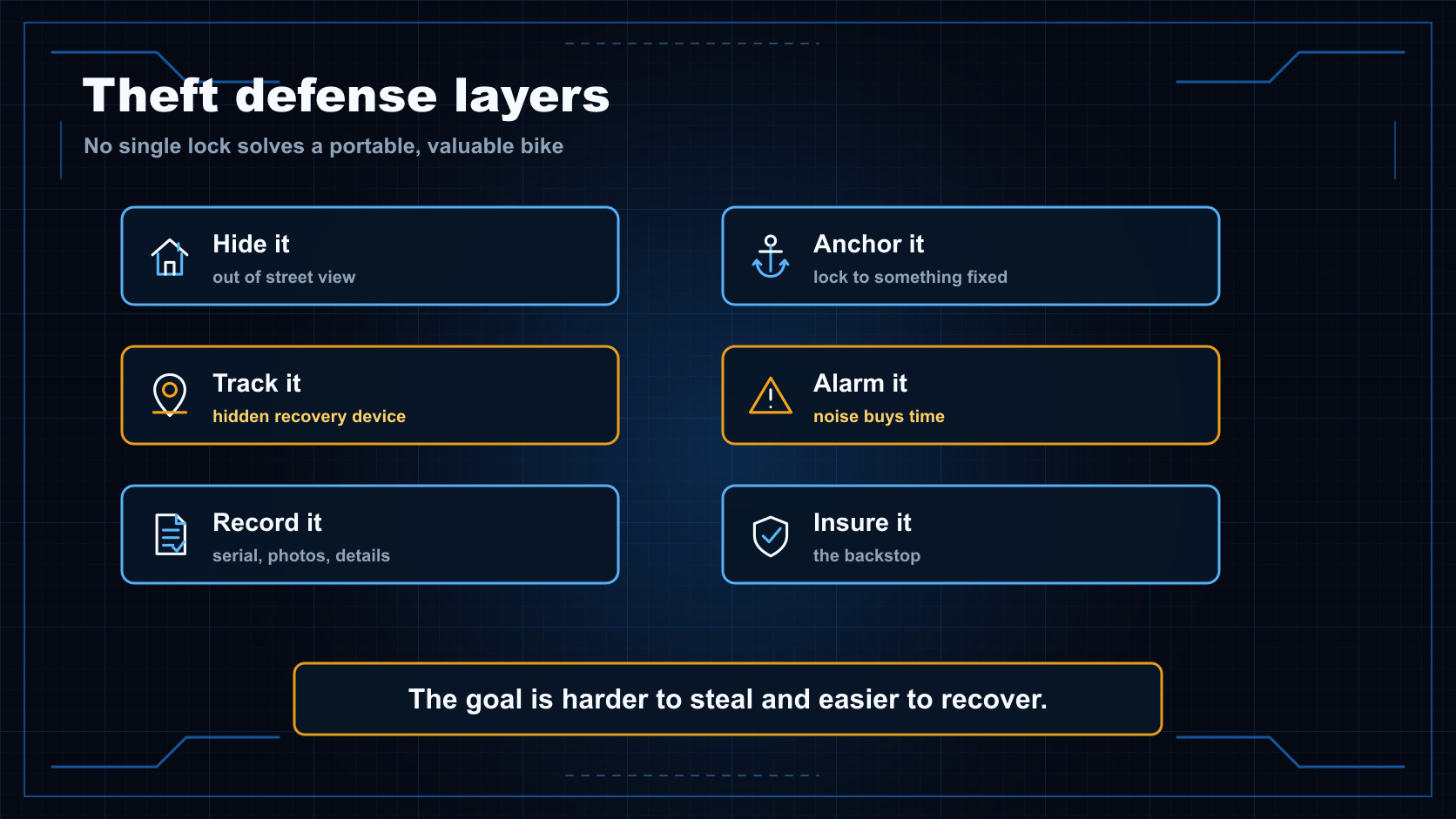
Sur-Ron-class electric dirt bikes are prime theft targets, and most get stolen because they were easy — unlocked, in sight, and gone in under a minute. You can't make any bike theft-proof, but you can make yours more trouble than the next one and recoverable if it's taken. The formula is layered: a serious lock, a hidden GPS tracker, secure storage, and recovery-readiness. Here's how to do each.
Why they're targets
Understanding the problem tells you how to solve it. These bikes are stolen because they're:
- Valuable — $4,000–$13,000, with strong used demand and easy resale.
- Light and portable — at ~110–130 lb, two people lift one into a truck bed in seconds; no need to ride it away.
- Low-security by default — no factory alarm, no steering lock like a car, often no immobilizer.
So the defense isn't "stop someone strong enough to ride off" — it's make it hard to grab, lift, and disappear, and make it findable afterward.
Why the weight matters more than the lock
Here is the number that explains this whole category. Across the bikes we track, the median weight is 130 lb, and 33 of 52 are under 150 lb. The lightest adult-capable machines are near 105 lb.
A gas 450 is a wrestling match to move without its engine running. A Sur-Ron is a two-person lift into a pickup bed, in silence, in about ten seconds. Every security decision below follows from that: you are not trying to stop someone riding it away, you are trying to stop someone carrying it away.
That is why locking the bike to itself is close to useless, and why an anchor matters more than the lock attached to it.
The layers of defence, with what they actually cost
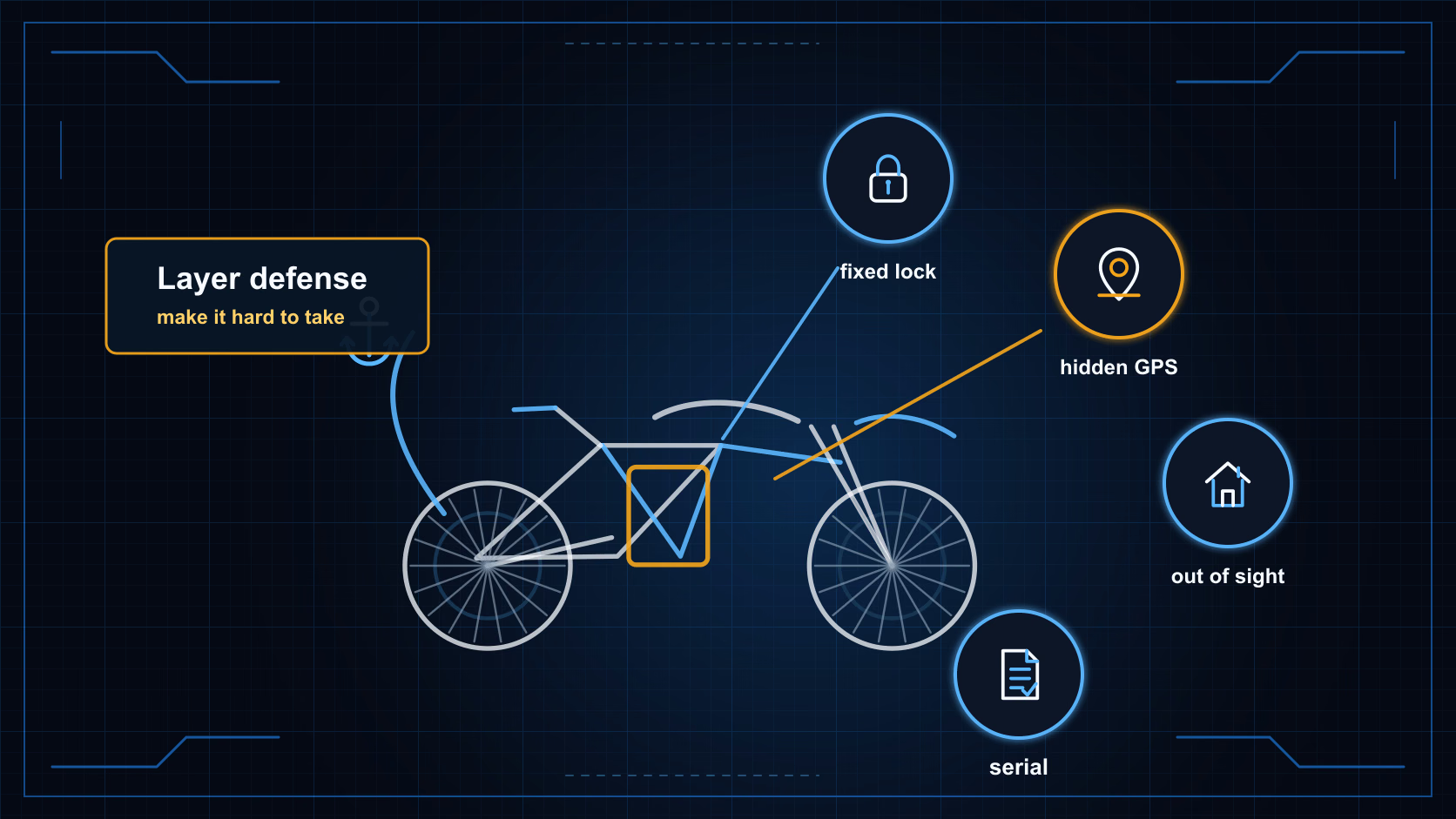
1. Lock it to something immovable. A chain through the frame and around a ground anchor is the baseline. From the parts we track: the Kryptonite New York Fahgettaboudit chain and disc lock at $266.95 is the serious end, and a Stronghold ground anchor at $129.95 is what gives it something to be serious about. On a budget, a Keeper 5-S disc lock at $44.95 plus a KryptoFlex looped cable at $14.95 is far better than nothing — but understand what you are buying: a cable is a deterrent, not a barrier.
2. A tracker, and know which kind you bought. This is the highest-value item for recovery, and the distinction matters. A GPS tracker such as the M9 anti-theft unit at $179 reports its own position over a cellular link. An AirTag at $29 does not — it has no GPS and no radio of its own, and only appears on a map when someone else's iPhone passes near it. In a city that is often enough. In a rural barn or a shipping container, it is nothing. Hide whichever you choose somewhere that survives a fast strip of the obvious panels.
3. An alarm buys noise and hassle. A disc lock with a built-in alarm — the XX-14 at $123.98 — turns a quiet lift into a loud one. Opportunists leave; determined thieves do not. Price it as a deterrent rather than a defence.
4. Out of sight beats any single lock. Most theft is opportunistic, and opportunity starts with seeing the bike. A locked garage with the door shut, bolted to an anchor, out of view from the street, defeats more attempts than any product on this page.
5. Recovery-readiness, which costs nothing. Record the frame and motor numbers, photograph the bike including anything identifying, and keep it somewhere you can reach from your phone. This is what lets police return a recovered bike and lets you prove it is yours. It is free, it takes ten minutes, and almost nobody does it before they need it.
What a real setup costs
| Setup | Parts | Cost |
|---|---|---|
| Minimum viable | Keeper disc lock + AirTag | ~$74 |
| Sensible | Disc lock with alarm + M9 GPS tracker | ~$303 |
| Serious | Kryptonite NY chain and lock + Stronghold anchor + M9 GPS | ~$576 |
Weigh that against the bike, not against your instincts about lock prices. A serious setup is about 13% of a Sur-Ron Light Bee X at $4,499. Against a Stark Varg EX, it is closer to 4%. Against a total loss with no insurance — which is where most off-road owners sit, because coverage is not required — it is cheap.
Don't forget the trailhead and transport
A lot of thefts happen away from home. Never leave the bike unattended and unlocked at the trailhead, and when it's in the truck, lock it to the bed — a bike sitting loose in an open truck is an easy grab at every stop.
The backstop: insurance
Prevention reduces the odds; it doesn't eliminate them. Theft coverage is the backstop for when it fails — and because off-road bikes aren't required to be insured, many owners have none and eat the full loss. For a bike worth thousands, a theft/damage policy or rider is worth pricing out (see our insurance guide).
The bottom line
Treat an electric dirt bike like the valuable, portable, high-demand target it is: lock it hard to a fixed anchor, hide a GPS tracker for recovery, store it out of sight, add an alarm, and record its serial for recovery — then back it all with theft insurance. No layer is enough alone, but together they move you off the "easy" list and give you a real shot at getting the bike back if it's taken. Protecting a serious investment? Our is-a-Sur-Ron-worth-it and cost guides put the value in context.
VoltRipper is independent — this is general security guidance, not a guarantee against theft. Affiliate disclosure is included on monetized pages.
FAQ
Are Sur-Rons easy to steal?
Unfortunately, yes. They're valuable ($4,000+), light (roughly 110–130 lb, so two people can lift one into a truck in seconds), have strong resale demand, and ship with almost no built-in security. That combination makes them a well-known theft target — which is exactly why layered anti-theft measures are worth it.
What's the best way to prevent Sur-Ron theft?
Layer your defenses: a heavy chain or U-lock securing the bike to a fixed anchor, a hidden GPS tracker (the single best recovery tool), secure out-of-sight storage ideally with a ground anchor, and a motion alarm. Then make recovery possible by recording the serial number and photos. No single measure is enough on its own; the goal is to make your bike more trouble than the next one.
Do GPS trackers help recover stolen electric dirt bikes?
Yes — a well-hidden GPS tracker is the most effective recovery tool there is. Many stolen bikes are recovered specifically because the owner could pinpoint the location for police. Hide it somewhere non-obvious, keep it powered, and don't rely on it as your only defense — it's for recovery, not prevention.
Does insurance cover a stolen electric dirt bike?
Only if you actually carry theft coverage — and many owners don't, because off-road bikes aren't required to be insured. A theft/damage policy or a scheduled-item rider is a smart backstop for a bike this valuable. See our insurance guide for how to get one of these bikes properly covered.
Sources
Specification sources
- Sur-Ron Light Bee XATV Wholesale Outlet - 2026 Sur-Ron Light Bee X (72V/35Ah, 10 kW), $4,699 from $4,999Checked
- Sur-Ron Ultra BeeVoro Motors — Surron Ultra Bee HP SW 24.5kW 74V 60AhChecked
- Talaria Sting R MX4Talaria Canada - Sting R MX4 specificationsChecked