Tracked price checks
Bikes in this guide
Sur-Ron
Light Bee X
Enormous aftermarket and parts ecosystem — the most-supported e-dirt-bike platform
Trade-off: Advertised range collapses at speed — plan for real-world miles well under the claim
We may earn a commission if you buy through this link, at no extra cost to you.
Check price at ATV Wholesale OutletOnyx
RCR
Moped-style comfort with a seat, lights, and a street kit — the most commuter-friendly bike here
Trade-off: Heavy (~155 lb) and moped-shaped — less capable in technical off-road than a true dirt bike
We may earn a commission if you buy through this link, at no extra cost to you.
Check price at Onyx Motors (official)The short answer
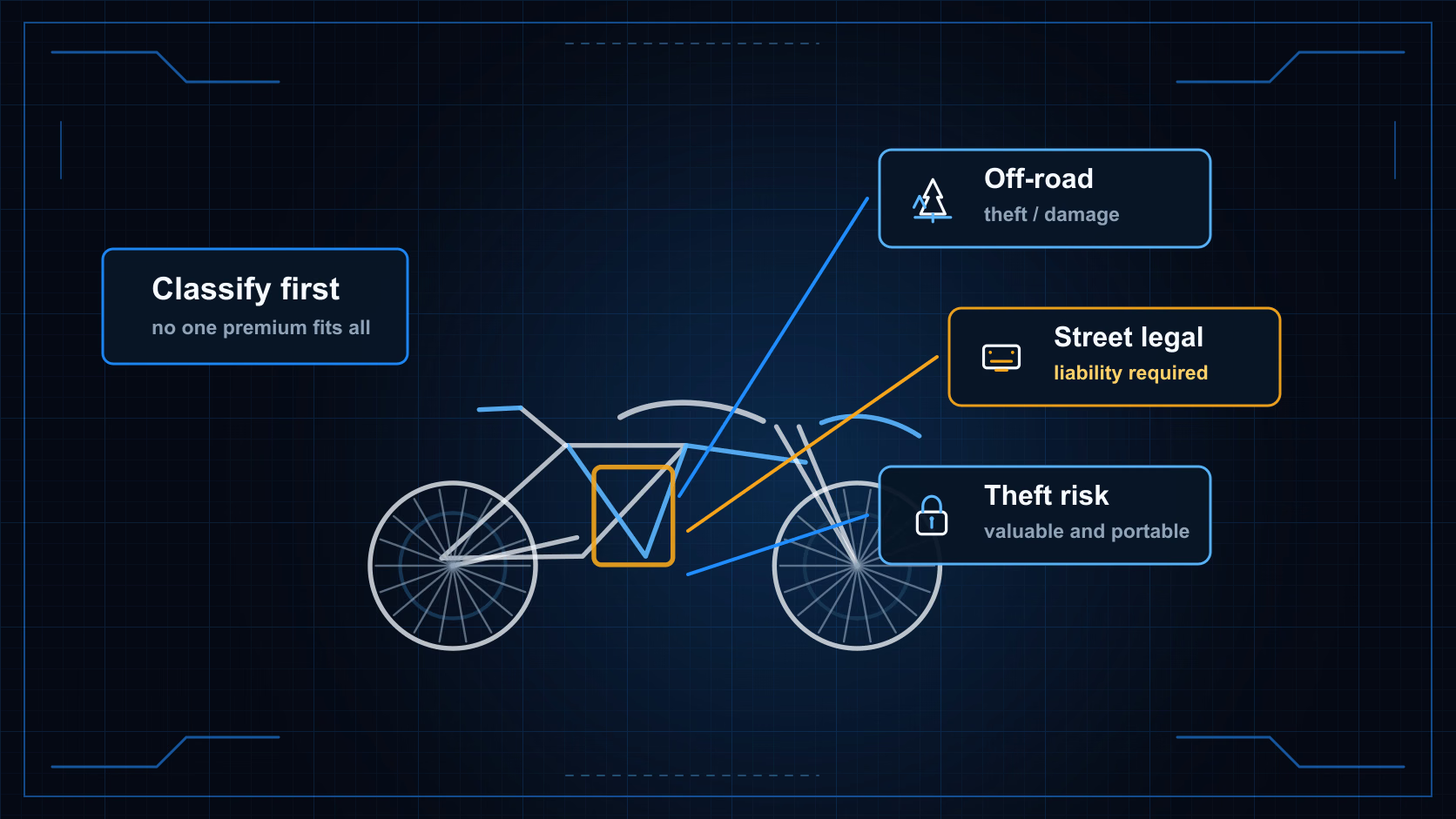
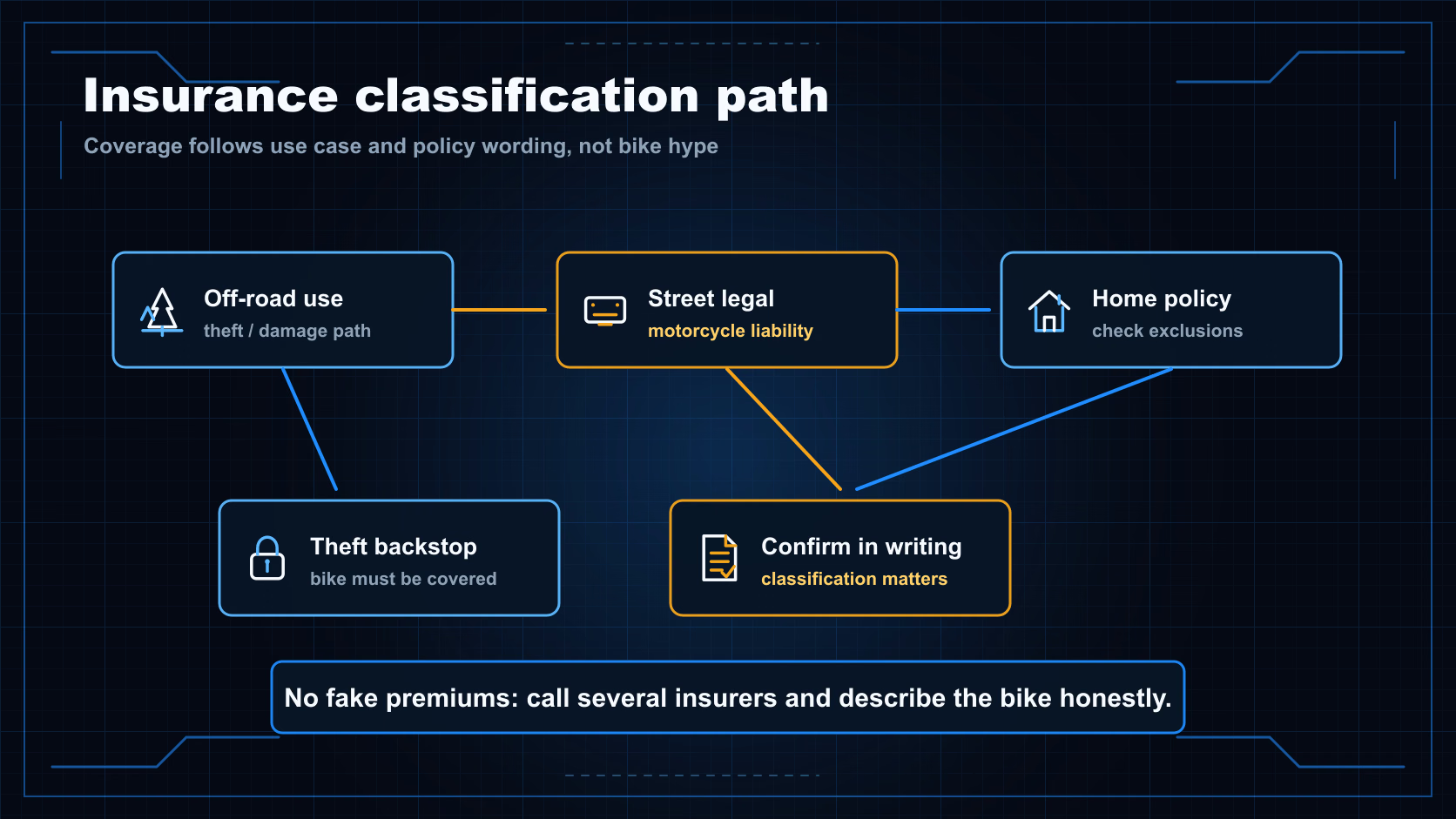
Whether you need insurance comes down to where you ride: off-road, it's generally not legally required; street-legal, it is. But "required" isn't the whole story — an electric dirt bike is a $1,000–$13,000 machine and a well-known theft target, so coverage is often worth having even when it isn't mandatory. The catch is that these bikes are an awkward fit for standard insurance categories, so getting covered takes a little work. Here's the honest picture.
Off-road use: not required, but worth considering
Riding on private property or designated OHV areas, there's generally no legal requirement to carry insurance — the same as any off-road machine. But two reasons to consider it anyway:
- Theft. Sur-Ron-class bikes are stolen often — they're valuable, light, and easy to load into a truck. A stolen uninsured bike is a total loss out of your pocket.
- Damage. Crash damage to an expensive battery or frame adds up fast.
Coverage here usually means theft and physical-damage protection rather than liability — via a powersports/off-road policy or, sometimes, a scheduled-item rider on your homeowners/renters policy (see below).
Street-legal use: required
If you've made the bike street-legal — converted it, titled it, and registered it — then you need insurance to ride it on the road, exactly like any motorcycle. States set minimum liability requirements, and riding an unregistered/uninsured motor vehicle on public roads is illegal on top of the registration problem. For street-legal e-motos like the Onyx RCR or Delfast Top 3.0, budget for motorcycle insurance as part of ownership.
Why insurers struggle, measured across every state we track
Every guide on this subject says these bikes "fall between categories". We track all fifty state law records, so we can show you exactly how badly.
Here is how many states use each term to describe the same machine in their own statutes and agency guidance, counted from our state-law records on 2026-08-22:
| The state calls it | States |
|---|---|
| a motorcycle (or motor-driven cycle) | 38 |
| a dirt bike | 15 |
| an off-highway vehicle (OHV) | 11 |
| an off-highway motorcycle (OHM) | 10 |
| an off-road vehicle (ORV) | 6 |
| an ATV / all-terrain vehicle | 5 |
| a recreational vehicle | 5 |
| a moped | 0 |
Those add to well over fifty because most states use two or three of these terms at once, in different statutes, for the same bike. Maine's ATV definition expressly includes "a motorcycle or related 2-wheel... vehicle". Michigan's off-road vehicle definition does the same. Rhode Island files it as a recreational vehicle.
And a whole group of states define the bike partly by what it is not. Pennsylvania, Michigan, North Carolina, Virginia, South Carolina, Alabama, Arkansas, Kansas, West Virginia and Vermont all state explicitly that it is not an ATV, usually because their ATV definition requires three or more wheels. Nevada and Hawaii say it is not a moped. No state we track classifies it as a moped at all, despite how often you will see the comparison made.
That negative definition is the part an underwriter cannot use. "It is a motorcycle-class vehicle that is not an ATV and not an electric bicycle" is a precise legal statement and an unusable product category.
That is the whole problem in one table. An underwriter's product categories are built on vehicle classes, and this machine does not have one — it has eight, depending on which state you are standing in. When an insurer tells you they cannot write it, they are usually not being difficult; they genuinely cannot work out which product it belongs to.
Most states already require you to register something
The other thing worth knowing before you call anyone: most states we track require registration of some kind, even for purely off-road use. Green stickers, OHV decals, ORV licences, recreational-vehicle registration — the name changes, the requirement does not.
That matters for insurance in two ways.
It gives the bike an identity. A registered vehicle with a number is far easier to insure than an undocumented one, because there is something for a policy to attach to. If you are struggling to get covered and you have skipped the OHV registration your state requires, that is worth fixing first.
It is not the same as an insurance requirement. Registration and insurance are separate obligations, and most states requiring the former do not require the latter for off-road riding. New Jersey is the clearest exception we track: the MVC requires current registration and liability insurance to ride off-road at all.
The road picture is also much narrower than most buyers assume. Only a single state grades as straightforwardly road-registrable for this class of bike; the rest are conversion-only, allow limited or local-option access, or offer no road path at all. Our street-legal guide renders the full tier lists from the same data, and your own state's page gives you the exact wording — read one of them before you build an insurance plan around road use.
What you are actually insuring
"Is it worth it?" depends on a number most owners have not written down. Across our catalogue:
| Price band | Bikes we track |
|---|---|
| Under $1,500 | 10 |
| $1,500–$3,000 | 7 |
| $3,000–$5,000 | 14 |
| $5,000–$8,000 | 15 |
| Over $8,000 | 6 |
The range runs $299 to $13,040, and 21 of 52 bikes sit above $5,000 — replacement cost in the same territory as a used car, on a machine two people can lift into a pickup in under a minute.
Add the parts. A replacement battery runs roughly $1,000–$2,500, and a motor swap with the controller and pack it requires can reach $3,900–$4,300. A modified bike can be worth considerably more than its sticker, and a policy written against the sticker will not know that.
Making the phone call actually work
Because the classification is the barrier, the call goes better if you remove the ambiguity yourself rather than letting the agent guess. Lead with:
- What it legally is in your state — the exact term from your state page, not "dirt
bike". "It is registered as an off-highway motorcycle in Colorado" is a sentence an underwriter can act on.
- Whether it has pedals. It does not, and that single fact rules out the e-bike products that
would otherwise be offered to you with limits far below the bike's value.
- Its power and top speed, and whether it is speed-limited.
- Where it is stored, since theft is the coverage you most likely want.
- The real replacement cost, including modifications, not the price on the receipt.
Then ask specifically for powersports or off-road products, and try a specialty broker as well as your existing insurer. Do not assume the company that writes your car will handle this well.
Homeowners/renters: check before you rely on it
It's tempting to assume your homeowners or renters policy covers the bike against theft. Often it doesn't — many policies exclude or cap motorized vehicles, so an expensive e-moto may fall outside coverage or hit a low sub-limit. If this is your plan, confirm it in writing and consider a scheduled-item rider to cover the bike's full value.
The bottom line
Off-road, insurance isn't legally required — but theft and damage coverage is smart for a bike this valuable. Street-legal, it's mandatory, so build motorcycle insurance into the cost of going road-legal. The real work is getting these bikes properly classified and covered, since they don't fit neatly into standard categories: call around, describe the bike honestly, and don't assume your home policy has you covered. Weighing the full cost of ownership? See our cost guide, and check your state's rules before you plan on road use.
VoltRipper is independent — this is general information, not insurance or legal advice. Coverage requirements and options vary by insurer, state, and how you ride; verify specifics with licensed insurers before relying on any of it. Affiliate disclosure is included on monetized pages.
FAQ
Do you need insurance for a Sur-Ron?
It depends on how you ride it. Off-road on private land or OHV areas, insurance is generally not legally required. If you make it street-legal and register it, motorcycle insurance is required just like any road vehicle. Either way, theft and damage coverage is worth considering — these are expensive bikes and common theft targets.
Can you insure an electric dirt bike?
Yes, but it can be tricky. Many insurers don't have a clean category for Sur-Ron-class bikes — some treat them as motorcycles, some as e-bikes, and some won't cover them at all. Your options are a motorcycle/powersports policy (especially if street-legal), a specialty off-road policy, or sometimes a scheduled-item rider on homeowners/renters coverage. It pays to call around.
Are electric dirt bikes covered by homeowners insurance?
Often not fully. Many homeowners and renters policies exclude or cap motorized vehicles, so a $4,000+ e-moto may not be covered for theft or damage under a standard policy. Check your specific policy — you may need a scheduled-item rider or a separate powersports/motorcycle policy to actually protect the bike.
How much does electric dirt bike insurance cost?
There's no single number — it varies widely by the coverage type, your location, and how the insurer classifies the bike, from a modest theft/damage rider to full motorcycle liability. Get a few quotes; because these bikes are an awkward fit for standard categories, prices and willingness to cover vary a lot between insurers.
Sources
Specification sources
- Sur-Ron Light Bee XATV Wholesale Outlet - 2026 Sur-Ron Light Bee X (72V/35Ah, 10 kW), $4,699 from $4,999Checked
- Onyx RCROnyx Motors — RCR 80V 45AhChecked